How Lifestyle Affects P Shot UK Results – Diet, Exercise, and Sleep

Most published guidance on the P shot focuses on the procedure itself. It covers the blood draw, centrifugation, platelet concentration, and injection. Far less attention goes to what happens in the weeks and months after treatment. Specifically, very little guidance addresses how a patient’s physiology either supports or undermines the regenerative process.
Platelet-rich plasma (PRP) therapy delivers a concentrated suspension of autologous growth factors directly into penile tissue. These growth factors include platelet-derived growth factor (PDGF), vascular endothelial growth factor (VEGF), and transforming growth factor-beta (TGF-β). They initiate angiogenesis, promote collagen remodelling, and stimulate smooth muscle cell proliferation within the corpus cavernosum. However, this process does not occur in isolation. It depends entirely on the body’s internal environment.
Diet, physical activity, sleep quality, hormonal status, and vascular health all shape that internal environment. Together, they determine how effectively injected growth factors produce results. A patient with poor nutritional status, sedentary habits, and disrupted sleep presents a biochemically hostile environment for tissue regeneration. Conversely, a patient who actively supports vascular and endocrine function post-treatment creates conditions in which PRP therapy performs optimally.
This article examines each lifestyle domain in clinical detail. It draws on peer-reviewed evidence and recognised UK sources. The aim is to give men considering or recovering from P shot treatment accurate, evidence-based information — not generic wellness advice.
What the Evidence Says About Lifestyle and Erectile Function
Before examining post-treatment behaviour, it is important to establish why lifestyle factors matter for erectile function at baseline.
NICE acknowledges that erectile dysfunction (ED) shares several risk factors with cardiovascular disease. These include physical inactivity, obesity, smoking, elevated cholesterol, and metabolic syndrome. NICE guidance states that all men with ED should receive counselling on risk reduction and lifestyle modification — particularly exercise and weight loss. This is not peripheral guidance. It reflects the established physiological link between vascular health and erectile function.
NHS Inform states that narrowed blood vessels represent a common cause of erectile dysfunction. Assessment of diet, exercise, and cardiovascular health forms part of the standard clinical evaluation. The British Society for Sexual Medicine (BSSM) similarly positions lifestyle intervention as an integral component of ED management across all treatment modalities.
For men pursuing PRP-based regenerative therapy for ED — whether as a standalone intervention or alongside other treatments — these lifestyle factors carry direct mechanistic relevance to treatment outcome.
Part One: Diet and Nutritional Status
How Diet Influences Endothelial Function and PRP Efficacy
Nitric oxide (NO) is the primary mediator of penile smooth muscle relaxation. Without adequate NO availability, the haemodynamic response required for erection cannot occur effectively. That response includes arterial dilation, cavernosal smooth muscle relaxation, and increased penile blood flow. Peer-reviewed research confirms that poor diet reduces NO bioavailability by impairing endothelial function.
The P shot introduces growth factors that stimulate angiogenesis and new blood vessel formation. This process depends on functional endothelium. A diet chronically high in refined carbohydrates, saturated fats, and ultra-processed foods promotes systemic inflammation and endothelial dysfunction. That creates conditions which reduce the effectiveness of growth factor signalling. Conversely, diets that support endothelial health enhance the vascular substrate on which PRP therapy acts.
Key Dietary Priorities Following P Shot Treatment
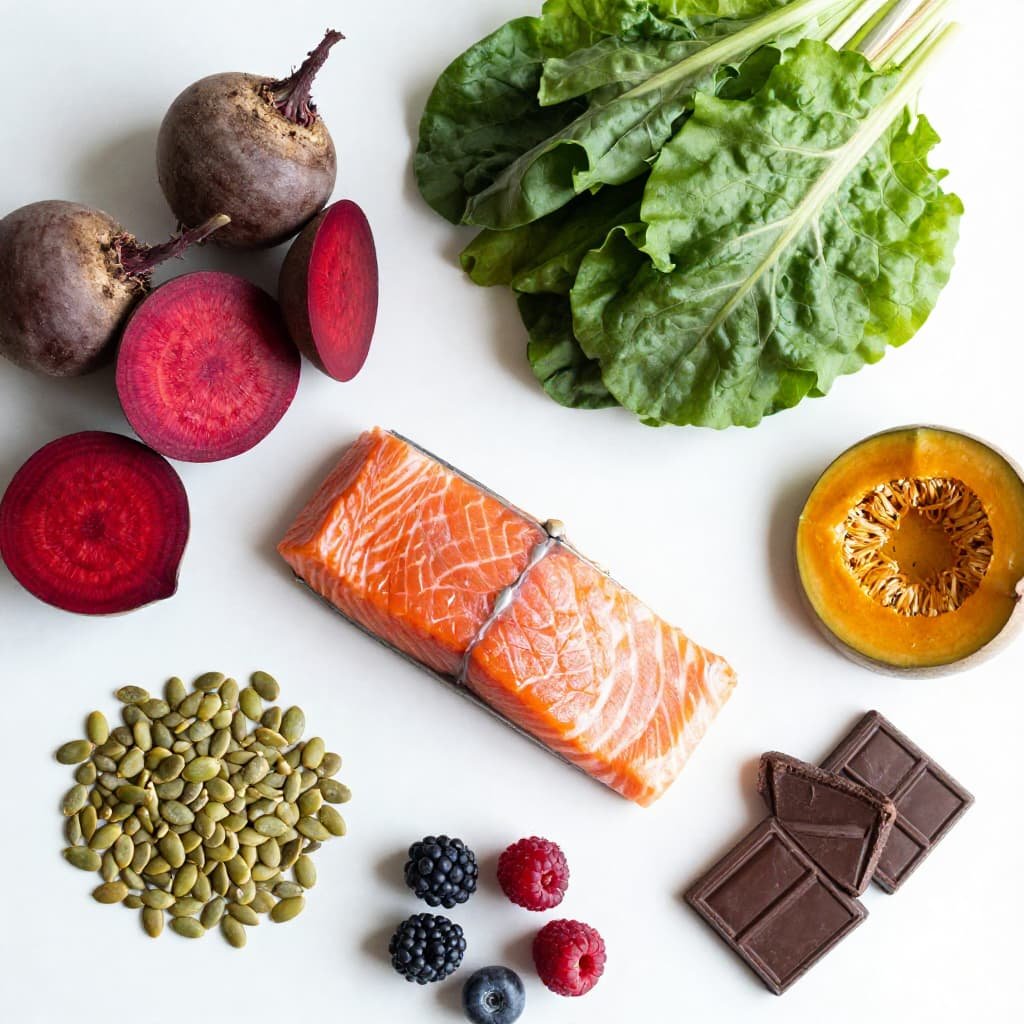
Nitrate-rich vegetables: Leafy greens, beetroot, and rocket contain dietary nitrates. The body converts these into nitric oxide via the enterosalivary pathway. These foods directly support endothelial NO production. This facilitates the vascular remodelling that the priapus shot aims to stimulate.
Omega-3 fatty acids: Oily fish — including mackerel, sardines, and salmon — provide omega-3s that reduce systemic inflammation. They lower triglyceride levels and support platelet function. PRP therapy relies on the biological activity of the patient’s own platelets. A diet that maintains healthy platelet function therefore carries direct treatment relevance.
Zinc and magnesium: Both minerals support testosterone synthesis and immune function. Zinc appears in lean red meat, pumpkin seeds, and legumes. Magnesium appears in whole grains, nuts, and dark chocolate. Suboptimal levels of either mineral associate with reduced androgenic function. This in turn may blunt the hormonal environment needed for optimal recovery from penile injection growth procedures.
Antioxidant-dense foods: Berries, tomatoes, green tea, and cruciferous vegetables reduce oxidative stress. Oxidative damage to endothelial cells counteracts the pro-angiogenic effects of VEGF that PRP delivers. Reducing oxidative burden supports the tissue environment in which the priapus shot operates.
Protein adequacy: Tissue repair requires amino acids. Men recovering from P shot treatment should consume adequate dietary protein — approximately 1.2–1.6 g per kilogram of body weight per day. Suitable sources include poultry, fish, eggs, legumes, and low-fat dairy.
What to Avoid
Ultra-processed foods, high-sugar diets, and excessive alcohol all elevate inflammatory markers, impair endothelial function, and reduce testosterone levels. The NHS advises men to limit alcohol to no more than 14 units per week, spread across at least three days. Even moderate excess alcohol consumption reduces vascular responsiveness. This mechanism directly undermines the intended outcomes of non-surgical treatment for erectile dysfunction in London and elsewhere.
Men with type 2 diabetes or metabolic syndrome should note that poor glycaemic control independently predicts impaired erectile function. Tight dietary management of blood glucose therefore carries particular relevance for this group when they pursue an advanced PRP solution for erectile dysfunction.
Part Two: Exercise and Physical Activity

The Mechanistic Role of Exercise in Male Vascular Health
Exercise represents the most evidence-supported lifestyle intervention for erectile dysfunction. A landmark randomised controlled trial demonstrated that obese men assigned to a structured exercise and weight-loss programme achieved clinically meaningful improvement in erectile function scores compared to controls. The mechanism involves improved endothelial function, increased NO bioavailability, reduced inflammatory cytokines, and improved insulin sensitivity. These changes create a more favourable vascular environment.
For men who have undergone P shot treatment, exercise serves an additional function. It maintains and extends the improvements in penile blood flow that the treatment initiates. The P shot promotes angiogenesis — the formation of new blood vessels. Those vessels require adequate perfusion pressure and cardiovascular demand to develop and sustain their function. Regular physical activity provides that stimulus.
Exercise Modalities and Their Relevance
Aerobic cardiovascular exercise: Moderate-intensity aerobic activity has the strongest evidence base for improving erectile function. Brisk walking, cycling, swimming, or rowing — performed for 30–40 minutes at least four times per week — produces meaningful improvements in International Index of Erectile Function (IIEF) scores in men with vasculogenic ED. This finding comes from a systematic review published in Sexual Medicine Reviews.
Published research indicates that exercising at or above 18 metabolic equivalent hours per week associates with improved sexual function. This level of activity corresponds to approximately four to five hours of brisk walking or three hours of moderate jogging per week. Most men can achieve this.
Pelvic floor rehabilitation: A randomised controlled trial published in the British Journal of General Practice found that pelvic floor muscle training significantly outperformed lifestyle advice alone for men with erectile dysfunction. Pelvic floor exercises strengthen the ischiocavernosus and bulbocavernosus muscles. These muscles compress the deep dorsal vein of the penis during erection and contribute to rigidity. Men who track their P shot before and after outcomes and incorporate pelvic floor training consistently report better functional results than those relying on the injection alone.
Resistance training: Progressive resistance exercise increases serum testosterone and growth hormone concentrations acutely and chronically. Testosterone supports penile smooth muscle health and libido. Resistance training two to three times per week, combined with aerobic exercise, provides a comprehensive physiological foundation for PRP therapy for men’s performance issues.
Exercise Timing After Treatment
During the first 48–72 hours following a P shot procedure, men should avoid intense physical activity — particularly anything that increases penile blood pressure or creates friction. The treating clinician will provide specific post-procedure instructions. After this initial period, a graduated return to exercise is appropriate and clinically encouraged.
Part Three: Sleep Quality and Hormonal Regulation
Why Sleep Is a Clinical Variable, Not a Lifestyle Preference
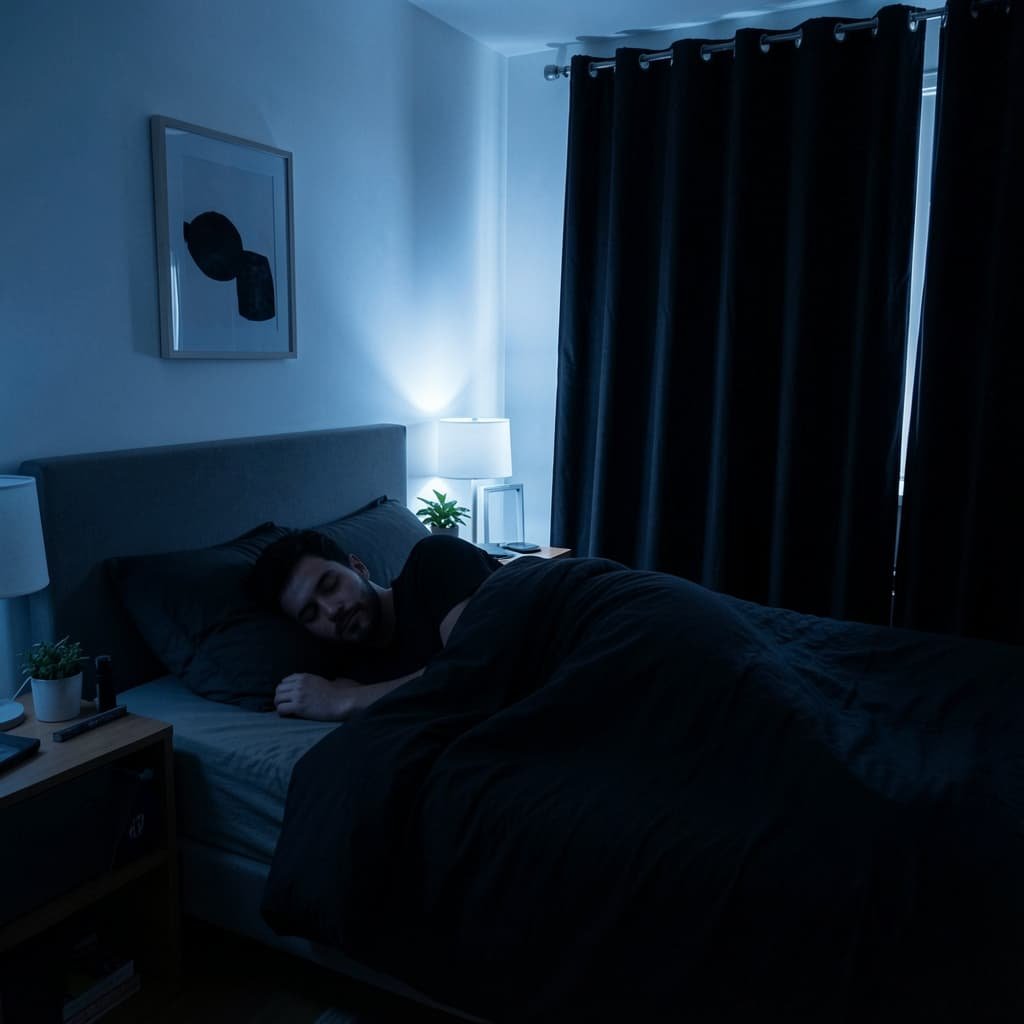
Post-procedure guidance consistently underweights sleep. This is clinically indefensible. Sleep is the primary context in which the body synthesises testosterone. Luteinising hormone (LH) pulses — which stimulate Leydig cell testosterone production — occur predominantly at night. They tie directly to slow-wave sleep architecture. Disrupted sleep impairs this hormonal cascade.
A randomised study published in JAMA found that one week of sleep restriction to five hours per night reduced testosterone levels in young healthy men by up to 15%. A testosterone decline of this magnitude would, over time, meaningfully compromise the tissue-supportive androgenic environment that P shot treatment depends upon.
A large-scale database analysis published in the International Journal of Impotence Research found that men with insomnia had 1.74 times the odds of testosterone deficiency compared to matched controls. Men with circadian rhythm sleep disorders had 2.63 times the odds. These findings confirm that sleep disorders are not merely comorbidities. They actively contribute to the hormonal and vascular dysfunction that ED reflects.
For men investing in P-shot before and after outcomes, protecting sleep quality carries as much clinical weight as the procedure itself.
Sleep, Endothelial Function, and Nitric Oxide
Beyond hormonal effects, sleep quality directly influences endothelial function. A study cited in the International Journal of Impotence Research demonstrated that chronic sleep restriction significantly impairs endothelial function and nitric oxide production. These are the same biological pathways that erectile function relies upon. Nocturnal hypoxemia — commonly associated with obstructive sleep apnoea (OSA) — carries an odds ratio of 1.39 for moderate-to-complete ED in community-dwelling men.
Men who present for men’s intimate health treatment in London and report poor sleep or snoring should undergo OSA assessment. Untreated OSA creates a state of chronic nocturnal hypoxia. It progressively damages the vascular endothelium and renders regenerative penile injection growth procedures less effective.
Evidence-Based Sleep Optimisation
The following measures carry clinical support for improving sleep quality in men:
Maintain a consistent sleep-wake schedule: Irregular sleep timing disrupts circadian rhythm and blunts the nocturnal testosterone surge. Research confirms that circadian rhythm disruption affects both testosterone levels and androgen receptor sensitivity.
Target seven to nine hours per night: Clinical andrology literature consistently identifies this range as optimal for hormonal function. Public Health England frameworks include adequate sleep as part of general health maintenance.
Manage obstructive sleep apnoea: CPAP therapy in men with moderate-to-severe OSA improves erectile function. It does so in part by restoring nocturnal oxygenation and testosterone dynamics.
Reduce pre-sleep screen exposure and alcohol: Both suppress melatonin secretion and fragment slow-wave sleep architecture. This reduces the duration of the most hormonally productive sleep stages.
Part Four: Body Weight, Smoking, and Systemic Inflammation
Obesity and Its Impact on PRP Outcomes
Abdominal obesity independently associates with reduced testosterone, elevated oestrogen, systemic inflammation, and endothelial dysfunction. These factors collectively impair the tissue environment in which PRP-based regenerative therapy for ED operates. Research confirms that only weight loss of 10–15% or more produces clinically meaningful improvements in erectile function in obese men. This makes weight management a priority for this population before and after P shot treatment.
Smoking and Vascular Damage
Smoking causes direct endothelial injury through oxidative stress and impaired NO synthase activity. The NHS advises that smoking is a significant risk factor for ED due to vascular constriction and reduced oxygen delivery to penile tissue. Men who smoke and undergo the P shot create a physiological conflict. The treatment promotes vascular regeneration whilst smoking actively degrades vascular integrity. Smoking cessation represents the single most impactful vascular health intervention available to this group.
Stress, Cortisol, and Hormonal Suppression
Chronic psychological stress elevates cortisol. Elevated cortisol suppresses both testosterone synthesis and hypothalamic-pituitary-gonadal axis activity. Research published in the Asian Journal of Andrology confirms that lifestyle habits which reduce low-grade inflammation improve erectile function. They do so through their effects on NO availability and endocrine status. Men pursuing erectile dysfunction treatment London — whether pharmacological or regenerative — benefit from structured stress management. Evidence-based approaches include cognitive behavioural therapy (CBT) and mindfulness-based stress reduction (MBSR).
What Realistic Outcomes Look Like
Men considering P shot UK treatmentshould approach it with calibrated expectations. A 2024 PLOS ONE meta-analysis of 12 controlled trials involving 991 patients demonstrated that PRP produces statistically significant improvements in IIEF scores compared to placebo. A 2024 systematic review in Translational Andrology and Urology similarly confirmed PRP’s potential in vasculogenic ED. However, researchers consistently note that large-sample, long-follow-up trials are still required to fully characterise the magnitude and duration of benefit.
Results are not uniform. Men with well-controlled vascular risk factors, healthy lifestyle behaviours, and no significant penile fibrosis or severe arterial insufficiency tend to achieve more pronounced P-shot before and after improvements. Men with multiple comorbidities and poor health behaviours achieve less. The priapus shot is a regenerative adjunct, not a curative standalone procedure. Its outcomes reflect the biological environment in which it operates.
At pshots uk clinic , Dr Syed Nadeem Abbas (MBBS, MRCS, MRCGP, MSc Aesthetic Plastic Surgery with Distinction, Queen Mary University London) includes assessment of lifestyle factors as part of every clinical evaluation. This recognises that men asking about male enlargement injections cost UK deserve a broader conversation — one that includes health status and realistic treatment expectations, not just pricing.

Frequently Asked Questions
How soon after P shot treatment should I start exercising?
Men should avoid vigorous physical activity and direct penile contact for 48–72 hours post-procedure. After this period, graduated aerobic exercise is appropriate and encouraged. Full exercise resumption typically follows from 72 hours onwards, subject to clinician guidance.
Does diet affect how long P shot results last?
Yes. The duration of P shot UK results depends on the ongoing health of the vascular and hormonal environment. Men who maintain a diet supporting endothelial function and NO availability — rich in leafy greens, omega-3s, lean protein, and antioxidants — sustain more favourable conditions for growth factors to continue their regenerative effects.
Can poor sleep reduce the effectiveness of the priapus shot London treatment?
Clinically, yes. Sleep deprivation reduces testosterone levels and impairs endothelial function. Both are directly relevant to erectile health. Men with untreated sleep disorders should discuss this with their clinician before or alongside P-shot treatment.
What is the priapus shot price in the UK and does lifestyle affect value for money?
The priapus shot price in the UK varies by clinic and by the number of sessions required. However, any assessment of male enlargement injections cost UK should factor in that lifestyle adherence significantly influences outcome quality. A patient who actively supports vascular health achieves better results. They may also require less frequent repeat sessions. This makes lifestyle modification directly relevant to long-term cost-effectiveness.
Can the P shot replace lifestyle changes for erectile dysfunction?
No. The P shot is a regenerative treatment that works within the body’s existing physiological systems. It does not override them. NICE and NHS guidance consistently position lifestyle modification as a first-line component of ED management. Regenerative and pharmacological treatments perform best when lifestyle factors receive concurrent attention — not as afterthoughts.
Is there an age limit for P shot treatment?
There is no fixed age limit. Clinical assessment of vascular health, comorbidities, medication history, and treatment objectives determines suitability. Men across a wide age range seek non-surgical treatment for erectile dysfunction in London. Clinical evaluation ensures that expectations align with individual physiology.
How many P shot sessions are typically needed?
This varies by patient. Some men report improvement after a single session. Others require two to three sessions spaced several months apart. The treating clinician assesses progress against baseline IIEF scores and adjusts the treatment plan accordingly. Lifestyle factors influence both the degree of improvement per session and the frequency of repeat treatments.
The Bottom Line
The P shot initiates a biological process. It does not complete one. Platelet-rich plasma therapy for men’s performance issues delivers growth factors capable of stimulating angiogenesis, tissue remodelling, and smooth muscle regeneration within the corpus cavernosum. But the effectiveness of that stimulus depends entirely on the physiological environment the patient maintains before, during, and after treatment.
Diet influences endothelial function and nitric oxide availability — the vascular substrate on which the treatment acts. Exercise maintains and extends the improvements in penile blood flow that the priapus shot promotes. Sleep preserves testosterone synthesis and endothelial integrity — both of which are mechanistically central to erectile function and recovery. Smoking, obesity, and chronic stress actively counteract each of these mechanisms.
The evidence from NICE, NHS guidance, and peer-reviewed literature converges on a consistent conclusion. Lifestyle is not ancillary to erectile function treatment — it is integral to it. Men who approach the P shot as part of a broader commitment to vascular and hormonal health achieve better outcomes than those who treat it as an isolated intervention.
The relevant clinical question, therefore, is not simply whether PRP therapy for men’s performance issues suits a given patient. The more informative question is this: what biological environment is that patient currently providing for regenerative treatment — and what are they willing to change?
Read more: How the Priapus Shot in London Can Improve Your Relationship and Quality of Life
P Shot London: What Men with Diabetes Need to Know About Erectile Dysfunction Treatment