
Martin was 61 when his urologist gave him the all-clear after the radical prostatectomy. The surgery had gone well. The cancer was gone. His family was relieved. He was relieved. But six months later, he sat in his GP’s office with a different kind of problem. He could not achieve a reliable erection. Sensation was dulled. Urinary leakage was still a daily frustration. A friend had mentioned the P shot UK clinics were beginning to offer as part of post-surgical recovery — and Martin wanted to know whether it was worth taking seriously. His GP had no strong answer. So he started looking for one himself.
That question — and the honest answer to it — is what this article is about.
What Prostate Surgery Actually Does to Sexual Function
Radical prostatectomy removes the prostate gland entirely. Surgeons today work hard to spare the neurovascular bundles that run alongside the prostate. These are the tiny nerve clusters responsible for erection. Even with nerve-sparing techniques, the nerves are stretched, bruised, and under significant stress during the procedure.
The NHS acknowledges that erectile dysfunction is one of the most common complications of prostate cancer treatment. According to guidance from the National Institute for Health and Care Excellence (NICE), up to 85% of men experience erectile dysfunction following radical prostatectomy. Recovery — where it happens at all — can take two to three years.
That is a long time.
Urinary leakage, reduced penile sensitivity, altered penis shape, and loss of orgasm intensity are all reported side effects. Many men also notice some degree of penile shrinkage in the months following surgery. This likely results from reduced oxygenated blood flow to penile tissue during the period when erections are absent.
The conventional rehabilitation path includes phosphodiesterase-5 inhibitors such as sildenafil, vacuum erection devices, penile injections of vasoactive agents, and psychological support. All of these have merit. But none of them address tissue repair at a cellular level.
This is where PRP — and by extension the priapus shot — enters the conversation.
What Is the P Shot?
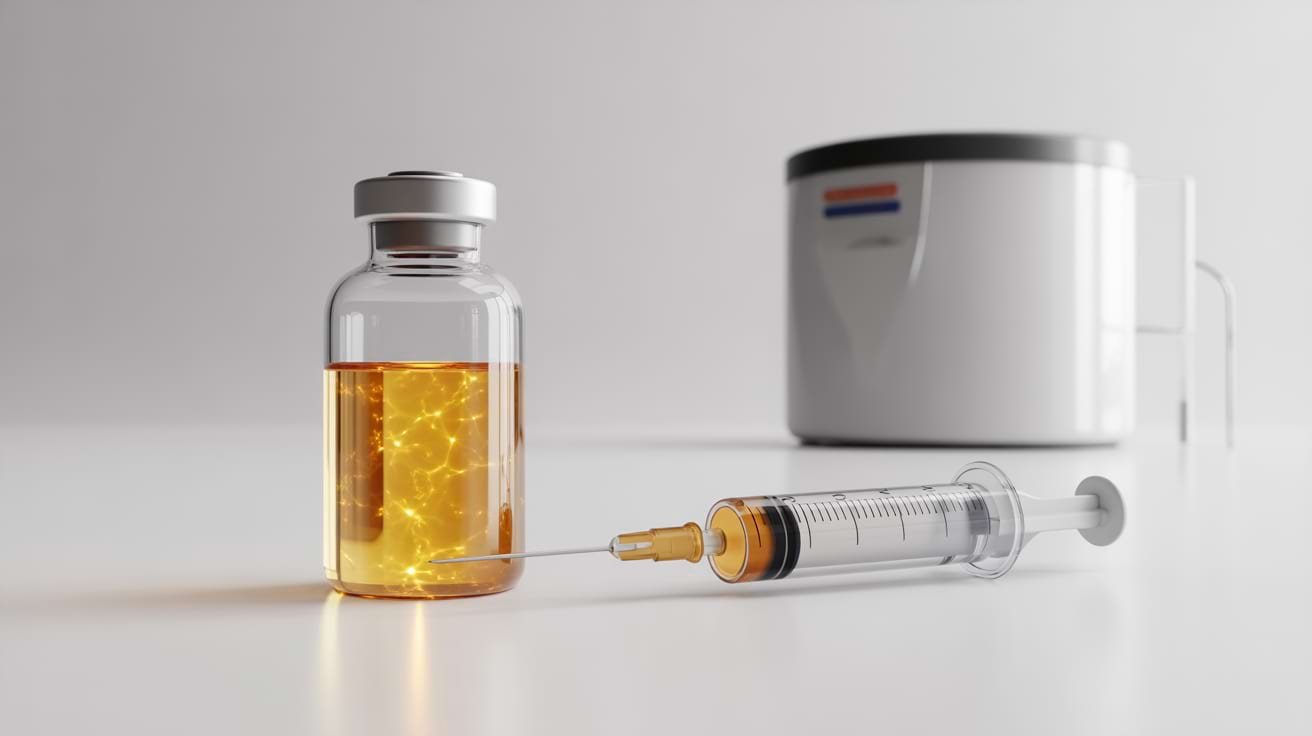
The P-shot, also written as Pshot or priapus shot, is an injectable treatment that uses platelet-rich plasma (PRP) drawn from the patient’s own blood. PRP has been used in orthopaedics, wound healing, and dermatology for decades. Its application to male sexual health is more recent but growing in clinical interest.
The procedure works as follows. A small volume of blood is drawn from the patient’s arm. It is placed in a centrifuge, which separates the plasma — the portion richest in platelets and growth factors. This concentrated plasma is then injected into specific structures of the penis.
Growth factors in PRP include platelet-derived growth factor, vascular endothelial growth factor, and transforming growth factor, among others. In tissue that has been damaged — whether from surgery, age, or poor circulation — these signalling molecules encourage new blood vessel formation, collagen remodelling, and nerve tissue repair.
The P shot treatment is regenerative, not pharmaceutical. It works with the body’s own biology rather than overriding it.
The Clinical Rationale After Prostatectomy
Post-prostatectomy penile rehabilitation is an active area of research. The premise is straightforward. If you do not use penile tissue — particularly the cavernous smooth muscle — it begins to deteriorate. Fibrosis, the replacement of healthy erectile tissue with scar-like collagen, is a well-documented process following prolonged absence of erections.
Early rehabilitation protocols aim to maintain tissue health while the nerves recover. This is why urologists often recommend starting PDE5 inhibitors or vacuum devices soon after surgery. Not because these produce satisfying erections in the short term, but because they push blood into the tissue and limit fibrous change.
PRP injections add a further dimension to this approach. They directly stimulate angiogenesis and cellular repair inside the corpora cavernosa — the cylindrical chambers that fill with blood during erection.
A study published in the Journal of Sexual Medicine found that men who received intracavernous PRP injections following prostatectomy showed improvement in erectile function scores compared to controls. Improvements in the International Index of Erectile Function (IIEF) were recorded at both three and six months post-treatment.
A further review published in Sexual Medicine Reviews assessed multiple small studies on PRP for erectile dysfunction. The reviewers concluded there was sufficient preliminary evidence to support continued investigation. The signal was consistent enough to take seriously.
Major academic urology centres in the United States and Europe are currently running trials on PRP for post-prostatectomy rehabilitation. This is not a fringe intervention.
What a P Shot Session Involves
For men considering this approach, understanding the procedure matters.
The p injection process takes approximately 45 to 60 minutes. A topical anaesthetic is applied to the penile tissue before any injection, so discomfort is generally minimal. Blood is drawn, centrifuged, and the resulting PRP is prepared carefully. Injections are placed in precise anatomical locations — typically the corpora cavernosa and the glans — to deliver growth factors directly to the tissues most affected by surgery and post-surgical atrophy.
There is no systemic medication involved. Because the PRP comes from the patient’s own blood, the risk of allergic reaction is very low. Bruising, temporary discomfort, or mild swelling at injection sites can occur, but these typically resolve within a few days.
Most patients who pursue the penis shot after prostate surgery do so as part of a broader rehabilitation plan rather than as a standalone treatment. It works best when combined with oral PDE5 inhibitors if prescribed, a vacuum erection device protocol, and pelvic floor physiotherapy.
Realistic Expectations: What Can and Cannot Be Fixed
Honesty matters here.
The P shot is not a reversal of prostatectomy damage. If nerve bundles were not spared during surgery, or if significant nerve damage has already occurred, PRP cannot regenerate those structures. It can support existing nerve tissue, improve vascular supply, and reduce fibrous change in the corpora — but it is not a substitute for intact neurological pathways.
Men who tend to see the most benefit from P shot treatment after prostatectomy are those who had nerve-sparing surgery, began rehabilitation early within the first year, still have some baseline erectile response even if poor, and are otherwise healthy with well-managed cardiovascular risk factors.
Men with complete nerve resection, poorly controlled diabetes, or severe cardiovascular disease are less likely to see dramatic results. A thorough consultation and full medical history review should always come before any decision to proceed.
For men looking at P shot before and after accounts online, patient experience varies considerably. Some report noticeable improvements in firmness, sensation, and confidence within three months. Others notice more modest changes. The research, while promising, does not yet allow clinicians to make strong predictive claims about individual outcomes. P-shot before and after results are encouraging in aggregate — but individual responses differ.
What About Penile Shrinkage After Prostate Surgery?
This side effect is real and under-discussed.
Post-prostatectomy penile shortening is well documented in the urology literature. It results from smooth muscle fibrosis during the prolonged absence of regular erections. Some studies suggest average shortening of 1 to 2 cm, though individual variation is wide.
Penile injection growth protocols — including PRP-based approaches — are being explored as a way to counteract this change. The aim is to maintain or partially restore cavernous smooth muscle health rather than allow progressive atrophy to take hold. Some patients report improved penile size or reduced shrinkage compared to those who did not pursue active rehabilitation.
This is distinct from cosmetic male enlargement. Post-surgical rehabilitation is a medical priority.
Priapus Shot Price and Access in the UK
The Priapus shot is not available on the NHS. It is offered through private medical clinics only. The priapus shot price varies depending on the provider, the number of sessions recommended, and whether the treatment is combined with other rehabilitation tools.
Men researching male enlargement injections cost UK should be aware that costs for therapeutic PRP — used in a post-surgical or medical context — are generally assessed differently from purely cosmetic applications. A credible clinic will make this distinction clearly during the consultation.
Priapus shot London and wider UK providers vary considerably in their level of medical training and clinical governance. The procedure must be performed by a qualified doctor with relevant experience in men’s health and post-surgical care.
Choosing a Clinic for P Shot UK Treatment
Because this procedure involves injections into sensitive anatomy — and because it is used in the context of post-surgical recovery — clinical standards carry real weight.
A credible P shot London clinic will offer a thorough consultation covering full sexual health history, review of surgical notes where possible, current medications, and honest expectation-setting. The clinic should be registered with the Care Quality Commission and able to explain the evidence base without overstating it.
Dr Syed Nadeem Abbas at pshots.co.uk, based on Harley Street, holds a postgraduate degree in aesthetic plastic surgery from Queen Mary University London and has trained at Cambridge, Oxford, and the Royal London Hospital. His clinical approach to P shot treatment is built around men’s health outcomes. The quality of the practitioner and the depth of the consultation should weigh as heavily as the treatment cost.
What the Evidence Currently Says
PRP therapy for erectile dysfunction — including post-prostatectomy erectile dysfunction — shows consistent preliminary positive signals across small to moderate-sized studies. It has a strong theoretical foundation in regenerative medicine. Urologists and men’s health specialists across the UK, US, and Europe use it clinically.
It is not yet endorsed as a first-line treatment by NICE or the British Association of Urological Surgeons (BAUS). Randomised controlled trials are ongoing. For men who have partially responded to or exhausted conventional rehabilitation, it represents a reasonable next step in the hands of a qualified clinician.
It is not a miracle. But it is not experimental wishful thinking either. The evidence places it between those two points — a biologically grounded, low-risk adjunct with a growing body of support.
Key Takeaways
Prostate surgery saves lives. That is the starting point and it should not be forgotten. But for many men, the months and years after surgery carry a quiet, private cost — one that affects relationships, confidence, and daily quality of life in ways that are rarely discussed openly.
The P shot UK men are increasingly turning to offers a coherent biological mechanism and a growing evidence base. It works with the body’s own repair systems. It does not replace what surgery may have taken, but it may meaningfully support what remains.
For any man exploring this route after prostatectomy, the decision deserves careful thought, a thorough clinical consultation, and realistic expectations. The research is moving quickly. The clinical community is paying attention.
And for Martin — who did go on to pursue a course of treatment — the answer turned out to be yes. Not a complete reversal. But a meaningful improvement. Enough to matter.
If you have had prostate surgery and are still managing erectile dysfunction, have you discussed penile rehabilitation options beyond medication with a men’s health specialist?
read more: Understanding the Priapus Shot in London: A Game-Changer for Men’s Sexual Health
How the Priapus Shot in London Can Improve Your Relationship and Quality of Life


