Platelet-Derived Growth Factor in PRP: How It Helps Repair Penile Tissue

Platelet-rich plasma (PRP) contains a concentrated mixture of bioactive proteins. Among these, platelet-derived growth factor (PDGF) plays a particularly significant role in tissue repair, cellular signalling, and vascular remodelling. In the context of male sexual health, understanding how these molecular mechanisms operate helps clinicians and patients make better-informed decisions about regenerative treatment options such as the P shot (Priapus shot).
This article presents the current scientific evidence regarding how platelet-derived growth factor and related proteins within PRP interact with penile tissue at a cellular level. It also outlines what the existing clinical literature supports — and where the evidence remains limited.
What Is Platelet-Derived Growth Factor and Why Does It Matter in Penile Tissue?
The Molecular Origin of PDGF
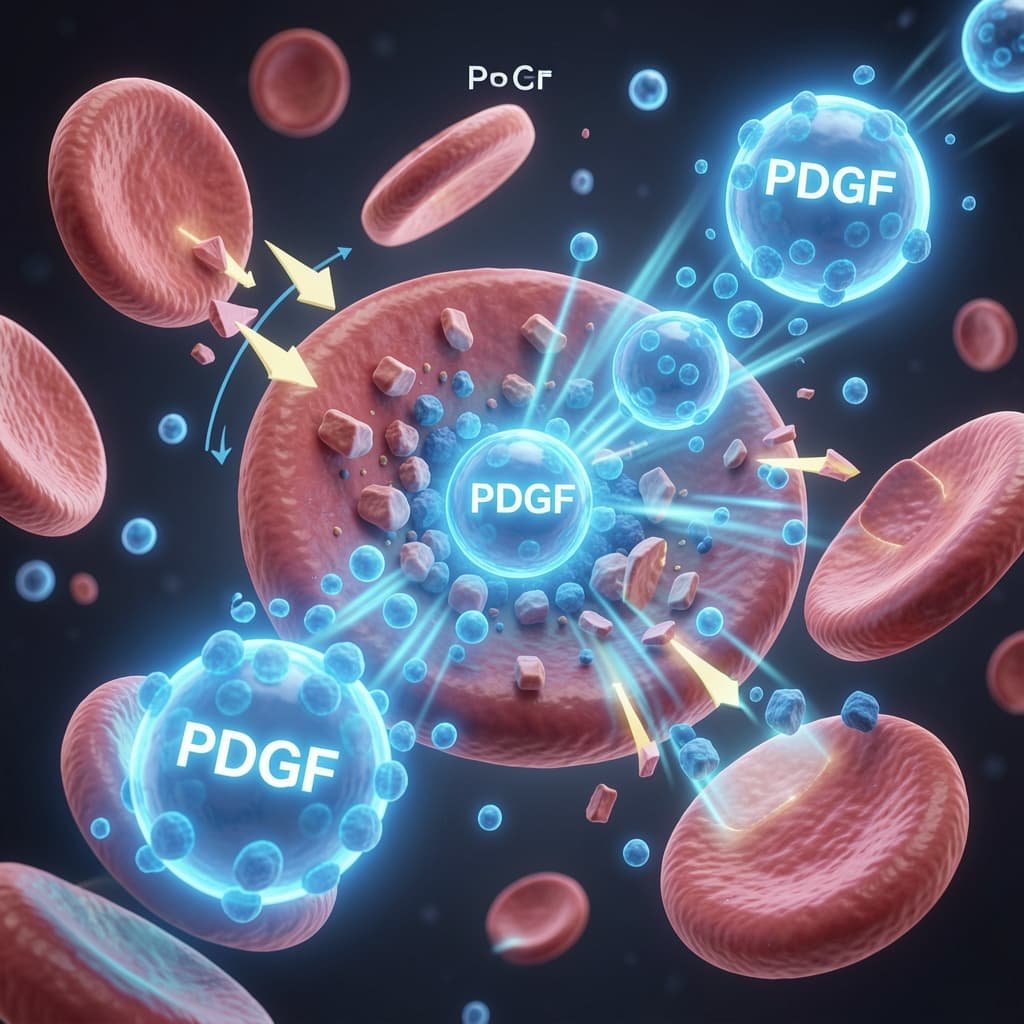
Platelet-derived growth factor is a dimeric glycoprotein that platelets store within their alpha-granules. It exists in four isoforms: PDGF-AA, PDGF-AB, PDGF-BB, and PDGF-CC. Each isoform binds to specific receptor tyrosine kinases — primarily PDGFRα and PDGFRβ — thereby triggering downstream cellular signalling cascades.
When platelets activate following tissue injury or therapeutic injection, they degranulate. This process releases PDGF alongside vascular endothelial growth factor (VEGF), transforming growth factor-beta (TGF-β), epidermal growth factor (EGF), insulin-like growth factor (IGF-1), and fibroblast growth factor (FGF). Together, these proteins coordinate the biological response to injury and regeneration.
Why Penile Tissue Requires Specific Repair Mechanisms
The penis contains a complex microarchitecture. The corpora cavernosa consist of smooth muscle cells, endothelial cells, connective tissue, and a dense vascular network. Erectile function depends on the integrity of these structures.
Conditions such as erectile dysfunction (ED), Peyronie’s disease, and age-related tissue fibrosis disrupt this architecture in specific ways. Researchers have well-documented smooth muscle cell loss, endothelial dysfunction, and collagen dysregulation as key contributors to impaired erectile function, as noted in peer-reviewed urological literature published in the International Journal of Impotence Research (Israeli et al., 2022, PMC9072597).
The Science of PRP: Preparation, Composition, and Concentration
How PRP Is Prepared
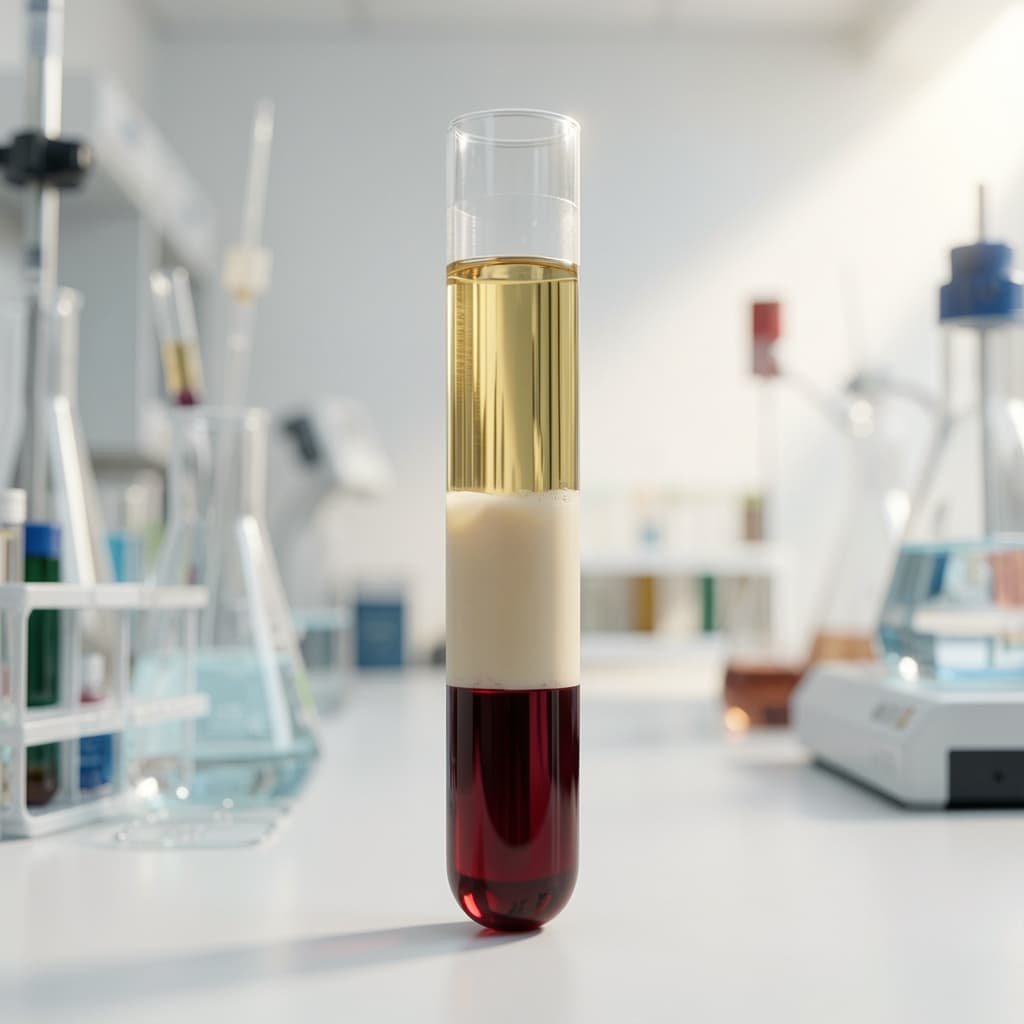
Clinicians produce PRP by centrifuging a patient’s venous blood sample. The centrifuge separates blood into three layers: red blood cells settle at the base, a buffy coat layer containing concentrated platelets and white blood cells forms in the middle, and platelet-poor plasma rises to the top.
The clinician then collects the buffy coat and surrounding plasma. This produces a solution with a platelet concentration typically 2 to 8 times greater than whole blood. Consequently, the concentration of platelet-derived growth factor in the final preparation increases correspondingly.
Variability in PRP Preparations
PRP is not a standardised pharmaceutical product. Platelet concentration, activation method, and white blood cell content differ significantly across preparation protocols and commercial systems. Furthermore, this variability directly affects the concentration of platelet-derived growth factor and other bioactive proteins in the final injection.
Currently, NICE (National Institute for Health and Care Excellence) does not endorse a single PRP preparation standard for urological applications. As a result, this lack of standardisation remains a recognised limitation in the existing evidence base.
How Platelet-Derived Growth Factor Acts on Penile Tissue
Smooth Muscle Cell Proliferation and Preservation
Smooth muscle cells within the corpora cavernosa regulate penile haemodynamics during erection. Their loss or replacement by fibrotic tissue reduces erectile capacity. Notably, PDGF-BB in particular has demonstrated the ability to promote smooth muscle cell proliferation in laboratory models.
Receptor binding of platelet-derived growth factor initiates a phosphorylation cascade involving phospholipase C, PI3K, and MAP kinase pathways. These pathways then regulate cell division, survival, and migration. In penile tissue models, this consequently translates to potential preservation and replenishment of functional smooth muscle cells.
Endothelial Cell Activation and Angiogenesis
VEGF, which platelets co-release alongside platelet-derived growth factor during degranulation, directly stimulates endothelial cell proliferation and new blood vessel formation. In addition, PDGF contributes to vessel stabilisation by recruiting pericytes to newly formed capillaries.
This dual-action mechanism — VEGF initiating angiogenesis and PDGF stabilising the vascular network — is well-established in wound healing literature. Furthermore, it forms the theoretical basis for PRP’s potential role in improving penile vascular integrity.
Fibrosis Reduction and Collagen Remodelling
TGF-β, another co-released growth factor, participates in collagen synthesis and extracellular matrix remodelling. In conditions such as Peyronie’s disease, aberrant collagen deposition creates fibrotic plaques within the tunica albuginea. The interaction between platelet-derived growth factor and TGF-β signalling pathways may therefore modulate the balance between fibrosis and normal tissue repair.
Pre-clinical studies have shown that PRP injection in animal models reduces fibrotic tissue area and preserves structural integrity of penile tissue. However, these findings require validation through robust human clinical trials before researchers can draw definitive conclusions.
Neuroprotection and Nerve Regeneration
IGF-1, released alongside platelet-derived growth factor, supports Schwann cell function and peripheral nerve regeneration. Nerve damage — particularly following prostatectomy — commonly contributes to post-surgical erectile dysfunction. The potential neuroprotective effects of PRP in this context represent an active area of pre-clinical research, though clinical evidence currently remains preliminary.
Clinical Evidence for the P Shot in Men’s Health

What the Published Literature Supports
The P shot (also referred to as the Priapus shot or pshot) involves injecting autologous PRP directly into the penile shaft and glans. The procedure aims to deliver concentrated platelet-derived growth factor and associated proteins to the target tissue.
A systematic review published in the International Journal of Impotence Research (Israeli et al., 2021) examined available studies on PRP for penile conditions. Researchers identified early positive signals in small-scale trials for mild to moderate erectile dysfunction. However, they also noted that most studies involved small sample sizes, lacked control groups, and used inconsistent PRP preparation methods.
For Peyronie’s disease, early studies suggest that penile injection with PRP — sometimes in combination with other treatments — may reduce plaque size and curvature. Again, the evidence base remains early-stage and heterogeneous.
What the Evidence Does Not Yet Support
Current published evidence does not support the use of P shot treatment as a first-line, evidence-based intervention for erectile dysfunction. Moreover, NHS guidance and NICE recommendations do not currently include PRP-based therapies for ED or Peyronie’s disease within their standard treatment pathways.
Claims regarding permanent penile enlargement, guaranteed restoration of erectile function, or quantified improvements in sexual performance lack support in the available peer-reviewed literature. Clinicians and patients should therefore treat such claims with appropriate caution.
P Shot Before and After: Managing Expectations
Reports of P shot before and after outcomes in the clinical literature describe variable results. Some participants in small trials report improved erectile rigidity and sensation. Others, by contrast, report no subjective change. Currently, no validated clinical tool exists that is specifically designed to assess P shot before and after outcomes consistently across trials.
Realistic expectations include the possibility of modest improvement in erectile quality in selected patients with mild dysfunction, alongside the genuine possibility of no measurable benefit. Adverse effects in the literature include transient bruising, localised swelling, and mild discomfort at the injection site. Serious adverse events are uncommon.
Who May Be Considered for PRP-Based Penile Therapy
Patient Selection Criteria in Current Research
Published studies have focused primarily on men with mild to moderate organic erectile dysfunction who have not responded adequately to phosphodiesterase-5 inhibitors (PDE5i) such as sildenafil, or who prefer non-pharmacological approaches. In addition, men with post-prostatectomy ED represent another subgroup that preliminary trials have studied.
Men with Peyronie’s disease — particularly in the active, inflammatory phase — have also featured in early clinical trials, with some reporting reduction in plaque-associated pain.
Contraindications and Caution
PRP therapy uses the patient’s own blood, which minimises immunogenic risk. However, clinicians must avoid it in patients with platelet dysfunction disorders, active infection at the injection site, haematological malignancies, or those taking anticoagulant therapy without medical clearance.
Furthermore, clinicians offering non-surgical treatment for erectile dysfunction in London or elsewhere in the UK must conduct thorough medical assessment prior to any PRP-based procedure.
PRP as Part of a Broader Therapeutic Framework
Integration with Established Treatments
PRP-based regenerative therapy for ED does not replace established medical treatments. PDE5 inhibitors remain the first-line pharmacological option that NHS guidelines endorse. Vacuum erection devices, penile prostheses, and psychological interventions also form part of the evidence-based management pathway.
Consequently, advanced PRP solution for erectile dysfunction more appropriately serves as a potential adjunct — or an option for patients who have exhausted other avenues — rather than a primary standalone treatment. Men’s intimate health treatment in London increasingly incorporates multimodal approaches that combine lifestyle modification, pharmacotherapy, and emerging regenerative options within a supervised clinical framework.
The Role of Platelet-Derived Growth Factor in Regenerative Medicine Broadly
Platelet-derived growth factor holds established roles in orthopaedic, dermatological, and wound healing applications. Its use in tendon repair, bone regeneration, and chronic wound management draws on a more extensive evidence base than currently exists for urological applications. Nevertheless, this broader body of evidence provides the biological rationale for investigating its application in penile tissue repair, even as urological-specific clinical evidence continues to develop.
Cost, Access, and the UK Regulatory Context
Male Enlargement Injections Cost UK: What Patients Should Know
PRP-based penile injections — marketed variously as the P shot UK, priapus shot London, Priapus shot, or penis shot — are not available on the NHS. Instead, private clinics exclusively offer these treatments.
The priapus shot price varies across providers. In London, costs typically range from £500 to £1,500 per session depending on clinic, practitioner experience, and preparation protocol. Some clinics offer package pricing for multiple sessions. Patients should therefore request transparency regarding the PRP preparation method, platelet concentration targets, and the practitioner’s qualifications before proceeding.
Male enlargement injections cost UK varies significantly. Price alone does not reliably indicate quality. Patients should consequently prioritise clinical credentials and evidence-based consultation over promotional pricing.
Regulatory Status in the UK
PRP is a minimally invasive medical procedure in the UK. It is not a licensed medicinal product. Clinics offering PRP therapy for men’s performance issues operate under general clinical governance frameworks, including Care Quality Commission (CQC) registration requirements for certain types of medical facilities.
Patients seeking PRP-based regenerative therapy for ED in the UK should therefore verify that their treating clinician holds appropriate medical registration with the General Medical Council (GMC) and relevant specialist training.
Dr Syed Nadeem Abbas at P shots UK clinic, based in Wimpole Street, Marylebone, London, holds MBBS, MRCS RCS Edinburgh, MRCGP, and an MSc in Aesthetic Plastic Surgery with Distinction from Queen Mary University London, with training at Cambridge, Oxford, and the Royal London Hospital.

Frequently Asked Questions (FAQ)
What is the difference between PRP and platelet-derived growth factor?
PRP (platelet-rich plasma) is the biological preparation — a concentrated plasma fraction containing elevated levels of platelets. Platelet-derived growth factor (PDGF) is one of several specific proteins that those platelets release when they activate. PDGF is therefore a component within PRP, not synonymous with it.
How many P shot sessions are typically needed?
The published literature does not establish a standard treatment protocol. Studies have used single injections as well as series of three or more sessions over several months. Consequently, the appropriate number of sessions depends on individual clinical assessment.
Is the P shot painful?
Clinicians apply a topical anaesthetic cream and/or local anaesthetic injection prior to the procedure. Most patients report mild to moderate discomfort. The procedure typically takes under 30 minutes.
Does the P shot permanently increase penile size?
No peer-reviewed clinical evidence supports permanent penile enlargement as a reliable or consistent outcome of PRP injection. Clinicians making such claims without supporting evidence are not adhering to evidence-based practice standards.
How long does it take to see results from a P shot?
In trials reporting positive outcomes, participants noted changes over a period of weeks to months. Individual variability is significant. Furthermore, some participants in published studies reported no change at all. Outcomes are not guaranteed.
Are there any natural ED treatment options using PRP therapy that the NHS recommends?
The NHS does not currently recommend natural ED treatment using PRP therapy as part of its standard clinical pathway. Instead, lifestyle modifications — including weight management, smoking cessation, cardiovascular exercise, and alcohol reduction — form the evidence-based foundation of natural ED management.
Is the P shot safe?
Adverse events in clinical studies are generally mild and transient, including localised bruising, swelling, and temporary discomfort. Because PRP uses the patient’s own blood, the risk of allergic reaction or infection is low, though not zero. Serious adverse events are rare but possible in any invasive procedure.
Key Takeaways
The biological mechanisms through which platelet-derived growth factor may influence penile tissue repair are scientifically coherent. PDGF’s roles in smooth muscle cell proliferation, vascular stabilisation, and modulation of collagen remodelling provide a rational basis for investigating PRP therapy in male sexual health.
However, the current clinical evidence for the P shot — whether referred to as P-shot, penile injection growth, p injection, or priapus shot — remains preliminary. Small sample sizes, inconsistent PRP preparation methods, absence of standardised outcome measures, and limited long-term follow-up data mean that researchers cannot yet draw definitive efficacy conclusions.
Patients considering this treatment should therefore engage with fully qualified medical practitioners, review the available evidence critically, and maintain realistic expectations. The science of platelet-derived growth factor in regenerative medicine continues to advance, and the urological application of PRP warrants rigorous, large-scale clinical investigation.
Ultimately, the most important question for any patient considering this treatment is not whether the biological mechanism is plausible — it is — but whether the available clinical evidence sufficiently justifies the procedure for their specific situation. That question deserves an honest, evidence-based answer from a qualified clinician.
Read more: Understanding the Priapus Shot in London: A Game-Changer for Men’s Sexual Health
P Shot London: How to Choose a Safe Clinic and What to Expect at Your Consultation