What Is a Dual-Spin Centrifuge and Why Does It Matter for P Shot UK?

Platelet-rich plasma (PRP) quality is not uniform. Two clinics can both claim to offer a P shot UK treatment, yet produce PRP of fundamentally different platelet concentrations. The difference often comes down to a single procedural variable: the centrifuge protocol used.
Most discussions around the priapus shot focus on what the treatment does — stimulating tissue repair, promoting vascular growth, and supporting erectile function.
Far fewer researchers address the upstream question of how clinicians prepare PRP and why the preparation method directly influences clinical outcomes.
This article examines dual-spin centrifugation: what it is, how it compares to single-spin methods, what the peer-reviewed evidence shows, and why it matters specifically in the context of regenerative treatment for male health in the UK.
What Is Platelet-Rich Plasma and How Is It Relevant to the P Shot?
PRP is an autologous blood product. It is derived from the patient’s own blood and processed to concentrate platelets above normal physiological levels.
Whole blood contains approximately 150,000 to 400,000 platelets per microlitre (μL). Therapeutic PRP targets concentrations that substantially exceed this baseline.Peer‑reviewed studies show that platelet concentrations above one million per μL deliver meaningful growth factors and drive soft tissue regeneration.
Platelets are not simply clotting agents. They carry dense granules packed with bioactive molecules, including platelet-derived growth factor (PDGF), vascular endothelial growth factor (VEGF), transforming growth factor-beta (TGF-β), and insulin-like growth factor (IGF). These molecules act on local tissue to promote angiogenesis, collagen synthesis, and cellular proliferation.
In P‑shot treatment — formally called the Priapus shot — clinicians inject PRP into the corpus cavernosum and surrounding penile tissue. The rationale is that concentrated growth factors may support endothelial repair, smooth muscle regeneration, and neurovascular recovery within the erectile chambers.
Centrifugation: The Core Step in PRP Preparation
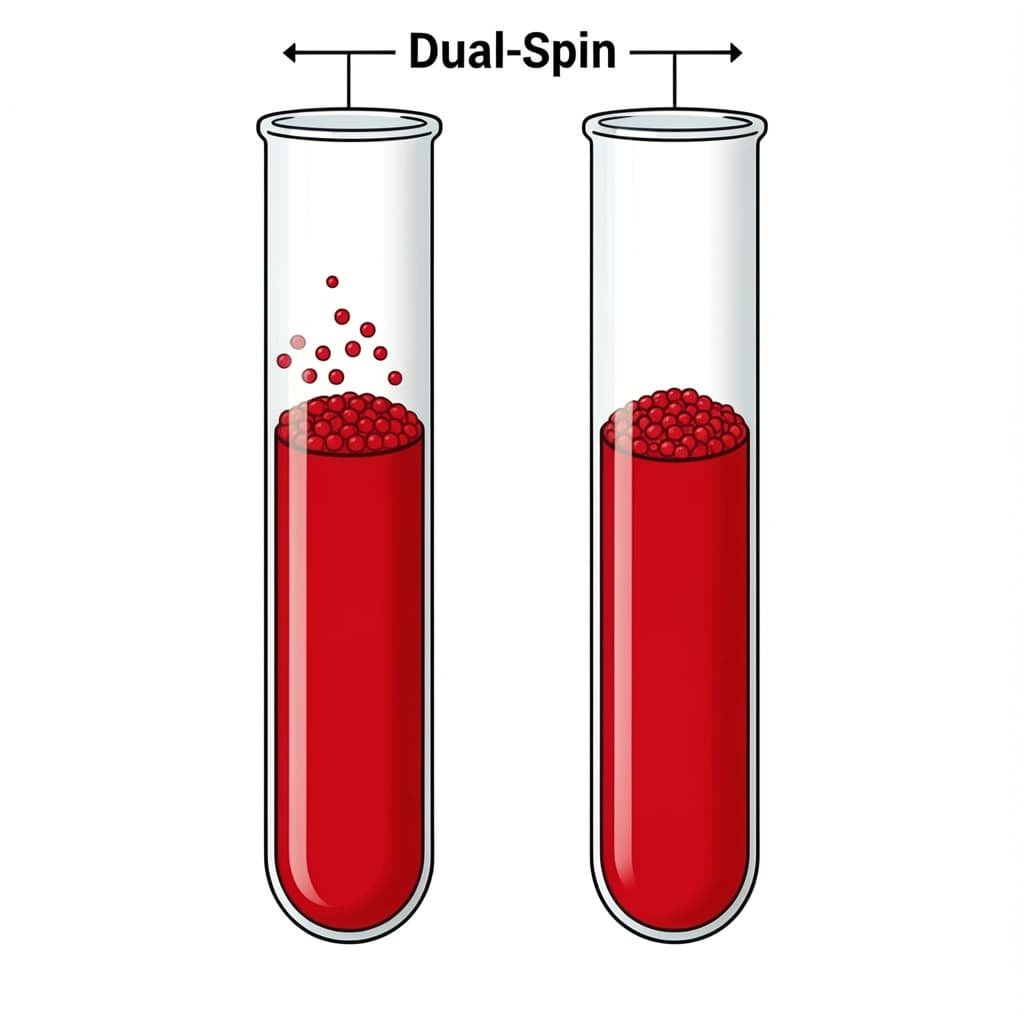
Centrifugation mechanically separates blood components according to their density.A centrifuge spins a tube at defined speeds (measured in revolutions per minute, or RPM) for a defined duration. Gravity-like forces separate red blood cells, white blood cells, platelets, and plasma into distinct layers.
The goal in PRP preparation is to discard the red cell fraction and concentrate platelets within the smallest possible plasma volume.
Centrifuge protocols vary considerably across clinics. The two principal approaches are single-spin and dual-spin (also called double-spin) centrifugation.
Single-Spin Centrifugation
Single-spin protocols apply one centrifugation cycle. The blood is spun once, separating into three broad layers: a red cell pellet at the bottom, a buffy coat (platelet-enriched layer) in the middle, and platelet-poor plasma at the top.
The clinician then draws off a volume of plasma above the buffy coat, hoping to capture a platelet-enriched fraction. This method is faster and simpler. However, the separation is incomplete. Platelet yield is lower, and the resulting PRP often contains a higher proportion of red and white blood cells, which can introduce pro-inflammatory mediators into the final product.
Dual-Spin (Double-Spin) Centrifugation
Dual-spin centrifugation adds a second centrifugation cycle. The first spin, typically at a lower RPM (soft spin), separates the red cells and produces a platelet-rich plasma fraction. This supernatant is then transferred to a second tube and centrifuged again at a higher RPM (hard spin). The hard spin further concentrates the platelets by pelleting them at the base of the second tube. The clinician then removes most of the overlying platelet-poor plasma, leaving a small, highly concentrated platelet suspension.
This two-stage process delivers a significantly higher platelet concentration per unit volume compared to single-spin methods. It also improves purity by reducing red and white blood cell contamination.
What the Evidence Shows: Single-Spin Versus Dual-Spin
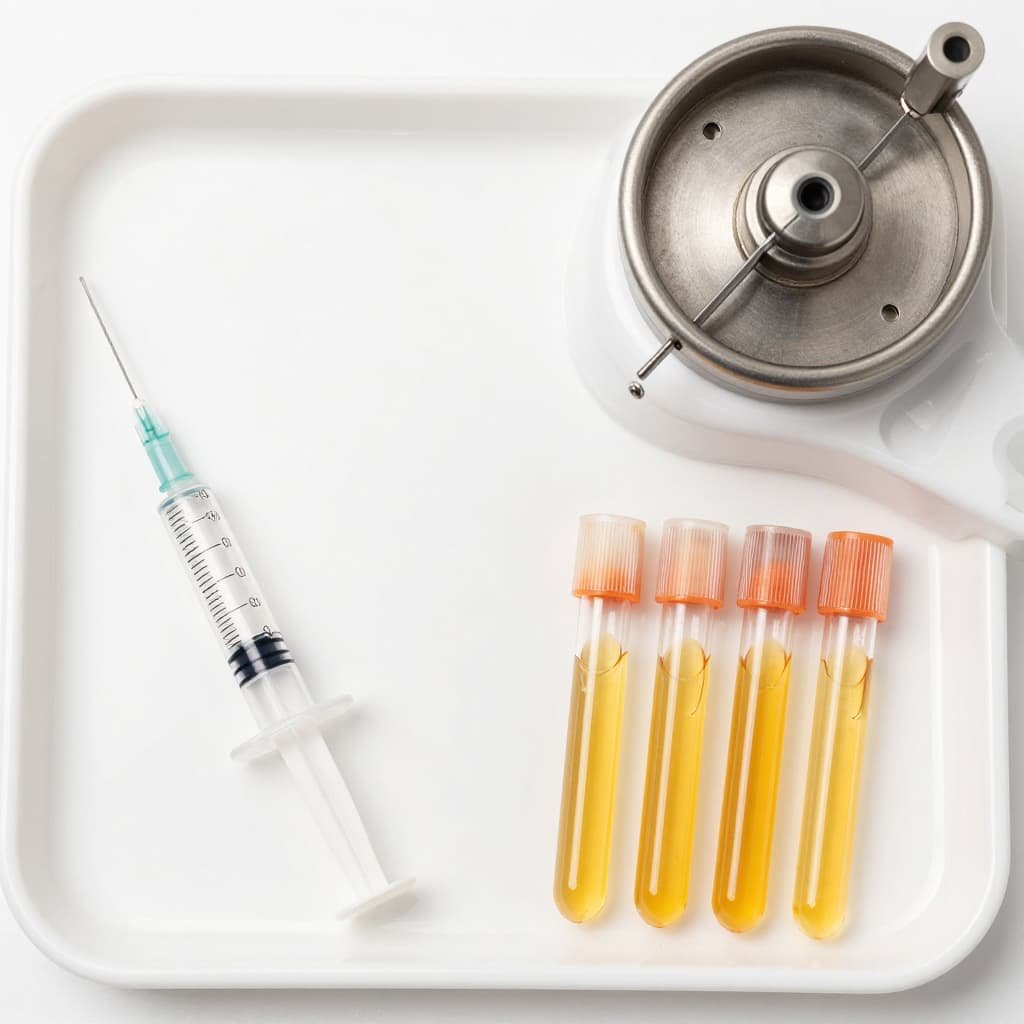
The clinical evidence base for dual-spin superiority comes primarily from the hair restoration literature, where PRP has been more extensively studied. However, the centrifuge science is directly applicable to penile injection growth treatments.
Platelet Yield
A 2025 systematic review and meta-analysis published in Frontiers in Medicine (PMC12318733) compared single-spin and double-spin PRP centrifugation methods in the context of androgenic alopecia treatment. The analysis drew on randomised controlled trials and found that double-spin centrifugation produced statistically significantly higher platelet counts in the final PRP product compared to single-spin methods.
A preliminary randomised double-blind clinical trial published in the Journal of Clinical and Aesthetic Dermatology (JCAD) — examining thrombocyte count and clinical outcomes — similarly demonstrated that double-spin PRP yielded higher platelet concentrations. The clinical relevance of this difference was reflected in measurable hair regrowth outcomes, supporting the mechanistic link between platelet concentration and tissue response.
Growth Factor Delivery
Higher platelet concentration correlates with greater growth factor release at the injection site. PDGF, VEGF, and TGF-β concentrations are proportional to platelet density in the final PRP preparation. In PRP-based regenerative therapy for ED, this is mechanistically important because endothelial dysfunction — a core driver of vasculogenic erectile dysfunction — responds to VEGF-mediated angiogenic signalling.
White Blood Cell Content and Inflammatory Risk
Dual-spin protocols generally reduce residual white blood cell (WBC) content in the final product. Leukocyte-rich PRP has been associated with greater post-injection inflammation in some tissue contexts. While the clinical significance in penile injection applications requires further study, minimising unnecessary inflammatory mediators remains a sound principle in any regenerative injection therapy.
Evidence in Erectile Dysfunction Specifically
A 2024 meta-analysis published in PLOS ONE examined 12 controlled trials involving 991 patients who received intracavernosal PRP for erectile dysfunction. The PRP group showed significantly better outcomes on the International Index of Erectile Function (IIEF) score compared to controls (standardised mean difference = 0.59; 95% CI: 0.34–0.84). The relative risk of achieving minimal clinically important difference was 1.94.
The authors noted, however, that heterogeneity in PRP preparation protocols — including centrifuge method — limited the ability to draw firm conclusions about optimal technique. This finding underscores the importance of standardising PRP preparation in future trials and in clinical practice.
Clinical Implications for P Shot UK Patients
The practical significance of centrifuge protocol selection is not merely technical. It directly affects what a patient receives.
Concentration Targets
Research from the UroPrecision 2025 narrative review specifies that achieving platelet concentrations exceeding one million platelets per μL is considered optimal for promoting soft tissue healing. Single-spin protocols often fall short of this threshold. Dual-spin methods are more reliably capable of producing concentrations in this therapeutic range.
A patient attending for a non-surgical treatment for erectile dysfunction in London should have confidence that the PRP they receive meets clinically meaningful concentration standards — not merely that blood has been processed.
Consistency Across Treatment Cycles
Men seeking P shot treatment commonly attend for multiple treatment sessions over several months. Consistent PRP quality across sessions is necessary for cumulative benefit. Dual-spin centrifugation, when conducted with a validated protocol, offers greater batch-to-batch consistency than informal single-spin approaches.
Equipment Matters
Not all centrifuges are equal. Dedicated medical-grade PRP centrifuges, such as the Arthrex Angel system, incorporate optical sensors to automate buffy coat identification and improve precision. These systems are considerably more accurate than standard laboratory centrifuges adapted for clinical use. The use of validated equipment is a meaningful quality indicator when evaluating advanced PRP solution for erectile dysfunction providers in the UK.
Understanding the P Shot Procedure in Context
The P shot — also referred to in clinical contexts as a priapus shot, penile injection growth treatment, or p injection — follows a standardised sequence regardless of the specific clinic or practitioner.
Procedure Overview
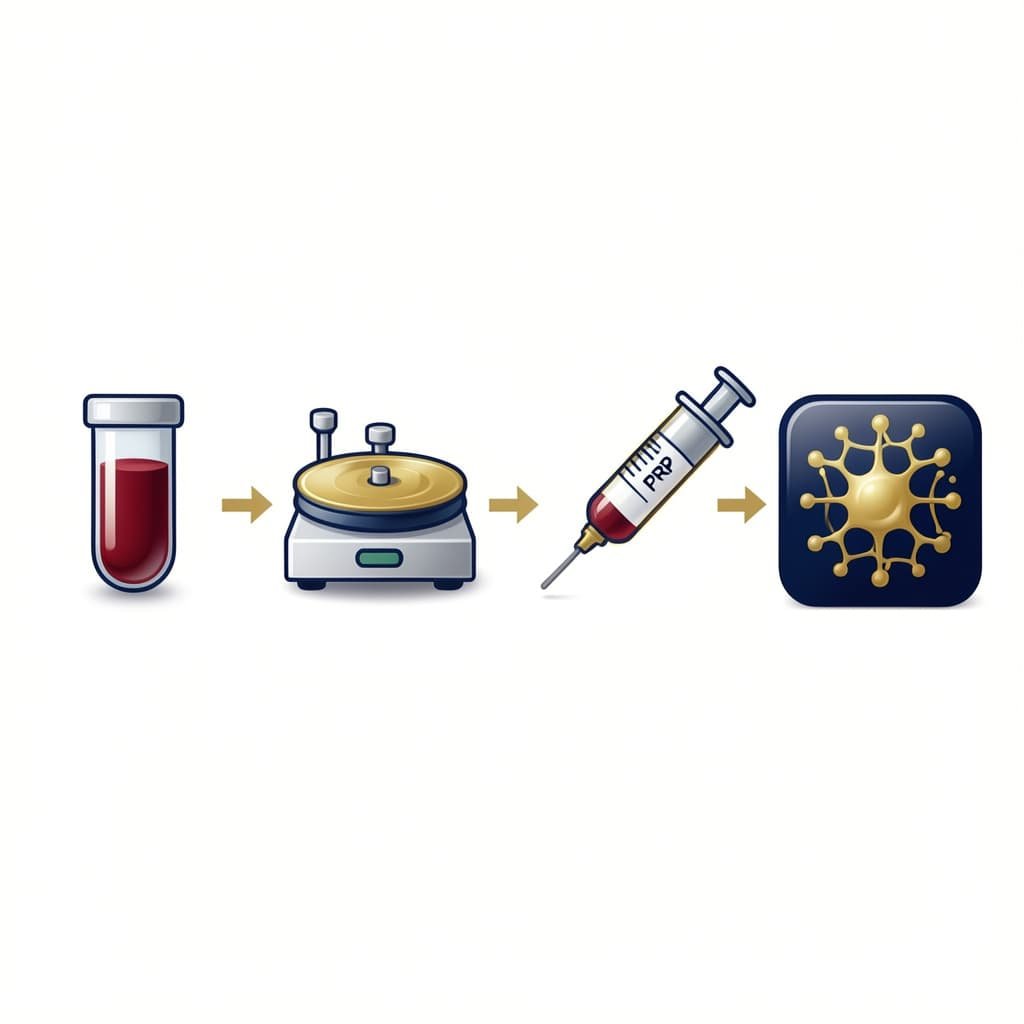
Blood is drawn from the patient’s arm (typically 10–60 ml depending on protocol). The blood undergoes centrifugation — either single or dual spin. The processed PRP is drawn into a syringe. A topical anaesthetic cream is applied to the treatment site. The PRP is then injected into the corpus cavernosum and, in some protocols, the glans.
The entire procedure takes approximately 45 to 60 minutes at most clinics offering P shot London treatments.
P Shot Before and After: What the Evidence Supports
P shot before and after comparisons in published literature typically assess IIEF domain scores, penile blood flow via Doppler ultrasound, and patient-reported quality of life.
A 2025 systematic review on PRP for vasculogenic erectile dysfunction (published in the World Journal of Men’s Health) noted improvements in IIEF scores and peak systolic velocity in Doppler studies following intracavernosal PRP. These findings suggest vascular and functional improvement at tissue level, though the authors emphasised that large-scale, long-duration randomised controlled trials remain necessary.
P-shot before and after results vary between patients. Factors influencing response include baseline severity of erectile dysfunction, vascular health, age, and — critically — the quality of PRP administered.
What the P Shot Does Not Do
The P‑shot does not qualify as a surgical intervention. Patients cannot rely on it for permanent results in every case. Nor does it consistently replace phosphodiesterase type 5 inhibitors (PDE5i) such as sildenafil or tadalafil. In addition, the UK Medicines and Healthcare products Regulatory Agency (MHRA) has not licensed it as a specific treatment for erectile dysfunction in the way pharmaceutical agents are.
Men pursuing natural ED treatment using PRP therapy should approach the treatment with realistic expectations, informed by evidence rather than marketing claims.
Why Dual-Spin Matters Specifically in the UK Context
In the United Kingdom, PRP treatments for male sexual health operate outside standard NHS provision. The NHS does not routinely commission PRP-based penile injections for erectile dysfunction. Private providers, therefore, bear a higher responsibility for clinical transparency and quality standards.
The British Society for Sexual Medicine (BSSM) recommends evidence-based approaches to erectile dysfunction treatment London providers should follow. NICE guideline NG181 (Erectile dysfunction: assessment and management, 2021) covers pharmacological and surgical options but does not address PRP therapy, reflecting the current absence of sufficient trial data at national guideline level.
This regulatory gap makes it all the more important for private UK clinics to self-impose high preparation standards. A clinic that employs dual-spin centrifugation with validated medical-grade equipment, appropriate PRP concentration verification, and trained practitioners is substantively different from one that adopts minimal protocols.
Clinics offering male enlargement injections cost UK pricing should disclose their centrifuge protocol alongside their treatment costs, as preparation quality is directly linked to clinical value.
Limitations of Current Evidence and Areas for Future Research
It is important to acknowledge the limitations of the existing evidence base. Most studies comparing centrifuge protocols have been conducted in hair restoration, not urology. Direct comparative trials of single-spin versus dual-spin PRP for erectile dysfunction specifically are not yet available.
The mechanistic inference — that higher platelet concentrations produce better clinical outcomes in penile tissue — is biologically reasonable and supported by growth factor pharmacology. However, it has not been proven in large-scale randomised controlled trials restricted to ED applications.
PRP research also faces the challenge of non-standardisation. Protocols differ in spin speed, spin duration, tube volume, anticoagulant type, and activation method. This heterogeneity makes meta-analysis conclusions inherently limited. Future high-quality trials should pre-specify centrifuge protocols to allow meaningful comparison.
Men who are considering PRP therapy for men’s performance issues should be informed of these evidentiary limitations by their treating clinician before consenting to treatment.
What to Ask a Provider Before Booking a P Shot UK Treatment
Given the variation in preparation standards across providers, patients have a right to ask direct questions about clinical protocols. The following questions are clinically relevant:
What centrifuge protocol do you use — single-spin or dual-spin?
The answer should specify the number of centrifugation cycles and, ideally, the target platelet concentration.
What medical-grade centrifuge system do you use?
Validated systems with optical sensors or standardised kits are preferable to adapted laboratory equipment.
How do you verify the platelet concentration of the final product?
Point-of-care platelet counting, where available, provides the most direct quality confirmation.
What volume of blood do you collect, and what is your final PRP yield?
Higher input volumes generally allow for a more concentrated final product.
Is your practitioner trained and what are their qualifications?
Penile injections carry procedural risks. Practitioner training and medical qualifications are non-negotiable considerations.
At pshots clinic UK, P shot UK treatments are led by Dr Syed Nadeem Abbas (MBBS, MRCS RCS Edinburgh, MRCGP, MSc Aesthetic Plastic Surgery with Distinction — Queen Mary University London), with training from Cambridge, Oxford, and the Royal London Hospital, and the clinic operates from Harley Street, Marylebone.
Frequently Asked Questions (FAQ)
What is the difference between a single-spin and dual-spin centrifuge in PRP preparation?
A single-spin centrifuge applies one centrifugation cycle, producing a moderate platelet concentrate. A dual-spin centrifuge applies two cycles — a soft spin followed by a hard spin — to achieve a significantly higher platelet concentration in a smaller final volume. The dual-spin method delivers more growth factors per injection.
Does the centrifuge type affect P shot results?
Yes. The biological activity of PRP depends on platelet concentration. Higher platelet concentrations contain more growth factors, which are the active agents driving tissue repair and vascular regeneration. Using dual-spin centrifugation is a key step in producing clinically effective PRP for P shot UK treatments.
What platelet concentration is needed for effective PRP in erectile dysfunction?
Research indicates that platelet concentrations exceeding one million platelets per μL are associated with meaningful soft tissue healing. Single-spin methods may not reliably achieve this threshold. Dual-spin protocols are more consistently capable of reaching clinically relevant concentration levels.
How many treatment sessions does the P shot require?
Most clinical protocols involve an initial series of two to three treatment sessions spaced four to six weeks apart. Some patients require maintenance sessions thereafter. Individual responses vary, and no fixed number of sessions guarantees a specific outcome.
Is the P shot available on the NHS?
No. PRP-based penile injections are not currently offered on the NHS for erectile dysfunction. NICE guideline NG181 does not include PRP as a recommended treatment. The P shot is available only through private providers in the UK.
What are the risks of a P shot treatment?
As with any injectable procedure, risks include localised bruising, temporary swelling, and discomfort at the injection site. Serious complications are rare when the procedure is performed by a trained medical practitioner using sterile technique. There is also a small risk of priapism (prolonged erection), which requires urgent medical attention. Patients should receive a full risk consultation before treatment.
What does the priapus shot cost in the UK?
Priapus shot price in the UK varies between private providers. Pricing depends on the clinic’s location, the practitioner’s qualifications, the centrifuge equipment used, and the volume of PRP prepared. Patients should request full cost transparency, including details of what is included in the quoted price, before proceeding.
How long do P shot results last?
Clinical evidence suggests that improvements in erectile function can be observed for six to twelve months following treatment, though individual variation is significant. Long-term outcome data from large-scale randomised controlled trials are not yet available.
Key Takeaway
The quality of PRP used in a P shot UK procedure is not a minor technical detail. It is the central determinant of biological activity at the treatment site. Dual-spin centrifugation produces meaningfully higher platelet concentrations than single-spin methods, delivers more growth factors per injection, and is supported by published comparative evidence.
Men considering PRP-based regenerative therapy for ED in the UK deserve full transparency about the preparation methods used at the clinics they attend. Centrifuge protocol, equipment type, and platelet concentration are not proprietary secrets — they are legitimate clinical disclosures that inform informed consent.
The priapus shot — like any regenerative treatment for male health in the UK — is only as effective as the PRP it delivers. A clinically meaningful penile injection growth intervention begins not at the point of injection, but in the centrifuge.
As PRP science advances and clinicians standardise practices, patients and clinicians continue to ask a key question: should private UK practices disclose the quality of PRP preparation under mandatory standards, just as regulators enforce pharmaceutical manufacturing rules — and if not, what justifies the absence of such disclosure?
Read more: How the Priapus Shot in London Can Improve Your Relationship and Quality of Life
Platelet-Derived Growth Factor in PRP: How It Helps Repair Penile Tissue