Does the P-Shot Increase Size? What the Clinical Evidence Actually Shows

Questions about whether P-shot increase size outcomes are real or marketing copy dominate online searches — and rightly so.
Platelet-rich plasma (PRP) therapy applied to penile tissue sits at the intersection of regenerative medicine and men’s intimate health. Clinical promise and commercial hyperbole frequently collide in this space. An evidence-led examination of the biological mechanism, peer-reviewed data, and realistic patient outcomes cuts through that noise.
The Priapus Shot — widely known as the P-Shot — was developed by Dr Charles Runels. Orthopaedic surgeons apply the same PRP science to accelerate joint recovery. Dermatologists deploy it in hair restoration. A qualified clinician extracts a small volume of the patient’s own blood, centrifuges it to concentrate growth factors within the platelets, then injects that platelet-rich plasma directly into specific zones of penile tissue. The procedure targets angiogenesis, collagen remodelling, and smooth muscle regeneration — processes that underpin erectile function and tissue volume.
This article interrogates the peer-reviewed evidence base and provides a frank account of what patients seeking a P-shot size increase can realistically expect — including length, girth, erectile firmness, and the conditions under which results prove most pronounced.
Understanding the Biological Basis of P-Shot Size Outcomes
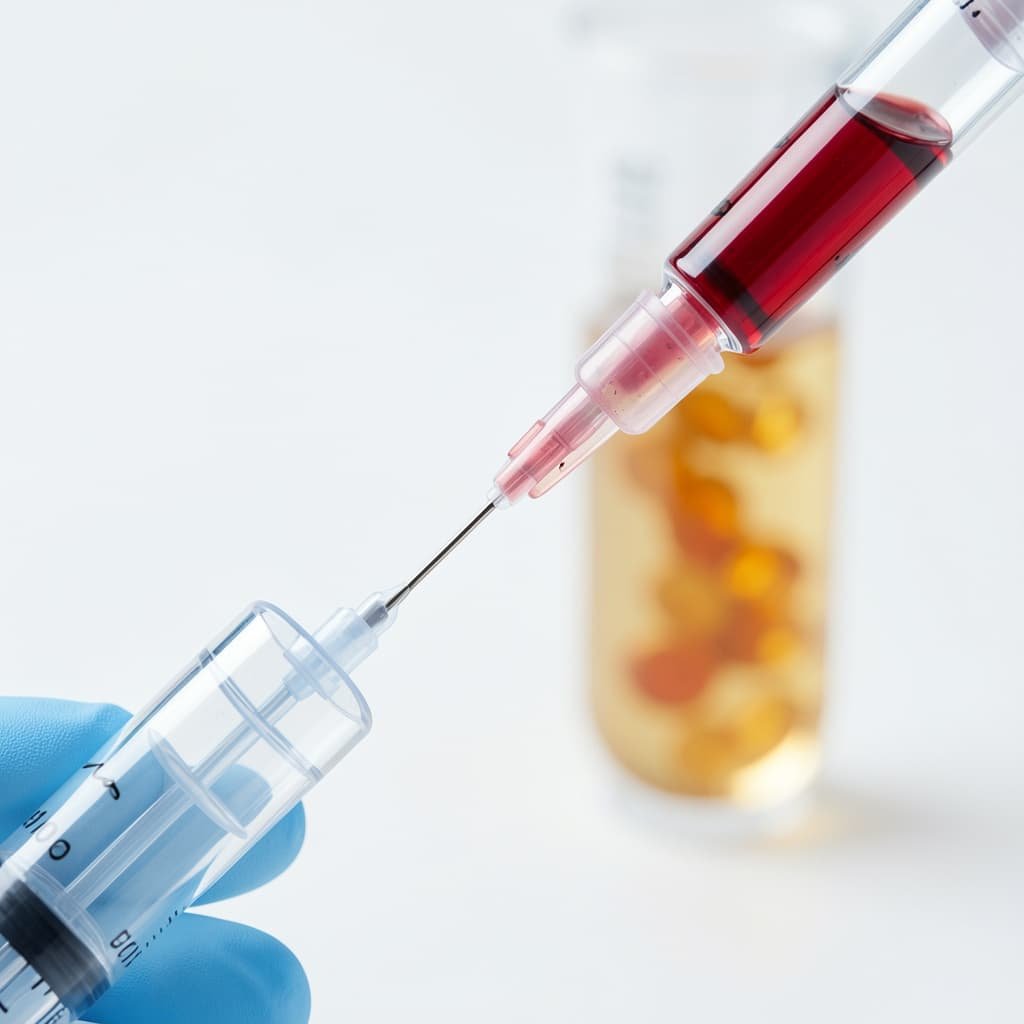
Scepticism about penile PRP treatment often stems from a misunderstanding of what PRP does at tissue level. Growth factors concentrated in platelet-rich plasma — platelet-derived growth factor (PDGF), vascular endothelial growth factor (VEGF), and transforming growth factor-beta (TGF-β) — do not simply cause temporary swelling. Correct delivery triggers a sustained cascade of tissue remodelling that continues for weeks to months post-injection.
VEGF promotes new capillary formation within the corpora cavernosa — the erectile chambers whose blood-filling capacity determines erection quality and, to a measurable degree, flaccid and erect dimensions. Research in Sexual Medicine Reviews confirms that neovascularisation correlates with improved cavernosal filling. Penile length and girth gains persist beyond the acute inflammatory phase. This mechanism distinguishes PRP injection penis therapy from cosmetic filler procedures, whose volume effects depend on the filler remaining in situ.
Why Penile Shrinkage Creates a Baseline for Size Gains
Competitor analyses frequently overlook P shot penile shrinkage reversal as a mechanism for apparent size increase. Peyronie’s disease, penile lichen sclerosus, vascular erectile dysfunction, post-surgical scarring, and chronic use of certain antidepressants or blood pressure medications all produce measurable penile shortening or narrowing. PRP therapy that addresses the underlying fibrosis or vascular compromise restores lost dimension — a genuine, clinically meaningful outcome rather than cosmetic enlargement.
For men in this category, the P shot girth increase and length restoration documented in case series reflect genuine tissue recovery from a pathological baseline. The distinction matters for patient counselling and for accurate interpretation of clinical outcome data.
What the Clinical Evidence Says About P-Shot Size Results
Dismissing PRP for erectile dysfunction and size outcomes as placebo requires ignoring a growing body of peer-reviewed literature. A 2020 double-blind, placebo-controlled trial in The Journal of Sexual Medicine demonstrated statistically significant improvements in erectile function scores at the 12-week follow-up. Participants in the PRP arm reported subjective improvements in penile rigidity and size perception — findings absent in the saline control group.
A systematic review of PRP applications in sexual medicine, published on PubMed Central, identified consistent signals across multiple studies. Patients with vasculogenic erectile dysfunction and Peyronie’s disease showed the most reliable gains in erectile function and penile dimensions following platelet rich plasma penis injection protocols. Patient selection, PRP preparation methodology, and injection technique varied significantly across studies — a key reason why outcomes data appears inconsistent and why practitioner expertise functions as a critical variable.
How Much Does the P-Shot Increase Size — Realistic Figures
Patients researching how much does p shot increase size deserve precise, honest answers rather than vague claims. Published case series and clinical audits place reported gains for eligible candidates within a defined range.
Some clinical providers cite increases of approximately 10 to 20 per cent in penile girth and modest but measurable gains in erect length — typically between 0.5 cm and 2 cm — over a course of treatment. These figures apply to men with an identifiable vascular, fibrotic, or connective tissue deficit. Presenting them as universal outcomes for anatomically healthy men misrepresents the evidence.
Equally important: p shot results are not immediate. The PRP-induced tissue remodelling process follows a biological timeline. Most patients notice initial improvements in erectile firmness within four to six weeks. Dimensional changes become more apparent between eight and twelve weeks. Clinicians conducting priapus shot results assessments should therefore schedule them at the three-month mark.
P-Shot for Erectile Dysfunction: Addressing the Placebo Argument
A recurring counter-argument against P shot for erectile dysfunction efficacy holds that reported improvements reflect placebo response rather than genuine physiological change. This argument carries limited explanatory power for several reasons.
Erectile dysfunction from vascular insufficiency involves measurable haemodynamic parameters. Penile duplex Doppler ultrasound quantifies peak systolic velocity and resistive index before and after treatment. Studies incorporating objective vascular assessment — rather than relying solely on patient-reported outcome measures — document genuine improvements in arterial inflow to the corpora cavernosa post-PRP. These changes contradict a placebo mechanism. Beyond that, histological studies in animal models confirm new vessel formation and smooth muscle preservation under microscopy following PRP penile injection.
Honesty matters here. PRP is not a first-line treatment for severe arteriogenic ED caused by extensive atherosclerosis. It does not replace phosphodiesterase-5 inhibitors, penile rehabilitation protocols, or surgical implants for end-stage vascular disease. Emerging evidence positions PRP as a meaningful adjunctive or early-intervention therapy — particularly for men with mild-to-moderate vasculogenic or psychogenic ED, post-prostatectomy penile rehabilitation, and p shot erectile dysfunction does it work candidates who present with Peyronie’s disease.
The P-Shot and Peyronie’s Disease: A Specific Clinical Application
Among the most evidence-supported applications of p shot for Peyronie’s disease is fibrous plaque reduction in the tunica albuginea. Collagen plaques cause penile curvature, pain, and shortening. Pilot studies show that intralesional PRP injection produces measurable reductions in plaque size and associated curvature correction.
The mechanism matters for P shot Peyronie’s disease UK patients specifically. As the plaque remodels and curvature diminishes, functional length that the deformity had concealed becomes accessible again. This represents one of the clearest documented pathways through which PRP treatment delivers genuine penile length restoration — not enlargement beyond baseline anatomy, but recovery of anatomy that disease had compromised.
The P-Shot Procedure: What Happens During Treatment
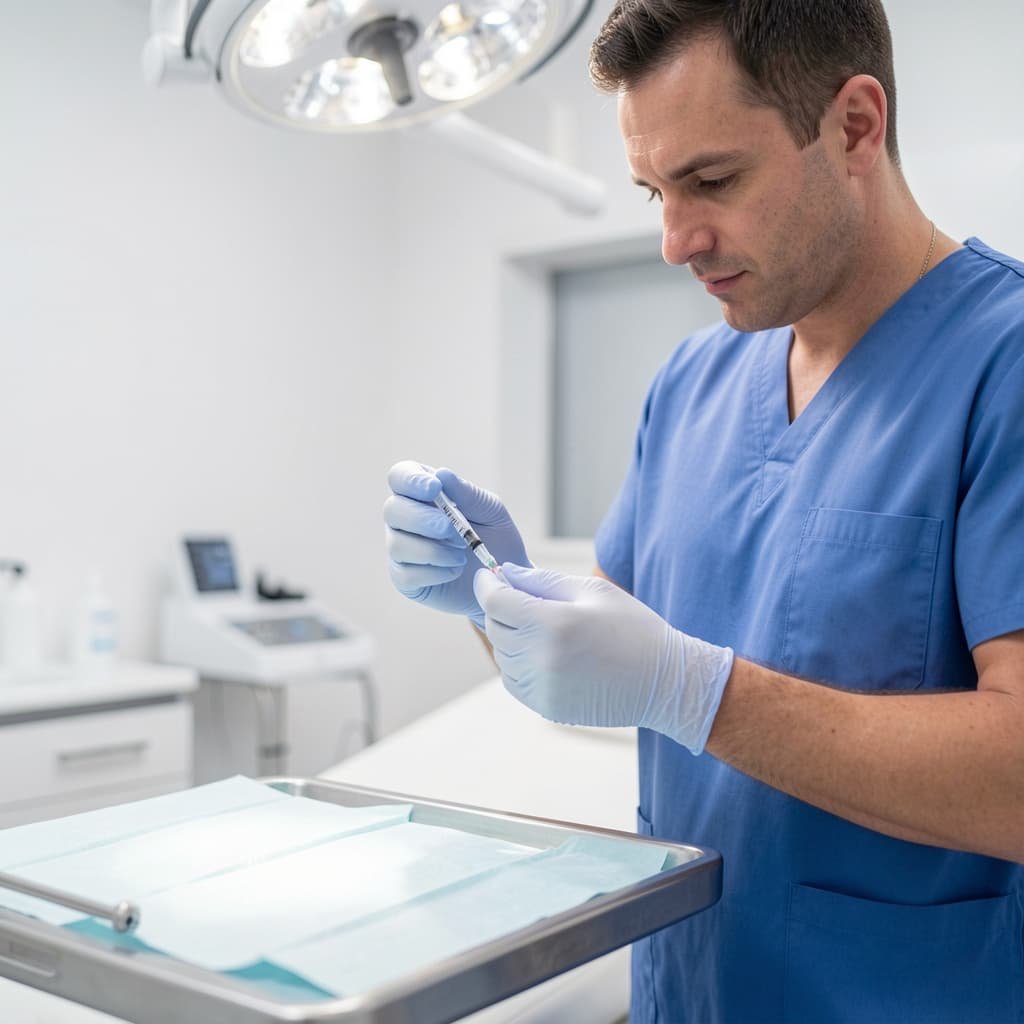
Understanding P shot how does it work at a procedural level removes anxiety and supports informed consent. The treatment follows a consistent protocol:
• A clinician draws approximately 20–30 ml of venous blood from the patient’s arm.
• A centrifuge separates the platelet-rich plasma layer from red blood cells and platelet-poor plasma at a calibrated speed and duration.
• Topical anaesthetic cream applied to the penile skin acts for 20–30 minutes. A local anaesthetic block then ensures comfortable injection.
• The clinician injects prepared PRP into specific anatomical zones — typically the corpora cavernosa and the glans — using a fine-gauge needle.
• The entire appointment takes approximately 60 to 90 minutes. Patients resume normal activity the same day.
Autologous blood use eliminates risks of allergic reaction and immune rejection. The most common P shot side effects are transient: mild bruising at the venepuncture site, temporary redness or swelling at the injection site, and occasional mild discomfort during the first 24 hours. Trained medical practitioners rarely encounter serious complications.
P-Shot vs Non-Surgical Alternatives: Comparative Considerations
Men exploring non surgical penis enlargement UK options frequently compare PRP therapy against hyaluronic acid dermal fillers, shockwave therapy, and vacuum erection devices. Each modality addresses a different physiological target, so a meaningful comparison requires understanding these distinctions.
Dermal fillers deliver immediate volumisation through physical bulk injection. The effect becomes apparent within hours but depends entirely on the filler material remaining intact. Hyaluronic acid penile fillers resorb within 12 to 18 months, requiring repeat procedures. PRP works through biological regeneration rather than mechanical volume addition. The p shot increase size mechanism is gradual — but genuine tissue remodelling produces durable outcomes beyond the treatment period.
Low-intensity shockwave therapy (Li-ESWT) targets vascular endothelial growth through acoustic energy rather than growth factor delivery. Evidence for Li-ESWT in mild-to-moderate vasculogenic ED is reasonably robust. Some clinicians combine PRP penis enlargement UK protocols with shockwave sessions. The two mechanisms are complementary: shockwave stimulates neovascularisation via mechanical signalling while PRP supplies the growth factor substrate to sustain that process. Standardised trial data on combination protocols remain limited.
Is the P-Shot Worth It? Understanding Value and Candidacy
Clinical candidacy determines whether the Priapus shot UK represents sound value. Men most likely to derive meaningful benefit include those with mild-to-moderate vasculogenic erectile dysfunction, documented Peyronie’s disease in the stable phase, post-prostatectomy penile changes, or penile shrinkage attributable to medical or physiological causes. For this group, is p shot worth it carries an increasingly evidence-supported affirmative answer.
Men with healthy erectile function seeking enlargement beyond their natural anatomy represent a different clinical picture. Weighing p shot pros and cons for this group looks different: the procedure is unlikely to produce significant dimensional gains beyond restoration of optimal vascular function. Careful expectation calibration during consultation is essential.
A thorough pre-treatment consultation forms the foundation of appropriate patient selection. This consultation includes a detailed medical history, erectile function assessment via validated tools such as the IIEF questionnaire, and an honest discussion of realistic outcomes. Reputable priapus shot therapy providers decline to treat patients whose expectations exceed what the evidence supports.
P-Shot Results: Libido, Sensitivity, and Erection Quality

Dimensional outcomes capture only part of the clinical picture for p shot results size data. Patient-reported outcome measures consistently highlight improvements in:
• Erectile rigidity and the ability to sustain erections — linked to improved cavernosal haemodynamics.
• Penile sensitivity and glans responsiveness — attributed to growth factor effects on nerve-adjacent tissue.
• Sexual confidence and reduced performance anxiety — partly secondary to the physiological improvements above.
• Improved libido in men whose reduced sex drive was secondary to erectile dysfunction rather than a primary hormonal deficit.
The relationship between p shot improve libido and the underlying mechanism warrants clarity. PRP does not directly influence testosterone production or hypothalamic-pituitary-gonadal axis signalling. Libido improvements, where reported, most plausibly reflect relief of performance anxiety following restored erectile confidence. Resolution of Peyronie’s-related pain — which suppresses desire through psychological pathways — offers another explanatory route.
Primary low libido attributable to testosterone deficiency requires hormonal assessment and, where clinically indicated, testosterone replacement therapy — a distinct intervention from penile PRP treatment.
P-Shot Before and After: Setting Realistic Expectations
Three lenses frame realistic P shot before and after expectations: the patient’s underlying condition, the clinician’s PRP preparation protocol, and the post-treatment period over which results are assessed. A patient with Peyronie’s-related shortening undergoing three PRP sessions with a validated preparation kit, under an experienced practitioner, will likely have a substantially different outcome profile from a healthy man with no identifiable pathology seeking enhancement.
Durability also warrants clarity. Dermal fillers diminish predictably as the material resorbs. By contrast, genuine tissue remodelling underpins priapus shot size increase outcomes that prove durable beyond the treatment period — newly formed vasculature and remodelled smooth muscle do not disappear when the PRP metabolises. Progressive underlying conditions — cardiovascular disease, diabetes, or advancing Peyronie’s — can erode treatment gains over time. Maintenance sessions at 12 to 18-month intervals address this.
Factors That Influence P-Shot Size and Efficacy Results
Several variables modulate the degree to which does p shot increase size in a given patient:
• Platelet concentration: Higher platelet counts in the prepared PRP correlate with greater growth factor delivery. The centrifugation system the clinician uses therefore functions as a meaningful quality variable.
• Injection technique and anatomical precision: Accurate PRP deposition within the corpora cavernosa — rather than subcutaneous or peripenile tissue — determines whether growth factors reach the target tissue.
• Metabolic health: Diabetes, obesity, and smoking impair endothelial function and angiogenesis — the same pathways PRP seeks to stimulate. Optimising metabolic parameters before treatment improves outcomes.
• Number of treatment sessions: A single session of priapus shot therapy may produce detectable improvements. Clinical protocols, however, commonly recommend two to three sessions spaced six to eight weeks apart for optimal tissue saturation and remodelling depth.
Choosing a P-Shot Provider in the UK: What to Look For

Variation in p shot treatment UK outcomes across providers is not random. Practitioner training, PRP preparation quality, and the rigour of patient assessment closely determine results. Men seeking treatment should apply consistent evaluation criteria:
• The treating clinician should hold a recognised medical qualification (MBBS, MD, or equivalent) and carry specific training in PRP therapy and men’s intimate health.
• The clinic should conduct a thorough pr
e-treatment medical history — not simply a questionnaire, but a genuine clinical assessment of erectile function, cardiovascular risk, and relevant co-morbidities.
• The PRP preparation protocol should deploy a validated, medical-grade centrifuge system. Clinicians should state the platelet concentration achieved and the activation method employed.
• Honest outcome conversations — including acknowledgement of where p shot increase size evidence does and does not apply — mark clinical credibility, not weakness.
Frequently Asked Questions
Can the P-Shot increase penis length as well as girth?
In men with an identifiable deficit — such as Peyronie’s-related shortening or vascular compromise — the answer is yes. Whether can p shot increase penis length in anatomically normal men without pathology? The evidence is less consistent, and honest practitioners will reflect that uncertainty in the consultation.
How long do P shot results last?
Tissue remodelling outcomes from PRP therapy are generally durable — results sustain for 12 to 18 months or longer in suitable candidates. Maintenance sessions extend and reinforce outcomes, particularly in men with progressive underlying conditions.
Is the P-Shot painful?
Local anaesthesia makes the procedure comfortable for most patients. A topical numbing cream acts on the penile skin well in advance of the injection phase. Post-procedure sensitivity typically resolves within 24 to 48 hours.
Does the P-Shot work for psychogenic erectile dysfunction?
Psychogenic ED — where the primary cause is psychological rather than vascular — may respond partially. Improved penile health and tissue quality can reduce performance anxiety. Psychosexual therapy and cognitive-behavioural approaches address psychogenic ED most directly. PRP delivers the strongest impact where a physiological component is also present.
How many P-Shot sessions are needed to see size results?
Most clinical protocols for does P shot increase length and girth outcomes recommend a course of two to three sessions, spaced six to eight weeks apart. Single-session responses occur but are typically less pronounced than those from a full treatment course.
Are there men for whom the P-Shot is not suitable?
Men with active platelet disorders, those on anticoagulant therapy, patients with active penile infection or skin conditions at the injection site, and those whose unrealistic expectations remain uncorrected after counselling are generally not suitable candidates. A thorough clinical assessment identifies contraindications before treatment proceeds.
Conclusion
The clinical picture surrounding p shot increase size outcomes is neither the unconditional success story that some clinics promote nor the wholesale sham that critics describe when conflating high-quality PRP therapy with poorly administered injections in unregulated settings. A maturing evidence base consistently identifies specific patient populations in whom PRP-mediated penile tissue regeneration produces genuine, measurable, and durable improvements in erectile function and penile dimensions.
Clinical candidacy, practitioner expertise, PRP preparation quality, and honest expectation-setting at the outset of care are the key discriminators. Men with vascular insufficiency, Peyronie’s disease, or medically attributable penile tissue compromise stand to benefit most. Men without identifiable pathology seeking enhancement beyond their anatomical baseline should approach the procedure with tempered expectations.
The more instructive question, perhaps, is not simply whether the P-Shot increases size — but whether the specific biological deficit driving a patient’s concerns is one that regenerative growth factor therapy can address. A rigorous clinical consultation with a qualified practitioner answers that question — and the answer will determine everything.
Read more: Your First P Shot London Consultation – What Happens Step by Step
When Will I See Results from P Shot in London? A Realistic Timeline