
Erectile dysfunction carries an outdated reputation as a problem confined to later life. Clinical data challenges that assumption directly. ED in younger men is far more common than most people realise, affecting a substantial proportion of men under 40. Stress, anxiety, lifestyle habits and undiagnosed physical conditions all contribute to erectile difficulty at a younger age. This pattern differs from erectile dysfunction in older men, where vascular disease and age-related hormonal decline dominate the clinical picture. Recognising these distinctions matters, because a treatment plan suited to a 65-year-old rarely addresses the specific drivers seen in a 25-year-old.
This article sets out the causes, risk factors and treatment options relevant to erectile difficulty in young adulthood. It draws on published research, NHS and NICE guidance and clinical practice standards used across UK sexual health services. It also examines non-surgical treatment for erectile dysfunction in London, including regenerative injection-based approaches, and states the current evidence and its limitations without exaggeration or unsupported promises.
How Common Is ED in Younger Men?
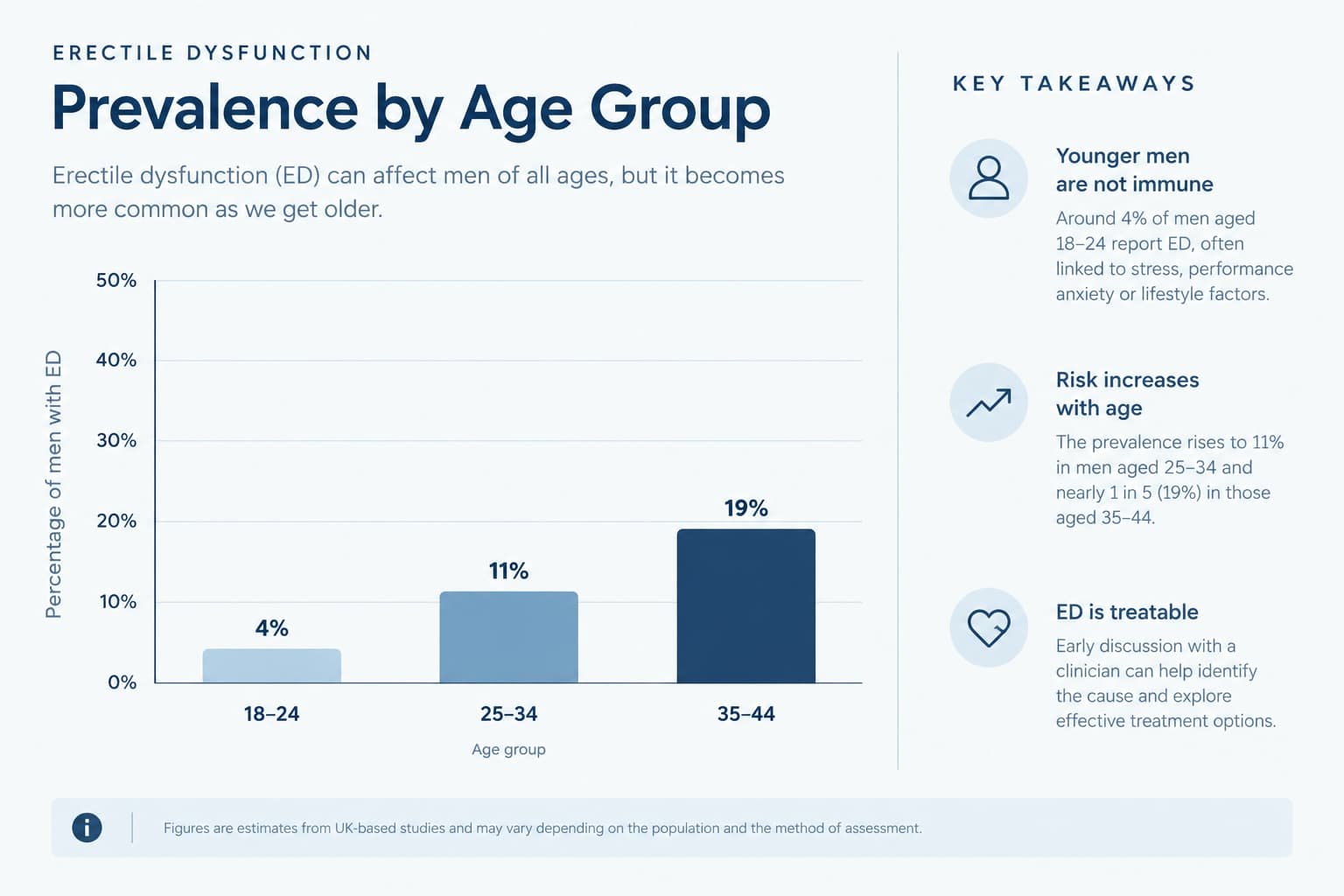
Erectile dysfunction is often assumed to develop gradually after middle age. Research does not support that assumption. A 2024 analysis of the National Survey of Sexual Wellbeing recorded erectile dysfunction in 17.9 percent of men aged 18 to 24, and 13.3 percent of men aged 25 to 34. These figures sit close to rates recorded in men aged 35 to 44, at 12.7 percent. Research from King’s College London estimates that up to 4.3 million men in the UK live with some degree of erectile dysfunction, with symptoms reported in up to half of men under the age of 50.
These figures confirm that erectile difficulty in young adulthood represents a genuine clinical pattern rather than an isolated exception. A separate published study found that one in every four men diagnosed with erectile dysfunction was under the age of 40. Reported prevalence may still understate the true figure, since a considerable number of men remain reluctant to raise erectile symptoms during a routine GP appointment.
Defining Erectile Dysfunction in Young Adults
The NHS defines erectile dysfunction as persistent difficulty getting or keeping an erection firm enough for satisfactory sexual activity. Occasional difficulty is common and does not, on its own, indicate a clinical problem. A diagnosis becomes clinically relevant when difficulty occurs regularly, persists for several months, or causes distress. Symptoms present in broadly the same way regardless of patient age: reduced firmness, inconsistent erections, or a complete inability to achieve an erection. ED in younger men frequently presents alongside intact night-time or morning erections, together with difficulty specifically during partnered sexual activity. This pattern often points toward a psychological rather than a purely physical cause, and it forms an important part of initial clinical assessment.
Physical Causes of Erectile Dysfunction in Young Men
Physical causes affect a meaningful share of younger patients, even though psychological factors dominate the overall picture at this stage of life.
Vascular and Cardiovascular Factors
Erections depend on adequate blood flow into penile tissue. Smoking, high cholesterol, elevated blood pressure and early-stage diabetes each narrow blood vessels and reduce that flow. Coronary heart disease affects around 2.3 million people across the UK, and a family history of the condition raises individual risk considerably. Vascular causes identified at a younger age often signal wider cardiovascular risk that benefits from prompt clinical assessment rather than delay.
Hormonal Imbalances
Abnormal thyroid hormone levels, elevated prolactin, or low testosterone can each interfere with normal erectile function. Anabolic steroid use, increasingly common among younger men pursuing rapid muscle growth, disrupts natural testosterone production and carries a recognised association with erectile difficulty that persists after the drug is discontinued.
Anatomical Conditions
Structural conditions such as Peyronie’s disease, phimosis, and a tight frenulum can each restrict normal erectile function. These conditions occur across all age groups and generally respond well to targeted clinical assessment and appropriate treatment.
Medication Side Effects
Certain antidepressants, blood pressure medications, and several other prescribed drugs list erectile difficulty as a recognised side effect. A GP consultation should take place before any dose change or medication substitution, since abrupt changes carry separate clinical risks.
Psychological Causes of Erectile Dysfunction
Psychological factors account for a considerable share of erectile difficulty in younger patients, more so than in older age groups, where physical disease more often predominates.
Performance Anxiety
Anxiety about sexual performance ranks among the most frequently cited psychological causes affecting young men. Worry about maintaining an erection, satisfying a partner, or unintended pregnancy can create a self-reinforcing cycle. Anxiety interferes with erectile response, and the resulting difficulty increases anxiety further on subsequent occasions. This anxiety-driven cycle explains why symptoms often improve once the underlying psychological trigger receives proper clinical attention.
Stress and Depression
General life stress, relationship strain, and depressive symptoms can each reduce libido and interfere with erectile response. Depression presents differently across individuals, and the resulting effect on sexual function varies considerably from one patient to the next.
Pornography Use and Sexual Conditioning
Some evidence suggests that frequent pornography use may alter expectations around sexual arousal, contributing to difficulty during partnered activity. Research in this specific area remains limited in scope, and firm conclusions should be treated with appropriate caution until larger studies emerge.
Risk Factors Linked to Early-Onset Erectile Difficulty

Several modifiable lifestyle factors raise the likelihood of erectile difficulty developing at a younger age:
Smoking and vaping can damage blood vessels and restrict healthy blood flow.
Excessive alcohol consumption, particularly above the recommended 14 units per week, may contribute to erectile difficulties.
Recreational drug use can affect sexual function and interfere with normal erectile responses.
Obesity and low physical activity levels may increase the risk of erectile dysfunction.
Poor sleep quality, including undiagnosed sleep apnoea, can also affect erectile function.
Anabolic steroids and testosterone boosters may disrupt natural hormone balance and contribute to sexual problems.
Addressing these modifiable risk factors represents the first and most evidence-supported step in managing ED in younger men. Unlike age or genetic predisposition, each factor listed above responds meaningfully to behavioural change over a relatively short period.
Diagnosis and Clinical Assessment
NICE has not published a single dedicated clinical guideline for erectile dysfunction, though several existing guidelines address identification and management within specific patient groups. NICE Clinical Knowledge Summaries recommend a structured assessment covering medical history, current medication, lifestyle factors, and a validated questionnaire such as the International Index of Erectile Function. Because erectile dysfunction can act as an early marker of cardiovascular disease, assessment typically includes blood pressure, cholesterol, and blood glucose screening, even in patients presenting at a comparatively young age. Most cases involve a mixed physical and psychological cause rather than a single isolated factor, which is why a structured assessment matters more than guesswork.
Treatment Options for ED in Younger Men
Treatment selection depends on the underlying cause identified during assessment, and several evidence-based options exist across NHS and private care pathways.
Lifestyle Modification
Quitting smoking, reducing alcohol intake, achieving a moderate weight, and increasing regular physical activity each improve erectile function in a meaningful proportion of cases. These measures also reduce broader cardiovascular risk, independent of any specific effect on sexual function, and represent the lowest-risk starting point for most patients.
Psychological Support and Counselling
Where anxiety, stress, depression, or relationship difficulty contributes to symptoms, structured counselling or psychosexual therapy addresses the underlying cause rather than the symptom alone. Counselling is frequently combined with short-term medication while the underlying issue resolves over subsequent weeks.
Pharmacological Treatment
PDE5 inhibitors, including sildenafil, tadalafil, and vardenafil, remain the first-line pharmacological option for most patients. These medications increase blood flow to the penis and prove effective in a majority of men without contraindications. NHS prescribing for these medications is restricted under specific criteria, meaning many men seeking treatment obtain a private prescription instead of an NHS one.
Mechanical Devices
Vacuum erection devices draw blood into the penis using negative pressure, while constriction rings maintain firmness by trapping blood at the base of the penis. Both options offer a non-pharmacological route with minimal systemic side effects, though neither addresses an underlying physical or psychological cause directly.
Non-Surgical Treatment for Erectile Dysfunction in London: The P-Shot Approach
Interest in non-surgical treatment for erectile dysfunction in London has grown alongside demand for options beyond daily or on-demand medication. One such option is the P-Shot treatment, also referred to as a Priapus shot or penile injection growth procedure. Clinics offering a P shot London service typically position it as a complementary rather than a replacement option within a wider treatment plan.
What Is the P-Shot Treatment?
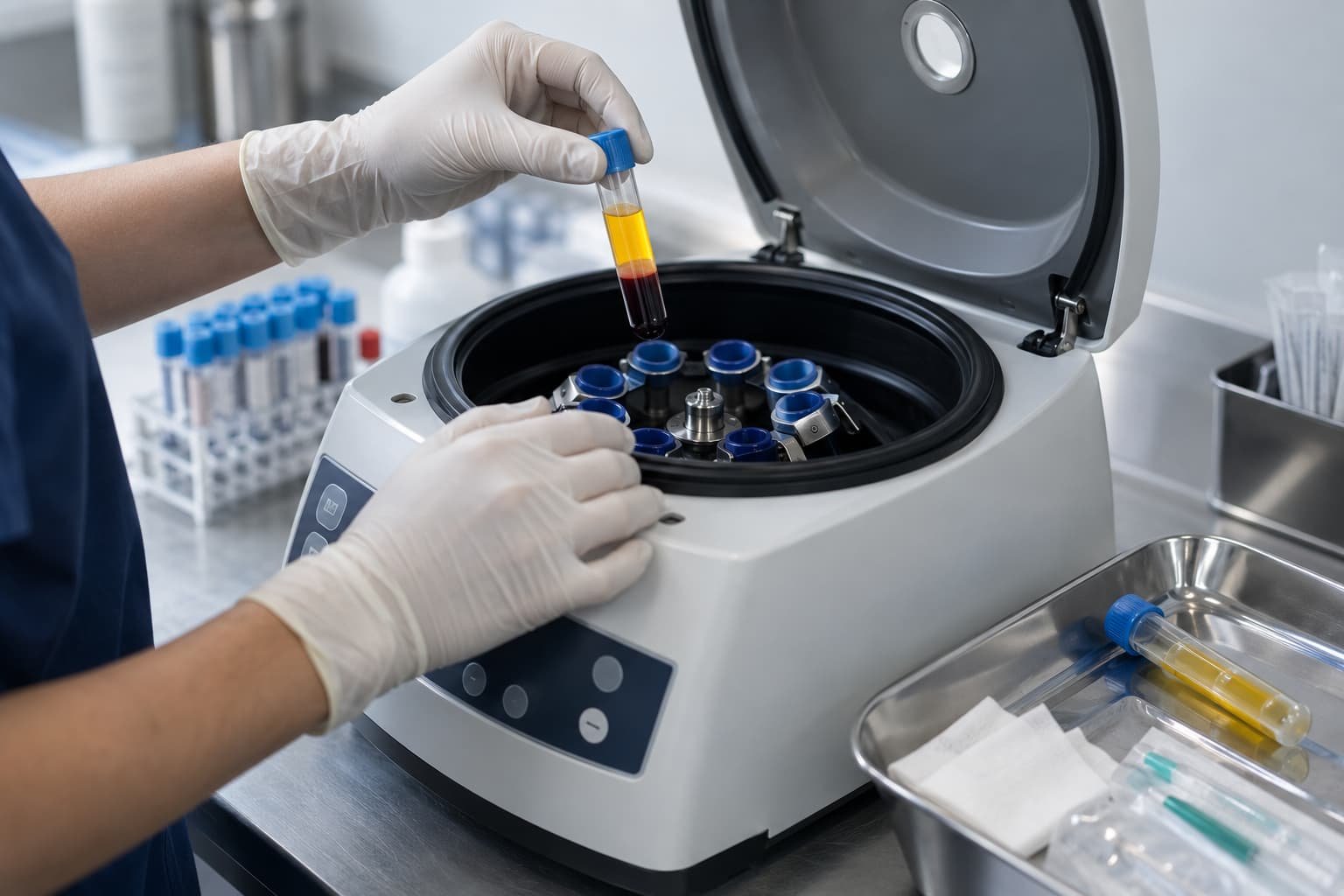
The P-Shot treatment uses platelet-rich plasma, or PRP, extracted from a patient’s own blood sample. The sample undergoes centrifugation to concentrate platelets and growth factors, which are then prepared as a P injection administered into specific areas of penile tissue under local anaesthetic. The stated aim is to stimulate tissue repair and encourage new blood vessel formation, addressing one of the vascular mechanisms underlying erectile difficulty. Patients considering a P shot treatment typically attend an initial consultation to confirm medical suitability before any procedure takes place.
Evidence Base and Current Limitations
The evidence supporting PRP-based penile injection remains mixed and still developing. A 2021 randomised controlled trial published in the Journal of Sexual Medicine reported measurable improvement in erectile function scores among treated participants. A subsequent 2023 randomised controlled trial published in European Urology produced more modest findings, highlighting the need for further large-scale research before firm conclusions can be drawn. The Sexual Medicine Society of North America has classified PRP-based restorative therapies as an emerging rather than an established treatment. NICE Clinical Knowledge Summaries and European Association of Urology guidance do not currently list PRP injection among recommended first-line treatments for erectile dysfunction. This evidence gap means that a P shot treatment for ED in younger men should be considered alongside, rather than instead of, guideline-recommended options.
Priapus Shot Price and Realistic Expectations
Priapus shot price in the UK typically ranges from £900 to £1,500 per session, depending on clinic protocol and the number of sessions recommended following consultation. P shot before and after comparisons circulating online should be interpreted with caution, since lighting, positioning, and individual variation each affect apparent outcomes considerably. No clinic can guarantee a specific result, and realistic expectations should form a standard part of any pre-treatment consultation. Individuals researching a P shot UK provider should confirm that a qualified medical practitioner performs the procedure under appropriate clinical governance and with documented aftercare guidance.
Provider Selection for a P-Shot Treatment

Selecting a provider offering a Priapus shot London service requires attention to practitioner qualifications, hygiene standards, and a transparent discussion of expected outcomes ahead of any procedure. pshots clinic uk, a Harley Street clinic led by Dr Syed Nadeem Abbas, is one example of a UK provider offering the P-Shot treatment alongside standard clinical assessment. This mention serves as a factual reference rather than an endorsement, and independent verification of practitioner credentials remains advisable before any procedure proceeds.
When to Seek Medical Advice
Persistent erectile difficulty lasting more than a few months warrants a GP consultation, particularly where cardiovascular risk factors, diabetes, or depressive symptoms are also present. Sudden-onset erectile dysfunction with no clear psychological trigger should prompt urgent medical review, since it can occasionally indicate an underlying cardiovascular or neurological condition requiring prompt attention rather than a wait-and-see approach.
Frequently Asked Questions
At what age can ED in younger men begin?
Erectile difficulty has been recorded in men during the late teenage years and twenties. Age alone does not determine risk; lifestyle, psychological wellbeing, and underlying health conditions play a larger role at these younger ages than age itself.
Is early-onset erectile dysfunction usually reversible?
Many cases resolve with lifestyle modification, counselling, or short-term medication, particularly where a psychological or lifestyle-related cause receives early identification. Reversibility ultimately depends on the underlying cause and how promptly it receives clinical attention.
Can lifestyle changes alone resolve erectile difficulty?
Lifestyle changes improve erectile function in a meaningful proportion of cases, especially where smoking, alcohol, obesity, or inactivity contribute to the underlying problem. Some cases still require additional medical or psychological treatment alongside lifestyle change to achieve full resolution.
How does a P-Shot treatment differ from standard medication?
Standard medication, such as PDE5 inhibitors, produces a temporary effect limited to the period during which the drug remains active in the body. A P-Shot treatment aims to encourage longer-term tissue and vascular change through PRP injection, though evidence for this longer-term effect remains limited compared with established pharmacological options.
What does a Priapus shot price typically include?
Priapus shot price generally covers the initial consultation, blood draw and processing, local anaesthetic, and the injection procedure itself. Some providers charge separately for follow-up review appointments booked after the initial session.
Is a P shot treatment suitable for every younger man with erectile difficulty?
Suitability depends on individual medical history, current medication, and the underlying cause of erectile difficulty identified during assessment. A qualified practitioner should confirm suitability during an initial consultation before recommending any P shot treatment or penile injection growth procedure.
Key Takeaways
ED in younger men reflects a genuine and measurable clinical pattern. It is not limited to a small minority. Physical causes, psychological factors, and lifestyle risks can all contribute. Their influence varies between individuals. Accurate diagnosis requires structured clinical assessment. It should not rely on assumptions or guesswork. Established treatments include lifestyle changes, counselling, and PDE5 inhibitors. These remain evidence-backed options for many patients. Emerging options, such as P-Shot treatment, provide another non-surgical approach in London. However, current evidence supports a cautious and informed approach. No treatment can guarantee results for every patient. Individual causes and treatment pathways must be considered. Early clinical assessment may help identify underlying causes and suitable treatment options. Erectile difficulties deserve the same attention as other health concerns.
Read more: Erectile Dysfunction Under 40: Causes and Modern Solutions
Best Age for P Shot: Is There an Ideal Time to Start Treatment?
Dr Syed Nadeem Abbas, MBBS, MRCSEd, MSc Aesthetic Plastic Surgery (Distinction) Medical Director, Pshot Clinic | CQC Regulated | Monday to Saturday 10:00–18:00 +44 7955 836986


