
✅Medically reviewed
A bleeding gum and a failing erection look like unrelated problems. Medical research now challenges that assumption. Studies from Turkey, Taiwan, India and Israel report a consistent pattern. Men with severe gum disease show higher rates of erectile problems than men with healthy gums. This pattern places erectile dysfunction and gum disease in the same clinical conversation.
The numbers deserve attention. A 2021 meta-analysis covered 215,008 participants. It reported an odds ratio of 2.56 for erectile dysfunction (ED) in men with periodontitis. That figure shows association, not proof of cause. Researchers still debate what drives the link. Inflammation, damaged blood vessels and shared lifestyle risks all feature in the discussion.
Inflammation sits at the centre of the debate. Gum disease keeps the immune system active for years. Erectile function depends on healthy, flexible blood vessels. Chronic inflammation can damage exactly those vessels.
Oral health rarely features in a consultation about sexual function. Dentists seldom ask about erections. GPs seldom examine gums. Each specialty therefore sees only half of the picture. A joined-up view may help men spot warning signs earlier.
This article examines erectile dysfunction and gum disease using peer-reviewed evidence. Sources include the NHS, NICE and the European Federation of Periodontology (EFP). The sections below explain how gum inflammation might affect blood flow. Limits of the current research receive equal attention. Practical steps for oral and vascular health follow.
Understanding the Link Between Gum Disease and ED
What Gum Disease Involves
Gum disease starts when plaque builds up along the gum line. Plaque is a sticky film of bacteria. The NHS describes the earliest stage as gingivitis. Gums turn red, swollen and sore, and bleed during brushing. Gingivitis can reverse with good oral hygiene.
Untreated gingivitis can progress to periodontitis. This stage damages the bone and tissue that hold teeth in place. Gums recede, breath turns unpleasant and teeth may loosen. Periodontitis often causes little pain, so many men carry the disease unaware. The NHS stresses that regular dental check-ups matter for this reason.
Dentists use the term chronic periodontitis for the slowly progressing, long-standing form. Most studies on ED examine this form.
What Erectile Dysfunction Involves
Erectile dysfunction means persistent difficulty achieving or keeping an erection firm enough for sex. The NHS describes the condition as common, especially with age. An erection depends on healthy blood vessels, intact nerves, balanced hormones and a settled mind. Disruption in any of these systems can impair function.
ED often reflects the health of blood vessels throughout the body, not only the penis. NICE Clinical Knowledge Summaries therefore advise clinicians to assess cardiovascular risk in men with ED. This vascular link explains the interest in gum inflammation. Clinicians now ask whether erectile dysfunction and gum disease share a common vascular root.
What Does Research Say About Erectile Dysfunction and Gum Disease?
Evidence From Meta-Analyses
Several systematic reviews have examined periodontal disease and erectile dysfunction. A 2016 meta-analysis in the International Journal of Impotence Research pooled five studies with 213,006 participants. It reported an odds ratio of 2.28 for ED in men with chronic periodontitis. The 2021 meta-analysis in the American Journal of Men’s Health added newer data. It reported an odds ratio of 2.56 across six studies.
A 2018 systematic review of nine studies found a positive association in every study. Four studies reported odds ratios between 1.53 and 3.35. A 2019 British Dental Journal review covered nine case-control studies and three meta-analyses. Odds ratios there ranged from 1.53 to 5.94. Every analysis reviewed here points the same way. Men with periodontitis report ED more often than men with healthy gums.
Evidence From Treatment Trials
Intervention trials ask a sharper question. They test whether treating gum disease changes erectile function. A 2013 randomised controlled trial enrolled 120 men with moderate or severe ED and chronic periodontitis. It appeared in the Journal of Clinical Periodontology. Half received periodontal treatment. The other half received none.
Researchers measured erectile function with the International Index of Erectile Function questionnaire. Scores matched between the groups at one month. At three months, the treated group showed a greater improvement. The EFP cites a second trial, from 2020, with a similar direction.
Treating gum disease may therefore add a benefit for men who have both conditions. Both trials were small and short. Neither establishes that the benefit lasts. Larger, longer trials must confirm the result. Publication bias may also play a role.
Limits of the Evidence
Honest interpretation requires caution. Most studies use cross-sectional or case-control designs. These designs show association but cannot prove cause. The 2016 meta-analysis reported very high heterogeneity, with an I² of 97.8%. A 2019 British Dental Journal review also flagged considerable heterogeneity.
Several other problems limit interpretation. Studies on oral health and erectile dysfunction define both conditions in different ways. Small samples affect some trials. Unmeasured confounders may remain even after statistical adjustment. Association alone does not prove a causal chain between erectile dysfunction and gum disease.
Can Gum Disease Cause Erectile Dysfunction?
Current evidence cannot confirm a direct cause. Biological plausibility exists, though. Three routes receive most attention: inflammation, impaired blood flow and shared risk factors.
Gum Inflammation and Erectile Dysfunction
Periodontitis creates a chronic inflammatory burden. Bacteria and bacterial products accumulate in the gum pockets. According to the EFP, microorganisms, bacterial components and inflammatory molecules enter the systemic circulation in severe periodontitis. These agents can damage blood vessels in distant organs.
Inflammation and erectile dysfunction share a well-described biological route. Proinflammatory cytokines promote atherosclerosis, which narrows arteries. Penile arteries have a small diameter, so narrowing may reduce penile blood flow early. Clinicians often describe this idea as the artery-size hypothesis.
Gum Disease and Blood Flow
Gum disease and blood flow connect through the lining of the blood vessels, the endothelium. A healthy endothelium releases nitric oxide. That molecule relaxes vessel walls and allows blood to flow in.
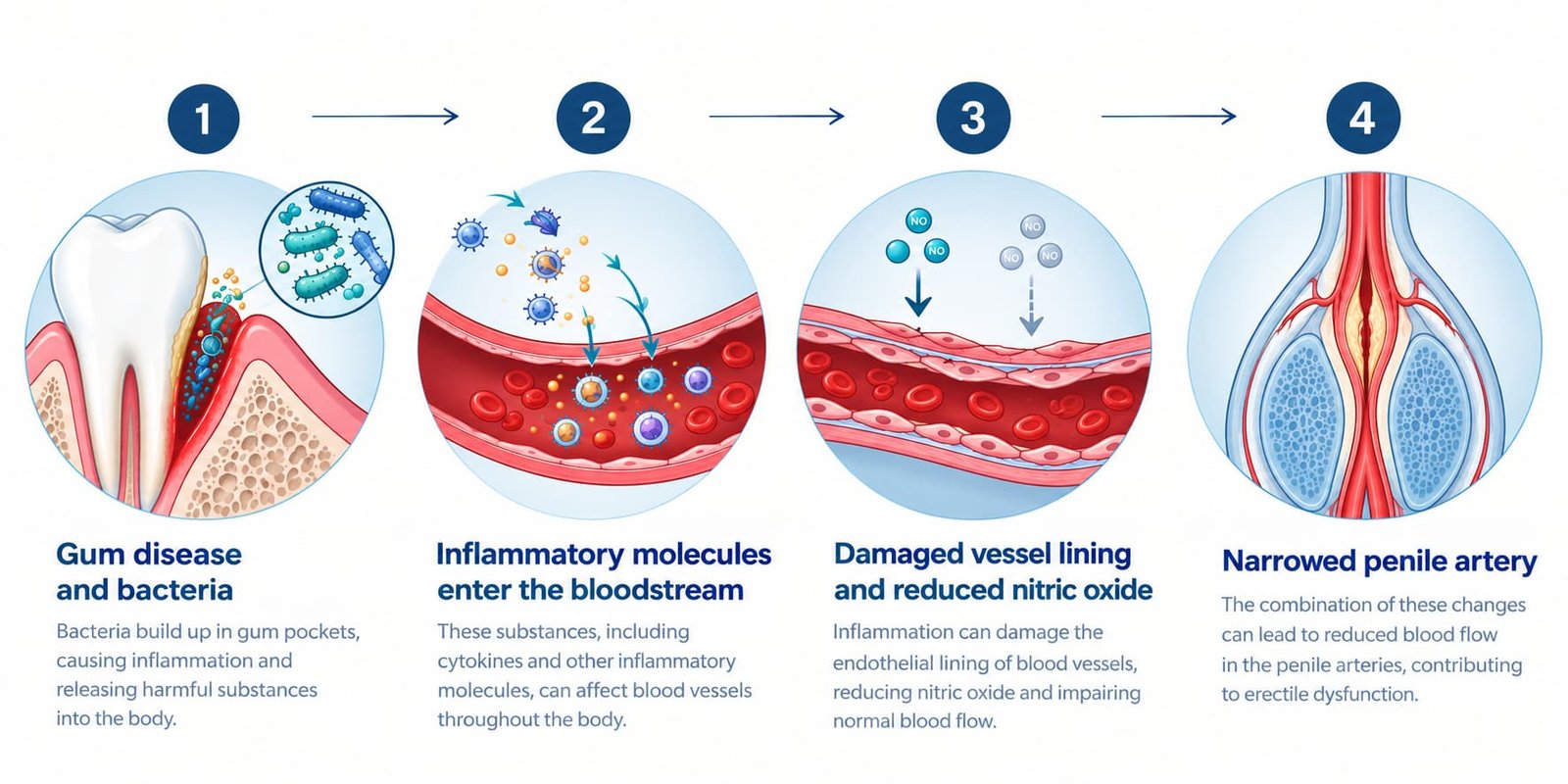
The Nitric Oxide Pathway
An erection requires the penile arteries to widen. Nitric oxide drives that widening. Oxidative stress lowers nitric oxide availability. The EFP proposes that periodontitis could reduce nitric oxide through inflammatory molecules and oxidative stress. Animal research supports the idea. Rats with induced periodontitis showed lower nitric oxide synthase activity in penile tissue.
Early Vascular Changes
Periodontitis can promote early vascular changes that signal the start of atherosclerosis. The EFP reports that periodontal treatment can improve these changes. This finding supports a vascular explanation. Reviewers therefore link the association to vasculogenic ED, the form that stems from impaired blood flow.
Shared Risk Factors
Shared risk factors may explain part of the association. The EFP lists high blood pressure, cardiovascular disease, dyslipidaemia, poorly controlled diabetes and obesity. Each raises the risk of both ED and periodontitis. Smoking affects both conditions as well.
Researchers adjust for these factors where possible. The 2016 meta-analysis found estimates broadly consistent in sensitivity analyses. According to the EFP, unknown risk factors may also influence the relationship. A direct inflammatory effect and shared risk factors may both contribute.
Chronic Periodontitis and Erectile Dysfunction: Who Faces Higher Risk?
The pattern appears across age groups. Studies include men aged 20 to 85 years. Smokers, men with diabetes and men with obesity appear in both risk groups. Periodontal disease and ED therefore share many of the same drivers.
Men also tend to show lower health awareness and less consistent oral hygiene, according to the EFP. Higher rates of smoking and less healthy diets add to the burden.
Erectile Dysfunction Causes: Where Oral Health Fits
Doctors place erectile dysfunction and gum disease within a wider list of causes. Most men have more than one contributing factor. The list below summarises the main groups.
- Vascular disease, including atherosclerosis, high blood pressure and high cholesterol
- Type 2 diabetes, which damages blood vessels and nerves
- Obesity and low physical activity
- Smoking and heavy alcohol use
- Low testosterone and other hormonal conditions
- Stress, anxiety and depression
- Side effects of some medicines
- Chronic inflammatory conditions, with periodontitis as one possible contributor
Oral health forms one contributing factor, not a standalone explanation. The NHS advises any man with persistent ED to see a GP. A GP can check blood pressure, blood glucose, cholesterol and testosterone levels.
Gum Disease and Male Sexual Health Beyond Erections
Research on gum disease and male sexual health extends beyond erectile function. Some studies suggest periodontitis may affect sperm quality and quantity. Several meta-analyses report an association between gum disease and prostate cancer. The EFP states that more research must confirm both relationships. Evidence in these areas remains preliminary.
Warning Signs That Deserve Attention
Gum Warning Signs
The NHS advises a dental visit for several signs.
- Gums that bleed during brushing, flossing or eating hard foods
- Red, swollen or sore gums
- Persistent bad breath or an unpleasant taste
- Gums that recede from the teeth
- Teeth that loosen or fall out
The NHS asks for an urgent dental appointment when severe swelling, loose teeth, mouth ulcers or a lump appear.
Erectile Warning Signs
Ongoing difficulty with erections merits a GP appointment. Weaker erections, fewer morning erections and trouble sustaining an erection all count. Chest pain, breathlessness or leg pain on exertion need prompt medical review.
Practical Steps for Oral and Vascular Health
Evidence-based habits protect both the mouth and the circulation. The EFP recommends four core oral measures.
- Brush twice a day with fluoride toothpaste
- Clean between the teeth daily
- Schedule regular professional cleanings
- Seek dental advice promptly for bleeding gums
Interdental brushes and floss reach areas that a toothbrush misses. The dental team can advise on suitable sizes and techniques.
NICE guideline CG19 sets dental recall intervals between three and 24 months for adults. Individual risk determines the interval for each patient. The NHS adds that smoking and diabetes may justify more frequent visits.
General lifestyle measures also matter. Stopping smoking improves gum health and vascular health. Regular exercise and a balanced diet support circulation. Good control of blood pressure and diabetes helps both conditions.
Joined-Up Care Between Dentist and GP
Dentists see gum pockets, bleeding and bone loss directly. GPs see blood pressure, glucose and cholesterol. Each set of results informs the other. A dentist who finds severe periodontitis can suggest a GP review of cardiovascular risk. GPs who treat ED can ask about bleeding gums and recent dental visits. This cooperation costs little and uses routine appointments.
Realistic Outcomes and Limitations
Realistic expectations protect informed decision-making. Gum treatment does not cure ED. Trials show short-term gains in questionnaire scores for men with both conditions. Many men with ED have other dominant causes. A dental clean cannot correct diabetes, low testosterone or severe arterial disease. Men reading about erectile dysfunction and gum disease should treat findings as prompts for checks, not diagnoses.
Good gum care supports general health, even when it does not change erectile function.
When Specialist Assessment of Erectile Dysfunction Helps
Persistent ED needs a proper medical assessment. Assessment usually covers medical history, blood pressure, glucose, lipids and hormone levels. The NHS describes lifestyle change and tablets such as sildenafil or tadalafil as common first steps.
Some clinics also offer platelet-rich plasma (PRP) injections under the names Priapus Shot and P shot. Patients who consider a Priapus Shot London service should ask about evidence, risks and realistic outcomes. The same advice applies to any P shot London or P Shot UK provider. Evidence for PRP in ED remains limited, and large long-term trials are scarce. PRP does not treat gum disease. Gum treatment, in turn, does not replace specialist ED assessment.
Dr Syed Nadeem Abbas leads pshots clinic UK, a private clinic on Harley Street in Marylebone. He holds MBBS, MRCS (RCS Edinburgh) and MRCGP qualifications. His MSc in Aesthetic Plastic Surgery carries Distinction from Queen Mary University of London. He trained at Cambridge, Oxford and the Royal London Hospital. The clinic assesses ED and explains treatment options with the supporting evidence.
Frequently Asked Questions
Does treating gum disease cure erectile dysfunction?
No. Trials report improved questionnaire scores at three months in men with both conditions. Long-term benefit remains unproven. ED has many causes, and gum treatment addresses only one possible contributor.
Which men face the highest risk of both conditions?
Smokers, men with diabetes, men with high blood pressure and men with obesity face higher risk. Older age and poor oral hygiene add to the risk. A family history of gum disease also raises the risk of periodontitis.
How does gum disease affect blood flow?
Severe periodontitis releases inflammatory molecules and bacterial products into the circulation. These agents can impair the vessel lining and reduce nitric oxide. Reduced nitric oxide limits vessel widening. Research on this pathway continues.
Should a man with erectile dysfunction see a dentist?
A dental check-up makes sense, particularly with bleeding gums or loose teeth. The dentist can measure gum pockets and recommend treatment. A GP visit remains the first step for the ED itself.
Does gum disease guarantee erectile dysfunction?
No. Studies report higher odds, not certainty. Many men with gum disease keep normal erectile function.
Can the P shot treat erectile dysfunction linked to gum disease?
No evidence links the P shot to gum-related ED. PRP evidence for ED remains limited. Anyone considering the treatment should discuss risks and alternatives with a qualified doctor.
Key Takeaways
The research connects erectile dysfunction and gum disease through consistent statistical evidence. Pooled odds ratios range from about 2.3 to 2.6 in recent meta-analyses. Plausible biological routes include inflammation, oxidative stress and impaired nitric oxide signalling.
Causation remains unproven, and trials remain small. Shared risk factors explain part of the pattern. Good gum care costs little and benefits general health. Medical assessment remains essential for persistent ED.
Informed decisions rest on balanced evidence. A dental check-up and a GP review both deserve a place in routine health planning. Men with bleeding gums or erectile changes can start with either appointment.
If oral and vascular health share warning signs, which routine check has waited longest for an appointment?
Read more:
Sleep Apnoea and Erectile Dysfunction: Is There a Link to Consider Before a P Shot?
Can Type 2 Diabetes-Related Erectile Dysfunction Be Reversed? What Research Shows
Dr Syed Nadeem Abbas, MBBS, MRCSEd, MSc Aesthetic Plastic Surgery (Distinction) Medical Director, Pshot Clinic | CQC Regulated | Monday to Saturday 10:00–18:00 +44 7955 836986


