
✅Medically reviewed
More than half of men with diabetes develop erectile problems at some point. A meta-analysis of 145 studies placed the pooled prevalence at 52.5 per cent. That figure explains why type 2 diabetes and erectile dysfunction appear together so often in UK clinics. The pairing also raises a pressing question. Does the damage last for life, or can erectile function recover?
The honest answer sits between hope and caution. Research shows that some men regain normal erections after sustained weight loss, better glucose control and regular exercise. Others improve only partly. A third group needs ongoing treatment because long-standing nerve and blood vessel damage does not fully heal. Outcomes depend on the stage of damage, the duration of diabetes and the presence of other conditions.
Early action offers the best chance of recovery. Erectile changes often appear before a diabetes diagnosis. They can also warn of heart disease years before cardiac symptoms start. Reversal therefore matters for sexual health and for long-term cardiovascular safety.
This guide examines the biology, the trial evidence and the available treatments. Sources include NHS guidance, NICE recommendations and peer-reviewed studies. Each section states what research proves and what remains uncertain.
What Does Erectile Dysfunction Reversal Really Mean?
Clinicians define erectile dysfunction (ED) as persistent difficulty achieving or keeping an erection firm enough for sexual activity. Researchers often measure severity with the International Index of Erectile Function (IIEF-5). Scores of 22 to 25 indicate no ED. Lower scores indicate mild, moderate or severe ED.
Reversal therefore carries three possible meanings.
Full Recovery
The patient returns to a normal IIEF-5 score without medication. Trials report this outcome in a minority of men, mostly after major lifestyle change.
Partial Improvement
Scores rise, but erections stay less reliable than before diabetes. Many men reach this outcome.
Controlled Function with Treatment
Medication or devices restore satisfactory erections while the underlying damage persists. This outcome is common and clinically valuable.
Reversal is a spectrum, not a single result.
How Diabetes Damages Erections
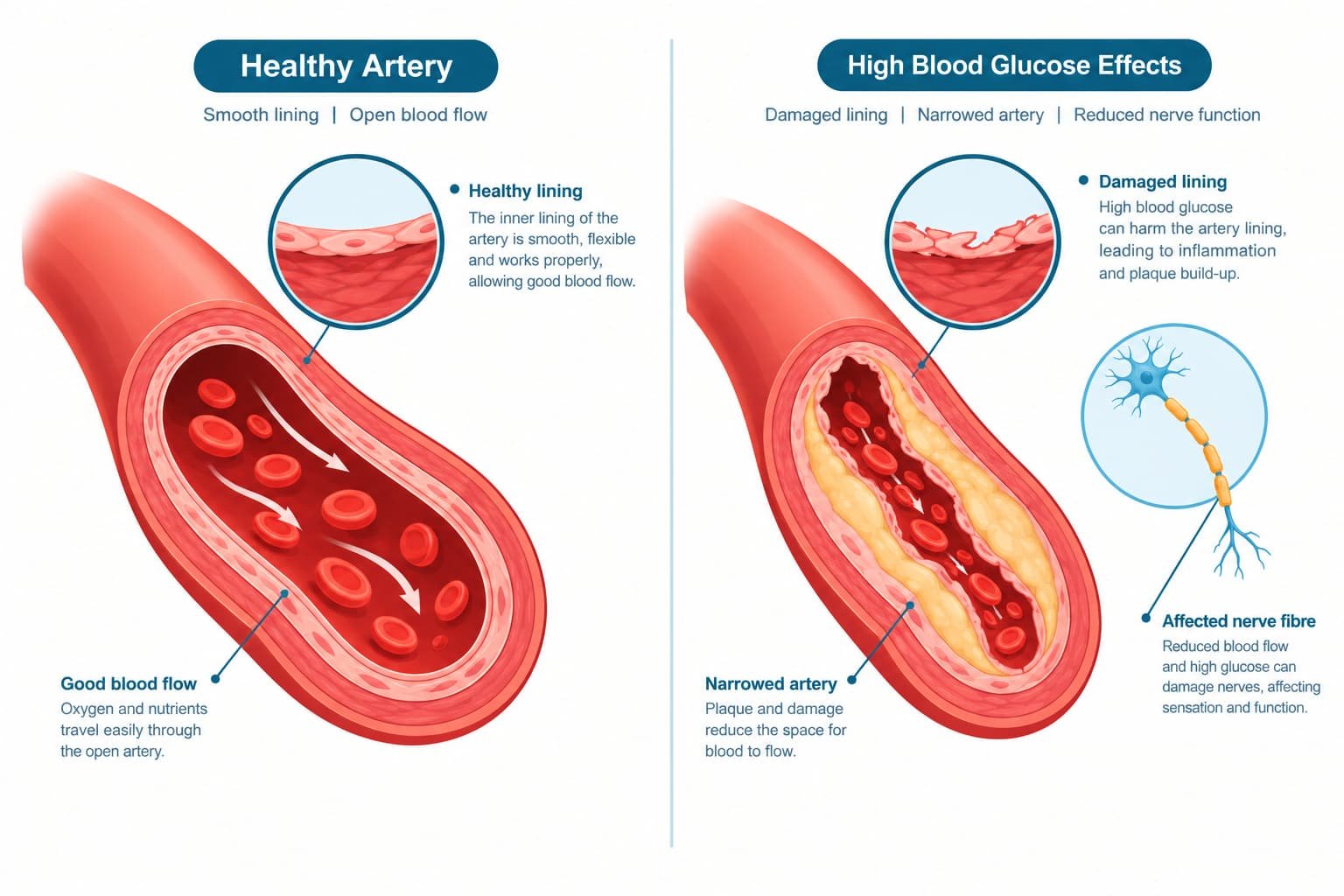
An erection needs healthy arteries, working nerves, supple erectile tissue and balanced hormones. Type 2 diabetes and erectile dysfunction connect through all four.
Blood Vessel Damage
Persistently high glucose injures the endothelium, the inner lining of blood vessels. Damaged endothelium produces less nitric oxide. Nitric oxide relaxes penile arteries and allows blood to fill the erectile tissue. Diabetes also accelerates atherosclerosis, which narrows the small arteries of the penis.
Nerve Damage
Autonomic neuropathy disrupts the signals that start and sustain an erection. Neuropathy tends to appear after many years of raised glucose. Men with numb feet or bladder changes may also have nerve-related ED.
Hormones, Medicines and Mood
Low testosterone affects a substantial share of men with type 2 diabetes. Obesity and insulin resistance both lower testosterone. Some antidepressants, beta-blockers and thiazide diuretics can worsen erections. Depression and performance anxiety add further strain.
Why Timing Matters
Early damage is functional. Blood vessels narrow, but the tissue stays healthy. Late damage is structural. Laboratory studies show smooth muscle loss and fibrosis in long-standing diabetic erectile tissue. Structural change responds poorly to lifestyle measures. The longer glucose stays high, the lower the prospect of full recovery.
What Research Shows About Type 2 Diabetes and Erectile Dysfunction Reversal
Evidence comes from randomised trials, observational cohorts and systematic reviews. Quality varies. Few trials enrol only men with diabetes.
Weight Loss and Lifestyle Change
The strongest trial evidence comes from Esposito and colleagues. Their 2004 JAMA study enrolled 110 obese men with ED. Most participants did not have diabetes. The intervention group received structured diet and exercise advice for two years. Some 31 per cent of the intervention group regained normal erectile function, compared with 5 per cent of controls. Men with diabetes may respond differently, so clinicians apply these findings with caution.
A 2015 review by Maiorino and colleagues reached a similar conclusion. Weight loss, physical activity and Mediterranean-style eating improved erectile scores in many trials.
Glucose Control
NICE guideline NG28 sets individual HbA1c targets for adults with type 2 diabetes. Typical targets are 48 mmol/mol or 53 mmol/mol, depending on treatment and hypoglycaemia risk. Observational studies link higher HbA1c with more severe ED. However, trials testing glucose lowering alone for erectile outcomes remain limited. Good control clearly protects nerves and vessels. Evidence that it reverses established ED is weaker.
Diabetes Remission and Bariatric Surgery
The DiRECT trial showed that structured low-energy diets can induce remission. Remission occurred in 46 per cent of participants at 12 months and 36 per cent at 24 months. The NHS now runs a Type 2 Diabetes Path to Remission Programme in England. Direct evidence on erectile outcomes after remission is scarce. Reviews of bariatric surgery report higher IIEF scores afterwards. Most of those studies are small and observational.
Exercise
Aerobic and resistance training improve endothelial function and insulin sensitivity. The UK Chief Medical Officers recommend at least 150 minutes of moderate activity weekly. Trials in men with ED report modest but consistent gains in IIEF-5 scores. Exercise also lowers cardiovascular risk.
Smoking, Alcohol and Medicines
Smoking damages the endothelium and reduces nitric oxide. Stopping smoking can improve erections in some men. Heavy alcohol use worsens erectile function and glucose control. A medication review may also help. ACE inhibitors and angiotensin receptor blockers appear neutral for erections. Older thiazides and non-selective beta-blockers can contribute to ED. Patients should never stop prescribed medicines without medical advice.
Newer Diabetes Medicines
GLP-1 receptor agonists and SGLT2 inhibitors support weight loss and cardiovascular health. Observational data hint at possible erectile benefit. No trial currently proves that these drugs reverse ED. Prescribers choose these drugs for diabetes, not for erections.
How Doctors Assess Type 2 Diabetes and Erectile Dysfunction
Assessment starts with a detailed medical and sexual history. The clinician asks about onset, morning erections, libido, medicines and mood. Sudden onset suggests a psychological or medicine-related cause. Gradual onset suggests vascular or nerve disease.
Examination and Blood Tests
A physical check covers blood pressure, body mass index, the genitals and the peripheral pulses. Blood tests usually include HbA1c, a lipid profile and morning total testosterone. Doctors repeat a low testosterone result before diagnosing hypogonadism. Thyroid function and kidney tests follow when clinical findings justify further testing.
Questionnaires and Risk Scores
The IIEF-5 questionnaire records severity and tracks response to treatment. QRISK3 estimates ten-year cardiovascular risk. Both tools give structure to follow-up and help patients and clinicians judge real progress.
The Role of Psychological Support
Anxiety and depression occur more often in men with diabetes. Performance worry can then sustain ED after the physical trigger fades. Cognitive behavioural therapy and psychosexual counselling address this cycle. Partners often join sessions. Psychological support works alongside physical treatment, not instead of it.
Medical Treatments When Lifestyle Change Is Not Enough
Many men need medical treatment alongside lifestyle change. NICE Clinical Knowledge Summaries guide UK practice. Type 2 diabetes and erectile dysfunction often require a combined approach.
Tablets: PDE5 Inhibitors
Sildenafil, tadalafil, vardenafil and avanafil form first-line therapy. Men with diabetes can receive generic sildenafil on NHS prescription. Response rates run lower in diabetes than in the general population. Nitrate medicines make PDE5 inhibitors unsafe. Doctors must check cardiovascular status before prescribing.
Testosterone Assessment
Doctors diagnose low testosterone after two separate morning blood tests. Replacement therapy mainly improves libido. Benefit for erections themselves is less certain. Specialist supervision and monitoring of haematocrit and PSA remain essential.
Second-Line Options
Vacuum erection devices draw blood into the penis through negative pressure. Alprostadil, given by injection or urethral pellet, relaxes penile arteries directly. Penile implants suit men who fail other options. Urologists manage these pathways.
Non-Surgical Treatment for Erectile Dysfunction Beyond Tablets
Several options sit outside standard NHS pathways. Evidence for each remains under development. Any non-surgical treatment for erectile dysfunction needs an honest discussion of benefit and uncertainty.
Low-Intensity Shockwave Therapy
Low-intensity shockwave therapy aims to stimulate new blood vessel growth. Some trials report improved erectile scores in mild vascular ED. Reviews note inconsistent protocols and small samples. UK bodies have not endorsed routine NHS use.
PRP and the P-Shot
Platelet-rich plasma (PRP) comes from a sample of the patient’s own blood. Clinicians inject the concentrate into penile tissue. Laboratory work suggests that growth factors may support tissue repair. Small clinical studies report improved erectile scores. However, trials are few, short and often lack placebo control. Studies in men with diabetes are particularly limited. PRP therefore remains an experimental option, not a proven reversal treatment. Patients considering P Shot London services should ask clinics to explain this evidence gap openly.
The Priapus Shot price varies between clinics, protocols and numbers of sessions. A written, itemised quote should state the cost per session and the proposed course length. Patients should weigh that figure against the evidence on expected benefit.
Choosing Erectile Dysfunction Treatment London Services
Men exploring erectile dysfunction treatment London clinics should verify General Medical Council registration and specialist training. The Care Quality Commission regulates private clinics in England. A responsible clinic checks cardiovascular and glucose status before treatment. Credible clinicians also document limitations and refer patients to a GP or diabetes team when needed.
Dr Syed Nadeem Abbas leads pshots clinic uk, a private clinic on Harley Street, London. Qualifications include MBBS, MRCS, MRCGP and an MSc in Aesthetic Plastic Surgery.
Why Erectile Dysfunction Matters for Heart Health
Erectile dysfunction in men with diabetes often signals cardiovascular disease. Penile arteries are narrower than coronary arteries, so disease can appear there first. Gazzaruso and colleagues found that ED predicted silent coronary artery disease in men with diabetes. The Prostate Cancer Prevention Trial also linked ED to later cardiovascular events.
NICE guidance therefore supports a cardiovascular risk assessment, often with the QRISK3 tool. A new erectile problem in diabetes deserves a heart check as well as a sexual health review. Type 2 diabetes and erectile dysfunction together justify a thorough cardiovascular review.
Limits of the Current Evidence
Honest reporting requires attention to what research cannot yet show. Four limits stand out.
First, most trials of lifestyle change excluded men with established diabetes complications. Those findings may not transfer to every patient. Second, follow-up rarely exceeds two years. Long-term durability remains uncertain.
Third, researchers measure erectile function with different questionnaires and thresholds. Direct comparison between studies therefore becomes difficult. Fourth, many studies of newer therapies lack placebo groups and independent replication.
Strong claims of guaranteed reversal exceed the available evidence. Type 2 diabetes and erectile dysfunction vary widely between individuals, and published averages hide that variation. Responsible clinicians describe likely ranges of benefit and avoid promises.
Realistic Expectations: What Predicts Recovery
Several factors shape the likelihood of improvement.
| Factor | More favourable | Less favourable |
| Diabetes duration | Short | Long |
| Glucose control | Stable and near target | Persistently high |
| Body weight | Substantial loss achieved | Persistent severe obesity |
| Nerve and vessel status | No neuropathy | Established neuropathy or vascular disease |
| Smoking | Stopped | Continuing |
These patterns reflect clinical experience and observational data. They do not guarantee outcomes. Even favourable profiles may need medication.
Practical Steps With the Strongest Support

The following measures carry the most consistent evidence and the lowest risk:
- Book a review with a GP or diabetes nurse to discuss erectile symptoms
- Agree an individual HbA1c target and a plan to reach it
- Aim for gradual weight loss of 5 to 10 per cent of body weight
- Build up to 150 minutes of moderate activity each week
- Stop smoking with NHS support
- Ask a pharmacist or GP to review current medicines
- Seek psychosexual counselling when anxiety or relationship strain persists
Type 2 diabetes and erectile dysfunction improve most often when several of these steps combine.
When to Seek Medical Advice
Men with diabetes should raise ED with a GP or diabetes nurse. Early assessment improves outcomes. Urgent care becomes necessary in these situations:
- Chest pain or breathlessness during sexual activity
- A painful erection lasting more than four hours
- Sudden loss of erections alongside new leg weakness or numbness
The NHS describes prolonged painful erection (priapism) as a medical emergency.
Frequently Asked Questions
Can erectile function return to normal in type 2 diabetes?
Some men recover fully, especially after substantial weight loss and better glucose control. Others improve partly. Men with long-standing neuropathy or vascular disease recover less often. Medication can still restore satisfactory erections in many of these cases.
How long does improvement take?
Lifestyle trials followed men for one to two years. Gains often build gradually. Individual timelines vary widely, so clinicians review progress at regular intervals.
Does tight blood sugar control cure erectile dysfunction?
No evidence shows that glucose control alone cures established ED. Good control protects nerves and vessels and may slow further decline. Weight loss, exercise and smoking cessation add independent benefit.
Is the P-shot a proven treatment for diabetic erectile dysfunction?
No. Evidence remains limited, particularly in men with diabetes. NICE does not list PRP as a standard ED therapy. Patients should discuss risks, costs and uncertainty before any decision.
Can the NHS prescribe tablets for erectile dysfunction in diabetes?
Yes. Men with diabetes can receive generic sildenafil on NHS prescription. Local integrated care board policies may apply. A GP checks medicines and heart health first.
Does erectile dysfunction always signal heart disease?
No. Psychological, hormonal and medicine-related causes also exist. Even so, ED in diabetes justifies a cardiovascular risk review.
Key Taakeaways
Type 2 diabetes and erectile dysfunction rarely resolve through one measure alone. Reversal is possible for some men and unrealistic for others. Evidence supports weight loss, exercise, glucose control, smoking cessation and medication review as first steps. Tablets, devices and injections manage function when recovery stalls. Experimental options such as shockwave therapy and PRP need cautious, evidence-led discussion.
Informed decision-making begins with a GP, an honest risk assessment and clear expectations. The earlier assessment starts, the more options remain open. Which single change could support both glucose control and erectile health over the coming month?
Read more:
P Shot London: What Men with Diabetes Need to Know About Erectile Dysfunction Treatment
Erectile Dysfunction and High Blood Pressure: Can the P-Shot Offer a Vascular Solution?
Dr Syed Nadeem Abbas, MBBS, MRCSEd, MSc Aesthetic Plastic Surgery (Distinction) Medical Director, Pshot Clinic | CQC Regulated | Monday to Saturday 10:00–18:00 +44 7955 836986


