Peyronie's Disease Treatment Options in London: A Complete Comparison

✅Medically reviewed | Updated September 2026
Peyronie’s disease affects a meaningful share of UK men, yet confusion often delays treatment. Medication, traction devices, injections, shockwave therapy and surgery each promise results. Each option suits a different stage of the condition, though. This guide compares every recognised Peyronie’s disease treatment available in London. The comparison weighs evidence, cost and realistic outcomes side by side. Private clinics across Harley Street now offer a full spectrum of care. Options range from conservative management in early disease to reconstructive surgery once curvature stabilises. Men researching treatment need clarity, not promotional claims. The following sections set out what current medical literature actually supports. NHS guidance, NICE recommendations and peer-reviewed research form the basis for every claim made here.
Understanding Peyronie’s Disease
Peyronie’s disease develops when fibrous scar tissue, called plaque, forms inside the tunica albuginea. NHS data show the condition mostly affects men over the age of 40. Younger men can develop it too, though less commonly. The plaque restricts normal tissue expansion during erection. This restriction produces curvature, indentation or shortening of the shaft. Pain often accompanies the early, acute phase of the disease. Erectile dysfunction can also develop as the condition progresses. Confidence and intimacy both suffer when curvature goes unaddressed for long periods.
How the Underlying Fibrosis Develops
Micro-injury during intercourse likely triggers much of the underlying process. Damaged tissue releases growth factors, including transforming growth factor beta. These growth factors drive fibroblast activity within the tunica albuginea. Excess collagen then accumulates, forming the rigid plaque itself. Genetic predisposition, including family history of Dupuytren’s contracture, may increase risk. Diabetes and smoking also appear to raise overall risk levels. Research into these pathways continues, though gaps in understanding remain.
Symptoms and Diagnosis
Common signs include a palpable lump, curvature during erection and pain. Some men notice a visible narrowing or hourglass-shaped deformity. NHS guidance confirms many men experience little or no pain at all. Diagnosis usually starts with a straightforward physical examination. Many private clinics also use penile duplex ultrasound scanning. This scan measures plaque size and blood flow accurately. Clinicians record the degree of curvature before recommending treatment. This measurement guides every later decision in the pathway.
Acute Phase Versus Chronic Phase
The acute phase lasts roughly six to twelve months. Active inflammation, evolving curvature and pain mark this stage. The chronic phase follows once curvature stabilises and pain settles. Correct staging determines which Peyronie’s disease treatment offers the best chance of success. Non-surgical options generally work best during the acute phase. Surgery becomes the primary route once the disease reaches the stable phase.
Non-Surgical Peyronie’s Disease Treatment Options in London
Most private clinics in London begin conservative management for the condition first. Surgery only becomes necessary once these measures fail or curvature stabilises. Non-surgical approaches suit men in the acute phase especially well. These approaches also suit men wishing to avoid an operation altogether.
Oral and Topical Medication
Vitamin E, pentoxifylline and potassium para-aminobenzoate rank among common oral agents. A 2023 network meta-analysis reviewed twenty-four randomised trials on these therapies. The trials included 1,643 participants across multiple countries. Frequentist analysis found several agents reduced curvature and plaque size significantly. Pentoxifylline, coenzyme Q10 and vitamin E all showed measurable benefit. Bayesian analysis, however, found no agent clearly beat placebo overall. This finding highlights genuine uncertainty still surrounding oral therapy. No single tablet cures Peyronie’s disease, and expectations should stay realistic.
Penile Traction Therapy
Traction devices apply gentle, sustained tension along the shaft. Clinical evidence suggests this approach can add length and reduce curvature. Few other conservative options achieve this combined effect. Typical protocols involve wearing a CE-marked device for several hours daily. Treatment usually continues across three to six months. Consistent daily use matters more than any specific device brand.
Intralesional Injections
Collagenase clostridium histolyticum, sold as Xiapex, breaks down plaque collagen directly. Two injections delivered forty-eight hours apart form one treatment cycle. Manual modelling of the penis follows each injection cycle in clinic. Multiple cycles produce measurable curvature reduction in many patients. Trial evidence supporting collagenase remains stronger than most oral therapies. Verapamil and hyaluronic acid injections offer gentler alternatives where needed. Supporting evidence for these alternatives remains more limited, though.
Low-Intensity Shockwave Therapy
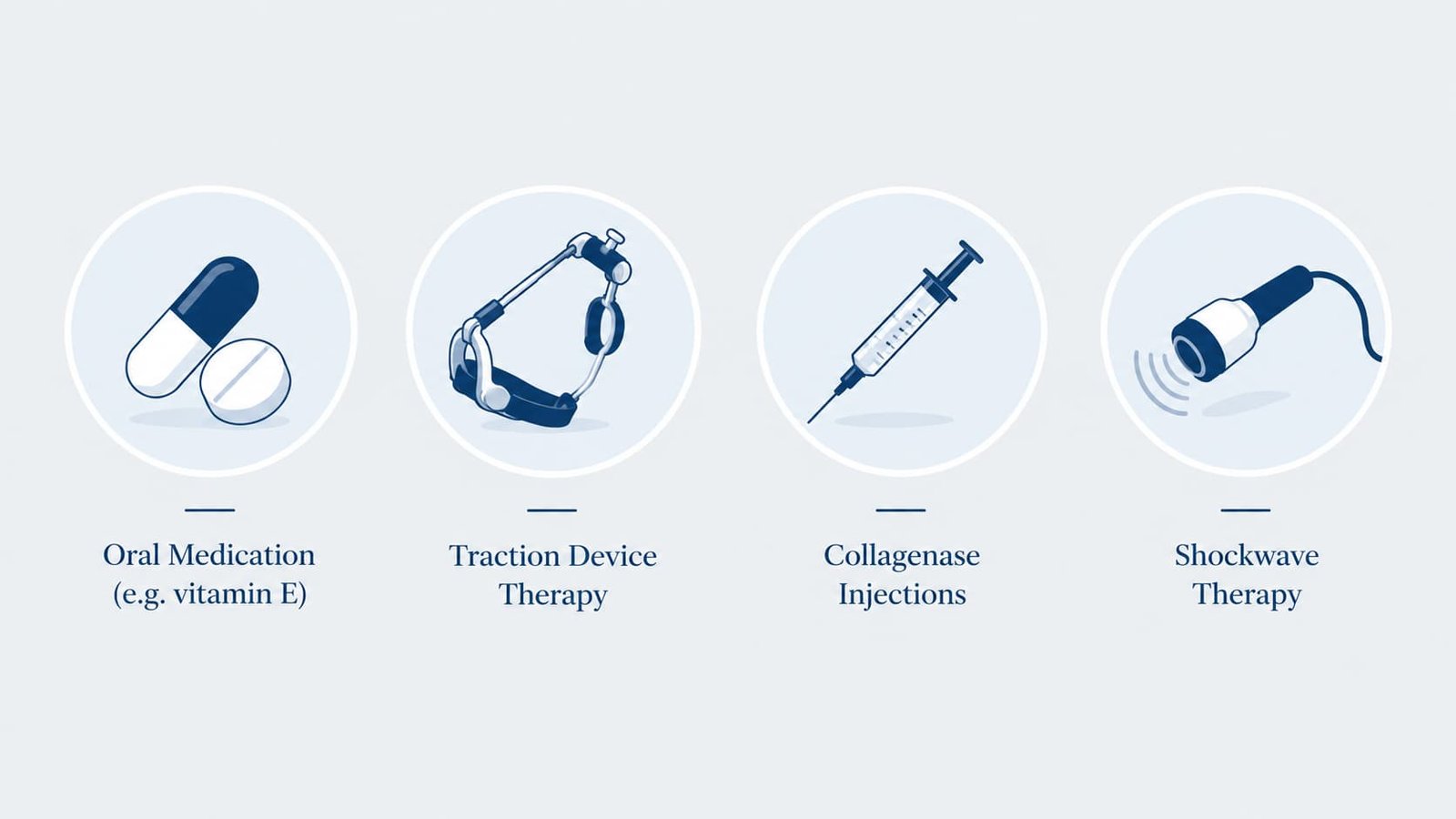
Shockwave therapy delivers acoustic pulses to the affected tissue. Sessions typically run weekly across a structured treatment course. Research reviewed by the World Journal of Men’s Health noted mixed results. Combination protocols produced significant improvement in erectile function scores. Curvature change from shockwave alone remained comparatively modest, though. Most London clinics now position shockwave as an adjunct therapy. Pain relief typically exceeds structural correction with this approach.
Platelet-Rich Plasma and the P Shot Approach
Platelet-rich plasma injections have gained interest as a regenerative option. This sits within the wider field of non-surgical treatment for erectile dysfunction in London. The P Shot treatment, sometimes called the Priapus Shot, uses concentrated platelets. Clinicians draw these platelets from the patient’s own blood sample. The concentrate then goes back into targeted penile tissue. Clinics offering P Shot London treatment position it mainly as functional support. The procedure supports erectile tissue quality rather than curing existing plaque. Interest in P shot UK provision continues rising steadily. Demand for broader penile injection growth procedures has grown alongside this trend. Men researching P shot before and after results should stay realistic. Published evidence for PRP in Peyronie’s disease specifically remains preliminary. Collagenase and traction therapy currently carry stronger supporting evidence. Priapus shot price in London reflects consultation, preparation and technique used. Pricing varies noticeably between individual providers and clinics. The Priapus shot London market has grown alongside broader p injection interest. Patients should discuss expected outcomes candidly before booking any P shot treatment. Cost alone should never guide this decision; evidence and suitability matter more.
Non-Surgical Treatment for Erectile Dysfunction in London
Erectile dysfunction frequently accompanies Peyronie’s disease, particularly with reduced blood flow. Phosphodiesterase-5 inhibitors, such as tadalafil, remain first-line therapy for most men. Daily low-dose use may modestly limit further scarring over time. Vacuum erection devices provide a useful mechanical alternative for many patients. Clinicians often combine these devices with traction therapy for dual benefit. Effective non-surgical treatment for erectile dysfunction in London usually combines several approaches. NICE guidance supports stepped management starting with the least invasive suitable option. This approach fits the individual health profile and personal circumstances involved. Combination therapy often works better than any single option alone. Regular review allows clinicians to adjust the plan as symptoms change.
Surgical Peyronie’s Disease Treatment Options
Surgery becomes the recommended route once curvature stabilises for six months. Significant interference with intercourse also supports moving toward surgical correction. Three main techniques currently dominate UK surgical practice.
Plication Surgery
Plication, including the Nesbit procedure, shortens the longer, unaffected tunica side. This shortened side then matches the scarred, shorter side. The operation typically takes under one hour to complete. Surgeons often perform plication as straightforward day surgery. Success rates for achieving a straight erection sit between 85 and 90 percent. Some overall shortening of length should be expected as a direct trade-off.
Plaque Incision and Grafting
This technique incises the plaque directly and covers the defect with a graft. Length preservation makes this option attractive compared with plication alone. Surgeons generally reserve grafting for severe curvature exceeding 60 to 70 degrees. Complex hourglass deformities also often call for this approach. Temporary or permanent erectile weakness develops in a meaningful minority of cases. Pre-operative erectile function assessment therefore matters considerably beforehand.
Penile Prosthesis Implantation
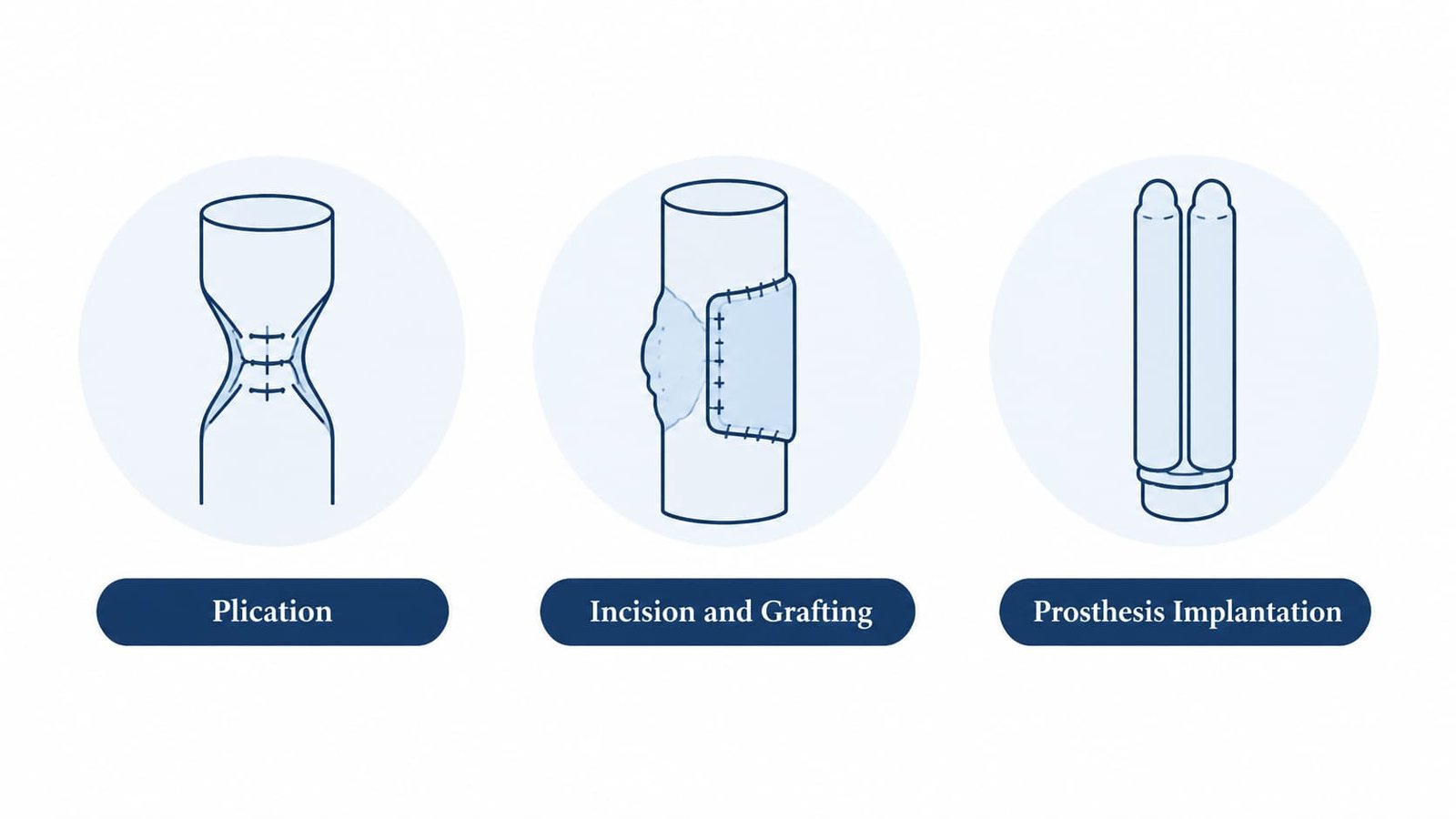
Some men experience both curvature and persistent erectile dysfunction together. An inflatable or malleable prosthesis can restore both function and shape at once. Recovery involves a short hospital stay and device training afterward. Most men resume sexual activity within several weeks of the procedure. This option carries the highest cost among current surgical routes. It also delivers the most predictable combined outcome for severe disease.
Treatment Options at a Glance
A structured comparison helps clarify which option suits which stage of disease.
| Option | Best Suited For | Typical London Cost | Evidence Level |
| Oral medication | Early acute-phase disease | £10–£150/month | Mixed |
| Penile traction therapy | Length preservation, acute/chronic | £150–£400 | Moderate |
| Collagenase injections | Curvature under ~60° | £6,000–£8,000 | Strong |
| PRP / P Shot treatment | Erectile function support | £900-£1500 | Preliminary |
| Shockwave therapy | Pain relief, adjunct use | Course £900–£2,500 | Limited for curvature |
| Plication surgery | Stable curvature under 60° | £5,000–£8,000 | Strong |
| Plaque incision & grafting | Severe curvature, length preserved | £7,000–£10,000 | Strong |
| Penile prosthesis | Combined ED and curvature | £10,000–£15,000+ | Strong |
Comparing Costs and Realistic Outcomes
London private clinics price care for Peyronie’s disease according to complexity. Consultant seniority and hospital overheads also affect final pricing. The following breakdown gives a general guide to current London pricing.
- Initial consultation: £200–£400
- Traction device or vacuum pump: £150–£400
- Collagenase injection course: £6,000–£8,000
- PRP injections: £900–£1500 per session
- Plication surgery: £5,000–£8,000
- Plaque incision and grafting: £7,000–£10,000
- Penile prosthesis implantation: £10,000–£15,000+
No treatment guarantees complete resolution, and realistic goal-setting should shape every consultation. Spontaneous partial improvement occurs in a small minority of men only. Most men still require some form of active management for meaningful change.
Preparing for Peyronie’s Disease Treatment: What to Expect at Consultation
Preparation helps every consultation run efficiently and productively. Men should bring a current list of medications and known allergies. Details of any previous penile trauma also help clinicians assess risk. Clear photographs of the erect penis, taken in good lighting, assist assessment. Many clinics also request a brief symptom and pain history beforehand. Duplex ultrasound scanning typically follows the initial physical examination. Hormone panels and cardiovascular screening sometimes accompany this initial workup. Follow-up reviews then track progress at regular intervals afterward. Non-surgical therapies generally require no significant time away from work. Surgical routes involve short recovery periods and staged follow-up visits.
Living with Peyronie’s Disease During Treatment
A diagnosis need not end sexual intimacy altogether. Simple pain management often helps couples remain active during treatment. Over-the-counter analgesia before intercourse can ease initial discomfort. Generous lubrication and side-lying positions also reduce strain on the area. Open communication between partners typically improves outcomes and reduces anxiety. Anxiety and low mood are common reactions to this diagnosis. UK support services, including Relate counselling, offer confidential guidance for couples. The Men’s Health Forum also provides a helpline for men seeking support. Quitting smoking and managing blood sugar levels may aid tissue recovery. Avoiding vigorous activity during the acute phase limits further micro-injury. Partner involvement in appointments often improves shared understanding of the condition. Patience matters, since most non-surgical therapies take several months to show measurable change.
Choosing a Qualified Peyronie’s Disease Treatment Provider in London
Credentials matter enormously given this field’s sensitive, technical nature. Men should seek consultants holding recognised urological or andrological qualifications. A transparent account of case volume and outcomes also helps. Pshots clinic, led by Dr Syed Nadeem Abbas, sits within London’s wider Harley Street network. This network offers assessment and management pathways for men’s sexual health concerns. These concerns include Peyronie’s disease and related erectile dysfunction. Membership of bodies such as BAUS Andrology adds a further reassurance marker. Published outcome audits and case volume figures indicate genuine sub-specialist experience. NHS pathways remain available at no cost throughout the UK. Waiting times for specialist input or surgery can extend considerably longer, though.
Questions Worth Raising at the First Appointment
Case volume for this specific condition deserves a direct question early on. Revision rates after previous surgical procedures also merit discussion beforehand. Clarifying which non-surgical tools a clinic actually offers helps set expectations. A second opinion remains a reasonable step before committing to surgery. Comparing NHS and private pathways side by side often clarifies genuine priorities. Private care generally offers faster scheduling and greater choice of surgeon. NHS care remains free at the point of use, though waiting lists vary.
Frequently Asked Questions
What is the most effective Peyronie’s disease treatment currently available?
No universally superior option currently exists for every patient. Early acute-phase disease often responds well to traction therapy or oral agents. Collagenase injections also suit many men during this early stage. Stable, severe curvature usually requires surgical correction instead.
Does the P Shot treat Peyronie’s disease directly?
Current evidence positions PRP-based procedures mainly as functional support. These procedures support erectile tissue quality rather than curing existing plaque or curvature.
How much does Peyronie’s disease treatment cost in London?
Costs range from a few hundred pounds for consultations and devices. Complex surgical reconstruction can reach fifteen thousand pounds or more. Final cost depends heavily on severity and technique chosen.
Can Peyronie’s disease resolve without any treatment?
Spontaneous improvement occurs in a small minority of cases only. Most men require some form of active management for meaningful change.
When should surgery replace non-surgical management?
Surgery generally becomes appropriate once curvature stays stable for six months. Significant interference with intercourse also supports this decision.
Does private insurance cover care for Peyronie’s disease in London?
Some insurers cover diagnostics and surgical fees under certain policies. Traction devices, injections and pumps often fall outside standard coverage. Checking pre-authorisation requirements beforehand avoids unexpected costs later.
Can lifestyle changes support recovery alongside medical care?
Smoking cessation and good blood sugar control both support tissue healing. Avoiding vigorous activity during the acute phase may limit further injury.
Is Peyronie’s disease common among UK men?
NHS estimates suggest the condition affects a notable minority of adult men. Prevalence increases with age, particularly from the fifth decade onward.
Key Takeaways
Peyronie’s disease presents a genuinely varied treatment landscape today. Options range from oral medication and traction therapy through to reconstructive surgery. Selecting the right Peyronie’s disease treatment depends on accurate staging and realistic expectations. An honest discussion of evidence with a qualified specialist matters most. London’s private and NHS pathways together offer a full spectrum of care. Outcomes still vary between individuals, techniques and disease severity, though. Given how much staging and timing influence success, what deserves closer attention first?
Read more:
Penile Numbness vs Erectile Dysfunction: What’s the Difference?
P-Shot Near Me: How to Find a Qualified Clinic in the UK
Dr Syed Nadeem Abbas, MBBS, MRCSEd, MSc Aesthetic Plastic Surgery (Distinction) Medical Director, Pshot Clinic | CQC Regulated | Monday to Saturday 10:00–18:00 +44 7955 836986