
Erectile dysfunction affects the relationship dynamic, not the individual one. Research published in the Journal of Sexual Medicine confirms that untreated ED reduces relationship satisfaction in both partners, regardless of who experiences the physical symptom. This is a clinically relevant finding. It reframes the treatment decision as a shared health matter rather than a private one.
Men who consider P shot UK treatment often do so without involving their partner. They research the procedure, assess the Priapus shot price, weigh up the evidence and arrive at a decision alone. That approach is understandable. Men’s intimate health carries significant social stigma in the UK. However, clinical guidance from the British Association of Urological Surgeons (BAUS) consistently places partner communication as a component of effective sexual dysfunction management.
This article provides a structured, medically grounded framework for discussing P shot treatment with a partner. It covers what the treatment involves, what the evidence supports, how to set realistic expectations, and how to approach the conversation in a way that is informed and productive.
What Is the P Shot UK? A Brief Clinical Summary
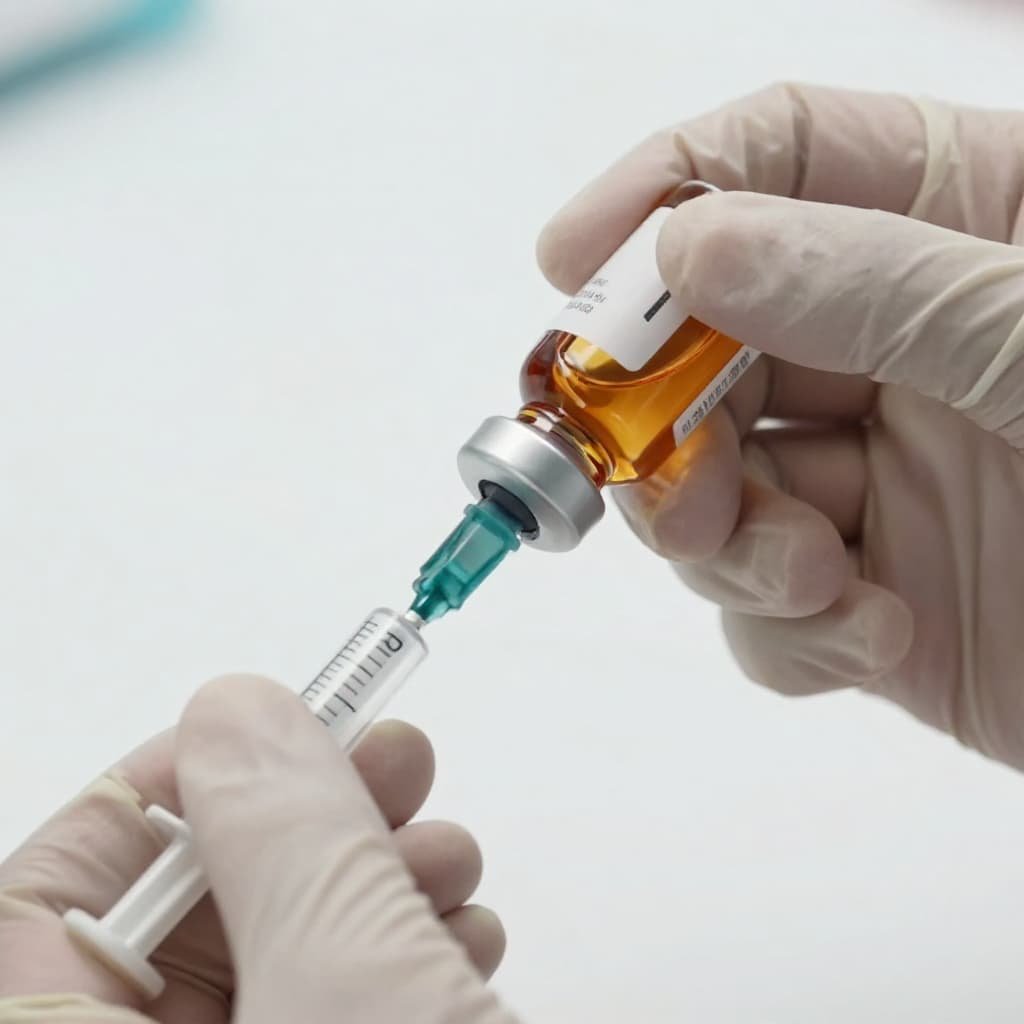
The P shot — formally known as the Priapus Shot — is a non-surgical treatment for erectile dysfunction in London and across the UK. It uses platelet-rich plasma (PRP) derived from the patient’s own blood. A clinician draws a small blood sample, processes it in a centrifuge, and injects the concentrated platelet fraction into penile tissue.
PRP contains growth factors including VEGF (vascular endothelial growth factor), PDGF (platelet-derived growth factor), and TGF-β (transforming growth factor beta). These growth factors stimulate angiogenesis — the formation of new blood vessels — and support tissue regeneration. The mechanism is regenerative, not pharmacological.
This distinction matters when talking to a partner. The P shot does not function in the way that PDE5 inhibitors such as sildenafil or tadalafil do. It does not produce an on-demand effect. It targets the underlying tissue and vascular architecture associated with erectile function. Results, if they occur, develop over weeks rather than hours.
The P-shot is currently classified as an experimental procedure. Cleveland Clinic notes that there is insufficient clinical trial data to confirm its efficacy for erectile dysfunction with statistical certainty. However, several peer-reviewed studies — including a randomised controlled trial published in the Journal of Sexual Medicine (2016) by Matz et al. — report measurable improvements in erectile function scores in treated cohorts.
Presenting this information to a partner with accuracy is the first step toward an informed, shared discussion.
Why Partner Involvement Matters Clinically

The NHS recognises that sexual dysfunction has a biopsychosocial dimension. The NICE clinical guideline CG167 on erectile dysfunction notes that psychological factors — including relationship stress, communication difficulty and performance anxiety — amplify the physiological components of the condition.
When one partner pursues P shot treatment without informing or involving the other, several clinical risks arise:
- Unrealistic expectations in the untreated partner. P shot before and after outcomes vary significantly. Without preparation, a partner may expect rapid, dramatic change that the treatment cannot reliably deliver.
- Exacerbated performance anxiety. If the treated partner does not disclose that they have undergone a PRP-based regenerative treatment for male health in the UK, the pressure surrounding intimacy may intensify rather than reduce.
- Reduced treatment adherence. Studies in couples therapy consistently find that shared understanding of a treatment plan improves follow-through, use of complementary strategies, and overall outcome satisfaction.
The decision to pursue advanced PRP solution for erectile dysfunction becomes more clinically effective when both partners understand the mechanism, timeline and limitations of the intervention.
How to Approach the Conversation: A Structured Framework

Step 1 — Choose the Right Setting and Time
Timing and environment directly influence conversational outcomes. The NHS recommends that sensitive health discussions occur in a calm, private environment, free from distraction or time pressure.
Select a moment when neither partner is stressed, tired or preoccupied. Avoid initiating the conversation immediately before or after sexual activity. A neutral domestic setting — a quiet evening at home, for example — provides the right conditions.
Step 2 — Establish the Medical Context First
Begin by framing the conversation around health rather than sexual performance. Erectile dysfunction is a medical condition. It frequently signals underlying cardiovascular or metabolic concerns. Research from the European Heart Journal demonstrates that ED precedes cardiovascular events by three to five years in a significant proportion of affected men.
Introducing the topic as a health issue normalises it. It removes the implication of personal failing and situates the treatment decision within the broader context of long-term wellbeing.
A factually grounded opening might address:
- The physiological basis of erectile dysfunction
- The vascular mechanism involved
- The recognised association between ED and cardiovascular risk
- The range of non-surgical treatment for erectile dysfunction in London and the UK
Step 3 — Explain the P Shot Treatment Accurately
Provide a factual account of what the pshot involves. Use accessible language without oversimplifying the clinical detail.
Key points to convey include:
What it is.
A PRP-based regenerative therapy for ED that uses the patient’s own blood. No synthetic substances are introduced into the body.
How it works.
The PRP contains growth factors that stimulate blood vessel formation and tissue repair in the penile corpus cavernosum. This is the mechanism behind PRP therapy for men’s performance issues in clinical practice.
What the evidence shows.
Results are variable. Some men report improvements in erectile rigidity, sensitivity, and function within four to eight weeks. P shot before and after outcomes documented in published literature show improvements on validated scoring tools such as the IIEF-5. However, the treatment does not work for all men, and effect size varies.
What it does not do.
It is not a guaranteed enlargement procedure. Claims surrounding penile injection growth should be understood in the context of limited and inconsistent data. Some men report modest girth changes; others do not. This should not be the primary indication for treatment.
What the P-shot before and after period involves.
There is no significant downtime. Men can return to daily activity immediately. Sexual activity is generally permissible within 24 to 48 hours, though clinicians vary in their specific post-procedure guidance.
Step 4 — Discuss the Priapus Shot Price and Practical Considerations
Cost is a practical factor in the joint decision-making process. The priapus shot price in the UK typically ranges between £800 and £2,000 per session, depending on the clinic, the PRP system used, the clinician’s qualifications, and whether a course of treatment is indicated. Male enlargement injections cost UK comparisons suggest this is broadly consistent with other private PRP-based procedures.
A course of treatment — typically two to three sessions spaced four to six weeks apart — is often recommended for optimal outcomes. This represents a significant financial commitment. A partner has a legitimate interest in understanding this.
The conversation should also cover:
- The number of sessions recommended
- Whether any complementary approaches are advised (such as a vacuum erection device post-procedure)
- The follow-up schedule
- What happens if results are not achieved
Step 5 — Address Concerns Without Minimising Them
A partner may express scepticism about the evidence base for P injection therapy. This scepticism is clinically reasonable. The Cleveland Clinic’s published overview of the P-shot states clearly that current clinical trials have not established definitive proof of efficacy. Acknowledging this is more effective than dismissing it.
Conversely, a partner may have concerns about safety. Reassurance here is well-founded. The P shot uses autologous material — the patient’s own blood. The risk of allergic reaction is negligible. The principal risks include localised bruising, temporary swelling, and minor discomfort at the injection site. Serious complications are rare when the procedure is performed by a qualified clinician.
Both perspectives — clinical uncertainty about efficacy and established safety — should be presented together.
What Partners Often Ask: A Clinical Response Guide
Is This Different from Viagra?
Yes. Sildenafil and tadalafil are phosphodiesterase type 5 inhibitors. They temporarily increase blood flow to penile tissue by blocking the enzyme that constricts blood vessels. They work acutely and require dosing before sexual activity.
The P shot is not an acute intervention. It is a regenerative treatment for male health in the UK that aims to address vascular and tissue-level changes over time. The two approaches are not mutually exclusive. Some men use PRP therapy for men’s performance issues alongside pharmacological treatment during the recovery period.
How Long Will Results Last?
Published data on durability is limited. Clinical observation and patient-reported outcomes suggest that effects may persist for 12 to 18 months in men who respond to treatment. Repeat sessions — sometimes referred to as maintenance injections — are used to sustain results. This is consistent with how PRP is used in other medical specialties, such as orthopaedics.
Will This Fix the Problem Completely?
Not necessarily. ED is multifactorial. Vascular disease, diabetes, neurological conditions, hormonal imbalance, and psychological factors all contribute. Natural ED treatment using PRP therapy addresses the vascular and tissue component. It does not modify hormone levels, resolve diabetic neuropathy, or address performance anxiety.
Men with complex or longstanding ED often benefit from a combined approach. This may include lifestyle modification, psychological support, pharmacological management, and PRP-based regenerative therapy for ED.
Should We See Anyone Together?
This is a clinically sound suggestion. Psychosexual counselling is a recognised adjunct to the medical management of ED. NHS guidance and BAUS recommendations both acknowledge the value of couples-based sexual health support. Pursuing both a physical treatment and couples communication support simultaneously is evidence-consistent practice.
The Role of Shared Decision-Making in ED Treatment
Shared decision-making is a formal framework in UK clinical practice, endorsed by NICE and embedded within NHS England’s patient-centred care model. It requires that clinicians ensure patients understand the benefits, risks, and alternatives to any proposed treatment. It also requires that patients actively participate in the decision, rather than passively accept recommendations.
Applying this framework at home — between partners — reflects the same principle. A partner who understands what men’s intimate health treatment in London involves, what the evidence supports, what the realistic P shot before and after outcomes are, and what the financial and practical implications look like, is able to participate meaningfully in the decision.
At pshots clinic uk, Dr Syed Nadeem Abbas (MBBS, MRCS, MRCGP, MSc Aesthetic Plastic Surgery) offers structured consultations that include a full clinical assessment and detailed explanation of expected outcomes — a process designed to support this kind of informed, shared approach.
Limitations and Realistic Expectations
It is clinically important to state these clearly before any treatment decision is made.
- The P shot UK is not a first-line treatment for ED. NICE guideline CG167 recommends lifestyle intervention and PDE5 inhibitors as initial management.
- It is not available on the NHS and is not covered by most private health insurance policies.
- Evidence quality remains limited. Most studies are small, uncontrolled, or short-term. Larger, randomised controlled trials are needed.
- Results are not guaranteed. A proportion of men who undergo erectile dysfunction treatment London experience little to no measurable improvement.
- It is not a weight-loss intervention, a testosterone therapy, or a psychological treatment. Men with ED primarily driven by psychogenic factors may benefit more from therapy than from PRP injection.
Communicating these limitations to a partner honestly is not a deterrent to treatment. It is the foundation of a treatment decision that both partners can commit to and evaluate fairly.
Frequently Asked Questions

Q: Does the P shot affect a partner’s experience?
A: The treatment uses the patient’s own blood. No synthetic material remains in penile tissue. There is no documented risk to a partner during sexual activity following the procedure.
Q: How soon after treatment can a couple resume sexual activity?
A: Most clinicians recommend a period of 24 to 48 hours before resuming intercourse. Post-procedure guidance varies by clinic. Patients receive specific instructions at their appointment.
Q: Is it normal to see no change immediately?
A: Yes. The P shot works through gradual tissue regeneration. Improvements, when they occur, typically develop over four to twelve weeks. Immediate results are not expected.
Q: Can the P shot be combined with other treatments?
A: Yes. Non-surgical treatment for erectile dysfunction in London frequently involves combining approaches. PRP therapy may be used alongside pharmacological treatment, shockwave therapy, or lifestyle modification. A clinician will advise on the most appropriate combination for an individual’s clinical profile.
Q: How do we know which clinic to choose?
A: Patients should verify that the treating clinician holds full GMC registration, that the clinic operates within a regulated clinical governance framework, and that the PRP system used meets professional standards. Harley Street and Marylebone-based clinics with board-certified clinicians provide a higher level of accountability.
Key Takeaways
Erectile dysfunction is a health condition. Treating it with evidence-informed options — including PRP-based regenerative therapy for ED — is a reasonable clinical choice when first-line therapies are insufficient or unsuitable. The decision to pursue this path is strengthened when both partners understand the procedure, the evidence, the limitations, and the expected timeline.
The conversation itself — approached with clinical accuracy, mutual respect, and realistic expectations — is not separate from the treatment process. It is part of it. A partner who understands what P shot UK treatment involves is a partner who can support recovery, participate in shared decision-making, and interpret outcomes accurately.
The question that follows naturally from this is not whether to have the conversation, but whether the quality of information shared in it will be sufficient to make the decision a genuinely informed one.
Read more: What Qualifications Should a P Shot London Clinician Have?
Your First P Shot London Consultation – What Happens Step by Step
P shot Treatment London


