Early Signs of Lichen Sclerosus in Men: Symptoms Not to Ignore

✅Medically reviewed | Updated September 2026
Lichen sclerosus is a chronic inflammatory skin condition affecting genital skin in men, often developing slowly and escaping notice until scarring has already begun. Recognising the early signs of lichen sclerosus allows men to seek treatment before the condition narrows the foreskin, tightens the tip of the penis, or restricts normal urination. Many men mistake the first symptoms for irritation, a minor infection, or simple dryness, and delay a medical review. This article sets out the early signs of lichen sclerosus clinicians look for, explains how the condition develops, and outlines evidence-based treatment pathways drawn from NHS and British Association of Dermatologists guidance. It also considers the wider effect of long-term scarring on erectile function and reviews non-surgical options available across London clinics for related sexual health concerns.
What Is Lichen Sclerosus?
Lichen sclerosus is a long-term inflammatory skin disorder. NHS guidance describes the condition as causing itchy white patches, most often on genital skin. The exact cause remains unclear, though clinicians link the condition to an overactive immune response affecting skin cells. Lichen sclerosus is not an infection and cannot pass between sexual partners. In men, the British Association of Dermatologists refers to genital lichen sclerosus by a second name: balanitis xerotica obliterans. The condition typically develops on the foreskin and glans, the tip of the penis, though patches occasionally appear elsewhere on the body.
Why Early Signs of Lichen Sclerosus Deserve Attention
Delayed diagnosis allows inflammation to progress unchecked. Untreated lichen sclerosus can scar the foreskin, narrow the urinary opening, and distort the shape of the glans. Identifying early signs supports long-term skin structure, sexual function, and urinary health. Peer-reviewed dermatology literature links delayed or inadequate treatment with a higher risk of secondary complications, including chronic discomfort and reduced tissue elasticity.
How Common Is Lichen Sclerosus in Men?
Lichen sclerosus occurs more often in women, particularly after menopause, though men and boys develop the condition too. Exact UK prevalence in men remains difficult to establish, since many cases go unreported or misdiagnosed as balanitis or a fungal infection. Clinical literature notes a strong association between lichen sclerosus and an intact, uncircumcised foreskin; the condition rarely develops in men circumcised in infancy. Men of any age can develop lichen sclerosus, including boys before puberty and men in later adulthood.
Early Signs of Lichen Sclerosus in Men
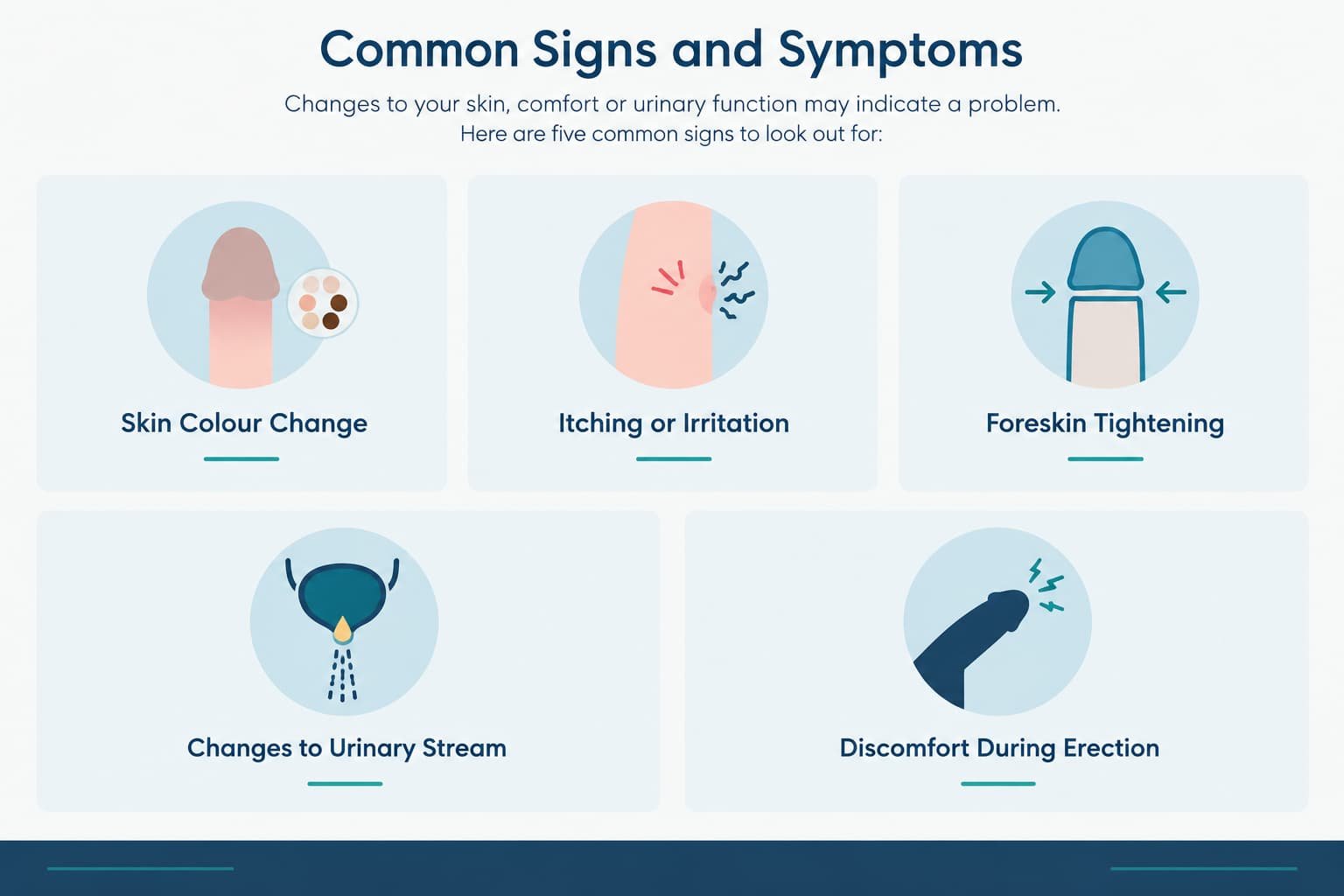
Recognising the early signs of lichen sclerosus supports timely referral and treatment. Presentation varies between individuals, and some men notice mild changes only after several months.
Changes in Skin Colour and Texture
The foreskin and glans often develop pale, whitish patches. Affected skin may appear thickened, shiny, or crinkled compared with surrounding tissue. Some men notice a firm, waxy texture at the tip of the penis. These skin changes represent one of the clearest early signs of lichen sclerosus and often appear before pain or functional symptoms begin.
Itching, Soreness and Irritation
Persistent itching affects many men with early-stage disease. The skin may feel sore, tender, or easily irritated by clothing or contact. Some men describe a burning sensation after urination. Itching that does not resolve with standard hygiene changes warrants clinical review.
Difficulty Retracting the Foreskin
Progressive tightening of the foreskin, known clinically as phimosis, ranks among the most commonly reported symptoms. Men may notice the foreskin no longer retracts as easily as before, or that retraction causes small tears or bleeding. This symptom often prompts the first GP consultation.
Urinary Symptoms
Scarring near the urethral opening can narrow the urinary stream. A thin, split, or slow urine stream can signal early structural change caused by lichen sclerosus. Some men experience a sensation of incomplete bladder emptying or mild spraying during urination.
Discomfort During Erections
Tightened or scarred skin restricts normal stretching during an erection. Pain, tightness, or visible cracking of the skin during arousal can indicate progressing disease. Left unaddressed, this symptom often worsens over subsequent months.
What Causes Lichen Sclerosus?
The precise cause of lichen sclerosus remains unknown. Current dermatological understanding points toward an immune-mediated process, in which the immune system targets healthy skin tissue. Genetic predisposition, chronic irritation, and hormonal factors may all contribute, though no single trigger explains every case. Clinical evidence consistently shows very low incidence among men circumcised early in life, suggesting prolonged exposure of the glans to trapped moisture and friction plays a contributing role.
Distinguishing Lichen Sclerosus From Similar Conditions
Several genital skin conditions produce overlapping symptoms, which occasionally delays accurate diagnosis. Balanitis, a general term for inflammation of the glans, can cause redness, soreness, and discharge without the characteristic whitening seen in lichen sclerosus. Fungal infections such as candidal balanitis typically respond to antifungal treatment within days, whereas lichen sclerosus does not improve without steroid therapy. Psoriasis affecting genital skin tends to appear as well-defined red patches rather than pale, thickened tissue. Lichen planus, another inflammatory skin condition, can affect genital skin but usually produces purplish, flat-topped lesions rather than white plaques. Because these conditions require different management approaches, an accurate clinical diagnosis matters. Men unsure whether symptoms match the early signs of lichen sclerosus described above should avoid self-treating with over-the-counter antifungal creams and should arrange a GP review instead.
Diagnosing Lichen Sclerosus in Men
Clinical Examination
A GP or dermatologist typically diagnoses lichen sclerosus through visual examination and a review of reported symptoms. Distinctive whitish, thickened skin, combined with the pattern of early signs described above, often allows a confident diagnosis without further testing.
When a Biopsy Becomes Necessary
A skin biopsy may confirm the diagnosis when presentation appears atypical or when a clinician needs to rule out other skin conditions. Biopsy also helps exclude precancerous change in longstanding or treatment-resistant cases. NICE guidance and dermatology literature support biopsy where a lesion shows irregular pigmentation, non-healing ulceration, or fails to respond to standard steroid treatment.
Why These Early Signs Should Not Be Ignored
Risk of Scarring and Phimosis
Ongoing inflammation gradually replaces healthy elastic tissue with fibrous scar tissue. This scarring process can permanently narrow the foreskin opening, sometimes requiring surgical correction where topical treatment alone cannot restore normal retraction.
Urethral Narrowing
Long-standing lichen sclerosus occasionally extends into the urethral opening, producing a condition called meatal stenosis. Severe narrowing can restrict urinary flow and, in advanced cases, require surgical widening of the urethral opening.
Association With Penile Cancer
Peer-reviewed research, including studies indexed on PMC, associates a proportion of penile cancer cases with longstanding, poorly controlled lichen sclerosus. Overall risk remains low, and most men treated promptly never develop malignant change. Regular follow-up nonetheless forms an important part of long-term management, particularly for men with persistent or recurrent symptoms.
Treatment Options for Lichen Sclerosus
Topical Corticosteroids
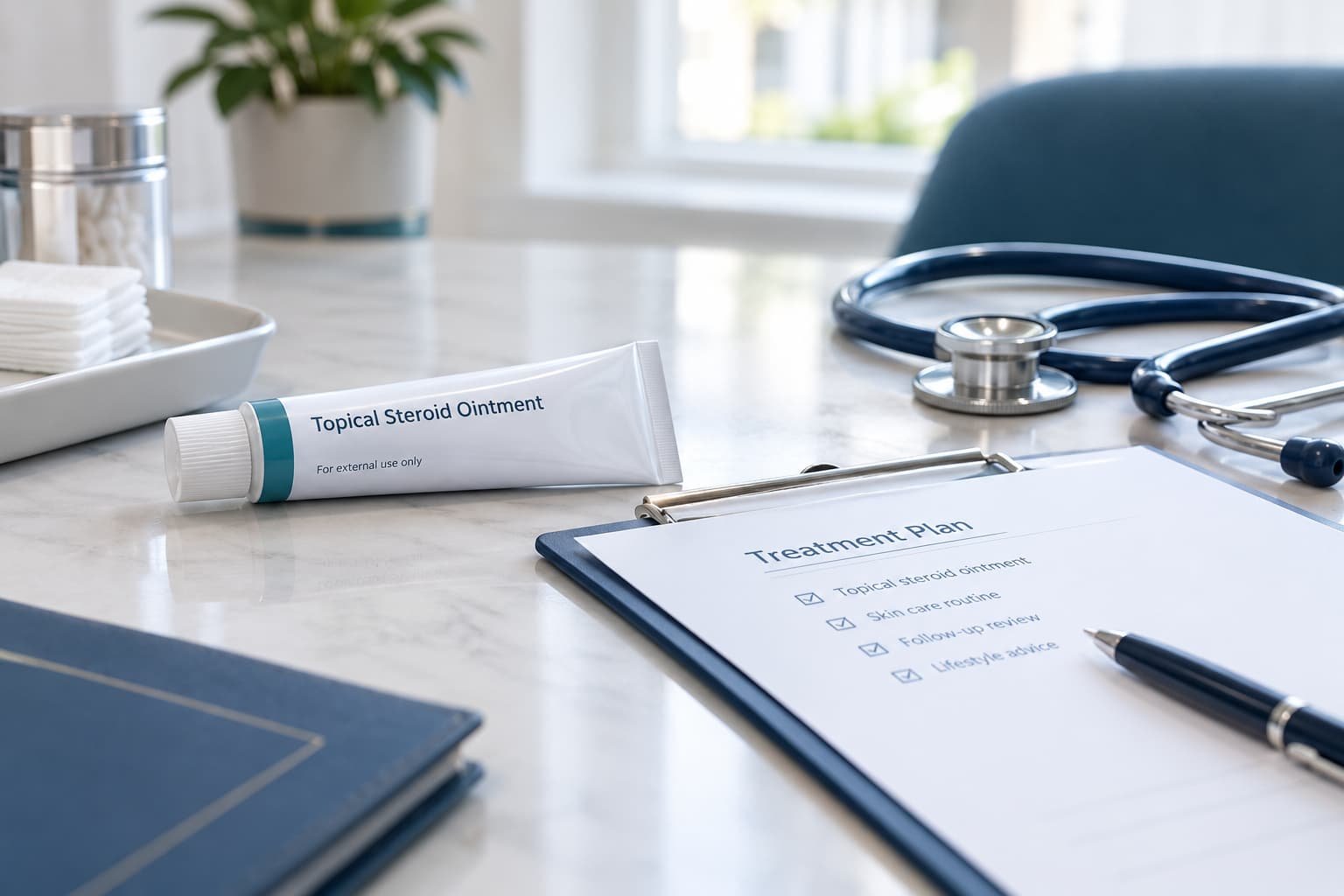
High-potency topical steroid ointment forms the first-line treatment recommended by the British Association of Dermatologists. Regular application over several months typically reduces inflammation, restores more normal skin texture, and controls itching. Lower-strength maintenance therapy often continues long term to prevent flare-ups.
Circumcision
Circumcision offers a definitive surgical option for men with persistent phimosis or repeated symptom flares despite steroid treatment. Removing affected foreskin tissue often resolves retraction difficulty and reduces the risk of further scarring, though lichen sclerosus can occasionally recur on remaining glans skin.
Emollients and Second-Line Options
Regular use of a plain, fragrance-free emollient supports the skin barrier alongside steroid treatment and during maintenance phases. Where topical steroids prove insufficient or produce side effects, dermatologists sometimes consider second-line options such as topical calcineurin inhibitors, though evidence for these remains less extensive than for corticosteroids. Referral to a specialist dermatology or urology clinic becomes appropriate when standard treatment fails to control symptoms within the expected timeframe.
Ongoing Monitoring
Because lichen sclerosus carries a small long-term cancer risk, clinicians typically recommend periodic skin review, even once symptoms settle. Long-term monitoring remains an essential part of managing lichen sclerosus safely. Men with a history of poorly controlled disease, or with previous atypical biopsy results, may need more frequent review than those with well-controlled, mild disease.
Psychological Impact of Lichen Sclerosus
A chronic genital skin condition can affect confidence and wellbeing, even when physical symptoms remain mild. Discomfort during intimacy, visible skin changes, and uncertainty about long-term outlook contribute to anxiety for some men. Clear information about diagnosis, treatment, and expected outcomes helps reduce this uncertainty. Support from a GP, dermatologist, or counsellor remains available for men finding the condition difficult to manage emotionally, and open discussion with a healthcare professional forms a normal part of ongoing care.
Lichen Sclerosus, Erections and Sexual Health
Long-standing scarring from lichen sclerosus can restrict normal tissue stretch, sometimes contributing to painful or reduced-quality erections. Erectile difficulty in this context stems from structural skin changes rather than vascular or hormonal causes, and dermatological treatment of the underlying condition remains the clinical priority.
Separately, men experiencing erectile dysfunction from other, unrelated causes sometimes explore non-surgical treatment for erectile dysfunction in London, including PRP-based injectable treatment, marketed under the name P shot treatment or Priapus shot. A P shot treatment, sometimes called a p injection, uses platelet-rich plasma prepared from a patient’s own blood and injected into penile tissue. Clinics offering the Priapus shot London providers describe, including services researched under the term P shot London, position the treatment as a non-surgical treatment for erectile dysfunction in London, distinct from dermatological management of skin conditions such as lichen sclerosus. Some London clinics, including pshots clinic uk under the clinical direction of Dr Syed Nadeem Abbas, list P shot treatment among a wider range of men’s sexual health services.
Priapus shot price in the UK commonly ranges between roughly £900 and £1,500 per session, and P shot UK providers generally recommend a full consultation before treatment. Marketing material describing penile injection growth and P shot before and after results should be interpreted cautiously; clinical evidence for the P shot remains limited, and outcomes vary between individuals. A P shot treatment does not treat lichen sclerosus and does not replace dermatological or urological care for scarring-related symptoms. Men with erectile difficulty linked to lichen sclerosus scarring should address the underlying skin condition with a dermatologist or urologist before considering a p injection or any elective treatment for sexual function.
Choosing a Clinic for Related Sexual Health Concerns
Men researching options for erectile difficulty linked to scarring, or considering an elective treatment such as the P shot, benefit from checking a provider’s clinical credentials before booking a consultation. A registered medical practitioner should lead any P shot London consultation, with a documented assessment of suitability and a clear explanation of realistic, evidence-based outcomes. Reputable Priapus shot London clinics provide a thorough medical history review and screen for conditions, including active lichen sclerosus, that may affect suitability for injectable treatment. Transparent pricing, a documented consent process, and realistic discussion of limitations distinguish a responsible provider from purely promotional marketing.
Living With Lichen Sclerosus: Practical Management
Simple daily measures support medical treatment. Avoiding soap, shower gel, and other irritant products on affected skin reduces flare frequency. A plain emollient can replace soap as a gentler cleansing alternative. Loose-fitting underwear reduces friction against sensitive skin. Attending scheduled follow-up appointments allows a clinician to adjust treatment and monitor for complications.
When to See a Doctor
Any man noticing persistent white patches, itching, tightening of the foreskin, or a change in urinary stream should arrange a GP appointment. Prompt review of these early signs reduces the risk of long-term scarring and supports better treatment outcomes. Sudden pain, bleeding, ulceration, or a rapidly changing lesion warrants urgent assessment.
Frequently Asked Questions
Is lichen sclerosus in men contagious?
No. Lichen sclerosus is not an infection and cannot pass between sexual partners.
Can lichen sclerosus be cured?
No permanent cure currently exists. Topical steroid treatment controls symptoms effectively for most men, and long-term maintenance therapy helps prevent flare-ups.
Does lichen sclerosus always require circumcision?
No. Many men manage symptoms successfully with topical steroids alone. Circumcision becomes an option when phimosis persists or recurs despite medical treatment.
Can lichen sclerosus affect fertility?
Lichen sclerosus primarily affects skin structure rather than reproductive organs directly, though severe scarring can occasionally complicate intercourse. Specific fertility concerns should be discussed with a urologist.
Is a P shot treatment a cure for lichen sclerosus?
No. A P shot treatment addresses erectile dysfunction through PRP injection and does not treat the underlying skin inflammation or scarring caused by lichen sclerosus.
How often should follow-up appointments happen?
Follow-up frequency depends on symptom severity and treatment response. Many clinicians recommend annual review once symptoms stabilise, in line with general dermatology monitoring guidance.
Can lichen sclerosus come back after circumcision?
Recurrence on remaining glans skin is possible, though circumcision generally reduces the frequency and severity of symptoms for most men.
Should erectile difficulty from lichen sclerosus scarring be treated with a P shot?
Scarring-related erectile difficulty should first be assessed by a dermatologist or urologist. A P shot treatment addresses erectile function through PRP injection and does not resolve the underlying skin scarring.
Outlook for Men Diagnosed With Lichen Sclerosus
Most men diagnosed early and treated consistently achieve good long-term control of symptoms. Regular steroid application, avoidance of irritants, and scheduled monitoring together reduce the likelihood of significant scarring. Men who delay diagnosis, or who apply treatment inconsistently, face a higher chance of progressive tightening, urinary symptoms, and the need for surgical correction. Outcomes therefore depend heavily on how quickly the early signs of lichen sclerosus receive medical attention and how consistently treatment continues once prescribed. A realistic, well-informed approach to diagnosis and ongoing care supports the best achievable long-term result for most men.
Key Takeaways
Lichen sclerosus in men remains a manageable condition when identified and treated early. Recognising the early signs of lichen sclerosus protects skin structure, urinary function, and long-term sexual health. NHS and British Association of Dermatologists guidance both support prompt GP assessment and consistent long-term monitoring. Delayed diagnosis increases the risk of scarring, urethral narrowing, and, in rare cases, malignant change. Genital skin changes deserve attention rather than dismissal as minor irritation. What would change if more men recognised these signs before scarring became permanent?
Read more:
What Are the First Signs of Erectile Dysfunction?
P-Shot Near Me: How to Find a Qualified Clinic in the UK
Dr Syed Nadeem Abbas, MBBS, MRCSEd, MSc Aesthetic Plastic Surgery (Distinction) Medical Director, Pshot Clinic | CQC Regulated | Monday to Saturday 10:00–18:00 +44 7955 836986