Common Questions About Erectile Dysfunction: What Doctors Hear Most Often

✅Medically reviewed | Updated September 2026
Erectile dysfunction remains one of the most common reasons men book a private consultation. Many men still hesitate to raise the topic openly. Silence around the condition often causes more distress than the condition itself. Doctors across general practice and specialist clinics hear the same recurring questions about erectile dysfunction. These patterns repeat from London teaching hospitals to Harley Street practices. This article addresses the questions about erectile dysfunction that clinicians hear most often. Coverage includes causes, diagnosis, established medical treatments, and newer non-surgical approaches. Information here draws on NHS guidance, NICE clinical knowledge summaries, and peer-reviewed research. Private clinics increasingly supplement NHS pathways for time-pressed patients. Both routes of care share the same underlying clinical evidence base. No single treatment suits every patient, and outcomes vary between individuals. This overview stays evidence-based rather than promotional. Readers can use it to prepare informed questions before a doctor’s appointment.
Understanding Erectile Dysfunction: The Basics
What Is Erectile Dysfunction?
Erectile dysfunction means persistent difficulty achieving or maintaining an erection. The erection must be firm enough for satisfactory sexual activity. Occasional difficulty happens to most men and rarely signals a problem. A pattern lasting three months or more usually needs assessment. NICE clinical knowledge summaries use this three-month threshold as a working definition. A single difficult episode does not amount to a diagnosis.
Does Erectile Dysfunction Ever Resolve on Its Own?
Mild, stress-related episodes sometimes resolve without formal treatment. Removing a triggering factor, such as acute stress, can restore normal function. Chronic or worsening symptoms rarely resolve without addressing the underlying cause. Self-resolution should not replace proper medical assessment. Assuming symptoms will disappear alone risks delaying diagnosis of a treatable condition.
How Common Is Erectile Dysfunction in the UK?
Erectile dysfunction affects a large share of UK men. NHS estimates suggest around half of men aged 40 to 70 experience some erectile difficulty. Prevalence rises steadily with age. Younger men increasingly report symptoms too, often linked to stress or lifestyle factors. Age alone does not determine risk, since cardiovascular health plays an equally significant role. Rising rates among younger men reflect broader lifestyle and mental health trends.
What Effect Does Erectile Dysfunction Have on Wellbeing?
Erectile dysfunction often affects confidence and general wellbeing. Research links the condition to lower self-esteem and relationship strain. Anxiety about performance can worsen symptoms over time, creating a difficult cycle. Addressing the psychological impact matters as much as treating the physical cause. Support from a partner or counsellor often improves overall treatment outcomes.
Questions About Erectile Dysfunction: Causes and Diagnosis
What Causes Erectile Dysfunction?
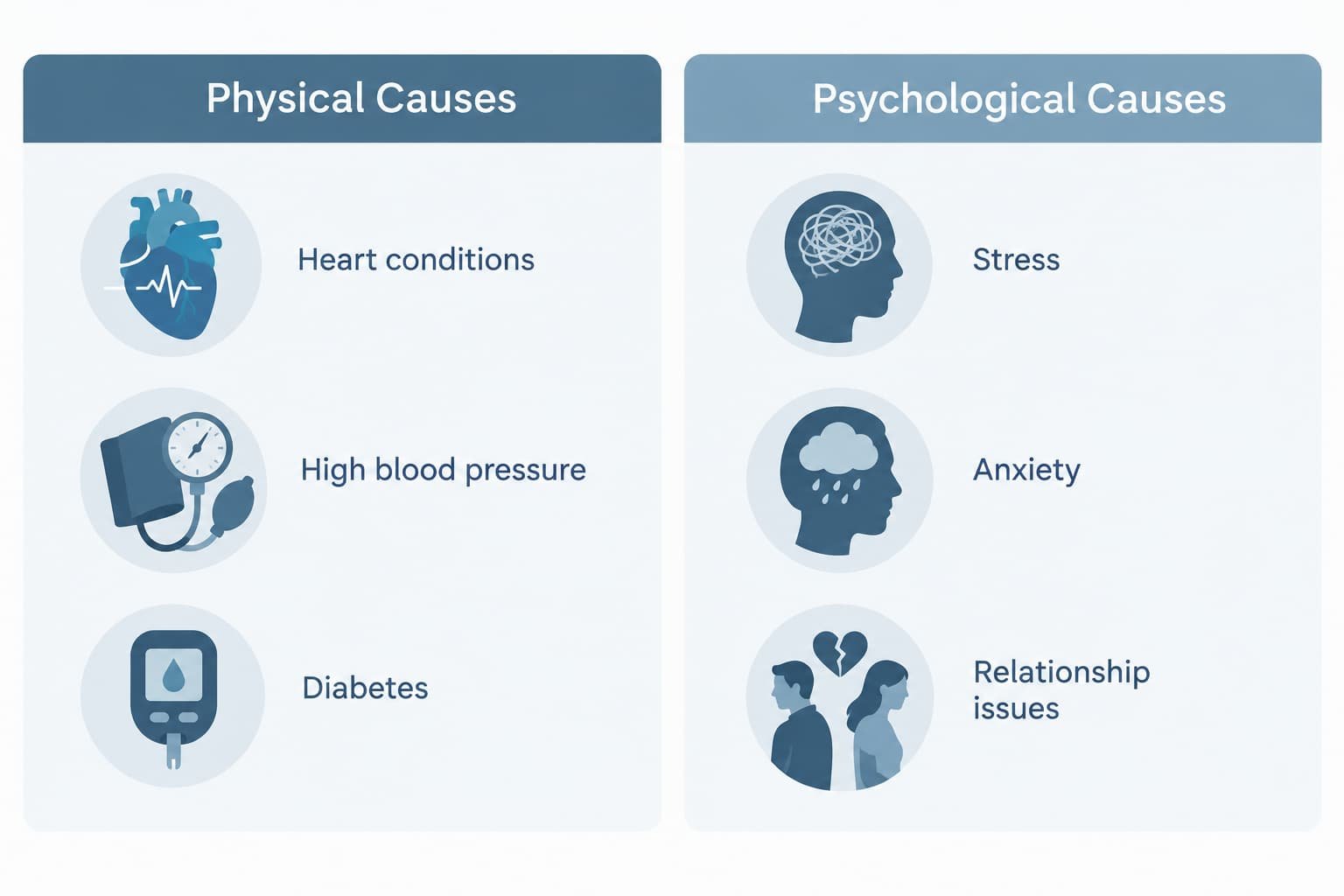
Doctors frequently answer questions about erectile dysfunction causes during consultations. Causes generally fall into physical, psychological, or mixed categories. Most cases involve more than one contributing factor. Identifying the dominant cause guides the treatment plan.
Physical Causes
Physical causes include cardiovascular disease, diabetes, and high blood pressure. High cholesterol and neurological conditions also contribute significantly. Low testosterone and previous pelvic surgery increase risk further. Certain medications list erectile dysfunction as a known side effect. Healthy blood flow underpins erectile function, so vascular disease often causes the condition directly. Smoking and obesity compound vascular risk considerably over time.
Psychological Causes
Psychological causes include stress, anxiety, and depression. Relationship difficulties often play a contributing role. Performance anxiety alone can trigger a lasting cycle of difficulty. Mixed cases, combining physical and psychological factors, appear often in clinical practice. A thorough history helps separate these overlapping contributing factors.
Is Erectile Dysfunction a Warning Sign of Other Health Problems?
Erectile dysfunction sometimes signals an underlying cardiovascular condition. Symptoms can appear before other warning signs develop. Peer-reviewed urology research links erectile dysfunction to raised cardiovascular risk. Doctors often use the symptom as a prompt to check blood pressure and cholesterol. Ignoring persistent symptoms can delay diagnosis of a more serious underlying condition. Early investigation sometimes uncovers previously undetected diabetes or hypertension.
What Tests Confirm a Diagnosis?
Diagnosis usually starts with a medical history and physical examination. Blood tests check testosterone, glucose, and cholesterol levels. Doctors may also check blood pressure and perform a genital examination. Specialist vascular assessment follows in select cases only. A GP typically coordinates initial investigation before any specialist referral. Psychological screening sometimes forms part of a full assessment too.
What Happens During a Specialist Consultation?
A specialist consultation begins with a detailed medical and sexual history. Clinicians review current medications and existing health conditions carefully. Physical examination checks for signs relevant to erectile function. Blood tests often follow to rule out hormonal or metabolic causes. Clinicians then discuss suitable treatment options based on findings. Follow-up appointments monitor response and adjust the plan as needed.
Why Do Many Men Delay Seeking Help?
Stigma remains a major barrier to early treatment. Surveys on male health consistently report reluctance to discuss sexual symptoms. Embarrassment often outweighs concern about underlying health risks. Delay rarely improves outcomes and sometimes allows an underlying condition to progress unchecked. Private clinics offer an alternative route for men uncomfortable with NHS waiting times. Confidential consultation can reduce the barrier that stigma creates.
Common Questions About Erectile Dysfunction Treatment Options
Can Erectile Dysfunction Be Treated?
Erectile dysfunction responds well to treatment in most cases. NICE guidance recommends addressing underlying causes first. Lifestyle changes should accompany any medical treatment plan. Treatment choice depends on cause, severity, and patient preference.
Oral Medication
Phosphodiesterase type 5 inhibitors remain first-line treatment for most men. Sildenafil, tadalafil, and vardenafil fall into this drug class. These medications increase blood flow to the penis during arousal. Sildenafil acts within about an hour and lasts several hours. Tadalafil lasts considerably longer, allowing more spontaneous use. Effectiveness varies between individuals, and medication does not suit everyone. Men taking nitrate medication should avoid this drug class entirely. A doctor should review medical history before prescribing any option.
Lifestyle Modification
Lifestyle changes support treatment and sometimes resolve mild cases alone. Regular exercise improves circulation and cardiovascular health markedly. Smoking cessation and reduced alcohol intake both help erectile function. Weight management addresses a major modifiable risk factor. NHS guidance treats lifestyle change as a foundation, not a replacement for medical care. Sleep quality also influences hormone levels relevant to erectile function. Dietary patterns rich in vegetables and healthy fats support vascular health.
Vacuum Devices and Other Mechanical Options
Vacuum erection devices draw blood into the penis using negative pressure. A constriction ring then maintains the erection during activity. These devices suit men who cannot take oral medication safely. Correct technique matters, so initial guidance from a clinician helps.
Psychological Support and Counselling
Sex therapy and cognitive behavioural therapy help men with psychological causes. Couples counselling sometimes addresses relationship factors contributing to symptoms. NHS talking therapies offer a recognised route to psychological support. Combining counselling with medical treatment often improves overall outcomes.
How Do Doctors Choose Between Treatment Options?
Doctors weigh cause, severity, and patient preference when recommending treatment. Cardiovascular risk factors influence which medications remain safe to prescribe. Psychological causes often prompt a referral toward counselling alongside medication. Patients unable to tolerate oral medication may explore mechanical or injectable options. A personalised plan generally produces better results than a standardised approach.
Surgical Options for Persistent Cases
Penile implants remain an option when other treatments fail repeatedly. Surgery carries recognised risks and requires careful patient selection. NICE guidance reserves this option for refractory cases only. Specialist urological assessment precedes any surgical referral.
Risks and Side Effects of Common Treatments
Side Effects of Oral Medication
Common side effects include headache, flushing, and mild indigestion. Vision changes and nasal congestion occur less frequently. Serious side effects remain rare but require immediate medical attention. Priapism, a prolonged erection lasting several hours, needs emergency care.
Safety Considerations for Injectable Treatments
Platelet-rich plasma injections carry a lower allergic reaction risk than external agents. Bruising, swelling, and temporary discomfort commonly occur after injection. Infection risk remains low when a qualified clinician uses sterile technique. Patients should disclose bleeding disorders or blood-thinning medication beforehand. Mild numbness or tenderness can persist for a few days afterward. Clinicians should provide clear aftercare instructions following any injectable procedure.
Non-Surgical Treatment for Erectile Dysfunction in London

Private clinics across London increasingly discuss regenerative and injectable options with patients. These approaches sit alongside, rather than replace, established medical treatment. Interest has grown despite a still-developing evidence base. Regulatory oversight for injectable treatments differs from that governing licensed medication.
What Is the P Shot Treatment?
The P shot treatment, also called the Priapus shot, uses platelet-rich plasma from a patient’s own blood. Clinicians draw blood, process it, then inject the resulting plasma into penile tissue. Platelet-rich plasma contains growth factors that may support tissue repair. Clinicians classify the P injection procedure as a non-surgical treatment for erectile dysfunction in London and other UK cities. Clinics offering P shot London and Priapus shot London procedures position the treatment as an adjunct, not a cure. Sessions typically take place under local anaesthetic in an outpatient setting.
Does Penile Injection Growth Have Supporting Evidence?
Evidence for penile injection growth from platelet-rich plasma remains limited. Small studies report improved erectile function scores in some patients. Sample sizes stay small, and long-term data remain scarce. NICE has not issued specific guidance on this treatment. Claims of guaranteed size or performance gains lack robust scientific backing. Further randomised trials would strengthen confidence in reported outcomes.
P Shot Before and After: What Realistic Outcomes Look Like
Patients researching P shot before and after results should treat photographs with caution. Individual response varies considerably between patients. Results depend on baseline health, injection technique, and underlying cause. Marketing images rarely reflect the full range of outcomes. A qualified clinician should discuss realistic expectations before any procedure.
How Does the P Shot Compare with Other Non-Surgical Options?
Shockwave therapy represents another non-surgical option under clinical discussion. Shockwave therapy uses acoustic waves to stimulate blood vessel growth. Evidence for shockwave therapy remains similarly preliminary but is growing steadily. Clinicians sometimes combine approaches depending on individual assessment findings. Neither option currently replaces established first-line medical treatment.
Priapus Shot Price and Access in the UK
Priapus shot price varies between clinics and depends on sessions required. The P shot UK market includes specialist men’s health clinics and general aesthetic providers. Verifying practitioner qualifications matters before booking any procedure. Dr Syed Nadeem Abbas leads Pshots clinic in London, which offers this procedure alongside conventional erectile dysfunction assessment. Reputable providers should take a full medical history before treatment begins. Consultation beforehand should cover expected outcomes and possible limitations honestly.
Emerging Research Directions
Research into regenerative medicine for erectile dysfunction continues to expand. Ongoing trials examine platelet-rich plasma, stem cell therapy, and shockwave protocols. Larger, controlled studies would help clarify long-term safety and effectiveness. Peer-reviewed urology journals regularly publish updates on these developing treatments. Patients should view emerging treatments as promising rather than proven. Established, well-evidenced options remain the appropriate starting point for most men.
When to See a Doctor
Persistent difficulty lasting more than a few weeks warrants medical review. Sudden onset, especially in younger men, sometimes indicates a psychological trigger. Erectile dysfunction alongside chest pain or breathlessness needs urgent assessment. Delaying assessment rarely improves outcomes and may hide a serious cause. A GP remains the appropriate first point of contact for most men.
Common Myths About Erectile Dysfunction
Several persistent myths surround this condition and its treatment. Erectile dysfunction is not an inevitable consequence of ageing alone. Many older men maintain normal erectile function with good general health. Low testosterone causes only a minority of documented cases. Medication remains effective for many men despite common assumptions otherwise. Non-surgical injectable treatments do not offer guaranteed or permanent results. Erectile dysfunction never indicates a lack of attraction or interest. Effective treatment usually requires addressing the actual underlying cause directly. Accurate information helps counter misleading claims found online.
Frequently Asked Questions About Erectile Dysfunction
Can erectile dysfunction improve without treatment?
Mild cases sometimes improve with lifestyle change alone. Most cases benefit from a structured medical approach.
Does erectile dysfunction affect fertility?
Erectile dysfunction does not directly affect sperm production. It can, however, complicate attempts at conception.
Are P shot results permanent?
Current evidence does not support claims of permanent results. Effects, where present, typically need maintenance sessions.
Does diabetes increase the risk of erectile dysfunction?
Diabetes damages blood vessels and nerves over time. This damage makes erectile dysfunction significantly more common among diabetic men.
Should men discuss erectile dysfunction with a partner?
Open communication often reduces anxiety around the condition. Research on sexual health supports this approach for treatment adherence.
Does the NHS treat erectile dysfunction?
NHS GPs assess and treat erectile dysfunction as standard practice. Referral to specialist services follows when needed.
Can young men develop erectile dysfunction?
Younger men can and do develop erectile dysfunction. Psychological factors and lifestyle habits often play a larger role at younger ages.
Does NHS treatment cover every erectile dysfunction option?
NHS coverage depends on the underlying cause and local policy. GPs can advise on eligibility during an initial assessment.
How soon should erectile dysfunction be assessed after symptoms start?
Assessment within a few weeks of persistent symptoms is reasonable. Earlier review matters more when cardiovascular symptoms also appear.
Key Takeaways
Doctors hear the same core questions about erectile dysfunction repeatedly. The condition remains widespread, treatable, and often misunderstood. Evidence-based care, not internet speculation, offers the clearest path toward improvement. Established treatments carry a strong evidence base already. Newer approaches, including the P shot treatment, need further research before firm conclusions. Private and NHS pathways both offer routes toward effective treatment. Choosing between options depends on individual circumstances and preference. Informed decision-making depends on accurate information and realistic expectations. Open dialogue with a qualified clinician remains essential throughout. Given the range of options now available, which questions about erectile dysfunction deserve closer research attention next?
Read more: What Are the First Signs of Erectile Dysfunction?
ED in Younger Men: Causes, Risk Factors and Treatment Options
Dr Syed Nadeem Abbas, MBBS, MRCSEd, MSc Aesthetic Plastic Surgery (Distinction) Medical Director, Pshot Clinic | CQC Regulated | Monday to Saturday 10:00–18:00 +44 7955 836986