Drugs Causing Erectile Dysfunction: Which Medications Are Most Likely?

✅Medically reviewed | Updated September 2026
Erectile dysfunction affects a substantial proportion of adult men, and lifestyle, vascular disease, and psychological stress usually dominate the conversation. A medicine cabinet, however, deserves equal scrutiny. Many prescribed and over-the-counter treatments interfere with the hormonal, neurological, or vascular pathways that control an erection. Understanding drugs causing erectile dysfunction helps men and clinicians distinguish a treatable side effect from an unrelated medical problem. Some men change or stop a prescription without medical advice once they suspect a link, which can create new health risks. This article sets out the evidence, explains the mechanisms, and outlines realistic next steps for men who suspect their medication plays a role.
Understanding Erectile Dysfunction and Its Causes
Erectile dysfunction means a persistent inability to achieve or maintain an erection sufficient for satisfactory sexual activity. NICE Clinical Knowledge Summaries describe multiple overlapping causes, including vascular disease, diabetes, hormonal imbalance, psychological factors, and certain medications. Erectile function depends on a precise sequence of nerve signals, hormone levels, and blood flow. Any drug that disrupts one of these systems can reduce erectile capacity, even when the underlying reason for prescribing the drug has nothing to do with sexual health.
Clinicians increasingly recognise that drugs causing erectile dysfunction represent an underreported category of side effect. Men often attribute the problem to stress or ageing, and many hesitate to raise the issue with a prescriber. This under-reporting delays diagnosis and can lead to unnecessary anxiety about unrelated health conditions. NHS guidance encourages men to raise sexual side effects openly during routine medication reviews, since accurate reporting improves prescribing decisions for the whole population, not only for the individual patient.
Erectile dysfunction also shares risk factors with cardiovascular disease, including smoking, obesity, and high cholesterol. A medication effect rarely acts in isolation. Instead, it typically adds to an existing vascular or hormonal vulnerability, which makes careful assessment essential rather than optional.
How Medications Interfere With Erectile Function
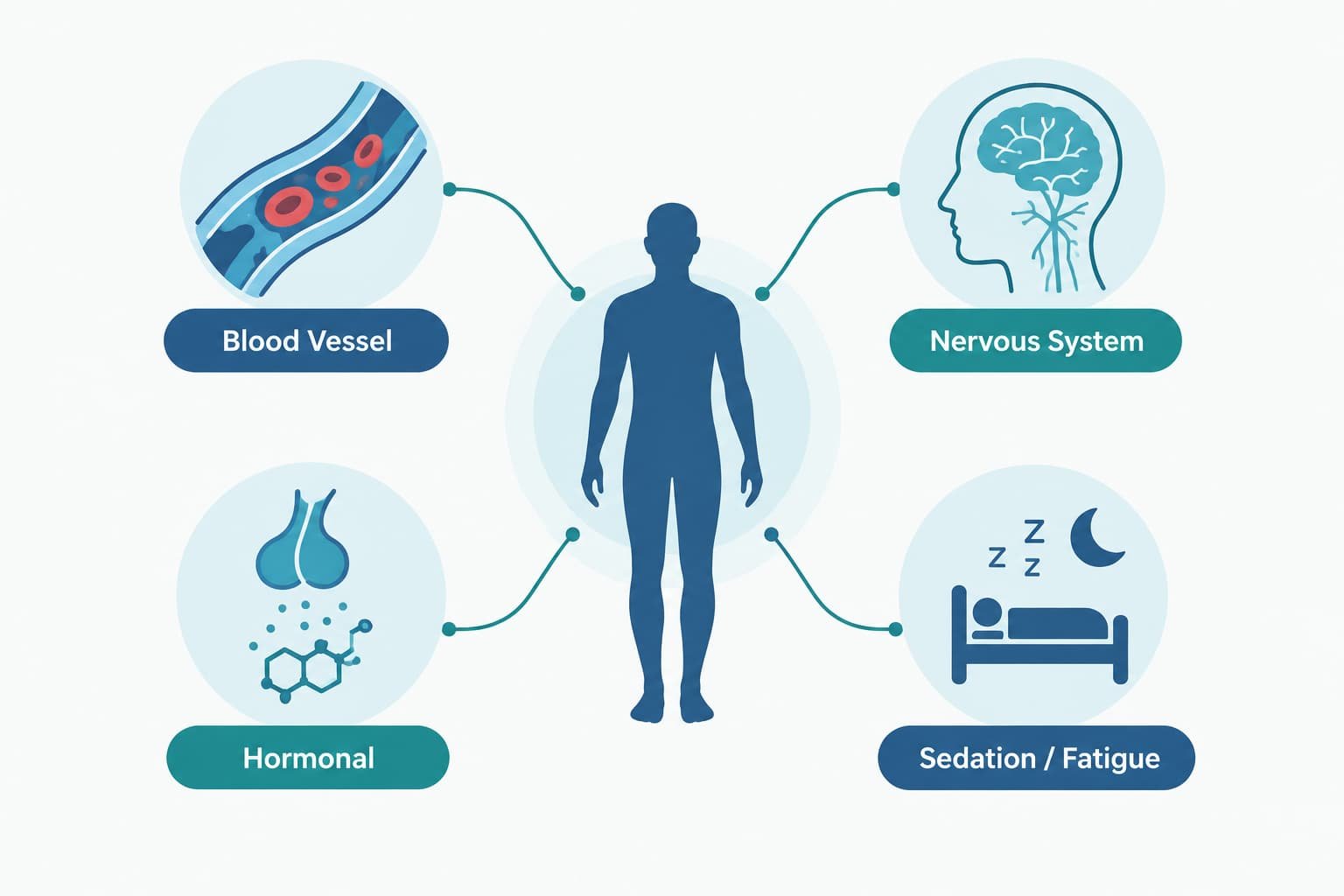
Medications influence erectile function through several distinct mechanisms. Some drugs reduce blood flow to the penis by affecting blood vessel tone or nitric oxide release. Others interfere with the central nervous system pathways that trigger arousal and desire. A further group alters hormone levels, particularly testosterone, which supports both libido and tissue health within the penis. A smaller number of drugs act through sedation or fatigue, which indirectly reduces sexual activity without a direct physical cause.
These mechanisms often overlap, which makes attributing erectile dysfunction to a single drug difficult. A man taking several medications for blood pressure, mood, and pain may experience a cumulative effect rather than one caused by a single agent. Clinicians therefore review the full medication list, including over-the-counter products and supplements, before assuming any one drug is responsible. Age, existing vascular disease, and psychological state also influence how strongly a given medication affects erectile function in an individual man.
Which Drug Classes Are Most Linked to Erectile Dysfunction
Antihypertensive Drugs
Blood pressure medications remain among the most frequently discussed drugs causing erectile dysfunction. Older non-selective beta-blockers reduce nitric oxide release and constrict blood vessels, which lowers blood flow to erectile tissue. Thiazide diuretics show a similar association in several studies, though the evidence remains mixed for some agents. Centrally acting antihypertensives, such as clonidine and methyldopa, carry a well-documented negative effect on erectile function through their action on the central nervous system.
Not every blood pressure medication carries the same risk. Angiotensin-converting enzyme inhibitors and angiotensin receptor blockers show a neutral or even positive effect on erectile function in comparative reviews. Calcium channel blockers also appear largely neutral. Newer beta-blockers such as nebivolol may support erectile function through nitric oxide release, unlike older agents in the same class. This variation means a change of brand or generation within the same drug category can sometimes resolve symptoms without compromising blood pressure control.
Antidepressants
Selective serotonin reuptake inhibitors, commonly prescribed for depression and anxiety, frequently cause sexual side effects. These include reduced libido, delayed ejaculation, and erectile dysfunction. Raised serotonin levels appear to suppress the hormonal signals that support arousal and erection. Some men experience persistent symptoms after stopping the medication, a condition described in medical literature as post-SSRI sexual dysfunction. Reported rates of sexual side effects with SSRIs vary widely between studies, partly because many trials rely on spontaneous reporting rather than direct questioning.
Tricyclic antidepressants and certain other antidepressant classes also feature among drugs causing erectile dysfunction, though the strength of association varies between individual agents. Some newer antidepressants carry a comparatively lower reported risk, which clinicians may consider when depression and erectile dysfunction coexist.
Antipsychotics
Antipsychotic medications, prescribed for schizophrenia and other psychiatric conditions, commonly affect sexual function. These drugs block dopamine receptors and raise prolactin levels, both of which reduce libido and impair erectile capacity. This mechanism distinguishes antipsychotics from the vascular effects seen with blood pressure medication, and it explains why the sexual side effects can appear early in treatment, sometimes within days of starting the drug.
Diuretics
Thiazide diuretics, used widely to manage hypertension, appear in several studies among drugs causing erectile dysfunction. Spironolactone, an aldosterone receptor antagonist, carries an additional antiandrogenic effect that can reduce testosterone activity and worsen erectile function. Men prescribed spironolactone for hypertension or hormonal conditions should discuss this risk with a prescriber, particularly where the drug is used long term.
Opioid Painkillers
Opioid analgesics exert a pronounced effect on the hypothalamic-pituitary-gonadal axis. Long-term opioid use suppresses testosterone production, a condition sometimes termed opioid-induced hypogonadism. This hormonal suppression contributes to reduced libido and erectile dysfunction, and the effect appears particularly strong in younger men prescribed opioids for chronic pain. The risk increases with dose and duration of use, which supports regular review of long-term opioid prescriptions.
5-Alpha Reductase Inhibitors
Finasteride and dutasteride, prescribed for male pattern hair loss and benign prostatic hyperplasia, reduce the conversion of testosterone into dihydrotestosterone. Clinical trial data show a modest increase in erectile dysfunction risk, with reported rates around one to eight per cent depending on dose and indication. A small number of men report persistent sexual symptoms after stopping the drug, though large population studies have not consistently confirmed a lasting causal link. This category remains one of the more debated entries among drugs causing erectile dysfunction, and further long-term research continues into the mechanism behind persistent symptoms.
Antiepileptic Drugs and Other Agents
Certain antiepileptic drugs, lithium, and some non-steroidal anti-inflammatory drugs also appear in the medical literature as contributors to sexual dysfunction. Histamine-2 receptor antagonists, used for acid reflux, have been linked to antiandrogenic effects in some case reports. Chemotherapy agents and hormone therapies used in prostate cancer treatment carry a well-established and expected effect on erectile function, given their deliberate suppression of testosterone as part of cancer treatment.
Recreational and Non-Prescription Substances
Alcohol, tobacco, and recreational drugs including cannabis, cocaine, and anabolic steroids also feature among substances linked to erectile dysfunction. Anabolic steroid use suppresses natural testosterone production and can produce long-lasting effects on erectile function even after use stops. Excessive alcohol intake affects both the nervous system and hormone levels, and the effect is often dose-dependent rather than fixed.
Medications With Neutral or Favourable Effects
Not all cardiovascular drugs carry a negative reputation. Angiotensin-converting enzyme inhibitors, angiotensin receptor blockers, and calcium channel blockers show neutral or favourable profiles in comparative research. This distinction matters because switching within a drug class, rather than stopping treatment altogether, often resolves the problem without compromising blood pressure control. Clinicians weigh this evidence carefully when a man presents with both hypertension and new erectile difficulty.
Why Individual Response Varies
Two men taking the same medication at the same dose can experience entirely different outcomes. Genetic differences in drug metabolism, baseline vascular health, and psychological resilience all shape how strongly a drug affects erectile function. Age plays a further role, since older men typically have less physiological reserve to compensate for a hormonal or vascular disruption. Body weight, kidney function, and liver function also influence how a drug is processed, which affects the dose reaching target tissues.
This variation explains why population statistics offer only a general guide rather than a personal prediction. A reported side-effect rate of five per cent in a clinical trial does not mean every fifth man will experience the problem; it means some men are considerably more susceptible than others. Clinicians therefore treat published figures as a starting point for discussion rather than a definitive forecast for an individual patient.
Recognising Medication-Induced Erectile Dysfunction
Several clues suggest a medication link rather than an unrelated cause. Symptoms that begin shortly after starting a new prescription point toward the drug itself. A close relationship between dosage changes and symptom severity strengthens the likelihood of a drug-related cause. Men who retain normal morning erections but struggle during sexual activity may also be experiencing a medication effect rather than a purely vascular problem, since morning erections rely on a different physiological trigger than those linked to arousal.
NICE guidance recommends a full medication review as part of the standard assessment for erectile dysfunction. This review sits alongside blood tests for testosterone, glucose, and lipid profile, since drug effects frequently coexist with underlying vascular or hormonal conditions. A timeline of symptom onset, current medication list, and any recent dosage changes gives a GP the clearest picture for assessment.
What To Do If a Medication May Be Causing Erectile Dysfunction

Men should never stop a prescribed medication without medical advice. Abruptly discontinuing blood pressure treatment, antidepressants, or opioid medication carries significant health risks, including rebound hypertension, withdrawal symptoms, or uncontrolled pain. A GP can review the full medication list, consider alternative agents within the same drug class, and adjust dosage where appropriate.
A structured medication review often resolves the problem without requiring additional treatment. Where switching drugs is not possible or does not fully resolve symptoms, further options exist to address the erectile dysfunction directly. A GP may also arrange blood tests to rule out diabetes, low testosterone, or thyroid dysfunction, since these conditions can present alongside or independently of any drug effect.
Treatment Options Beyond Medication Review
When changing or stopping a medication does not resolve erectile dysfunction, several established treatment options may help. The choice depends on the underlying cause, overall health and response to previous treatment.
Established ED Treatments
Oral PDE5 inhibitors are commonly used as a first-line treatment for erectile dysfunction. Vacuum erection devices provide a non-drug alternative, while penile injections such as alprostadil may be considered when oral medicines are unsuitable or ineffective.
Emerging PRP Treatments
Platelet-rich plasma (PRP) injections, sometimes marketed as the Priapus Shot or P shot treatment, are another non-surgical option offered by some private clinics in the UK. The procedure uses a preparation derived from the patient’s own blood and injects it into penile tissue.
However, evidence for PRP treatment remains limited. Clinical studies have reported mixed results, and professional organisations consider PRP for ED an emerging treatment rather than an established first-line option. Men considering a P shot London provider should discuss the available evidence, potential benefits and limitations with a qualified clinician.
Review the Underlying Cause First
Men whose erectile dysfunction appears to result from medication should prioritise a medical review before considering procedural treatments. A doctor may assess whether the medicine can be changed, reduced or replaced safely. Patients should never stop prescribed medication without medical advice.
If medication changes do not improve symptoms, a clinician can discuss appropriate alternatives based on the individual’s diagnosis, health and treatment preferences.
Frequently Asked Questions
Which medications are most commonly linked to erectile dysfunction?
Beta-blockers, thiazide diuretics, SSRIs, antipsychotics, opioid painkillers, and 5-alpha reductase inhibitors appear most frequently among drugs causing erectile dysfunction in clinical literature.
Should a man stop taking a medication that may cause erectile dysfunction?
No. Stopping a prescribed medication without medical supervision carries risk. A GP can review alternatives safely and adjust treatment where needed.
Does erectile dysfunction from medication reverse after stopping the drug?
In many cases, symptoms improve after switching medication or adjusting dosage. Some drug classes, including SSRIs and 5-alpha reductase inhibitors, have been linked to persistent symptoms in a smaller subset of men.
Can blood pressure medication be changed to avoid erectile dysfunction?
Yes, in many cases. ACE inhibitors, ARBs, and calcium channel blockers generally carry a lower risk than older beta-blockers and thiazide diuretics.
Is the P shot treatment a direct fix for medication-induced erectile dysfunction?
The P shot treatment targets tissue quality and blood vessel growth rather than reversing a specific drug mechanism. It may suit men whose erectile dysfunction persists despite medication review, though evidence remains limited and results vary.
How is medication-related erectile dysfunction diagnosed?
A GP reviews the full medication history alongside blood tests and a physical assessment, following NICE Clinical Knowledge Summaries guidance for erectile dysfunction.
Key Takeaways
Drugs causing erectile dysfunction span a wide range of drug classes, from blood pressure treatment to antidepressants, opioids, and hormone-altering medication. Recognising this link allows men and clinicians to pursue a structured, safe review rather than assuming an unchangeable or purely psychological cause. Switching within a drug class, adjusting dosage, and addressing underlying vascular or hormonal health often resolve the problem without further intervention. Where erectile dysfunction persists, established pharmacological treatment and emerging non-surgical treatment for erectile dysfunction in London provide further options, each with its own evidence base and limitations.
Given how many commonly prescribed medications carry this risk, should erectile dysfunction always prompt a medication review before any other investigation begins?
Read more: What Are the First Signs of Erectile Dysfunction?
ED in Younger Men: Causes, Risk Factors and Treatment Options
Dr Syed Nadeem Abbas, MBBS, MRCSEd, MSc Aesthetic Plastic Surgery (Distinction) Medical Director, Pshot Clinic | CQC Regulated | Monday to Saturday 10:00–18:00 +44 7955 836986