P Shot and Blood Vessel Growth: How PRP Supports Penile Tissue Repair

✅Medically reviewed | Updated August 2026
Erectile function depends on healthy blood vessels. Blood vessels carry oxygen-rich blood into penile tissue during arousal. When vessel health declines, erections weaken. Ageing, diabetes, high blood pressure and smoking damage these vessels over time. Medical science has long searched for treatments that repair, rather than mask, this damage. The P shot has emerged as one such option within regenerative urology. It uses platelet-rich plasma drawn from a patient’s own blood. Clinicians inject this plasma directly into penile tissue. The goal is not to force an erection artificially. The goal is to encourage tissue repair and new blood vessel growth. This article explains the biological process behind PRP-based penile treatment. It examines how platelet-rich plasma supports angiogenesis, the medical term for new vessel formation. It reviews current evidence, realistic outcomes and safety considerations relevant to anyone researching a non-surgical treatment for erectile dysfunction in London.
What Is the P Shot?
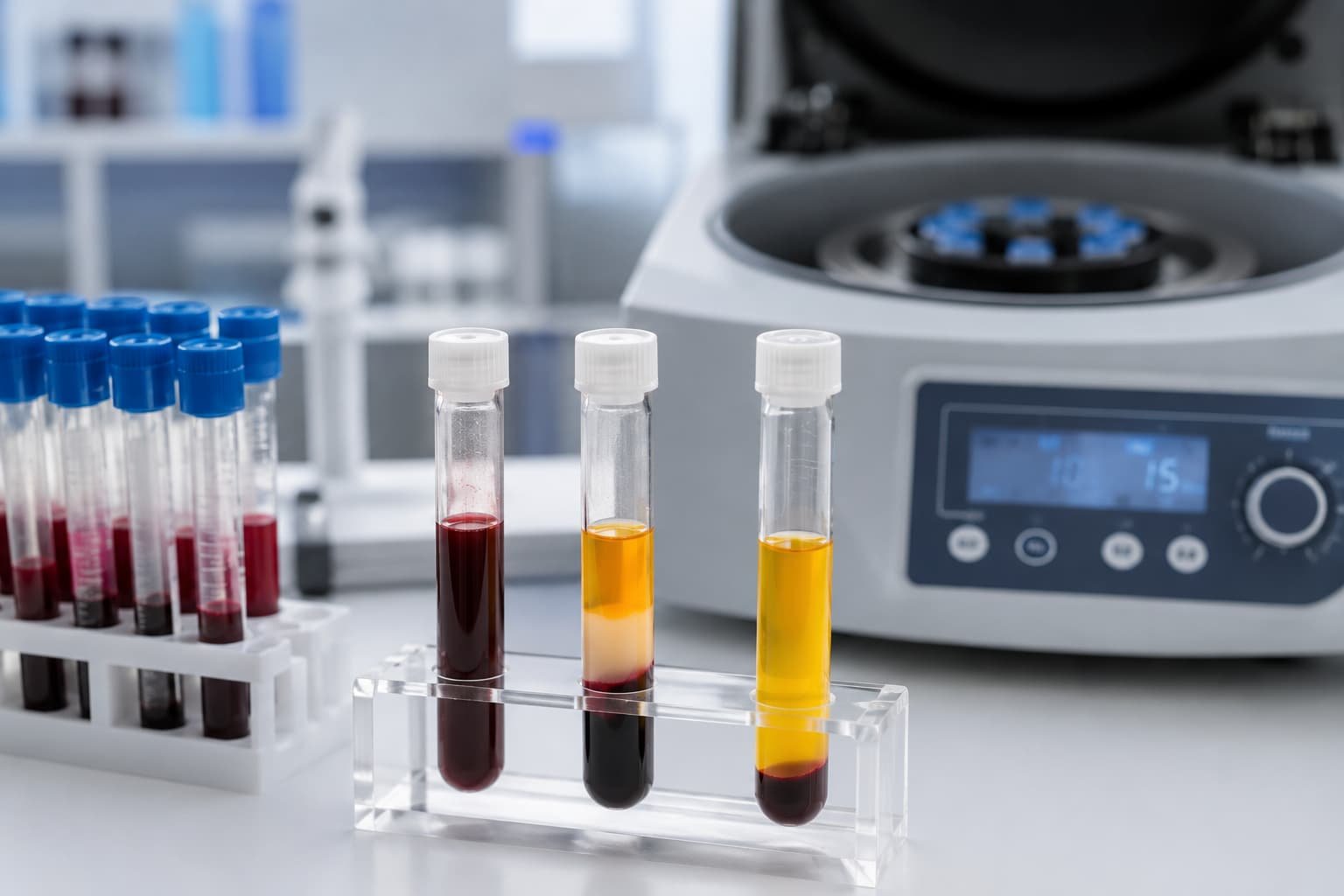
The P shot, also known as the Priapus shot or P-shot, is a PRP-based regenerative therapy for ED. Clinicians extract a small blood sample from the patient, similar to a routine blood test. A centrifuge separates platelet-rich plasma from red blood cells. This plasma contains a concentrated mixture of growth factors. Clinicians then inject the plasma into specific areas of the penis. The Priapus shot name originates from Priapus, a figure from Greek mythology associated with fertility. P-shot treatment sits within regenerative medicine rather than pharmaceutical medicine. It does not involve synthetic drugs, hormone implants or surgical grafts. Instead, it relies on components the body already produces.
The Biology of Erections: Why Blood Vessels Matter
An erection begins with nerve signals travelling from the brain and spinal cord. These signals trigger blood vessel dilation within the penis. Small arteries called cavernosal arteries fill spongy erectile tissue with blood. This tissue, known as the corpus cavernosum, expands and creates firmness. Healthy, elastic blood vessels are essential for this process to work reliably. Damaged or narrowed vessels reduce blood flow into erectile tissue. Reduced blood flow is a leading cause of erectile dysfunction, according to NHS information on ED causes. Vascular disease, diabetes and smoking are well-established contributors. Age-related vessel stiffening also plays a significant role. Restoring vessel function is therefore a central goal of most modern ED treatments.
Erection quality also depends on nerve sensitivity and smooth muscle relaxation within the corpus cavernosum. Nitric oxide release allows this smooth muscle to relax, letting blood flow inward. When blood vessels lose elasticity, this relaxation response weakens. Vascular ageing is now recognised as one of the most common underlying causes of erectile dysfunction in men over 40. Standard treatments such as PDE5 inhibitors work by supporting this nitric oxide pathway. They do not repair the underlying vessel wall. This distinction matters when comparing pharmaceutical options with regenerative approaches such as PRP-based penile injections.
How PRP Triggers Blood Vessel Growth
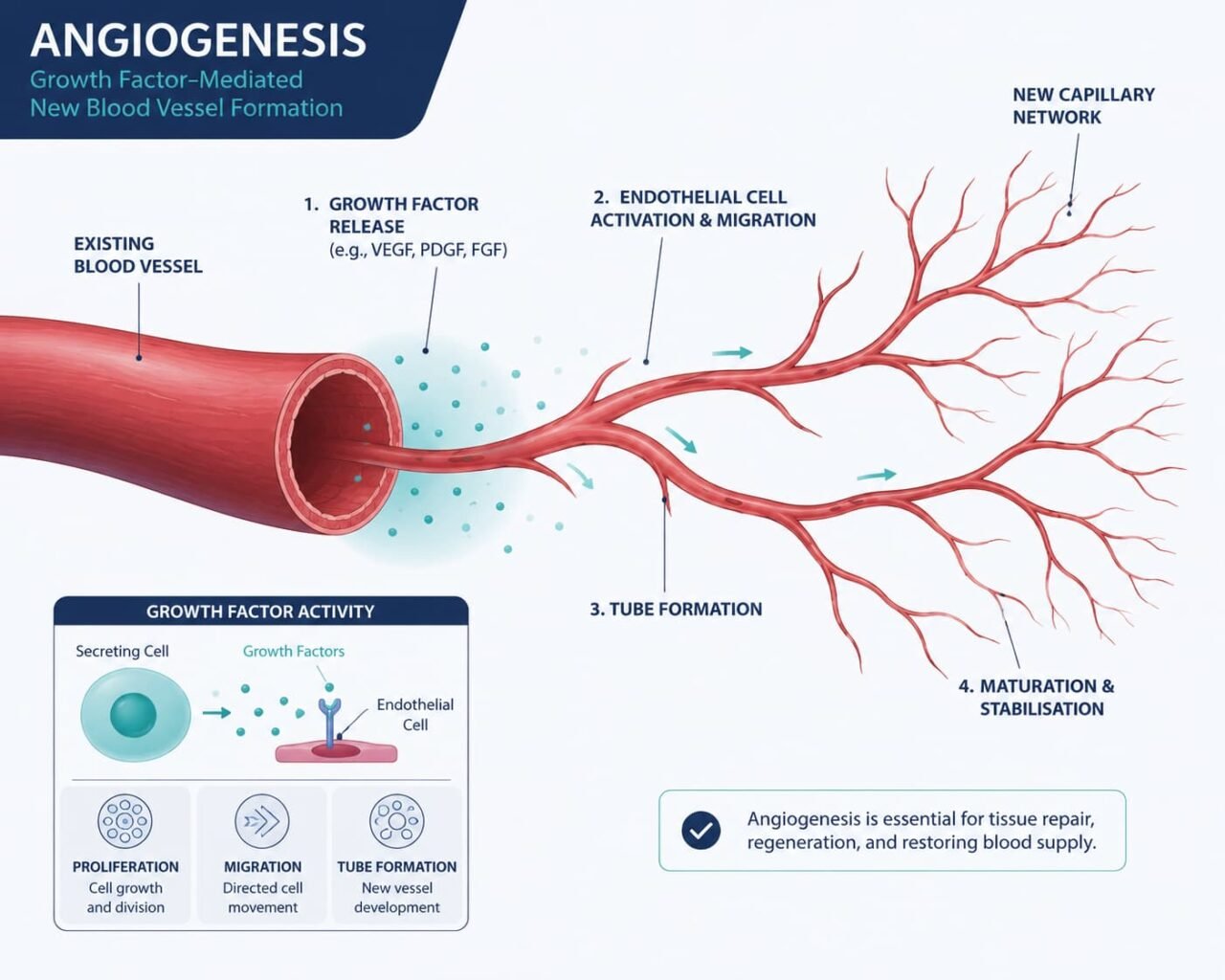
Platelet-rich plasma influences penile tissue through several biological pathways. Each pathway relates directly to blood vessel health and repair.
Platelet-Derived Growth Factors
Platelets contain granules filled with growth factors. These include platelet-derived growth factor, transforming growth factor-beta and vascular endothelial growth factor. When clinicians inject PRP into penile tissue, platelets release these factors locally. Growth factors signal nearby cells to begin repair work. Fibroblasts multiply and produce new collagen. Endothelial cells, which line the interior of blood vessels, become activated.
Vascular Endothelial Growth Factor and Angiogenesis
Vascular endothelial growth factor is a key driver of angiogenesis. It stimulates endothelial cells to form new capillary networks within tissue. Peer-reviewed literature on PRP in wound healing and orthopaedic contexts supports this mechanism. Angiogenesis increases local blood supply over time. Increased blood supply may support firmer, more sustained erections. This mechanism explains why penile injection growth at a cellular level, rather than anatomical alteration, forms the basis of P-shot treatment.
Collagen and Tissue Repair
Beyond vessel growth, PRP supports collagen remodelling within erectile tissue. Collagen gives the corpus cavernosum its structural integrity. Ageing and chronic disease can degrade collagen fibres over time. PRP-based regenerative therapy for ED aims to counter this gradual degradation. Improved tissue elasticity may support better blood retention during an erection.
The P Shot Procedure: What to Expect
A treatment appointment begins with a blood draw, comparable to a standard blood test. A centrifuge processes the sample for several minutes to isolate plasma. Clinicians apply topical numbing cream before injection to reduce discomfort. The p injection itself takes only a few minutes to complete. Most appointments last under one hour from start to finish. Patients typically resume normal daily activities the same day. Clinicians usually advise avoiding sexual activity for a short period afterwards, to reduce infection risk. Clinics offering Priapus shot London appointments generally schedule single-session visits, though some patients return for repeat sessions over several months.
Evidence and Research on PRP and Vascular Repair
PRP therapy is well established in orthopaedics, dermatology and wound care. Its use for erectile dysfunction remains a newer, evolving application. A 2020 review of ten PRP trials for male sexual function found the studies too small and inconsistently designed to draw firm conclusions. A 2022 review noted several studies showing improved erectile function scores after PRP treatment, though follow-up periods were short and control groups were often absent. A 2023 review of seven studies reported similar improvements in sexual function but called for larger, controlled trials before firm claims can be made. A more recent 2025 study involving men with Peyronie’s disease found that PRP injections reduced penile curvature and plaque size, though this relates to a different condition from standard erectile dysfunction. NICE has not issued specific guidance approving PRP injections for erectile dysfunction. The National Institute for Health and Care Excellence continues to prioritise established first-line options, including PDE5 inhibitor medication. Anyone considering treatment should understand that research in this field remains at an early stage. Most published trials involve small participant numbers, often fewer than one hundred men. Follow-up periods rarely extend beyond twelve months, limiting understanding of long-term durability. Researchers have called for standardised PRP preparation protocols, since platelet concentration varies between devices and clinics. Without a standard protocol, comparing results across different studies remains difficult. Larger, randomised, placebo-controlled trials would strengthen confidence in PRP as a vascular repair treatment. Until such trials exist, current evidence should be described as promising rather than conclusive.
Who May Consider Treatment
Men with mild to moderate erectile dysfunction linked to vascular ageing sometimes explore this option. Some men use PRP therapy alongside other ED management strategies, including lifestyle changes and prescribed medication. Men with Peyronie’s disease have also been included in PRP-focused research, given the condition’s link to scar tissue and reduced elasticity. A full medical assessment should precede any treatment decision. A private clinic in Marylebone, led by Dr Syed Nadeem Abbas at pshots clinic uk, provides such consultations as part of standard clinical practice.
Who Should Avoid PRP Injections
Certain medical conditions may rule out PRP-based treatment. Men with active infection near the injection site should postpone treatment until resolved. Blood disorders that affect platelet function, including thrombocytopenia, may reduce treatment effectiveness. Men taking anticoagulant medication require careful assessment before proceeding, since bleeding risk increases. Active cancer, particularly in the pelvic region, generally excludes candidacy until oncology teams confirm suitability. Severe Peyronie’s disease with dense scar tissue may respond poorly to injection-based therapy alone. A thorough medical history, including current medications and prior surgery, forms part of any responsible pre-treatment assessment. Mental health factors also warrant consideration, since psychological causes of erectile dysfunction may not respond to vascular-focused treatment alone. A practitioner should distinguish between physical and psychological contributors before recommending PRP injections. Referral to a sexual health specialist or psychologist may form part of a wider treatment plan where appropriate.
How PRP Compares With Other Regenerative Options
Several regenerative and mechanical approaches exist alongside PRP for erectile dysfunction. Shockwave therapy uses acoustic waves to stimulate blood vessel growth through a different mechanical mechanism. Some clinics combine shockwave therapy with PRP injections to address vessel repair from two angles simultaneously. Penis pumps draw blood into tissue mechanically but do not address underlying vessel damage. Stem cell therapy remains largely experimental and is not widely available within regulated UK clinics. Testosterone therapy addresses hormonal causes of low libido rather than vascular causes of erectile dysfunction directly. Each approach carries distinct evidence levels, and combining treatments should only follow a qualified clinical assessment.
Limitations and Realistic Outcomes
PRP injection is not a cure for erectile dysfunction. Results vary considerably between individuals. Some men report improved firmness within weeks of treatment. Others require multiple sessions before noticing meaningful change. PRP-based regenerative therapy for ED does not guarantee permanent results. Underlying conditions, including diabetes, cardiovascular disease or hormonal imbalance, may limit overall effectiveness. Clinicians cannot promise specific outcomes for any individual patient. Independent, high-quality clinical trials remain limited in number and scale. Men should discuss expected results and limitations directly during consultation, rather than relying solely on P shot before and after images found online. P-shot before and after photographs do not represent guaranteed or typical results for every patient. Photographic evidence should be interpreted with caution, given variability in lighting, angle and individual anatomy.
Priapus Shot Price in the UK
Priapus shot price varies by clinic, location and the number of sessions required. Male enlargement injections cost UK figures differ across private clinics, reflecting differences in consultation depth, PRP processing method and aftercare provision. Costs in London, including Harley Street and Marylebone practices, often reflect the overheads associated with specialist regulated facilities. Patients should request a full, itemised cost breakdown during consultation, including any charges for follow-up sessions or additional PRP treatment.
Accessing P Shot Treatment in the UK
Demand for P shot UK appointments has grown alongside wider interest in regenerative medicine. Provision remains concentrated among a limited number of trained practitioners, rather than being widely available across general practice. Men searching for a P shot London clinic should verify practitioner qualifications, insurance cover and registration with an appropriate regulatory body before booking. Some marketing material still uses the informal term penis shot when referring to this procedure, though P shot treatment and Priapus shot remain the more accurate clinical descriptions. Regulatory oversight of PRP procedures in the UK sits within the Human Tissue Authority framework and general medical practice standards, rather than a dedicated licensing scheme specific to PRP. Verifying a clinic’s regulatory standing forms a reasonable first step for anyone researching this treatment. Consultation should always precede booking, allowing a practitioner to confirm suitability based on individual medical history.
Safety Considerations
PRP treatment uses the patient’s own blood, which reduces the risk of allergic rejection. Because the procedure is autologous, immune reaction risk remains low compared with synthetic fillers. Reported side effects include temporary swelling, bruising and mild discomfort at injection sites. Rare risks include infection or localised scarring. Clinicians should screen for bleeding disorders, active infection and certain medications before treatment begins. Patients taking blood-thinning medication should disclose this during consultation. Only qualified, appropriately trained medical practitioners should perform penile injections of any kind.
Non-Surgical Treatment for Erectile Dysfunction in London

London-based clinics offer several options for non-surgical treatment for erectile dysfunction in London, including PDE5 inhibitor tablets, shockwave therapy and PRP-based injections. This PRP-based injection fits within a broader non-surgical toolkit rather than replacing it entirely. Natural ED treatment using PRP therapy avoids synthetic hormones and permanent implants, which appeals to men seeking a regenerative rather than purely pharmaceutical approach. However, PRP therapy does not replace surgical solutions for severe structural or vascular erectile dysfunction. Erectile dysfunction treatment London providers should assess vascular, hormonal and psychological factors before recommending any PRP-based pathway.
Frequently Asked Questions
What does the P shot treat?
This treatment targets mild to moderate erectile dysfunction linked to reduced blood vessel function and age-related tissue changes.
How long does a P shot appointment take?
Most appointments last under one hour, including blood processing and injection time.
Is the P-shot painful?
Clinicians apply numbing cream before injection to minimise discomfort during the procedure.
How soon do results appear after treatment?
Timelines vary between individuals. Some men notice change within weeks; others require multiple sessions over several months.
Does the NHS offer the Priapus shot?
NHS services do not currently offer this treatment. NICE has not issued specific approval guidance for PRP injections in erectile dysfunction.
Is the Priapus shot the same as the P shot?
Yes. Priapus shot is the original branded name for the P shot procedure, now also referred to as Pshot or P-shot.
Can this treatment be combined with other ED treatments?
Combination approaches, such as PRP alongside shockwave therapy, are used in some clinics. Suitability depends on individual assessment.
Are P-shot results permanent?
Effects are not guaranteed to be permanent. Ongoing vascular health and lifestyle factors influence how long benefits last.
Key takeaway
The P shot represents a regenerative approach to erectile dysfunction rooted in the body’s own healing biology. It relies on platelet-rich plasma to stimulate blood vessel growth and support tissue repair within the corpus cavernosum. Current evidence shows measurable promise but remains limited by small trial sizes and short follow-up periods. Individuals considering PRP-based regenerative therapy for ED should seek a full clinical consultation before proceeding. Realistic expectations, grounded in evidence rather than marketing claims, support better-informed decision-making. As research into PRP and vascular repair continues to expand, will future controlled trials confirm this treatment as a standard, evidence-based option for erectile dysfunction?
Read more: Platelet-Derived Growth Factor in PRP: How It Helps Repair Penile Tissue