
The Priapus Shot, widely known as the P-Shot, has become one of the most searched non-surgical treatments for erectile dysfunction in London. Men researching sex after a P-Shot often want a straightforward answer, not vague reassurance. Clinics vary in their aftercare advice, and online forums add further confusion. This guide sets out a clear, evidence-based timeline for resuming intimacy, explains why a brief waiting period protects results, and separates realistic expectations from marketing claims. Platelet-rich plasma, known as PRP, forms the basis of the P shot treatment, and its biological mechanism directly shapes how soon sexual activity should resume. Understanding this mechanism removes the guesswork many men feel after their appointment.
The following sections cover the standard recovery window, the clinical reasoning behind it, current research on PRP for erectile function, and practical steps for a safe return to sexual activity. Nothing here promises dramatic transformation. Instead, the aim is balanced, medically grounded information that supports informed decision-making before and after treatment.
What Is the P-Shot and How Does It Work?
The PRP Mechanism Behind P Shot Treatment
The P shot treatment uses platelet-rich plasma extracted from a small blood sample. A centrifuge separates platelets and growth factors from the remaining blood components. Clinicians then inject this concentrated plasma into specific areas of the penis, including the corpus cavernosum and glans. Growth factors within PRP support tissue repair, encourage new blood vessel formation, and may improve local circulation. This process differs completely from surgical penile enlargement or vasoactive injections such as alprostadil. The P-Shot causes no incisions and requires no general anaesthetic. Most appointments last between 30 and 60 minutes, and topical numbing cream reduces discomfort during injection. Because the procedure introduces a concentrated biological substance into sensitive tissue, however brief and minimally invasive, the body still needs time to process it. This biological reality underpins every recommendation about timing sex after a P-Shot.
Why the Injection Site Needs Recovery Time
Needle punctures create microscopic trauma at the injection site. Even fine-gauge needles disturb local tissue and trigger a short inflammatory response. This response forms part of normal healing and signals that growth factors are beginning to act. Physical friction, pressure, or vigorous movement during this window can disrupt clot formation and increase bruising. This reality is the central reason clinicians advise a pause before sex after a P-Shot.
Sex After a P-Shot: The General Recovery Timeline
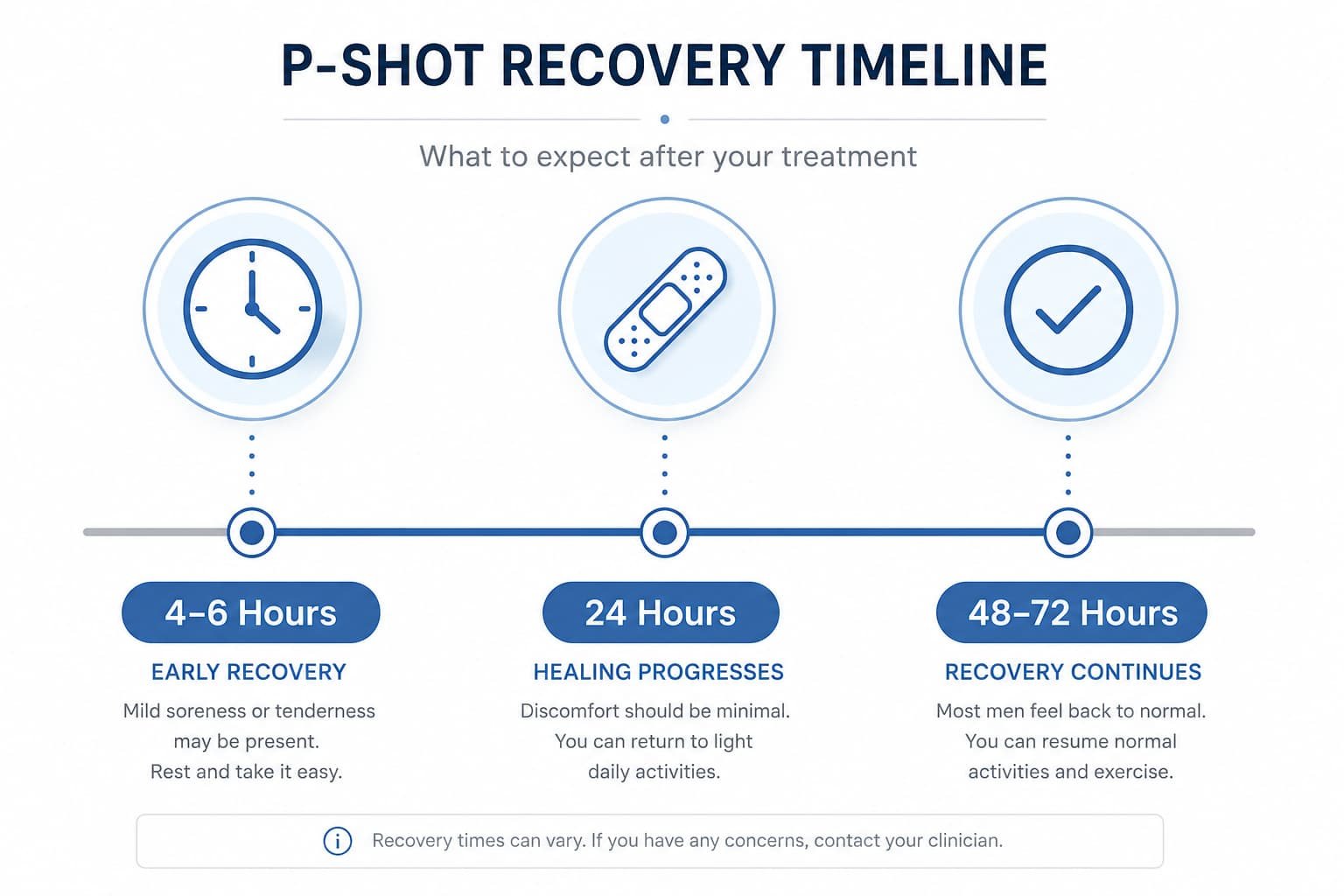
The First Four to Six Hours
Most UK clinics, including those offering P shot London appointments, recommend avoiding sexual activity for at least four to six hours after injection. This initial period allows the numbing agent to wear off and lets any pinprick bleeding settle. Sensation returns gradually, and men often notice mild tenderness rather than pain during this stage.
The First 24 Hours
Swelling and light bruising commonly appear during the first 24 hours. Clinicians generally advise against sex after a P-Shot within this window, even where four-hour clearance applies elsewhere. An erection during this period stretches newly treated tissue before it has stabilised. Waiting a full day allows visible swelling to settle and gives a clearer picture of how the tissue is responding.
48 to 72 Hours: The More Cautious Approach
Some clinicians, particularly those following a conservative aftercare protocol, recommend delaying sex after a P-Shot for 48 to 72 hours. This longer window reduces friction-related trauma while platelets remain biologically active at the injection site. Neither the four-hour nor the 72-hour approach carries strong comparative trial data. Current recommendations rely largely on clinical experience and general PRP wound-healing principles rather than dedicated erectile-function trials measuring this specific question.
Why the Waiting Period Exists
Protecting Platelet Activity and Growth Factor Release
Platelet-rich plasma continues releasing growth factors for approximately 24 to 72 hours after injection, as platelets degranulate and signalling molecules diffuse into surrounding tissue. A 2023 systematic review published in Sexual Medicine Reviews examined preclinical and clinical PRP studies for erectile dysfunction and identified this sustained-release mechanism as central to PRP’s theoretical benefit. Vigorous physical activity, including sex after a P-Shot taken too early, could theoretically disperse plasma away from the target site before this process completes, though direct clinical evidence quantifying this specific effect remains limited.
Infection Prevention
Needle-based procedures carry a small infection risk, managed through aseptic technique consistent with NICE guidance on invasive clinical procedures. Systematic reviews of PRP injections across multiple indications report infection rates below 0.1 percent when clinicians follow standard sterile protocols. Sexual activity soon after injection, particularly without adequate hygiene, could introduce bacteria to a fresh puncture site. A short waiting period allows the skin barrier to close more completely before intercourse resumes.
Reducing Bruising and Discomfort
Bruising affects a proportion of men following PRP injection, typically resolving within several days. Physical activity, including sexual intercourse, increases local blood flow and pressure, which can prolong bruising or increase swelling. Avoiding strenuous activity, not only intercourse but also exercise and heavy lifting, for the first day or two limits this effect considerably.
Factors That Influence When Sex After a P-Shot Is Safe
Individual Healing Response
Healing speed varies between individuals. Age, circulation, smoking status, and use of blood-thinning medication all affect bruising and recovery time. Men taking anticoagulants may experience more prolonged bruising and should discuss timing directly with the treating clinician rather than relying on generic online guidance.
Erection Quality During Early Recovery
Spontaneous or medication-assisted erections can occur throughout the recovery window. A firm erection increases tension on treated tissue. Men using PDE5 inhibitors such as sildenafil or tadalafil alongside PRP therapy should note that combining these medications with early sexual activity may increase discomfort during the first 24 to 48 hours.
Type of Sexual Activity
Penetrative intercourse places more mechanical stress on the penis than other forms of intimacy. Clinicians typically apply the same waiting period across all forms of sexual activity, since arousal and erection, not penetration specifically, cause most of the relevant tissue stress.
What Current Research Says About PRP Safety and Recovery
Clinical evidence on PRP-based regenerative therapy for ED remains an evolving field. A 2023 systematic review in Sexual Medicine Reviews concluded that PRP shows biological plausibility for supporting erectile tissue repair, though trial quality varies considerably across published studies. A subsequent meta-analysis found statistically significant improvement in International Index of Erectile Function scores at one, three, and six months, alongside a broadly favourable safety profile with no serious adverse events reported. However, professional urology bodies, including the European Association of Urology, continue to classify PRP injections for erectile dysfunction as experimental, reflecting the need for larger, standardised trials. This classification does not equal ineffectiveness; it reflects the current limits of available data. Men considering natural ED treatment using PRP therapy should weigh this evidence honestly rather than expecting guaranteed outcomes.
Reported side effects across studies remain generally mild, including localised bruising, swelling, and transient tenderness. Serious complications, including infection, appear rare when qualified clinicians follow sterile technique. No published study has specifically measured optimal timing for resuming sex after a P-Shot, so current recommendations rely on general PRP wound-healing principles rather than dedicated trials addressing this exact question. This is a genuine limitation worth acknowledging rather than overlooking.
Where the P-Shot Fits Within NHS and NICE Care Pathways
The National Institute for Health and Care Excellence has not issued specific guidance approving PRP injections as a standard erectile dysfunction treatment, and the NHS does not fund the P-Shot. Established NHS pathways for erectile dysfunction typically begin with lifestyle assessment, cardiovascular risk review, and PDE5 inhibitors such as sildenafil, progressing to vacuum devices, alprostadil, or surgical options where first-line treatment fails. Private clinics offering P shot treatment sit outside this NHS pathway entirely, meaning patients access PRP therapy through self-referral rather than GP gatekeeping. This distinction matters for informed decision-making. Men with underlying cardiovascular disease, diabetes, or hormonal imbalance should still seek proper NHS-based diagnosis and management of these root causes, since PRP addresses local tissue repair rather than systemic disease driving erectile dysfunction.
P Shot London: Aftercare Guidelines for a Safe Recovery
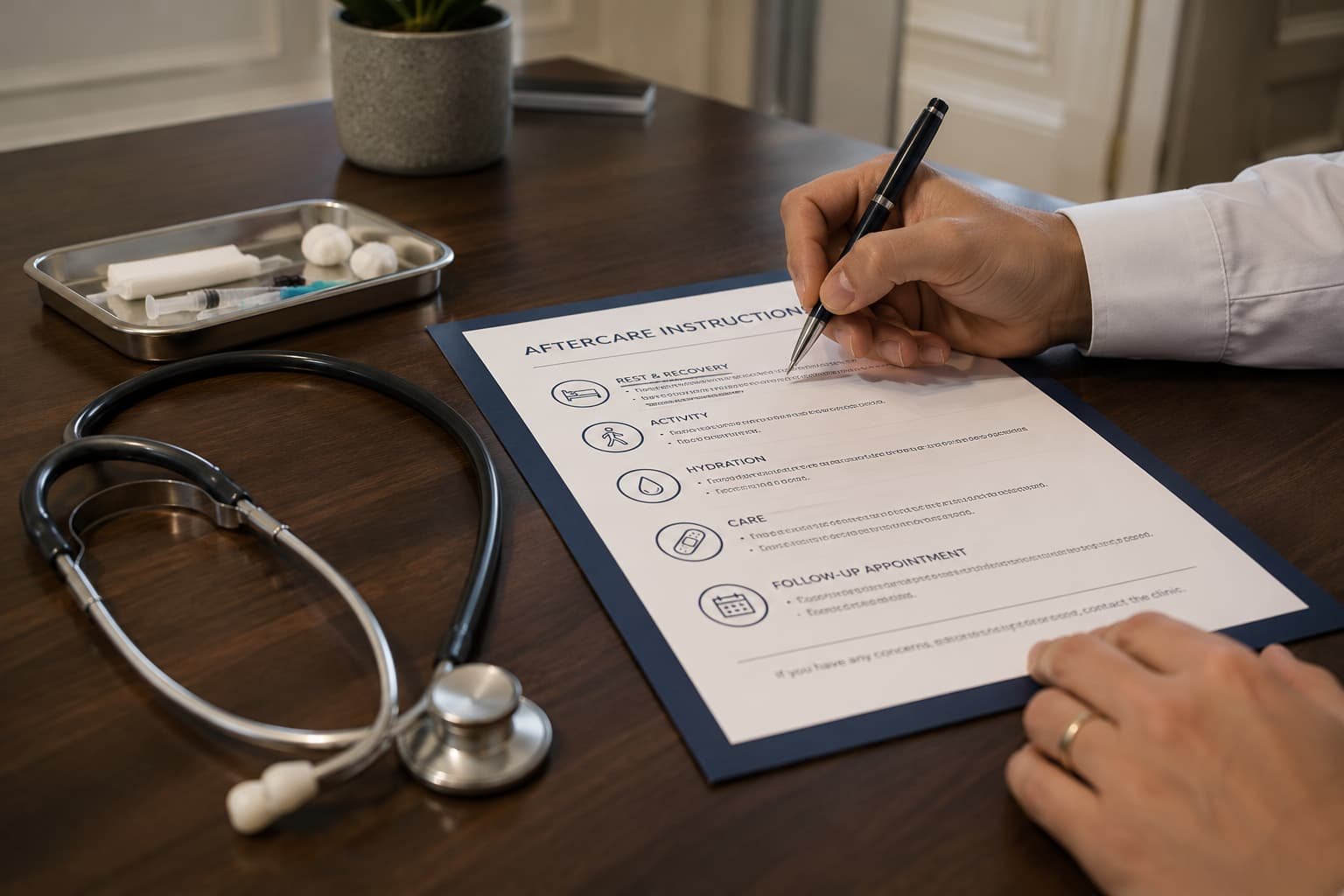
Clinics offering P shot London appointments typically provide a written aftercare sheet covering hygiene, activity restrictions, and warning signs. As a non-surgical treatment for erectile dysfunction in London, the P-Shot involves considerably less recovery than surgical alternatives, but aftercare still matters for safety and comfort. Standard guidance for Priapus shot London patients generally includes the following points:
• Avoid sexual activity for the period specified by the treating clinician, typically between 24 and 72 hours
• Keep the injection site clean and dry for the first 24 hours
• Avoid alcohol and tobacco for 48 hours, since both restrict blood flow and may slow healing
• Avoid strenuous exercise, cycling, and activities placing direct pressure on the groin for at least 24 hours
• Monitor for excessive swelling, spreading redness, fever, or discharge, and contact the clinic promptly if these occur
Regulatory oversight for P shot UK providers falls under Care Quality Commission and General Medical Council frameworks governing medical and aesthetic procedures. Clinics providing erectile dysfunction treatment London should tailor aftercare guidance to individual health history, including any bleeding disorders or current medication use. Following the specific aftercare plan given at consultation matters more than generic online advice.
P Shot Before and After: Realistic Expectations
Photographs showing P shot before and after results circulate widely online, and many exaggerate outcomes through lighting, arousal state, or camera angle. Genuine before-and-after changes, where they occur, tend to appear gradually rather than immediately. Some men report increased sensitivity within days, while functional changes in erection firmness typically develop over three to four weeks, with peak effect reported around three to four months in studies recording longer follow-up. Claims describing dramatic penile injection growth are not supported by robust evidence, and clinicians should present p injection outcomes as potentially modest and variable rather than guaranteed. Treating before-and-after photography as illustrative material, not clinical proof, protects patients from unrealistic expectations.
Priapus Shot Price and Value Considerations
Priapus shot price in the UK varies by clinic, practitioner experience, and number of sessions included in a treatment plan. Private clinics typically avoid publishing fixed prices online, since individual assessment determines the appropriate approach for each patient. Prospective patients should request a full written quote at consultation, including any recommended follow-up sessions, before committing to treatment. Cost should never outweigh a thorough discussion of realistic outcomes, safety data, and practitioner qualifications.
Combining the P-Shot With Other ED Treatment Options
Clinicians sometimes discuss combining PRP with other established therapies rather than relying on PRP alone. Low-intensity shockwave therapy, which targets penile blood vessels through mechanical stimulation, appears alongside PRP in several small combination-therapy studies, with some showing modestly greater improvement than either treatment used independently. PDE5 inhibitors remain the most evidence-backed first-line option for erectile dysfunction and continue working through a different mechanism, meaning combination use is physiologically plausible even though robust comparative trials remain scarce. Lifestyle factors, including smoking cessation, cardiovascular fitness, and sleep quality, influence erectile function independently of any injection-based treatment and deserve equal attention within a comprehensive treatment plan. Clinicians should present the P-Shot as one option within a broader toolkit rather than a standalone solution guaranteed to resolve erectile dysfunction on its own.
When to Delay Sex Further or Seek Medical Advice
Certain symptoms warrant delaying resumption of sexual activity beyond the standard window and contacting the treating clinic without delay:
• Pain that worsens rather than improves after 48 hours
• Spreading redness, warmth, or visible discharge at the injection site
• Fever or flu-like symptoms following treatment
• Swelling that persists beyond seven to ten days
• New curvature or lumps in penile tissue
These signs are uncommon but should never be ignored. Prompt clinical review protects both immediate safety and long-term treatment outcomes.
Frequently Asked Questions
How soon can sexual activity resume following P-Shot treatment?
Most clinics advise waiting between 24 and 72 hours, depending on individual healing and the specific aftercare protocol given at consultation. Some providers permit resumption after four to six hours, though a longer pause generally reduces bruising risk.
Does waiting longer improve P-Shot results?
No strong evidence links waiting time directly to treatment outcome. The recommended pause exists primarily to reduce bruising, swelling, and infection risk rather than to enhance PRP effectiveness itself.
Is discomfort during intimacy normal in the days following treatment?
Mild tenderness is common in the first few days. Sharp or worsening pain is not typical and should prompt contact with the treating clinic promptly.
Can the P-Shot be combined with ED medication?
Some clinicians combine PRP with PDE5 inhibitors as part of a broader treatment plan. This decision depends on individual health history and should be discussed at consultation rather than self-managed.
Is the P-Shot a permanent solution for erectile dysfunction?
No. Reported benefits, where present, generally last months rather than remaining permanent. Repeat sessions are commonly discussed as part of an ongoing treatment plan.
Key Takeaways
Deciding when to resume intimacy after a P-Shot involves more than counting hours on a clock. It requires understanding tissue healing, respecting individual variation, and following clinician-specific guidance rather than generic online timelines. Current evidence supports PRP as a biologically plausible, generally well-tolerated option within the wider landscape of non-surgical treatment for erectile dysfunction in London, while acknowledging that trial data remains limited and outcomes vary between individuals. Pshots clinic uk, a Harley Street clinic led by Dr Syed Nadeem Abbas, is among the UK providers offering P-Shot consultations within this evolving field of regenerative sexual health treatment. Patients considering treatment should prioritise thorough consultation, transparent pricing, and realistic expectations over marketing claims or curated before-and-after images. Informed patience during recovery protects both safety and results. What matters more in the end: rushing back to intimacy, or giving regenerative treatment the time it genuinely needs to work as intended?
Read more: P-Shot Aftercare: The Complete Pre and Post Treatment Guide
P-Shot for Performance Anxiety: Can It Restore Confidence?
Dr Syed Nadeem Abbas, MBBS, MRCSEd, MSc Aesthetic Plastic Surgery (Distinction) Medical Director, Pshot Clinic | CQC Regulated | Monday to Saturday 10:00–18:00 +44 7955 836986


