
✅Medically reviewed
A P shot takes under an hour, yet the choices that follow can shape recovery for weeks. Most men walk out of the clinic feeling normal. Few notice pain by the evening. That early comfort misleads many patients. Platelet-rich plasma (PRP) starts a repair sequence inside penile tissue, and physical stress can disturb that sequence.
Exercise after P shot treatment raises a practical question for every active man. Gym sessions raise blood pressure. Running adds friction and repeated impact. Cycling presses a saddle against the perineum for long periods. Each activity loads the injection area differently, so no single date suits all training.
Generic online advice often gives one blanket rule, such as 48 hours of rest. A blanket rule ignores the gap between a gentle walk, a heavy deadlift and a long ride. This guide separates each activity. It explains what research supports and where evidence ends. The guide also shows how UK clinicians usually stage a return to training.
Honest guidance needs honest limits. No randomised trial has tested training schedules after a P shot. Published PRP studies measure erectile function scores, not gym habits. Clinical reasoning therefore fills the gap, and the article labels it as such. Written advice from the treating clinician always overrides general guidance.
What Happens Inside the Tissue After a P Shot Treatment
The PRP Healing Sequence
A P shot treatment uses the patient’s own blood. Clinicians draw a small sample and spin it in a centrifuge. This process concentrates platelets in plasma. The clinician then injects the PRP into penile tissue, usually after topical anaesthetic.
Platelets release growth factors after injection. Marx described this process in a widely cited review of PRP biology (Marx, 2004). Inflammation begins within hours. Repair signals then continue over several days. Tissue remodelling carries on for weeks. Researchers still debate the exact mechanism in penile tissue.
Why Mechanical Stress Matters
Early inflammation forms part of the intended healing process, not a fault. Excess pressure, heat or friction can amplify it. Raised blood pressure during hard exercise can increase bleeding at fine needle sites. Bruising or a small haematoma may follow. Repeated rubbing can also irritate puncture sites and raise infection risk.
Clinicians therefore stage exercise in phases. The phases follow wound-healing logic rather than trial data. Light movement comes first. Compression, friction and heavy straining come last.
Exercise After P Shot: What the Evidence Shows
PRP for erectile dysfunction remains an emerging option. The NHS does not offer it as a standard treatment. NICE clinical guidance on erectile dysfunction centres on lifestyle change, PDE5 inhibitors and specialist referral instead (NICE CKS). Small trials show some benefit. Poulios and colleagues ran a double-blind, placebo-controlled trial. It reported improved erectile function scores after PRP injections (Poulios et al., 2021). Sample sizes remain small, and follow-up remains short.
No published trial compares exercise schedules after PRP injection. Evidence on exercise after P shot treatment therefore comes from three indirect sources. These sources are PRP biology, general wound-healing principles and cycling research on perineal pressure. Each source supports caution, but none gives exact day counts.
Exercise itself carries clear benefits for erectile health. The NHS lists regular exercise among lifestyle measures that help erectile dysfunction. UK Chief Medical Officers advise adults to complete 150 minutes of moderate activity weekly. A short pause for healing does not cancel those benefits. The aim is a temporary, planned pause, not long-term inactivity.
A Phase-by-Phase Return to Training
UK clinics set individual protocols, and ranges vary. The framework below covers exercise after P shot treatment in broad terms. It reflects commonly used staged guidance.
Phase 1: The First 24 to 48 Hours
Rest dominates this phase. Clinicians advise patients to skip gym sessions, running, cycling and sport. Short, gentle walks stay acceptable. Loose underwear reduces friction. Hot baths, saunas and alcohol add risk because heat dilates blood vessels and can increase swelling.
Phase 2: Days 3 to 7
Light activity usually resumes in this phase. Brisk walking, gentle stretching and easy upper-body work often suit. Lower-body machines, heavy loads and high impact stay off the list. Bruising or tenderness signals a need to slow down. Comfort guides progress, and the calendar only sets the earliest limit.
Phase 3: Weeks 2 to 4
Most patients return to normal training in this window. Running and moderate lifting usually restart first. Cycling often restarts last because saddle pressure targets the treated region. Intensity then builds gradually over several sessions. Full performance training waits until swelling and tenderness settle completely.
Factors That Change the Timeline
Several factors shift the schedule. Extent of bruising matters most, because visible bruises signal tissue irritation. Anticoagulant and antiplatelet medicines raise bleeding risk. Physically demanding jobs, such as heavy manual work, load the groin like gym lifting. Diabetes and smoking slow general wound healing. Injection technique and the number of injection sites also vary between protocols.
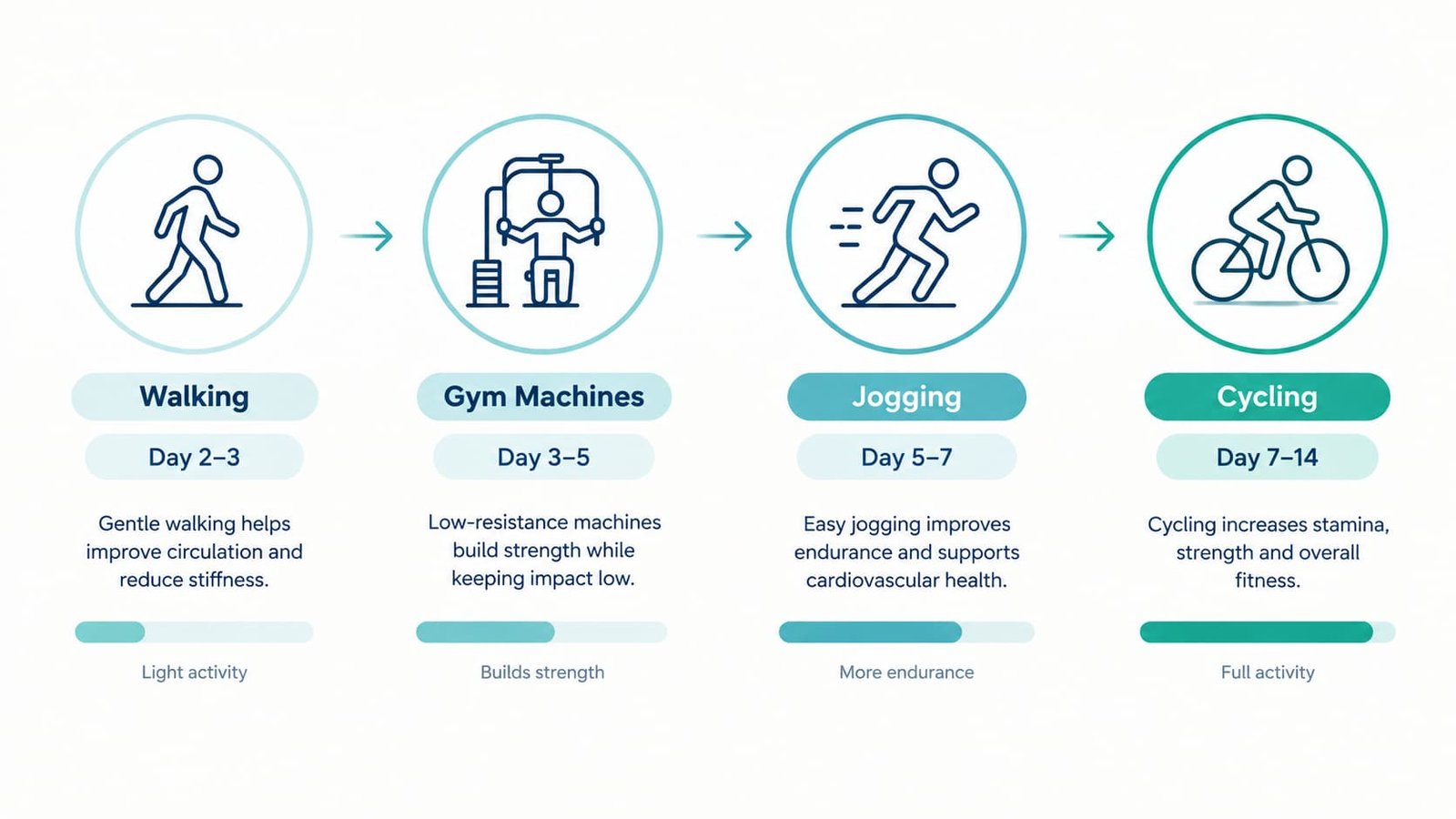
Typical Earliest Return by Activity
| Activity | Typical earliest return | Main concern |
| Walking and gentle stretching | Day 2 to 3 | Straining |
| Upper-body machine weights | Day 3 to 5 | Blood pressure rise |
| Jogging and easy running | Day 5 to 7 | Friction and impact |
| Squats, deadlifts and heavy lifting | Day 7 to 10 | Straining and groin pressure |
| Cycling, outdoors or indoors | Day 7 to 14 | Saddle pressure on the perineum |
| Sauna, steam room and swimming | Day 7, after sites close | Heat and infection risk |
These ranges reflect clinical reasoning, not trial data. Written advice from the treating clinician overrides this table.
Gym After P Shot: Weights, Cardio and Core Work
Many different movements fall under gym after P shot guidance. Each movement affects blood pressure and groin pressure differently. Separating the movements gives safer guidance than one blanket rule.
Machine Work and Light Cardio
Upper-body machines place little pressure on the groin. Seated chest presses, lat pulldowns and cable work usually return first. Moderate loads and slow, controlled repetitions reduce spikes in blood pressure. Treadmill walking and a gentle cross-trainer session also suit the first week, provided friction stays minimal. Core work needs careful selection. Planks and light crunches rarely load the groin. Hanging leg raises and weighted sit-ups strain the lower abdomen and hip flexors, so these wait.
Heavy Lifting and Straining
Squats, deadlifts and leg presses raise intra-abdominal pressure. The Valsalva manoeuvre, which means breath-holding during effort, lifts blood pressure sharply for a few seconds. Those spikes can stress fresh injection sites. Heavy compound lifts therefore sit near the end of the return schedule. Many clinicians advise waiting at least one week. Some extend the wait to two weeks after bruising. Squat and hip-hinge movements also load the groin and inner thigh directly.
Heat, Sweat and Pool Hygiene
Gym facilities add environmental risks. Saunas and steam rooms raise skin temperature and swelling risk. Shared changing rooms and pools increase infection exposure while puncture sites remain open. Clinicians usually advise waiting about a week, or until sites close fully. Clean, dry training clothes also lower irritation. Patients shower promptly after sweating and pat the area dry.
Running After P Shot: Impact, Friction and Clothing
Repeated impact and constant friction define running after P shot treatment. Each stride moves tissue against clothing. Sweat then increases rubbing. Both factors can irritate puncture sites and prolong swelling.
Walking comes first, followed by gentle jogging, then normal running. A typical progression starts with 20 minutes of brisk walking around day three. Easy jogging on flat ground often follows between days five and seven. Longer or faster runs wait until the area feels completely comfortable.
Clothing choice affects comfort and recovery. Supportive, breathable underwear holds tissue still and limits rubbing. Loose shorts without rough seams reduce friction. Soft anti-chafe products help once puncture sites close, but clinicians advise against using such products on open sites. Marathon training and race events need a separate discussion with the clinician. Long distances multiply friction for hours.
Cycling After P Shot: The Highest-Risk Activity
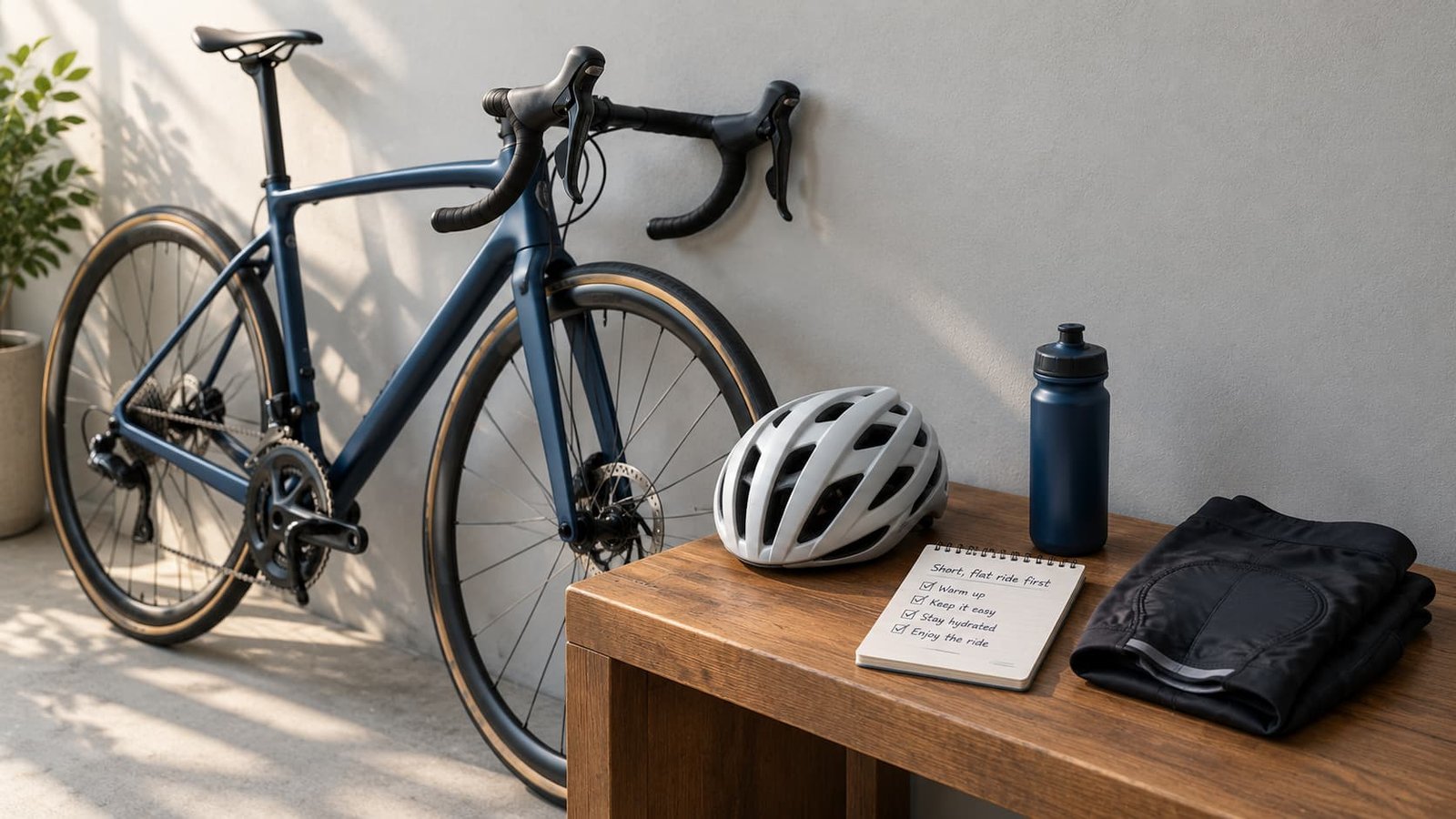
Of all common activities, cycling after P shot treatment needs the most caution. A standard saddle carries body weight through the perineum, the area between the scrotum and anus. That region contains nerves and vessels that supply the penis. Pressure there can reduce sensation and blood flow during long rides.
What Research Says About Saddle Pressure
Peer-reviewed research links saddle pressure with genital numbness. Studies of police bicycle patrol officers associated noseless saddles with less numbness (Schrader et al., 2008). Those studies involved healthy riders, not post-injection patients. The findings still show that saddle design changes perineal loading. Clinical reasoning suggests that healing tissue tolerates this loading less well.
Outdoor Rides, Spin Classes and Commuting
Short commuter rides, spin classes and long weekend rides all load the perineum. Spin classes add standing efforts and fast cadence, which raise friction. Mountain biking adds vibration. E-bikes reduce effort but not saddle contact. Clinicians commonly advise seven to fourteen days without cycling.
A gradual return starts with short, flat rides on a well-fitted saddle. Riders increase duration only if numbness and tenderness stay absent. Saddle width, tilt and height all change perineal pressure. Padded shorts without rough seams help. Standing briefly on the pedals relieves pressure during longer rides.
P Shot Aftercare Alongside Training
Rules for exercise form only part of P shot aftercare. Sleep, nutrition, hygiene and medicines all influence P shot recovery. Small habits add up across the first fortnight.
Hygiene and Clothing
Clean hands and clean clothing protect puncture sites. Patients wash the area gently with mild soap and water. Rubbing and scented products irritate skin. Clinicians usually advise against swimming, hot tubs and baths until sites close fully.
Medicines, Alcohol and Supplements
Some medicines alter bleeding risk. Aspirin, ibuprofen and fish oil can increase bruising in some patients. Clinicians often discuss these before treatment, because anti-inflammatory medicines may affect platelet function. Patients must not stop prescribed medicines without medical advice. Alcohol dilates blood vessels, so clinicians usually advise avoiding it for the first 48 hours. The treating clinician decides which painkiller suits each patient.
Hydration, Sleep and Nutrition
Adequate hydration supports normal circulation. No evidence shows that extra water speeds PRP healing. Balanced meals, protein intake and sleep support general tissue repair. Evidence for recovery supplements after PRP treatment remains limited.
Warning Signs During P Shot Recovery
Mild swelling, tenderness and small bruises are common in the first days. Exercise after P shot treatment can aggravate these effects. Certain symptoms need medical review.
Contact the Treating Clinic Promptly
The treating clinic needs to hear about any of the following:
- Swelling that grows after exercise instead of settling
- Bruising that spreads or darkens
- Pain that worsens after day three
- Numbness or altered sensation that persists
- Lumps or hard areas that develop
Seek Urgent NHS Care
Some signs need urgent help. Call NHS 111 or attend A&E for spreading redness, fever, pus or foul-smelling discharge. These signs suggest infection, and the NHS lists similar features for cellulitis. An erection lasting more than four hours needs emergency care. Severe swelling that blocks urination also needs emergency review. Dial 999 for severe or rapidly worsening symptoms.
Realistic Expectations and Limitations
Careful timing of exercise after P shot treatment supports comfort, but it does not guarantee a better result. No evidence shows that early or late training changes long-term outcomes. Responses to PRP vary widely between individuals. Trials report modest average improvements, not guaranteed ones. Underlying causes of erectile dysfunction, such as diabetes or vascular disease, influence response.
PRP does not replace evidence-based first-line care. The NHS and NICE place lifestyle measures and PDE5 inhibitors ahead of PRP. Regular exercise, sleep, weight control and stopping smoking improve vascular health. These measures therefore support erectile function over the long term.
Choosing Aftercare Advice in P Shot London and P Shot UK Practices
Aftercare rules differ between practices, so written instructions matter. Patients benefit from asking about activity limits before treatment, not afterwards. Useful questions cover gym sessions, running, cycling, heat exposure and emergency contact numbers. The Care Quality Commission website shows clinic registration, and the GMC register confirms doctor registration.
This article comes from pshots clinic uk, a Harley Street practice in Marylebone. Dr Syed Nadeem Abbas leads the practice and holds MBBS, MRCS RCS Edinburgh and MRCGP qualifications. The same clinician completed an MSc in Aesthetic Plastic Surgery with Distinction at Queen Mary University of London. Training took place at Cambridge, Oxford and the Royal London Hospital. Treating clinicians remain the authority on individual aftercare.
Frequently Asked Questions
How soon can exercise after P shot treatment begin?
Gentle walking usually restarts within 24 to 48 hours. Structured exercise typically waits until day three to five, depending on the activity and clinical advice.
Is gym training safe in the first week?
Light machine work often suits from day three to five. Heavy lifting, squats and heat exposure usually wait at least one week.
When does running restart?
Easy jogging commonly returns between days five and seven if swelling stays minimal. Longer runs follow in weeks two to four.
How long should cycling wait?
Typical advice ranges from seven to fourteen days. Saddle pressure targets the perineum, so cycling restarts last.
Can early exercise after P shot treatment reduce results?
No trial answers this directly. Early strain can raise bruising and discomfort. Evidence for any effect on long-term outcomes remains absent.
Does bruising change the timeline?
Yes. Visible bruising signals tissue irritation. Clinicians usually extend the rest period until tenderness settles.
Which painkillers suit recovery?
The treating clinician advises on painkillers. Some anti-inflammatory medicines affect platelet function, so confirmation before use matters.
Key Takeaways
Exercise after P shot treatment follows a staged logic. Rest comes first, then gentle movement, controlled strength work, and finally impact and saddle activities. Walking returns first, cycling returns last, and symptoms outrank calendars. Evidence remains indirect, so clinician-specific advice carries the most weight.
Informed decisions need three things. These are realistic expectations about PRP, clear written aftercare and honest symptom monitoring. Rushing back to training offers little benefit and adds avoidable risk. A planned pause costs only days.
If one extra week of patience protects the treated tissue, which workout truly justifies the risk?
read more:
Priapus Shot London: A Complete Guide for Patients Considering Treatment
Natural Male Enhancement in London: Real Benefits and Timeline of the Priapus Shot
Dr Syed Nadeem Abbas, MBBS, MRCSEd, MSc Aesthetic Plastic Surgery (Distinction) Medical Director, Pshot Clinic | CQC Regulated | Monday to Saturday 10:00–18:00 +44 7955 836986


