
✅Medically reviewed
The most important part of a P shot happens before the needle appears. Blood tests and a blood pressure reading shape the decision long before treatment begins. Clinicians use these results to find the cause of sexual symptoms. The same data show whether platelet-rich plasma suits the patient at all.
Sexual symptoms rarely appear in isolation. Erectile difficulty, reduced sensation and weaker orgasms in men often share the same roots. Diabetes, low testosterone, raised cholesterol and high blood pressure sit behind many cases. Each condition alters blood flow, nerve function or hormone signalling. An injection of platelets cannot correct any of these conditions.
This guide explains the tests before P shot treatment in plain clinical terms. The sections cover HbA1c, testosterone, lipids and blood pressure. Each one describes what the test measures, what the numbers mean and why the result matters. The guide also sets out the limits of current evidence. PRP therapy for sexual function remains an area of active research, not a settled NHS treatment.
Clear numbers lead to safer decisions. The sections below explain what each number means.
Why Clinicians Order Tests Before a P Shot
Sexual function depends on healthy blood vessels, intact nerves and balanced hormones. Damage to any one of these can cause symptoms. A P shot injects platelet-rich plasma from the patient’s own blood into penile tissue. That procedure does not treat a hormone deficit. Neither does it repair diabetic nerve damage.
Screening therefore serves three purposes. Tests before P shot treatment find reversible causes, set a baseline and protect safety.
Finding Reversible Causes
Many men with erectile or orgasm symptoms have an undiagnosed medical condition. Type 2 diabetes is a common example. Treating the condition often improves sexual function more than any local procedure. A clinician who skips testing risks treating the symptom while the cause progresses.
Setting a Baseline
Results give the clinic a starting point. Follow-up questionnaires and repeat blood tests then show real change. Without a baseline, any improvement stays difficult to interpret.
Protecting Patient Safety
Uncontrolled diabetes slows wound healing and raises infection risk. Very high blood pressure adds risk during any procedure. Testing flags these problems early.
The Cardiovascular Warning Sign
Penile arteries are narrow, often only one to two millimetres wide. Narrow vessels show damage earlier than the larger coronary arteries. Erectile dysfunction can therefore appear several years before heart disease. A sexual symptom can act as an early cardiovascular warning. Blood pressure and lipid results help clinicians act on that warning.
HbA1c: Checking Long-Term Blood Sugar Control
What HbA1c Measures
HbA1c shows the share of haemoglobin that carries attached glucose. Red blood cells live for about three months. The result therefore reflects average blood sugar over the previous two to three months. Patients need no fasting. One blood sample is enough.
NHS Thresholds
The NHS and NICE classify results using fixed bands.
| HbA1c (mmol/mol) | Classification | Usual next step |
| Below 42 | Normal range | Routine health advice |
| 42 to 47 | Prediabetes | Lifestyle support and yearly review |
| 48 or above | Diabetes range | Confirmation and clinical management |
Why Diabetes Matters for Sexual Function
High glucose damages the lining of blood vessels and the peripheral nerves. Both effects impair erections and sensation. A 2017 meta-analysis in Diabetic Medicine found erectile dysfunction in roughly half of men with diabetes. Nerve damage can also contribute to reduced orgasm intensity. Poor glucose control can blunt sensation and contribute to weaker orgasms in men.
Understanding Prediabetes
A result between 42 and 47 mmol/mol does not mean diabetes. It does signal higher risk. NICE recommends structured lifestyle support at this stage. Men in this band often have early vascular changes before any diagnosis. Repeat testing each year tracks the trend.
Limits of the HbA1c Test
Anaemia, recent blood loss and some inherited haemoglobin variants distort results. Clinicians then choose other tests or interpret the figure with caution.
How HbA1c Shapes Treatment Planning
No UK guideline sets a single HbA1c cut-off for PRP. Clinicians judge each case individually. A high result usually prompts a GP referral before any procedure. Better glucose control often helps more than injections. Clinicians weigh HbA1c alongside the other tests before P shot planning begins.
Testosterone: Hormone Levels and Sexual Function
When to Take the Sample
Testosterone follows a daily rhythm. Levels peak in the morning. NICE Clinical Knowledge Summaries advise sampling between 9 am and 11 am. Clinicians usually repeat a low result, because single readings vary. Acute illness, poor sleep and some medicines, including opioids, lower levels temporarily.
Which Tests Clinicians Request
Total testosterone forms the first-line test. Sex hormone-binding globulin (SHBG) shows how much testosterone stays bound and inactive. Clinicians calculate free testosterone from both values. Luteinising hormone (LH), follicle-stimulating hormone (FSH) and prolactin help locate the cause of a low result.
Reading the Results
UK specialist guidance uses broad bands. The British Society for Sexual Medicine and the Society for Endocrinology both publish such documents. Laboratory ranges differ, so clinicians interpret each report individually.
| Total testosterone | Usual interpretation | Typical response |
| Above 12 nmol/L | Deficiency unlikely | Look for other causes |
| 8 to 12 nmol/L | Borderline | Repeat; check SHBG and free testosterone |
| Below 8 nmol/L | Likely deficiency | Further tests and specialist review |
Why Testosterone Matters Here
Low testosterone reduces desire and arousal. It can also dull orgasm, although evidence for orgasm-specific effects remains modest. Hormone therapy does not suit every man, and it needs monitoring of haematocrit and PSA. No good evidence shows that PRP raises systemic testosterone. A P shot cannot replace a hormone assessment. The tests before P shot treatment therefore include testosterone whenever symptoms suggest deficiency.
Lipid Profile: Cholesterol and Vascular Risk
What the Lipid Profile Includes
A lipid profile reports total cholesterol, HDL cholesterol, non-HDL cholesterol and triglycerides. NICE guideline NG238 allows a non-fasting sample. Fasting therefore rarely matters.
Why Cholesterol Affects Erections
Raised LDL cholesterol promotes plaque in arterial walls. Plaque narrows vessels and reduces blood flow. The small penile arteries react early to this process. Reduced inflow can weaken erections.
From Results to Risk
Clinicians combine lipid values with age, blood pressure, smoking status and diabetes in the QRISK3 calculator. The calculator estimates ten-year cardiovascular risk. NICE advises offering atorvastatin 20 mg when that risk reaches 10 percent. Very high readings or a strong family history prompt assessment for familial hypercholesterolaemia.
Relevance Before PRP
Lipid results do not stop a P shot. Abnormal values do reveal vascular disease that may limit any benefit. Blood vessels that carry plaque may respond less well to local treatment.
Blood Pressure: The Simplest Check
What Counts as Normal
The NHS describes an ideal reading as between 90/60 mmHg and 120/80 mmHg. NICE guideline NG136 sets out the thresholds for high readings.
| Setting | Threshold suggesting hypertension |
| Clinic reading | 140/90 mmHg or higher |
| Home or ambulatory average | 135/85 mmHg or higher |
| Severe clinic reading | 180/120 mmHg or higher (urgent assessment) |
A raised clinic reading needs confirmation with home or ambulatory monitoring. Blood pressure remains the simplest of the tests before P shot, and it takes minutes.
Why Blood Pressure Affects Sexual Function
High pressure stiffens and damages arteries, which reduces flow into the penis. Some blood pressure medicines can also affect erections, notably beta-blockers and thiazide diuretics. Patients should never stop prescribed medicines without medical advice.
Blood Pressure on the Day
Clinicians record pressure before the procedure. Anxiety, pain and needle fear can raise readings or trigger fainting. A stable reading supports safe local anaesthesia.
How the Four Tests Work Together
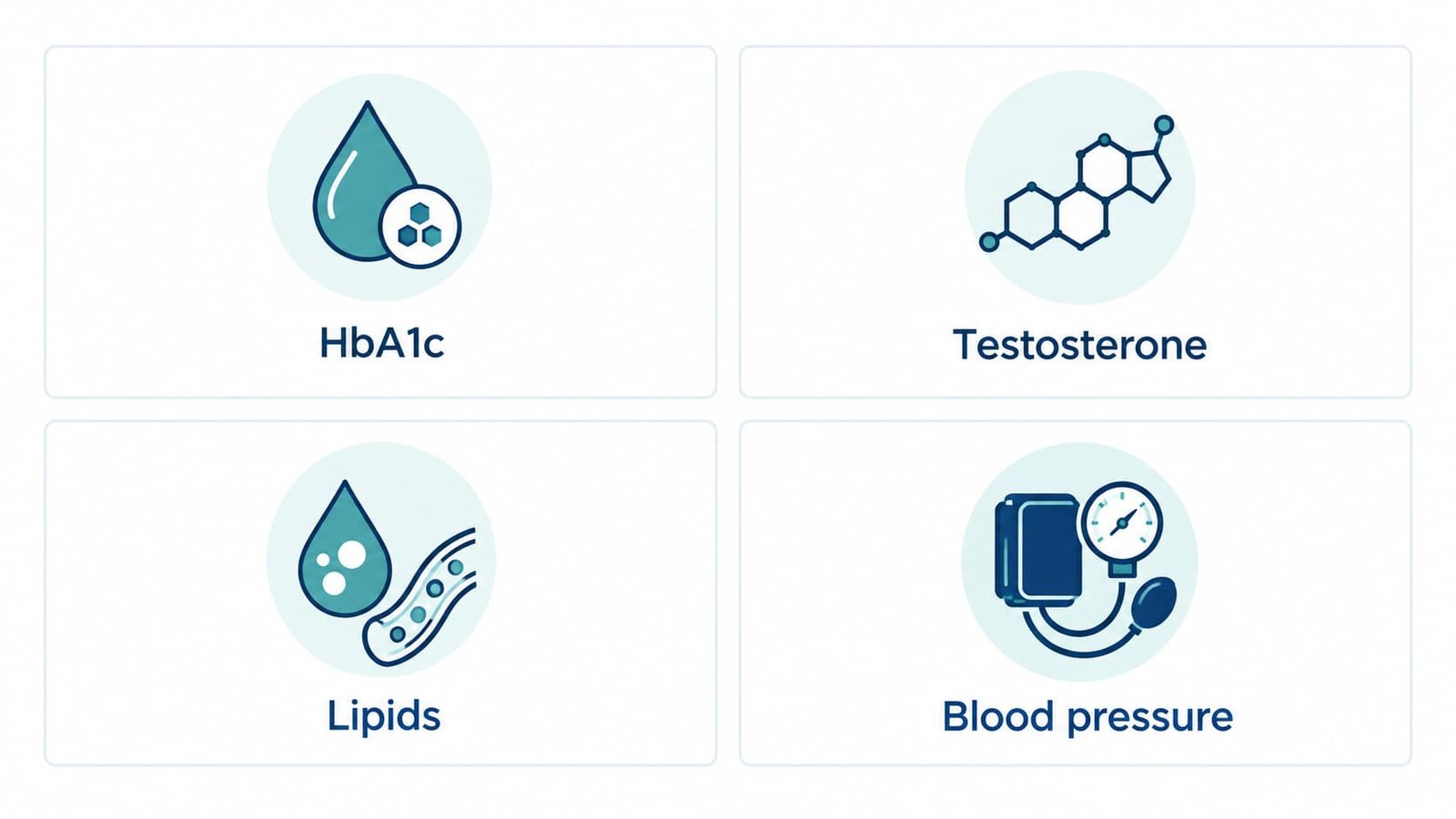
Each result adds one piece to a larger picture. Clinicians rarely read a single number alone.
Common Result Patterns
A high HbA1c with raised blood pressure points to metabolic and vascular disease. Low testosterone with obesity often reflects insulin resistance. Raised cholesterol with normal glucose may signal a lipid disorder. Normal results across all four tests shift attention to nerve injury, medicines or psychological factors.
Causes of Reduced Orgasm Intensity
Reduced orgasm intensity has several recognised causes. Low testosterone, diabetic neuropathy and vascular disease top the list. Antidepressants, especially SSRIs, commonly blunt orgasm. Prostate surgery and pelvic nerve injury can do the same. Stress, poor sleep and relationship strain add further layers. Blood tests identify only some of these causes. A clinical history identifies the rest.
Red Flags That Need Prompt Review
Some findings need medical attention before any elective procedure. These include readings of 180/120 mmHg or higher, chest pain on exertion and symptoms of high blood sugar. Excessive thirst, frequent urination and unexplained weight loss form that last group. Patients with these signs should contact an NHS GP or call NHS 111.
Retesting and Reference Ranges
Reference ranges vary slightly between laboratories. Clinicians therefore compare results against the range printed on each report. Repeat testing makes sense after medicine changes, weight loss or a new diagnosis. A result from several years ago no longer reflects current health. Recent figures give the safest starting point.
Additional Tests Before P Shot Treatment
Clinics may add further checks according to the patient’s history.
- Full blood count: this measures platelets and haemoglobin. PRP depends on healthy platelets.
- Kidney and liver function: these results guide medicine choices, especially in diabetes.
- Thyroid function: thyroid disorders can alter libido and ejaculation.
- PSA: men aged 50 and over can request an NHS PSA test after discussing benefits and risks.
- Infection screening: clinicians order this only when the history justifies it.
A medicine review matters just as much. Aspirin, anticoagulants and anti-inflammatory drugs can affect bleeding and platelet function. Patients should list every medicine and supplement at consultation.
How to Prepare for Testing

Preparation differs by test.
- HbA1c: no fasting is required.
- Testosterone: book a morning appointment, ideally before 11 am.
- Lipids: a non-fasting sample usually suffices.
- Blood pressure: sit quietly for five minutes first. Avoid caffeine, smoking and exercise for 30 minutes beforehand.
NHS GPs can arrange HbA1c, lipid and blood pressure checks when symptoms justify testing. The NHS Health Check offers cholesterol, blood pressure and diabetes risk assessment to adults aged 40 to 74. Private laboratories offer the same tests with faster turnaround. Some clinics review results during consultation. One example is pshots clinic UK on Harley Street. Dr Syed Nadeem Abbas leads that clinic (MBBS, MRCS RCS Edinburgh, MRCGP, MSc Aesthetic Plastic Surgery). Patients who arrange tests before P shot consultations save time and avoid repeat visits.
What Results Mean for Realistic Outcomes
Test results guide safety and suitability. Response remains unpredictable. A normal result does not guarantee benefit, and an abnormal result does not always rule out treatment.
Lifestyle correction deserves attention first. Weight loss, exercise, smoking cessation and moderate alcohol intake improve all four measurements. Several trials also show direct gains in erectile function. Lifestyle change often delivers the largest, safest improvement in sexual health.
Evidence for P shot treatment remains limited. Small randomised trials and systematic reviews report mixed, short-term improvements in erectile function scores. Larger trials with long follow-up remain scarce. NICE Clinical Knowledge Summaries list PDE5 inhibitors as first-line therapy for erectile dysfunction. NHS pathways do not currently list PRP as a standard option.
Evidence for reduced orgasm intensity is weaker still. Few studies measure orgasm directly. Patients should treat any claim of improved orgasm with caution.
Priapus shot London services use the same PRP technique, so the same testing logic applies. Standards differ between providers across P shot UK clinics. Patients should confirm Care Quality Commission registration and ask which tests the clinic requires. P shot London providers should also explain the evidence limits plainly.
Frequently Asked Questions
Which tests before P-shot treatment are standard?
No UK law fixes a mandatory list. Each clinic sets its own protocol. Most request HbA1c, testosterone, a lipid profile and blood pressure, often with a full blood count.
Does low testosterone prevent a P shot?
Not necessarily. Clinicians usually investigate the cause first. Hormone treatment or specialist review may come before any PRP decision.
Can diabetes affect the result of a P shot?
Diabetes damages vessels and nerves, which may limit benefit. Poor control also slows healing. Clinicians therefore prefer stable glucose levels before treatment.
How long do test results stay valid?
Validity varies by clinic. Clinicians prefer recent results, particularly after medicine changes or new symptoms.
Does the NHS offer the P shot?
The NHS does not routinely offer PRP for erectile dysfunction. NHS clinicians do offer the underlying tests and proven first-line treatments.
Are the tests the same for a priapus shot?
Yes. Both names describe the same PRP procedure. The same safety checks apply.
Can the tests explain weaker orgasms?
Sometimes. Low testosterone, diabetes and vascular disease all contribute to weaker orgasms in men. Normal results do not exclude other causes, such as medicines, nerve injury or psychological factors. A full clinical history remains essential.
Do clinicians check PSA before treatment?
Not routinely for a P shot. PSA matters more before testosterone therapy and for men with urinary symptoms or a family history. The NHS provides written guidance on the benefits and risks.
Key Takeaways
Testing comes first because sexual health reflects general health. HbA1c exposes hidden diabetes. Testosterone reveals hormone deficits. Lipids and blood pressure show the state of the vessels that supply the penis. Together, these four checks often explain symptoms that no injection can fix.
The evidence for PRP therapy for sexual function remains modest. Results vary, and no test predicts who will respond. Informed decisions rest on accurate data, realistic expectations and clear limits. Patients who complete the tests before P shot treatment gain a safer start and a clearer picture. Some discover a treatable condition that changes the plan entirely.
If four simple checks can reveal the real cause of a symptom, where else should treatment decisions begin?
read more:
Can Type 2 Diabetes-Related Erectile Dysfunction Be Reversed? What Research Shows
P Shot for Orgasm Intensity: What Does the Clinical Evidence Show?
Dr Syed Nadeem Abbas, MBBS, MRCSEd, MSc Aesthetic Plastic Surgery (Distinction) Medical Director, Pshot Clinic | CQC Regulated | Monday to Saturday 10:00–18:00 +44 7955 836986


