
Erectile dysfunction affects a large proportion of adult men in the UK, and interest in regenerative alternatives to daily tablets continues to grow. The Priapus Shot, widely known as the P-Shot, uses platelet-rich plasma drawn from a man’s own blood to stimulate tissue repair inside the penis. Understanding the P-Shot effects timeline matters as much as the procedure itself, because unrealistic expectations often lead to disappointment. Oral medication works within an hour. Regenerative injections operate differently. Results develop gradually over weeks and months as cellular repair processes unfold beneath the surface. This article sets out the biological mechanism behind the treatment, breaks the results timeline into clear stages, and reviews the clinical evidence supporting — and questioning — its use. Balanced, fact-based information supports informed decisions about non-surgical treatment for erectile dysfunction in London and beyond.
What Is the P-Shot and How Does It Work
The P-Shot involves drawing a small blood sample and spinning it in a centrifuge. This process concentrates platelets into a solution called platelet-rich plasma (PRP). A clinician then injects this PRP into specific areas of the penis, including the corpus cavernosum. The corpus cavernosum consists of spongy tissue that fills with blood during an erection.
Growth factors within the concentrated platelets theoretically trigger new blood vessel formation and nerve tissue repair. Practitioners describe this as a regenerative approach to erectile dysfunction, distinct from medications that simply increase blood flow on a temporary basis. The procedure typically takes between 30 and 45 minutes and uses topical anaesthetic to reduce discomfort during the injections.
The Biological Mechanism Behind Regenerative Results
Platelets release several growth factors after injection, including platelet-derived growth factor and vascular endothelial growth factor. These proteins may stimulate angiogenesis, the formation of new blood vessels, and support nerve tissue repair. Researchers at Guy’s and St Thomas’ NHS Foundation Trust noted that PRP may modify inflammatory and neuroprotective processes linked to erectile dysfunction.
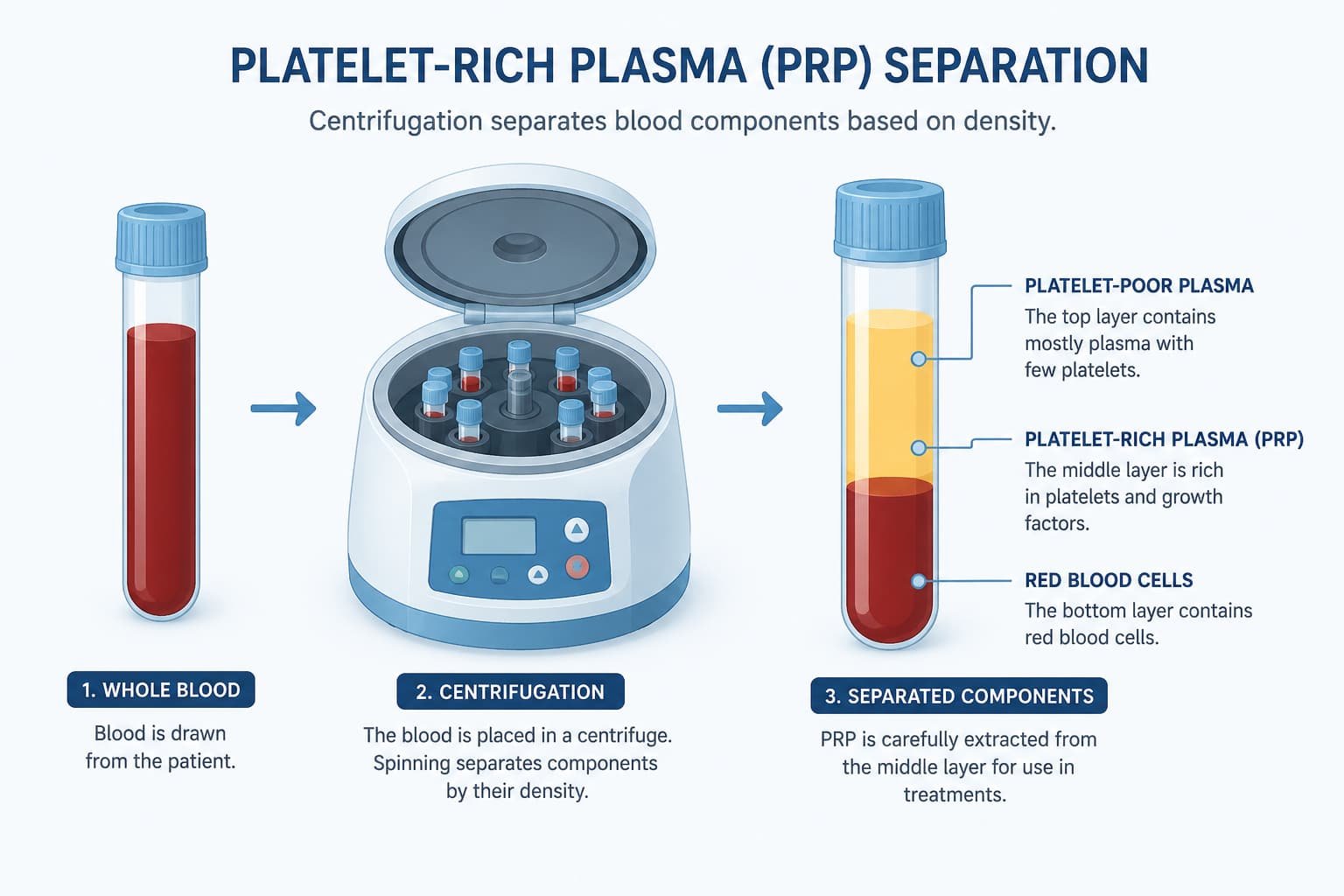
This mechanism explains why P-Shot effects take time to develop. Tissue regeneration is a biological process, not an instant chemical reaction. New vessels do not form overnight. Nerve tissue repair follows its own gradual pace, shaped by individual biology rather than the calendar. Patience becomes essential when considering this treatment route.
Why the Timeline Differs From Standard ED Medication
PDE-5 inhibitor tablets, such as sildenafil, work by relaxing blood vessels for a matter of hours. Regenerative injections aim instead to change the underlying tissue over an extended period. This distinction explains why the results timeline cannot be compared directly against a tablet that works within sixty minutes. One approach manages a symptom temporarily. The other attempts a slower, structural change.
The P-Shot Results Timeline: Week by Week
Men researching P shot before and after outcomes often expect a fixed, universal schedule. In practice, the timeline varies between individuals, though a general pattern applies across most cases.
Days 1 to 7: Initial Recovery Phase
Mild swelling, bruising, and tenderness commonly appear at the injection site during the first week. These symptoms usually resolve within seven to ten days. No meaningful improvement appears during this early period. The body focuses on healing the injection sites rather than generating new tissue.
Clinicians typically advise abstaining from sexual activity and strenuous exercise for several days after a p injection. This precaution allows the concentrated platelets to remain in the target tissue rather than dispersing prematurely.
Weeks Two to Four: Early Tissue Response
Growth factor activity increases during this phase. Some men report subtle changes in sensitivity or firmness, though formal studies rarely detect measurable improvement this early. Early changes tend to be inconsistent and should not be treated as a reliable predictor of the final outcome.
Individual variation becomes apparent at this stage. Some men notice nothing during the first month. Others report gradual, minor changes. Neither pattern reliably predicts eventual success or failure.
Months One to Three: Peak P-Shot Effects
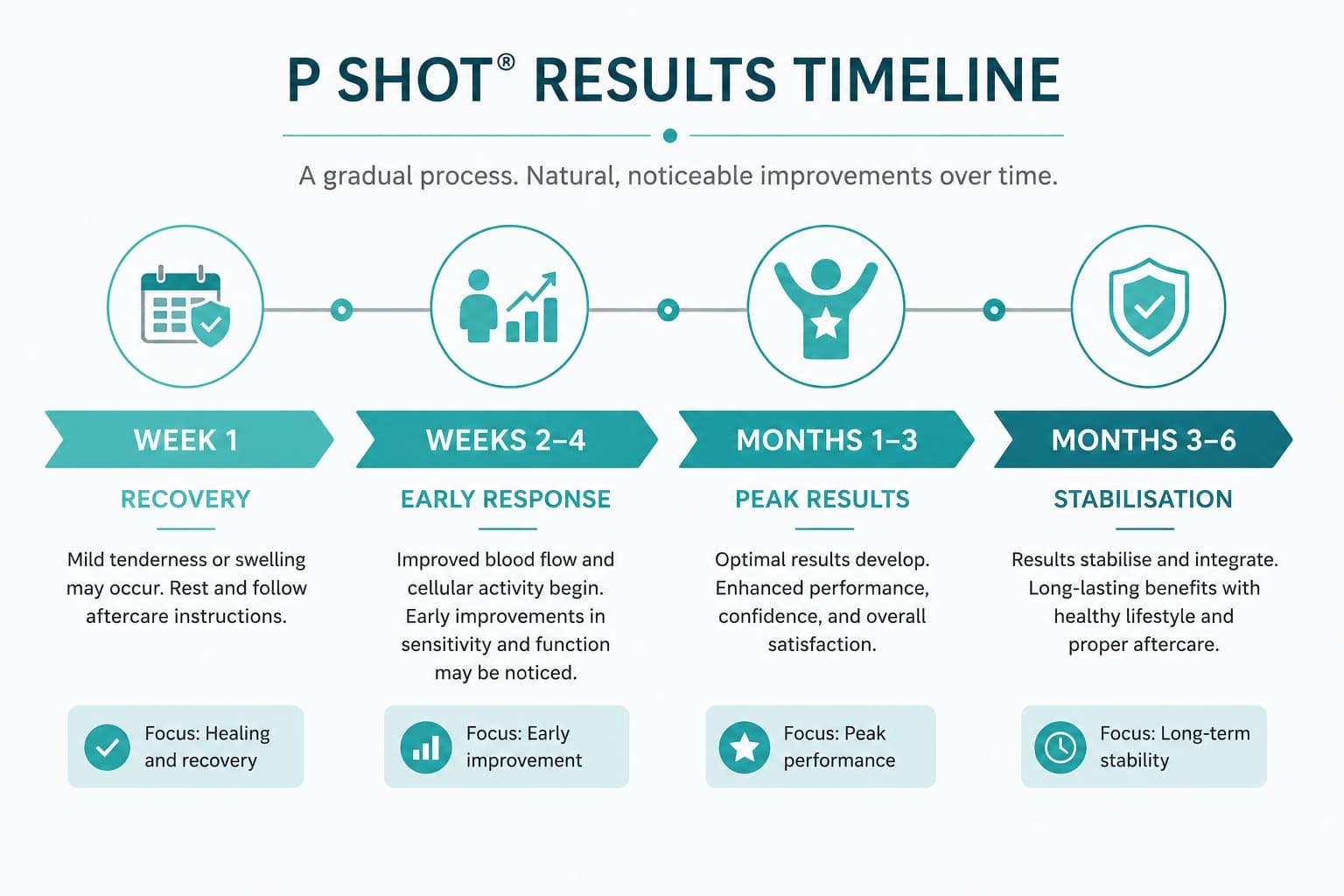
Most clinical evidence points to this window as the period when P-Shot effects become most noticeable, if noticeable change develops at all. Angiogenesis and tissue remodelling reportedly continue throughout these months. Patient-reported outcome measures, such as the International Index of Erectile Function (IIEF), typically show the greatest change between one and three months after treatment.
A meta-analysis published in PLOS One reviewed twelve controlled trials involving 991 patients and found that the PRP group demonstrated better IIEF outcomes than control groups, with a standardised mean difference of 0.59. This figure indicates a moderate effect, not a guaranteed transformation. Individual results still vary considerably between patients.
Months Three to Six: Stabilisation and Realistic Outcomes
By month three, most men who respond to treatment reach peak improvement. Results generally stabilise between three and six months, with limited further change beyond this point. Some clinics report that benefits persist for twelve to eighteen months, though robust long-term data remains limited.
Not every patient experiences noticeable improvement within this timeframe. Evidence quality varies across studies, and several trials found no statistically significant difference between PRP and placebo groups. This inconsistency deserves clear acknowledgement rather than dismissal.
Factors That Influence How Quickly Results Develop
Several variables affect the speed and extent of tissue response following treatment.
Age and Baseline Vascular Health
Younger men with healthier blood vessels typically show tissue repair more efficiently than older men with established vascular disease. Diabetes, hypertension, and a history of smoking all reduce the tissue’s regenerative capacity. Clinicians assess vascular health before recommending treatment, since underlying disease often limits the potential benefit.
Severity of Erectile Dysfunction
Men with mild to moderate erectile dysfunction generally show a more favourable response than men with severe, long-standing dysfunction. A 2021 double-blind, randomised, placebo-controlled trial specifically enrolled patients with mild and moderate erectile dysfunction, reflecting this pattern in trial design. Severe cases involving significant fibrous tissue changes may not respond meaningfully to regenerative injection at all.
Lifestyle Factors and General Health
Smoking, poor cardiovascular fitness, and unmanaged diabetes can all slow tissue repair. Addressing modifiable risk factors alongside treatment may support better outcomes, though no robust clinical evidence confirms this specific combination improves the overall timeline.
Number of Treatment Sessions
Some clinics recommend a single injection, while others build a protocol around two sessions spaced roughly a month apart. Certain trial designs used this two-session model when assessing outcomes. The number of sessions received may influence both the speed and durability of any improvement, though evidence comparing single versus repeat protocols remains limited.
Clinical Evidence on P-Shot Effects for Erectile Dysfunction
Evidence quality remains a central limitation across this field. A 2024 systematic review concluded that PRP therapy showed small to moderate benefits with mild and transient side effects across the studies analysed. However, the same review noted that neither the European Association of Urology nor the American Urological Association currently endorses PRP injections, classifying the treatment as experimental for erectile dysfunction.
A more recent meta-analysis of randomised controlled trials reached a more cautious conclusion. It found that current evidence does not support a consistent, clinically meaningful improvement with PRP monotherapy compared with placebo. High heterogeneity between studies, small sample sizes, and methodological limitations reduce confidence in these findings.

This mixed evidence base means meaningful benefit cannot be guaranteed for any individual patient. Some studies report meaningful improvement measured against the IIEF questionnaire. Others find no statistically significant difference from placebo. Both findings appear in peer-reviewed literature, and both deserve consideration before booking a P shot treatment.
NICE has not issued specific guidance endorsing PRP injections for erectile dysfunction. The NHS continues to recommend PDE-5 inhibitor tablets, such as sildenafil, as first-line treatment for most men. Regenerative injections remain a private, out-of-pocket option rather than a standard NHS pathway, which shapes decisions about pricing and access across the UK.
P-Shot Before and After: What Realistic Results Look Like
Marketing materials sometimes present dramatic before-and-after comparisons. Photographic evidence carries significant limitations. Lighting, positioning, and arousal state all affect penile appearance independently of any treatment. A single photograph rarely provides reliable evidence of genuine physiological change.
Genuine improvement, where it occurs, typically presents as firmer erections, improved sensitivity, or reduced reliance on oral medication, rather than dramatic visible transformation. Some men report changes consistent with modest penile injection growth in girth or sensation, though this outcome is not consistent or guaranteed across the wider patient population. Clinicians should set expectations around functional improvement rather than cosmetic change, and should discuss the limitations of photographic comparison openly during consultation.
P Shot Treatment Options in London
Several private clinics across the capital now offer P shot London and Priapus shot London services alongside other non-surgical treatment for erectile dysfunction in London. Pshots clinic UK, a Harley Street clinic led by Dr Syed Nadeem Abbas, is one example of a private provider offering this treatment within a structured clinical consultation framework.
Priapus shot price varies between clinics, typically depending on the number of sessions included and the specific PRP preparation system used. Patients should request a detailed breakdown of Priapus shot price before committing to a treatment plan, including any follow-up sessions required to reach peak effect. Costs for erectile dysfunction treatment London generally sit well above the price of a course of standard oral medication, reflecting the additional equipment and clinical time involved.
P shot UK availability continues to expand, though the treatment remains unregulated as a specific licensed indication. Patients considering this route should verify that the treating clinician holds appropriate medical qualifications and follows sterile injection protocols throughout the procedure, alongside a clear informed consent process.
Comparing the P-Shot Effects Timeline With Other ED Treatments
| Treatment | Time to Effect | Evidence Quality | Duration of Benefit |
| PDE-5 inhibitor tablets | 30–60 minutes | Extensive RCT evidence | Single use, per dose |
| Penile injections (alprostadil) | 5–20 minutes | Well established | Single use, per dose |
| P-Shot (PRP therapy) | 4–12 weeks | Limited, mixed RCT evidence | Reported 12–18 months |
This comparison highlights a fundamental difference in approach. Oral medications and injectable alprostadil produce immediate, predictable effects for a single sexual encounter. Regenerative treatment, when it works, aims to improve underlying tissue function over a longer period rather than producing an immediate erection on demand.
Who Should Consider This Treatment
Men who have not responded well to oral medication, or who experience side effects from PDE-5 inhibitors, sometimes explore PRP-based regenerative therapy for ED as an alternative route. Men seeking a natural ED treatment using PRP therapy, derived from their own blood rather than synthetic compounds, may also find this approach appealing in principle, even where the supporting evidence remains limited.
Limitations and Who Should Avoid It
Men with bleeding disorders, active infection at the injection site, or certain blood-related conditions should avoid this treatment. Men with severe, fibrotic erectile dysfunction may see little benefit, since PRP cannot reverse extensive structural tissue damage. Anyone currently taking blood-thinning medication should discuss this with a treating clinician beforehand, well ahead of any scheduled p injection.
Realistic expectations remain essential throughout. Current evidence does not support this treatment as a guaranteed cure. It represents one option among several, with a developing but still limited evidence base, and outcomes vary between individuals for reasons not yet fully understood.
What to Expect During Consultation and Follow-Up
A thorough consultation should include a review of medical history, current medication, and the severity of erectile dysfunction using a validated questionnaire such as the IIEF. Baseline scoring allows a clinician to measure any subsequent change objectively, rather than relying on impression alone.
Follow-up appointments at one, three, and six months allow tracking of the treatment timeline against baseline measurements. This structured approach helps separate genuine improvement from normal day-to-day variation in erectile function, and gives both patient and clinician a clearer picture of whether the chosen protocol is delivering the intended result.
Frequently Asked Questions
How soon do P-Shot effects become noticeable after treatment?
Most men report the earliest subtle changes between two and four weeks. Peak improvement generally appears between one and three months after injection.
Do the results last permanently after a single session?
No. Reported benefits typically last twelve to eighteen months. Long-term data remains limited, and some men opt for repeat sessions to sustain results over time.
Does everyone experience the same results timeline?
No. Age, baseline vascular health, and the severity of erectile dysfunction all influence how quickly, and whether, tissue responds to treatment.
Is P shot treatment painful?
Topical anaesthetic reduces discomfort during injection. Mild bruising, swelling, and tenderness commonly follow for several days afterward.
What does Priapus shot price typically include?
Priapus shot price usually covers the blood draw, PRP preparation, and injection procedure. Some clinics bundle multiple sessions into a package, which affects the overall figure quoted.
Is this treatment available on the NHS?
No. The NHS offers PDE-5 inhibitor tablets as first-line treatment. This procedure remains a private option across UK clinics, including those offering P shot London and Priapus shot London services.
Conclusion
P-Shot effects develop gradually, following a biological timeline rather than an immediate chemical response. Early weeks bring recovery rather than improvement. Peak effects, where present, typically emerge between one and three months, with stabilisation following by month six. Clinical evidence remains genuinely mixed, with some trials reporting moderate benefit and others finding no significant difference from placebo. Men considering this treatment deserve balanced information about realistic outcomes, evidence limitations, and appropriate alternatives, rather than promises of guaranteed transformation. Informed decision-making depends on weighing current research honestly against personal circumstances and treatment goals. Given the variability in individual response, what specific evidence would make this treatment’s true role in erectile dysfunction care genuinely clear?
read more: Factors That Influence P Shot Success Rates
When Will I See Results from P Shot in London? A Realistic Timeline
Dr Syed Nadeem Abbas, MBBS, MRCSEd, MSc Aesthetic Plastic Surgery (Distinction) Medical Director, Pshot Clinic | CQC Regulated | Monday to Saturday 10:00–18:00 +44 7955 836986


