
✅Medically reviewed
Needle position shapes both the safety and the purpose of a P shot. The P shot, also called the Priapus Shot, places platelet-rich plasma (PRP) into penile tissue. Clinics often describe the treatment as quick and simple. The P shot injection technique behind it involves precise anatomy, sterile preparation and controlled needle depth.
Men who type “how is the P shot done” into a search engine often find brief answers. Many pages mention a few shaft injections and stop there. That summary leaves out the detail that matters. The penis contains erectile chambers, a tough outer sheath, the urethra, a large dorsal vein and fine sensory nerves. Each structure influences where the needle enters.
Trials of PRP for erectile dysfunction (ED) show mixed results. A 2026 meta-analysis of seven randomised trials found no significant difference from placebo at one, three or six months. An earlier 2024 analysis of three trials reported short-term gains in mild to moderate ED. Neither the NHS nor NICE currently lists PRP among standard ED treatments.
This article explains P shot injection placement, numbing methods, injection numbers and safety checks. A comparison with standard penile injection therapy follows. The aim is to give balanced, accurate information to UK readers who weigh P shot treatment. Technique also affects comfort, bruising and recovery. The sections below follow a typical appointment, from screening to aftercare.
What the P Shot Aims to Do
The P shot uses PRP from the patient’s own blood. A centrifuge concentrates the platelets, which release growth factors. Researchers propose that these factors encourage new blood vessel growth and tissue repair. Human evidence for that effect remains limited.
Established ED care in the UK does not currently include PRP. The NHS lists lifestyle changes, oral phosphodiesterase type 5 inhibitors, vacuum devices and prescribed penile injections. NICE Clinical Knowledge Summaries follow a similar approach. Private clinics across the UK offer the P shot as an additional option. Costs therefore fall on the patient.
Penile Anatomy Behind P Shot Injection Placement
Safe P shot injection technique starts with anatomy. Three structural groups guide most decisions.
The Corpora Cavernosa
Two cylindrical chambers run along the shaft. Spongy erectile tissue fills each chamber. That tissue fills with blood during an erection. The 2024 meta-analysis assessed intracavernosal PRP injection, which places PRP directly into these chambers.
The Tunica Albuginea and Buck’s Fascia
A firm fibrous sheath, the tunica albuginea, wraps each chamber. Buck’s fascia surrounds the chambers and shelters the deep dorsal vein, arteries and nerves. Depth control matters because the needle must cross these layers with care. UCSF Health notes slight resistance at the skin and again at the tunica albuginea. The same source warns that improper injection and scarring can cause penile curvature after drug injection therapy.
The Urethra, Dorsal Vein and Nerves
The urethra runs through the corpus spongiosum on the underside of the shaft. Along the upper midline run the dorsal vein and dorsal nerves. Clinicians therefore avoid both midlines. Lateral entry points sit away from those structures. Dense nerve endings also supply the glans, so that area feels more sensitive.
Where Are P Shot Injections Placed?
No single guideline defines P shot injection placement. Protocols differ between clinics and trials. Three principles stay consistent: reach the target tissue, avoid vital structures and keep the field sterile. Any P shot injection technique must respect those principles.
Common Penile Injection Sites
Penile injection sites vary by protocol. Two regions dominate clinic descriptions.
The Shaft
Most protocols target the shaft. The needle enters through the lateral skin. Its tip aims for the corpora cavernosa. Some clinicians inject at several points along the shaft. Others use fewer entry points.
The Glans
Some protocols add glans injections to address reduced sensation. The glans carries dense nerve endings, so discomfort rises. Evidence for glans injection remains very limited.
Sites Clinicians Avoid
Clinicians avoid visible veins, the dorsal midline and the ventral midline. Broken skin, active infection and scarred areas also rule out injection. UCSF Health advises against injecting where blood vessels show.
Lessons from Standard Penile Injection Therapy
UCSF Health describes drug injection technique in detail. Patients alternate between the 3 o’clock and 9 o’clock positions at the mid-shaft. The needle enters at roughly 90 degrees to the shaft. Gentle traction on the glans thins the skin and exposes the target tissue. Needles of 28 to 30 gauge are typical. Alternating sides limits repeated trauma to one area, and UCSF Health calls that good practice. These principles inform P shot technique. However, drug injections and PRP injections differ in purpose, volume and risk profile. PRP does not aim to produce an erection.
How Is the P Shot Done? A Step-by-Step Account
The P shot procedure follows a consistent sequence at most clinics. Each step serves a clinical purpose.
Step 1: Consultation and Screening
A full medical history comes first. The assessment covers ED symptoms, medicines, bleeding disorders, diabetes and previous penile surgery. Screening decides whether any injection suits the patient. Active infection, low platelet counts and blood-thinning medicines need special attention. The doctor examines the penis for plaques, curvature and skin lesions. Written consent follows a discussion of benefits, risks and alternatives. ED can signal heart disease or diabetes, so NHS advice encourages a GP assessment.
Step 2: Blood Draw and PRP Preparation
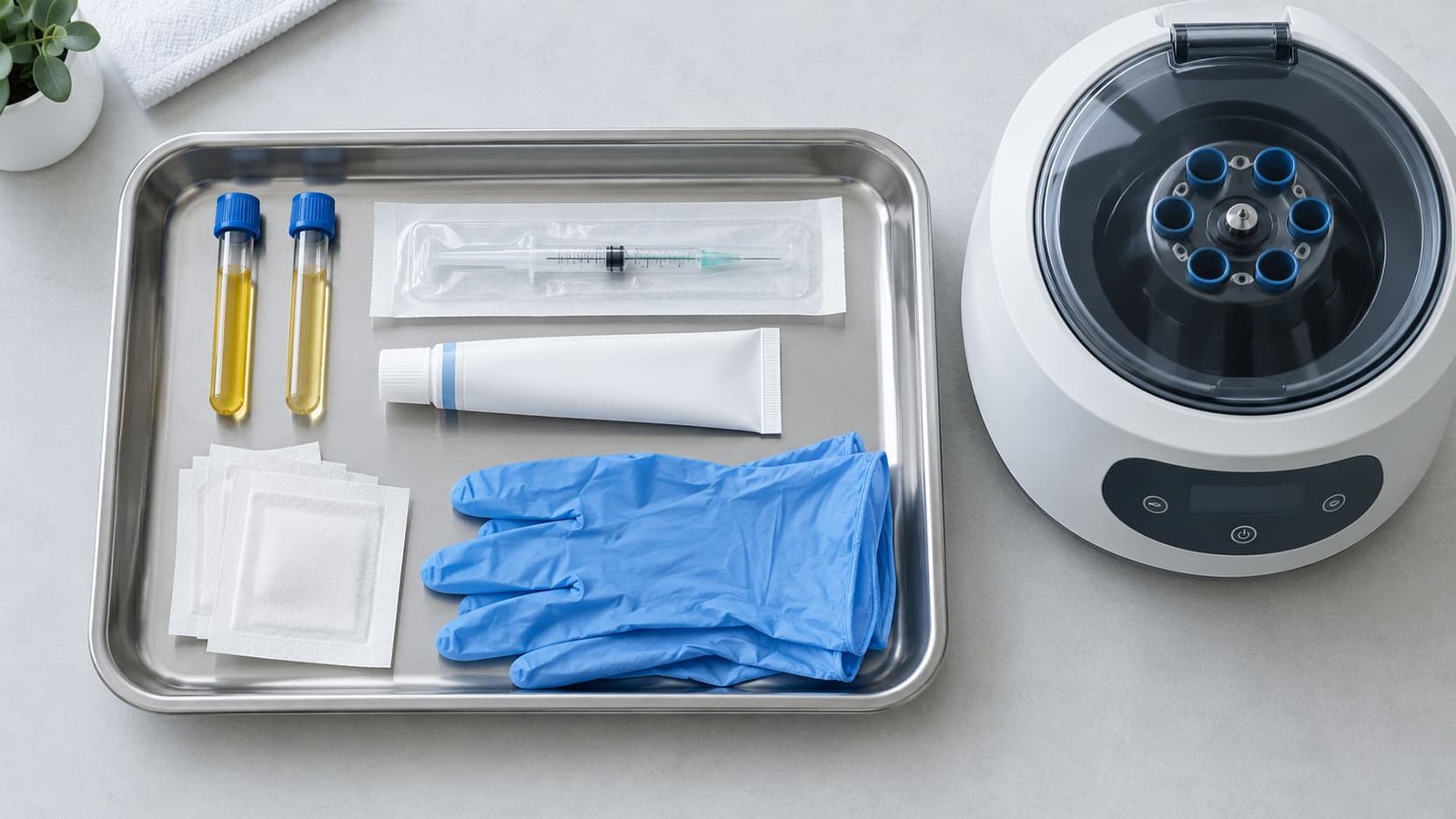
A clinician draws a small volume of venous blood. Clinic protocols often cite 10 to 20 millilitres. A centrifuge spins the sample and separates plasma from red cells. The clinician then collects the platelet-rich layer. PRP injection technique starts at this stage, because preparation method changes platelet concentration. Evidence on the best preparation method remains unsettled.
Step 3: P Shot Numbing Cream
Topical anaesthetic reduces skin sensitivity before the needle. A common option combines lidocaine and prilocaine. UCSF Health lists EMLA, which contains 2.5% of each agent. Clinics commonly allow 20 to 30 minutes for P shot numbing cream to work. The cream numbs the skin surface but not deeper tissue. Pressure sensations can therefore persist. Skin reactions to topical anaesthetic remain uncommon but can occur. Patients with known allergies to local anaesthetics must tell the doctor first.
Step 4: P Shot Nerve Block
Some clinicians add a P shot nerve block. A dorsal penile nerve block places local anaesthetic near the dorsal nerves at the base of the penis. This approach numbs the shaft and glans more deeply than cream alone. Lidocaine is the usual agent. Nerve blocks carry small risks of bruising and blood vessel puncture. Practice varies, and some clinics rely on cream alone.
Step 5: The Injection Phase
The clinician cleans the skin with antiseptic and wears sterile gloves. Gentle traction extends the penis. A fine needle then enters through the lateral skin at a roughly perpendicular angle. Slow, steady pressure delivers PRP in small amounts. Unusual plunger resistance signals incorrect depth, so the clinician repositions. UCSF Health describes this cue for drug injections. The clinician repeats the process at each planned site. Angle, depth and speed define P shot injection technique at this stage.
Step 6: Compression and Aftercare
Firm pressure follows each needle withdrawal. UCSF Health advises at least five minutes of compression after drug injections. Men on blood thinners need up to ten minutes. Written aftercare covers hygiene, activity limits and warning signs. Fever, spreading redness, heavy bleeding or severe pain need prompt medical contact. A follow-up review lets the doctor check bruising, sensation and any change in penile shape.
How Many Injections in a P Shot?
No guideline sets a fixed number of injections for a P shot. The count depends on protocol, anatomy and clinician judgement. Many protocols describe a limited number of entry points along the shaft. Some add glans injections. Total PRP volume also varies between clinics and trials.
More needle passes raise the chance of bruising and discomfort. Fewer passes may limit tissue coverage. Clinicians therefore weigh coverage against comfort and safety. Sound P shot injection technique adapts to each patient’s anatomy rather than copying a fixed template.
The consent discussion should state the planned number of sites and the expected volume. Men can ask for that detail in writing.
Why Technique Matters for Safety and Comfort
Safety Risks
P shot injection technique influences complication rates. Recognised risks include:
- Bruising and haematoma at puncture sites
- Infection, which remains rare with sterile practice
- Urethral puncture, which causes bleeding at the penile tip
- Temporary nerve irritation and altered sensation
- Scar tissue and curvature after repeated trauma
UCSF Health describes scarring as a small but real risk of repeated penile injections. Priapism links to vasoactive drugs rather than PRP. Any protocol that adds such drugs adds that risk.
Effectiveness Evidence
P shot injection technique may influence how PRP reaches target tissue. Evidence for that idea remains thin. No head-to-head comparison of injection sites appears in the reviews cited here. The 2026 meta-analysis pooled seven trials and 479 patients. It found no difference from placebo in International Index of Erectile Function scores at one, three or six months.
The 2024 analysis pooled three trials and 221 patients with mild to moderate ED. That review reported short-term improvement up to six months and no major adverse events. Trial protocols differed in PRP preparation, volume and session numbers. Those differences complicate any comparison.
Technique protects safety more clearly than it proves benefit.
PRP Injection Technique Compared with Standard Penile Injection Therapy
| Feature | P shot (PRP) | Prescription drug injection |
| Purpose | Aims to support tissue repair | Produces an erection on demand |
| Timing | Clinic procedure, repeated at intervals | Used before sex after training |
| Typical sites | Shaft, sometimes glans | 3 and 9 o’clock, mid-shaft |
| Numbing | Cream, sometimes a nerve block | Optional topical anaesthetic |
| Main risks | Bruising, infection, scarring | Priapism, pain, scarring, bruising |
| NHS status | Not a standard ED treatment | Established NHS option |
The comparison shows that PRP borrows anatomy from drug injection therapy but serves a different goal. Drug injections act within minutes. PRP aims for gradual tissue change, and evidence for that aim remains limited.
Choosing a Clinician for a P Shot in the UK

Safe technique depends on training and setting. Men who search for P shot London services find many providers. P shot UK standards also vary widely. The General Medical Council registers doctors, and the public register shows licence status. Independent healthcare providers in England fall under Care Quality Commission regulation. Training shapes P shot injection technique, so qualifications deserve scrutiny.
Reasonable checks include:
- GMC registration and a licence to practise
- CQC registration of the clinic
- Appropriate indemnity insurance
- Sterile, single-use needles and equipment
- A written consent form that lists sites, risks and alternatives
- Clear complaints route and follow-up arrangements
For transparency, Dr Syed Nadeem Abbas leads the pshots clinic UK in Marylebone, London. Qualifications include MBBS, MRCS (RCS Edinburgh) and MRCGP. An MSc in Aesthetic Plastic Surgery with Distinction came from Queen Mary University of London. Training took place at Cambridge, Oxford and the Royal London Hospital. Readers should verify any clinician’s credentials independently through the GMC register.
Realistic Outcomes and Limitations
Evidence supports caution. Current reviews show mixed results, and no trial guarantees improvement. One review reported short-term gains up to six months in mild to moderate ED. Another found no difference from placebo. Underlying vascular disease or diabetes can limit response to any injection therapy. Patient selection also matters. Active infection, bleeding disorders and low platelet counts may rule out treatment. Clinicians assess suitability case by case. Open discussion of these limits belongs in every consultation.
Men with ED symptoms should see a GP before any private treatment. Heart disease, diabetes and medicine side effects can cause ED, and each needs separate management. Oral medicines remain the usual first NHS option. Costs for P shot treatment fall on the patient, because the NHS does not fund PRP for ED.
Frequently Asked Questions
Where do P shot injections go?
Most protocols target the shaft and aim for the corpora cavernosa through lateral skin. Some add glans injections. No guideline sets one standard site pattern.
Does the P shot hurt?
Numbing cream reduces skin sensation. Pressure and mild discomfort can still occur. A nerve block lowers sensation further. Pain tolerance varies between men.
How many injections are in a P shot?
The number varies by clinic and protocol. Clinicians decide based on anatomy, planned volume and comfort. The consent discussion should confirm the planned sites.
Does P shot treatment guarantee better erections?
No. A 2026 meta-analysis found no difference from placebo at six months. An earlier analysis reported short-term gains in mild to moderate ED. Individual results vary.
Is the P shot available on the NHS?
No. The NHS does not list PRP among standard ED treatments. A GP can discuss established options and check for underlying causes.
Which warning signs need urgent review?
Fever, spreading redness, pus, heavy bleeding, severe pain or difficulty passing urine need prompt assessment. Men should contact the treating clinic or NHS 111.
Key Takeaways
Needle placement defines the safety profile of a P shot. Clear anatomical rules apply: lateral entry, controlled depth, sterile practice and avoidance of midline structures. Numbing cream, a nerve block and compression all support comfort and safety. Evidence for benefit, however, remains mixed.
Safe technique reduces avoidable harm. It cannot create a benefit that trials have not yet shown. Informed decision-making therefore rests on three steps. First, a GP review checks the causes of ED and established treatments. Second, written details of sites, numbers, risks and costs clarify what a clinic offers. Third, a realistic view of limited evidence guides expectations and spending.
Careful P shot injection technique protects patients, yet evidence quality should still shape every decision. Which questions will help each man judge technique, evidence and safety before choosing an elective injection treatment?
Read more:
Priapus Shot London: What Happens During Your First Consultation?
Dual-Spin vs Single-Spin PRP: Does Platelet Concentration Matter for the P Shot?
Dr Syed Nadeem Abbas, MBBS, MRCSEd, MSc Aesthetic Plastic Surgery (Distinction) Medical Director, Pshot Clinic | CQC Regulated | Monday to Saturday 10:00–18:00 +44 7955 836986


