
Men researching the P Shot often ask an unexpected question. Does the treatment affect fertility or sperm quality? The P Shot and Male Fertility question sits at an unusual crossroads in modern regenerative medicine. One field studies a non-surgical treatment for erectile dysfunction in London. It uses a man’s own blood to support penile tissue. A separate, fast-growing field studies intratesticular platelet injections aimed directly at treating infertility. Marketing language and online forums often blur these two applications together. This creates an assumption that a treatment for erectile function must also influence sperm production. Recent peer-reviewed reviews in Stem Cell Research & Therapy reveal current findings. These findings show what platelet-rich plasma research can demonstrate about male reproductive health.
This article separates evidence-based fact from marketing assumption. It clarifies exactly where sperm health fits into the P Shot and Male Fertility picture. The distinction matters. Private clinics increasingly promote regenerative injections as broad wellness solutions, sometimes without clarifying which specific outcomes the research actually supports.
What Is the P Shot? A Brief Clinical Overview
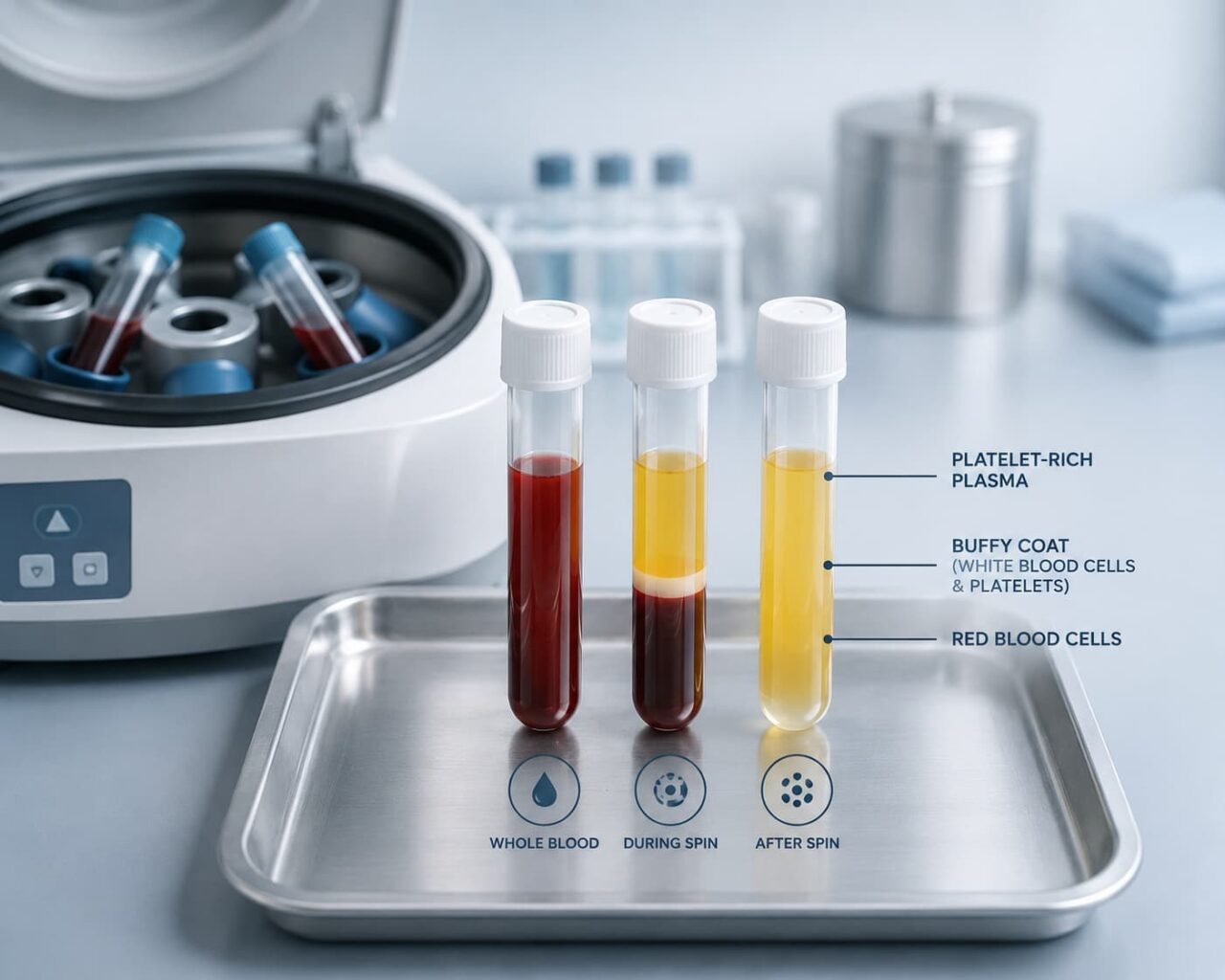
The P Shot, also called the Priapus Shot, is a p injection technique. It was developed for erectile dysfunction. The p shot treatment uses platelet-rich plasma (PRP) extracted from a patient’s own blood. A clinician draws a small blood sample and processes it through a centrifuge. This process concentrates platelets rich in growth factors. Key factors include platelet-derived growth factor (PDGF), vascular endothelial growth factor (VEGF), and transforming growth factor beta (TGF-beta). The concentrated plasma is injected into specific areas of the penis. Injection sites typically include the shaft and glans, under local anaesthetic. The stated goal is improved blood flow, tissue repair, and enhanced erectile function, not a change in reproductive capacity.
Marketing claims about penile injection growth sometimes describe size-related outcomes. These claims differ from the evidence-based purpose, which centres on tissue repair rather than fertility. The procedure targets penile erectile tissue directly. It does not involve the testes, epididymis, or seminal vesicles, the structures responsible for sperm production and storage. This anatomical distinction matters for anyone raising P Shot and Male Fertility concerns before treatment. A pre-treatment consultation typically reviews erectile dysfunction history, current medications, and reproductive health concerns. This allows the clinician to flag anatomical or procedural questions before injection.
Understanding Male Fertility and Sperm Health
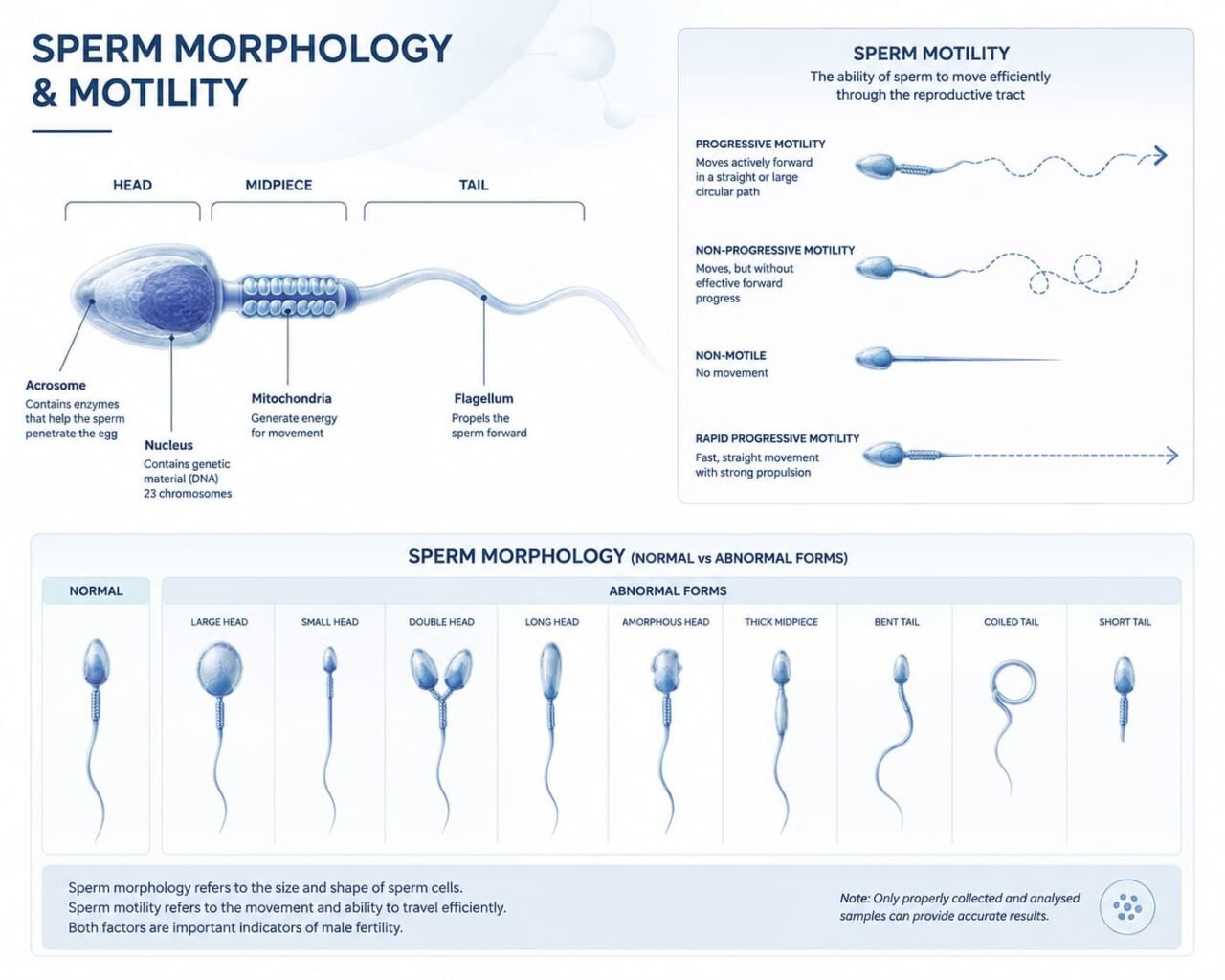
Male fertility depends on several measurable sperm parameters. These include concentration, motility, morphology, and DNA integrity. According to NHS guidance, common causes of male infertility include hypogonadism, certain medications, illegal drug use, and chemotherapy. The National Institute for Health and Care Excellence (NICE) recommends genetic testing for men with persistently low sperm concentration. NICE also outlines clear investigation pathways for couples experiencing fertility problems. Sperm production, known as spermatogenesis, occurs within the testes over an approximately 64 to 72-day cycle. Hormonal signals from the pituitary gland regulate this process through follicle-stimulating hormone (FSH) and luteinising hormone (LH).
World Health Organization reference values classify a sperm concentration below 16 million per millilitre as below the typical fertile range. Natural variation still exists between individuals. Any factor that disrupts testicular function, hormonal balance, or the testicular blood supply can influence fertility outcomes. Recognising which treatments interact with these specific structures matters. This distinction, rather than unrelated anatomy, is essential when evaluating claims about the P Shot and Male Fertility relationship.
PRP and Male Fertility: What the Research Actually Shows
Platelet-rich plasma has attracted growing research interest across reproductive medicine. A 2025 systematic review in Stem Cell Research & Therapy examined 43 studies. These studies covered PRP applications in male reproductive health. The review covered five distinct research categories. These included in vitro spermatogenesis, sperm cryopreservation, intratesticular PRP injection for infertility, testicular toxicity protection, and testicular torsion injury. None of these categories involved the type of penile injection used in the P Shot procedure.
Intratesticular PRP Injections for Infertility
Several studies reviewed by the Springer authors examined PRP injected directly into the testes. Participants had non-obstructive azoospermia or oligoasthenoteratozoospermia. One trial involved 135 men with non-obstructive azoospermia. A small percentage produced retrievable sperm after intratesticular PRP injection. Another randomised trial of 88 men with oligoasthenoteratozoospermia reported modest improvements in sperm concentration and motility after three months. These interventions target testicular tissue directly, aiming to support spermatogenesis at its source. Sperm was retrieved in 27.5% of first-attempt patients and 16.4% of repeat-attempt patients. This illustrates modest, condition-specific benefit rather than a general fertility boost. This procedure differs fundamentally from the P Shot, which targets penile erectile tissue rather than the testes.
PRP Added to Sperm Samples in the Laboratory
A separate 2025 study, published via ScienceDirect, examined an entirely different application. Researchers added PRP directly to collected semen samples during laboratory incubation and swim-up processing. This is a fertility clinic technique, applied outside the body to sperm already collected. Results showed improved total and progressive motility in both normal and abnormal semen samples. This laboratory application has no anatomical or procedural connection to a penile PRP injection performed in a clinic setting.
How PRP’s Growth Factors Interact With Reproductive Tissue
PRP contains a concentrated mixture of growth factors. Key examples include PDGF, VEGF, TGF-beta, and fibroblast growth factor. Within testicular tissue, laboratory and animal studies suggest these molecules may support spermatogonial stem cell viability. These molecules may also reduce oxidative damage to developing sperm cells. Within penile tissue, the same growth factors are theorised to support vascular repair. These factors may also support smooth muscle function relevant to erectile response. The biological mechanism differs according to the tissue receiving the injection. Growth factors do not automatically produce the same effect in every organ. Local receptor density, blood supply, and cell type all influence outcomes. This principle matters. Findings from testicular PRP research cannot be assumed to apply to a penile P Shot injection without direct testing.
Comparing the P Shot to Other Regenerative Approaches for Fertility
Men exploring regenerative options for reproductive or sexual health may encounter several distinct treatments. Intratesticular PRP injection targets infertility directly and remains under active clinical investigation. Laboratory PRP supplementation supports sperm samples during fertility treatment cycles. The P Shot, by contrast, targets erectile function through localised penile injection. Each approach uses the same underlying biological material, autologous platelet-rich plasma. The injection site, clinical indication, and evidence base differ substantially. Men should avoid assuming interchangeable outcomes across these three distinct applications.
Does the P Shot Itself Affect Sperm or Fertility?
No published clinical trial has examined whether a penile P Shot injection changes sperm parameters or fertility outcomes. The existing PRP-fertility evidence base, discussed above, investigates entirely separate delivery routes: direct testicular injection or laboratory-based sperm treatment. A penile injection targets vascular and erectile tissue, not the seminiferous tubules where sperm production occurs. PRP used in the P Shot remains within the corpus cavernosum and surrounding penile tissue. It does not circulate systemically in concentrations likely to alter testicular hormone production or spermatogenesis.
This localised delivery is a core principle behind PRP-based regenerative therapy for ED generally. Current marketing sometimes implies a P Shot and Male Fertility connection that lacks direct supporting evidence. Clinicians typically describe the treatment’s intended effect as local tissue support rather than a systemic hormonal or reproductive intervention. Absence of evidence for harm is not the same as proof of neutrality. Men with active fertility concerns deserve a cautious, individualised conversation before proceeding.
What the Current Evidence Cannot Yet Tell Us
PRP research in male reproductive medicine remains at an early stage. The Stem Cell Research & Therapy review noted considerable inconsistency. Preparation protocols, dosing, and outcome measures varied widely across studies. Many findings originate from animal models rather than large human trials. Sample sizes in the available human studies remain small, often fewer than 100 participants. Few trials include long-term follow-up beyond several months. Long-term safety data on intratesticular PRP remains limited. No dedicated trial has directly measured semen parameters before and after a standard penile P Shot procedure. Until such trials exist, any confident claim about the P Shot and Male Fertility relationship remains speculative. Men actively trying to conceive, or planning to do so soon, should raise this evidence gap directly. A qualified clinician should confirm suitability before any PRP-based treatment. Extrapolating fertility benefit, or fertility risk, from unrelated PRP applications is not supported by current data.
Who Typically Considers the P Shot
Men considering the P Shot commonly present with erectile dysfunction. First-line options, such as oral PDE5 inhibitors, have often not fully resolved symptoms. Some men seek the treatment alongside lifestyle changes or shockwave therapy as part of a broader management plan. Age, cardiovascular health, and psychological factors all influence erectile function and should be assessed before treatment. Men with an active fertility concern form a distinct group within this population. This group’s specific questions about sperm health warrant separate, dedicated discussion during consultation.
Priapus Shot Price and Availability in the UK
Priapus shot price in private UK clinics typically ranges from £900 to £1,500 per session. Cost depends on clinic location, practitioner experience, and recommended session number. Cost varies between a p shot London clinic and providers outside major cities. This reflects differences in overheads and consultation standards. Men researching Priapus shot London providers should compare consultation standards as carefully as price. A thorough medical consultation should precede any p shot UK booking. This includes a review of relevant medical history and fertility-related concerns. Clinics offering this treatment should provide transparent pricing and avoid bundling unrelated add-on services into a single quoted fee.
Non-Surgical Treatment for Erectile Dysfunction in London: Where the P Shot Fits
London hosts a growing number of clinics offering non-surgical treatment for erectile dysfunction. Options range from oral medication to shockwave therapy and PRP-based treatment. The P Shot represents one branch of natural ED treatment using PRP therapy, alongside other regenerative approaches. Men seeking erectile dysfunction treatment London providers should consider evidence quality and practitioner qualifications. Realistic outcome expectations matter before selecting a specific option. Clinics such as pshots clinic uk, led by Dr Syed Nadeem Abbas, provide consultations assessing suitability for PRP-based treatment. Other established options are also considered. Selecting a registered clinic with clear clinical governance matters more than choosing a treatment based on marketing claims alone.
P Shot Before and After: Realistic Expectations
P shot before and after photographs are widely shared online. These images focus on subjective appearance and reported erectile function, not fertility markers. No published before-and-after data includes semen analysis results. Prospective patients should treat visual before-and-after material as illustrative rather than diagnostic evidence of any fertility-related outcome. Realistic expectations centre on erectile function, sensation, and tissue response, not reproductive capacity.
Safety Considerations for Men Concerned About Fertility
Men actively planning conception should disclose this intention during consultation. A qualified clinician can then discuss the current limits of PRP research. This includes the P Shot and Male Fertility evidence gap outlined above. Standard exclusion criteria for PRP-based treatments include active infection, bleeding disorders, and certain blood-thinning medications. No current guideline recommends postponing conception attempts because of a prior penile P Shot procedure. Individualised medical advice always takes precedence over general information. M-en with pre-existing fertility diagnoses, including azoospermia or severe oligospermia, may benefit more from the intratesticular PRP research pathway. A penile-focused treatment is less directly relevant. A referral to a fertility specialist remains the appropriate first step for men with a confirmed fertility diagnosis. A cosmetic or sexual health clinic is not the right starting point.
Frequently Asked Questions
Does the P Shot affect sperm count or sperm production?
No published clinical study has measured sperm count changes following a penile P Shot injection. Existing PRP-fertility research examines different delivery methods entirely.
Is the P Shot and Male Fertility link supported by clinical trials?
No dedicated trial currently exists. Available evidence covers intratesticular PRP injection and laboratory sperm processing, not penile PRP injection.
Can the P Shot be combined with fertility treatment?
Men undergoing fertility investigation or treatment should discuss any additional procedure with the treating clinician first. This includes the P Shot.
How much does the Priapus Shot cost in the UK?
Priapus shot price typically ranges from £900 to £1,500 per session in private UK clinics. Costs vary by provider.
Does PRP used in fertility treatment come from the same process as the P Shot?
Both use autologous platelet-rich plasma prepared through centrifugation. The injection site and clinical purpose differ substantially.
Should men trying to conceive avoid the P Shot altogether?
Current evidence does not confirm harm. Men trying to conceive should still raise this specific question during consultation before proceeding.
Are the studies on PRP and fertility relevant to a standard P Shot consultation?
These studies provide useful background on PRP biology. Background research does not substitute for direct evidence on penile PRP injection and fertility outcomes.
Does age affect how PRP research applies to fertility discussions?
Sperm quality naturally declines with age, regardless of any PRP treatment. Age-related fertility factors should be discussed separately from any P Shot consultation.
Key Takeaways
The P Shot and Male Fertility question deserves a precise, evidence-based answer. An assumption borrowed from unrelated research is not sufficient. Current studies on PRP and fertility focus on intratesticular injection and laboratory sperm processing. Neither examines the penile procedure used in a standard P Shot. No direct clinical evidence currently links a penile P Shot injection to changes in sperm count, motility, or fertility outcomes. None currently proves complete neutrality either. Men considering treatment, particularly those actively planning conception, benefit most from a detailed consultation. This consultation should address the evidence gap directly. Informed decision-making depends on separating documented clinical outcomes from marketing narrative. Platelet-rich plasma research continues to expand across reproductive medicine. Will future trials finally test the P Shot itself for any measurable effect on male fertility?
read more: Men’s Sexual Health in 2026: Trends, Treatments and Taboos
How to Prepare for a P-Shot: Full Pre-Treatment Checklist
Dr Syed Nadeem Abbas, MBBS, MRCSEd, MSc Aesthetic Plastic Surgery (Distinction) Medical Director, Pshot Clinic | CQC Regulated | Monday to Saturday 10:00–18:00 +44 7955 836986


