
✅Medically reviewed
A vasectomy ends fertility, yet the procedure leaves desire, hormones and erections intact. Many men still notice a change in sexual performance in the months that follow. Some blame the surgery. Others suspect age, stress or an unrelated health problem. Confusion grows quickly, and online advice often adds to the noise.
Platelet-rich plasma (PRP) therapy enters the picture at this point. Clinics market the P Shot as a regenerative option for erectile difficulty. Men with a vasectomy then ask a sensible question. Does the earlier surgery change how well the treatment works? This guide examines P Shot UK after vasectomy using NHS information, NICE clinical knowledge summaries and peer-reviewed research.
The honest answer sits between hype and dismissal. Vasectomy rarely causes erectile dysfunction. PRP shows promise, yet the research remains mixed. No trial has tested the P Shot only in men with a vasectomy. The sections below separate established facts from open questions, so readers can judge realistic outcomes before any appointment.
P Shot UK After Vasectomy
A previous vasectomy does not appear to block P Shot treatment. The injection targets penile tissue, while a vasectomy alters the vas deferens in the scrotum. Clinicians therefore see no anatomical conflict between the two procedures. That reasoning comes from anatomy, not from dedicated trials.
Results depend mainly on the cause of the erectile problem. Vasectomy seldom causes that problem. Men who research P Shot UK after vasectomy should first confirm why erections have changed.
What a Vasectomy Changes and What It Leaves Untouched
The Anatomy
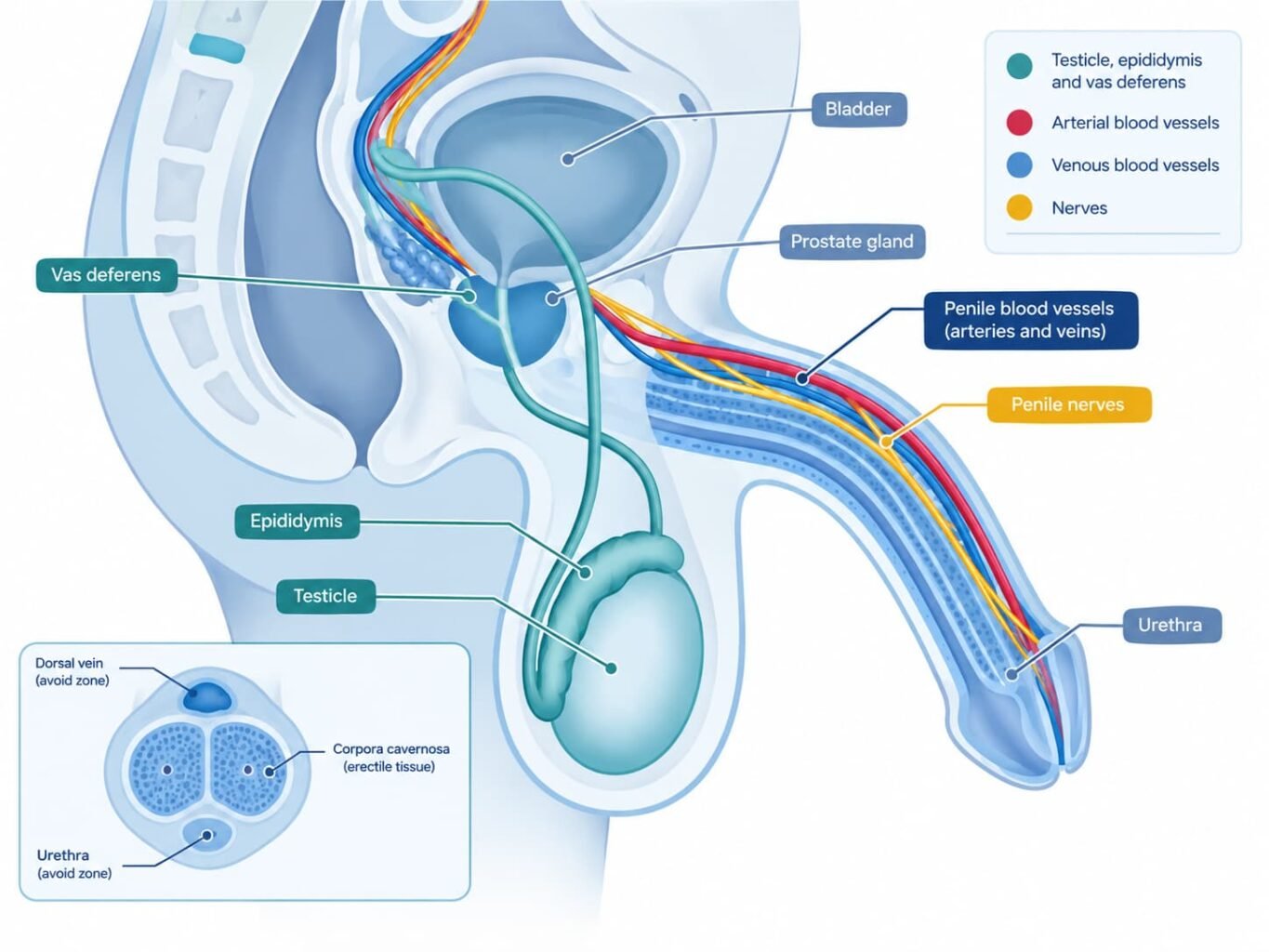
A vasectomy cuts or blocks the vas deferens. These two tubes carry sperm from the testicles toward the urethra. A surgeon works through the scrotum, usually under local anaesthetic. Penile tissue, including blood vessels and erectile structures, stays outside the surgical field.
Testicles keep producing sperm after the procedure. The body absorbs the sperm that cannot travel onward. Ejaculation continues, although semen no longer contains sperm. NHS hospital leaflets describe vasectomy as a relatively minor operation with few side effects.
The Hormones
The testicles also produce testosterone, and vasectomy leaves that pathway alone. A prospective study in Fertility and Sterility followed hundreds of men for up to two years. Hormone levels shifted slightly but stayed within normal adult ranges. The study dates from 1976, yet later reviews have not overturned the broad conclusion.
Low testosterone after vasectomy therefore needs another explanation, such as age, obesity or illness.
Vasectomy and Erectile Dysfunction: What the Evidence Shows
Does Vasectomy Affect Erections?
Current evidence does not link vasectomy with a higher risk of erectile dysfunction. A 2024 systematic review of 20 studies found sexual function mostly unchanged or improved after vasectomy. One German study of 5,425 middle-aged men found erectile dysfunction in 12.1% of vasectomised men and 20.1% of others.
Erections depend on blood flow, nerve signals and hormones. A vasectomy interrupts none of these systems. Vasectomy and erectile dysfunction therefore share no established biological pathway.
Those German figures need careful reading. The study looked backwards in time and lacked pre-surgery data. Men who choose vasectomy may also differ from other men in age, relationship status and health. The data therefore show no added risk, not a protective effect.
Findings across studies are not perfectly uniform. A separate systematic review of 11 studies found rare complications overall. Some included studies reported slightly more difficulty maintaining erections. One linked poor acceptance of the procedure with erectile problems.
Why Some Men Still Report Problems
Several factors can explain erectile changes after a vasectomy, either by coincidence or by indirect routes.
Psychological Factors
Anxiety about performance can follow any surgery. Worry about permanence adds pressure. Persistent worry disrupts arousal, and arousal drives erections. A cycle of anxiety and avoidance can then develop. Psychosexual counselling often helps anxiety-driven difficulty.
Age and Vascular Health
Many men have a vasectomy in midlife, when erectile dysfunction becomes more common. Diabetes, high blood pressure, smoking, obesity and cardiovascular disease all damage blood flow. Erectile difficulty can also signal developing vascular disease. NHS pathways therefore include cardiovascular assessment.
Medication
Antidepressants, antihypertensives and several other drugs can reduce erectile quality. A medication review forms part of a proper assessment.
Post-Vasectomy Pain
Chronic testicular pain affects a minority of men. One NHS hospital leaflet quotes periodic discomfort in about 1 in 10 men. The same leaflet quotes severe chronic pain in about 1 in 200. Pain during arousal or ejaculation can reduce interest in sex. That symptom differs from erectile dysfunction, although the two can overlap.
Vasectomy Recovery and Sexual Function
Recovery follows a predictable course. Swelling and tenderness settle within a week or two for most men. Medical guidance advises avoiding sex until pain eases, usually after about a week. NHS leaflets also advise avoiding alcohol for 48 hours.
Contraception remains necessary after surgery. Semen testing takes place at least 12 weeks later and confirms clearance. Sexual function questions during this period deserve attention too. Open discussion with a GP helps separate temporary recovery effects from lasting erectile change.
Erectile problems that persist beyond early recovery deserve medical assessment, not reassurance alone. A GP can review cardiovascular risk, hormones, medicines and mood. Pain that lasts longer than a week, or returns after weeks or months, also needs review.
Can You Have a P Shot After a Vasectomy?
Medical logic says yes in most cases, subject to individual assessment. P Shot after vasectomy involves no contact with the surgical site. PRP injections after vasectomy target penile tissue. The vas deferens lies in the spermatic cord, away from the injection zone.
Two cautions apply. First, no published trial has studied P Shot UK after vasectomy as a defined group. Clinicians extrapolate from general PRP research. Second, unresolved scrotal pain, infection or swelling needs treatment before any elective injection.
Does the P Shot Affect the Vasectomy Itself?
The injection does not reach the vas deferens, so the vasectomy stays intact. Contraceptive effect continues as before. Men should still complete post-vasectomy semen testing as normal.
How P Shot Treatment Works
The Procedure
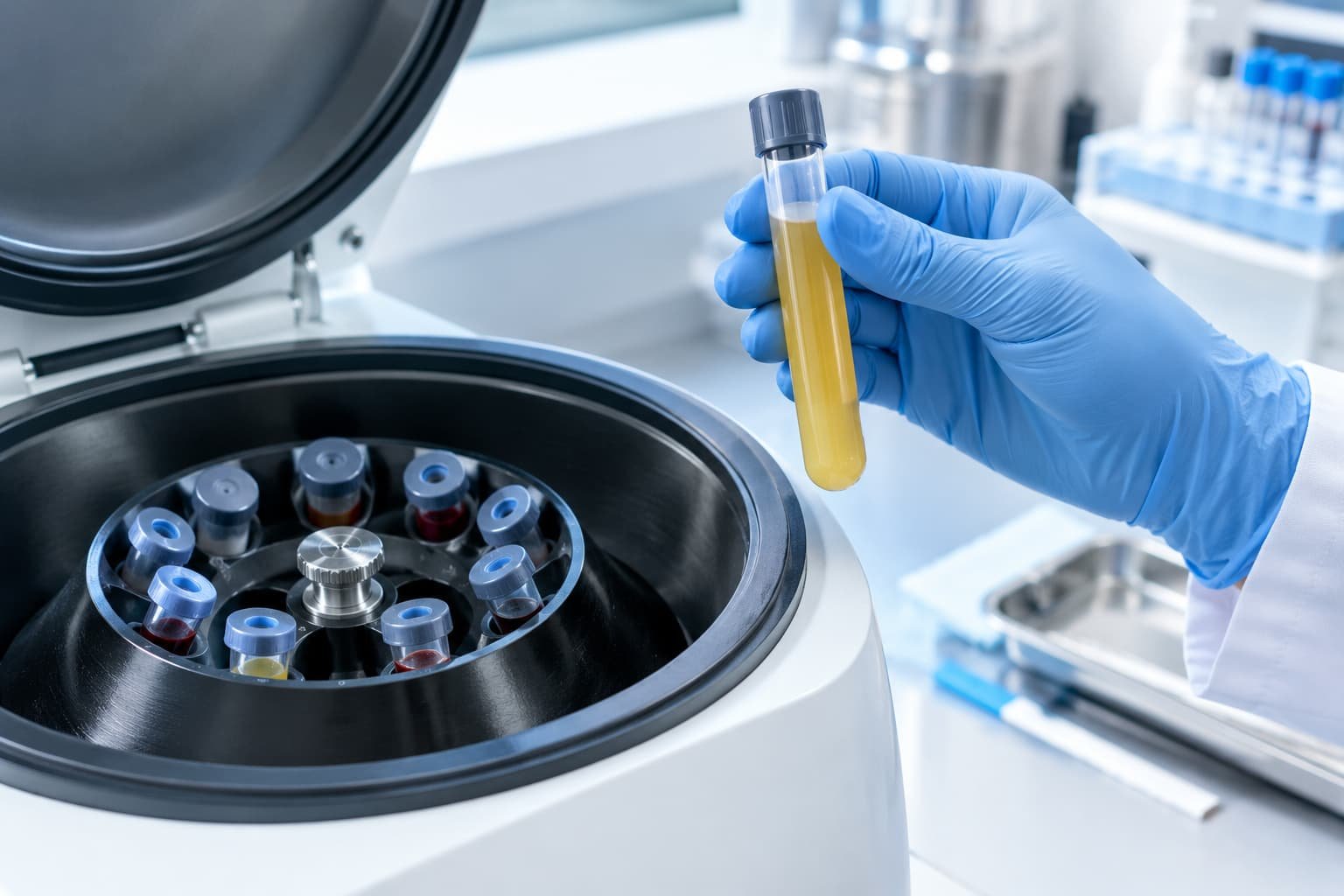
PRP comes from the patient’s own blood. A clinician draws a small sample and spins the sample in a centrifuge. The process concentrates platelets, which release growth factors. A practitioner then injects the plasma into penile tissue after applying local anaesthetic.
Many clinics call the procedure the Priapus Shot. Men who search for a Priapus Shot London or P shot London clinic will meet both names. The terms describe the same PRP approach.
Researchers propose that growth factors support new blood vessels and nerve repair. That mechanism remains a hypothesis in men. Human trials supply the real test.
What Trials and Meta-Analyses Report
Findings That Favour PRP
A 2024 meta-analysis in PLoS ONE pooled 12 controlled trials with 991 men. PRP produced better erectile function scores than control treatment. The standardised mean difference reached 0.59.
A 2024 meta-analysis in The Aging Male pooled four randomised trials with 413 men. PRP outperformed placebo at one, three and six months on the International Index of Erectile Function (IIEF). A 2025 review of seven randomised trials found that adding PRP to low-intensity shockwave therapy beat shockwave therapy alone.
Findings That Urge Caution
More recent work reached a different conclusion. A meta-analysis of randomised trials found pooled differences of 0.28, 0.29 and 0.36 at one, three and six months. Placebo served as the comparator. Confidence intervals included zero at every time point. The authors concluded that evidence does not support a consistent, clinically meaningful improvement.
Trials differ in PRP preparation, injection schedules and patient selection. Even the favourable PLoS ONE authors call for larger trials with longer follow-up. Taken together, the evidence suggests possible benefit, not proven benefit.
P Shot Results and Effectiveness After Vasectomy
Does Vasectomy Affect P Shot Results?
No study shows that a vasectomy reduces the response to PRP. Results depend on factors unrelated to the surgery. The cause of erectile dysfunction matters most. Vascular damage from diabetes or smoking limits what any regenerative option can achieve. Psychological difficulty offers no clear tissue target for PRP.
Age, severity, smoking status and alcohol use also shape outcomes. Several meta-analyses focus on mild to moderate erectile dysfunction. Results in severe disease remain less certain.
Realistic Outcomes
Clinicians usually describe gradual change over weeks to months, not instant change. Meta-analyses measured outcomes at one, three and six months. Some men notice no benefit. Consent should therefore state that outcomes vary and that no guarantee exists. Realistic expectations for P Shot UK after vasectomy mirror those for any man with erectile dysfunction.
Claims that the P Shot restores sensation, corrects hormones or relieves post-vasectomy pain lack robust trial support. PRP does not change testosterone levels. Men with pain or low libido need a proper work-up instead. Baseline and follow-up IIEF scoring helps track change objectively.
P Shot for Erectile Dysfunction: Who May Benefit
P Shot for erectile dysfunction suits a narrow group best. Trials mostly enrol men with mild to moderate vascular erectile dysfunction. A clear diagnosis, stable general health and realistic goals form the sensible starting point.
Men with normal erections gain no proven sexual benefit from PRP. Specialist urology review suits men with penile curvature, pelvic injury or severe erectile dysfunction.
Timing After Surgery
The sources reviewed here set no fixed waiting period between vasectomy and PRP injections after vasectomy. Clinicians generally wait until the wound heals, swelling resolves and pain settles. A gap of several weeks reflects clinical caution, not a published rule.
Combining Treatments
Some trials combine PRP with low-intensity shockwave therapy. The 2025 review above found an added benefit over shockwave therapy alone. Lifestyle change and psychosexual support remain core NHS measures for erectile dysfunction. Any injection plan should sit alongside those measures.
Assessment Before Any P Shot Treatment
NICE clinical knowledge summaries and NHS pathways treat erectile dysfunction as a symptom, not a disease. Assessment aims to find the underlying cause. A thorough review covers medical history, medication, lifestyle, mood and relationship factors. Examination checks cardiovascular and genitourinary health. Blood tests may measure glucose, lipids and testosterone when history suggests a hormonal or metabolic cause.
First-line NHS care centres on lifestyle change and PDE5 inhibitors such as sildenafil and tadalafil. One regional NHS referral pathway reports improved erections in about 75% of men using PDE5 inhibitors. Alprostadil and vacuum devices follow when tablets fail. Standard guidance does not position PRP as first-line care.
Possible Risks and Side Effects
PRP uses the patient’s own blood, so allergic reaction is unlikely. Bruising, soreness and swelling at the injection site occur. Infection and bleeding remain rare but possible. Men who take blood thinners or have a bleeding disorder need specific advice. Long-term safety data remain limited. Cost, session numbers and PRP kit quality also vary between clinics.
Choosing a UK Clinic for P Shot Treatment
Several checks help men compare providers. A Priapus Shot London search returns many options, and a P shot London comparison needs the same scrutiny. Men asking about P Shot UK after vasectomy should also disclose the surgery date and any lingering pain.
- Registration: confirm GMC registration for the treating doctor and Care Quality Commission registration where required.
- Experience: ask about training in men’s health, injectable procedures and PRP preparation.
- Consent: expect written information on benefits, limits, risks and cost.
- Honesty: treat any promise of guaranteed results as a warning sign.
Clinical Oversight and Editorial Standards
This article draws on NHS patient information, NICE clinical knowledge summaries and peer-reviewed systematic reviews. Dr Syed Nadeem Abbas leads pshots clinic UK, a private clinic on Harley Street in Marylebone. Qualifications include MBBS, MRCS (RCS Edinburgh) and MRCGP. An MSc in Aesthetic Plastic Surgery with Distinction came from Queen Mary University of London. Training took place at Cambridge, Oxford and the Royal London Hospital.
Frequently Asked Questions
Does a vasectomy cause erectile dysfunction?
Current evidence does not show that. Large reviews report unchanged or improved sexual function in most men. Persistent erectile problems usually trace back to age, vascular health, medication or anxiety.
Is the P Shot safe after a vasectomy?
No trial addresses this group directly. Anatomy suggests no conflict, because P Shot after vasectomy involves injection into penile tissue only. A doctor should confirm suitability after individual assessment.
How long should a man wait after a vasectomy before treatment?
Most men recover physically within about a week. Unresolved pain, swelling or infection needs review first. A clinician can advise on timing for each case.
Does the P Shot treat post-vasectomy pain?
Robust evidence does not support that use. Chronic testicular pain needs assessment by a GP or urologist. The P Shot targets erectile function, not scrotal pain.
Can PRP restore fertility after a vasectomy?
No. The P Shot does not reconnect the vas deferens. Fertility restoration needs vasectomy reversal, a separate operation. Reversal does not always succeed, particularly after seven years.
Does the P Shot work for every man?
No. Meta-analyses show mixed results, and individual response varies. Cause, severity and overall health all influence outcomes.
What should a man tell a clinic before P Shot UK after vasectomy?
Useful details include the vasectomy date, current symptoms, medicines and existing conditions. Smoking and alcohol habits also matter. Honest consent also names the limits of current evidence. Full disclosure allows a safe, realistic plan.
Key Takeaways
A vasectomy rarely causes erectile dysfunction, and no evidence shows that it blocks P Shot treatment. The better question concerns the cause of the erectile change. Age, vascular health, medication and anxiety explain most cases.
Evidence for PRP remains mixed. Some meta-analyses favour PRP, while a newer analysis of randomised trials found no consistent clinically meaningful gain over placebo. P Shot UK after vasectomy therefore remains a matter for individual assessment, not blanket promises.
Informed decisions rest on evidence, realistic expectations and a proper medical work-up. Standard NHS options deserve consideration alongside any regenerative treatment. Before booking any injection, has a doctor identified the cause of the erectile change?
Read more:
Tests to Take Before a P Shot: HbA1c, Testosterone, Lipids and Blood Pressure
Natural Male Enhancement in London: Real Benefits and Timeline of the Priapus Shot
Dr Syed Nadeem Abbas, MBBS, MRCSEd, MSc Aesthetic Plastic Surgery (Distinction) Medical Director, Pshot Clinic | CQC Regulated | Monday to Saturday 10:00–18:00 +44 7955 836986


