P Shot vs Low-Intensity Extracorporeal Shockwave Therapy

✅Medically reviewed | Updated August 2026
Erectile dysfunction affects a substantial proportion of adult men across the United Kingdom, and interest in non-surgical, drug-free treatment options continues to grow steadily. Two approaches now dominate discussion among clinicians, researchers, and patients seeking alternatives to daily medication: the P-shot and low-intensity shockwave therapy. Both target the vascular and tissue-level causes of erectile dysfunction rather than simply masking symptoms for a few hours. Understanding the genuine clinical differences between these treatments matters far more than persuasive marketing language.
This article examines the P shot vs Shockwave Therapy debate through an evidence-based lens, covering mechanism, procedure, cost, evidence quality, safety, and realistic outcomes. Neither treatment offers a guaranteed cure for every patient. Both carry specific indications, limitations, and an evolving research base that continues to develop. Clarity, rather than persuasion, forms the purpose of this comparison. Men researching non-surgical treatment for erectile dysfunction in London deserve balanced, fact-based information before committing time and money to either pathway.
Erectile Dysfunction: A Brief Clinical Context
Erectile dysfunction describes persistent difficulty achieving or maintaining an erection sufficient for satisfactory sexual activity. NHS guidance notes the condition becomes more common with age, though younger men experience it too. Vascular disease represents the most frequently identified underlying cause. Diabetes, hypertension, high cholesterol, and smoking all reduce blood flow to erectile tissue over time. Psychological factors, including stress, anxiety, and relationship difficulties, also contribute in many cases. Standard first-line treatment usually involves oral PDE5 inhibitors, such as sildenafil or tadalafil, which increase blood flow temporarily. These medications work well for many men but fail to address the underlying vascular or tissue-level cause driving the dysfunction. This limitation has driven growing clinical interest in regenerative and mechanical treatments, including the two options compared throughout this article.
What Is the P-Shot (Priapus Shot)?
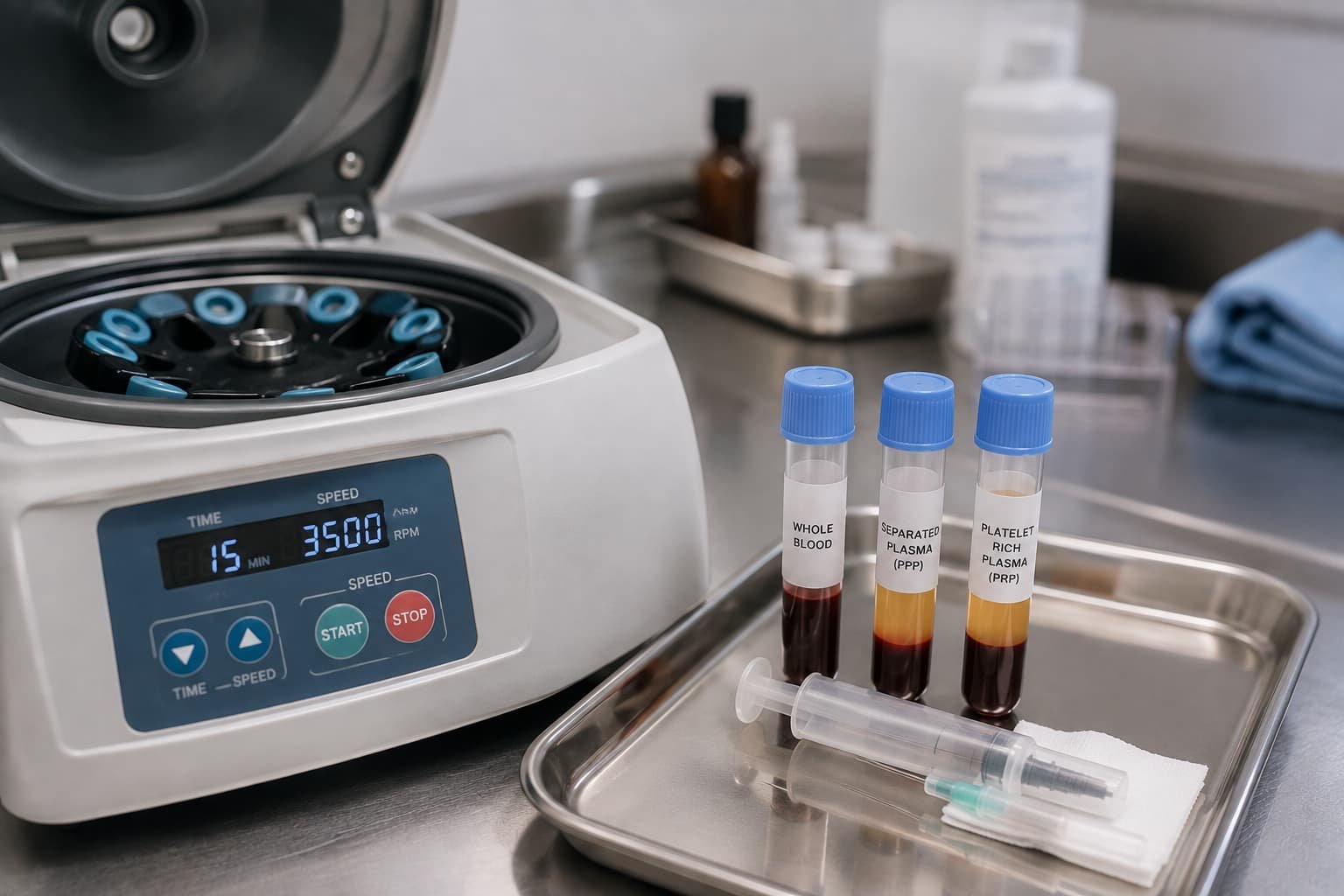
The P-shot, sometimes written as P shot, Pshot, or informally described as the penis shot, uses platelet-rich plasma extracted from a patient’s own blood. A clinician draws a small venous blood sample, usually from the arm, and processes it through a centrifuge. This step separates the platelet-rich fraction from red blood cells and other components. The concentrated plasma then enters specific areas of penile tissue through targeted injection using fine needles. This procedure falls under the broader category of PRP-based regenerative therapy for ED, an approach already established in orthopaedic medicine and increasingly used in aesthetic and sexual health treatment.
How PRP Supports Tissue Repair
Platelets contain numerous growth factors that trigger several biological processes once injected into tissue. Angiogenesis, meaning the formation of new blood vessels, improves oxygen and nutrient supply to erectile tissue. Growth factors also appear to support collagen production and may assist nerve fibre repair in some cases. This combination underpins penile injection growth theories, though results vary considerably between individuals and objective, large-scale evidence remains limited. Practitioners often describe this p injection approach as regenerative rather than purely symptomatic, since it aims to improve tissue quality rather than temporarily increase blood flow.
Blood Collection and Processing
The blood collection stage takes only a few minutes. Centrifuge processing typically runs for around fifteen minutes, separating plasma layers by density. Only the platelet-rich layer proceeds to injection.
Injection Technique
Clinicians typically use several injection points along the penile shaft. Topical numbing cream or local anaesthetic reduces discomfort. The full procedure, including preparation, usually takes thirty to forty-five minutes from start to finish.
What a P-Shot Appointment Involves
Most clinics recommend avoiding vigorous sexual activity for several days following treatment, allowing injected tissue time to settle. Downtime remains minimal, and many patients resume normal daily activity, including work and driving, immediately afterwards. Follow-up appointments at six and twelve weeks allow clinicians to assess progress and address any concerns.
What Is Low-Intensity Shockwave Therapy?
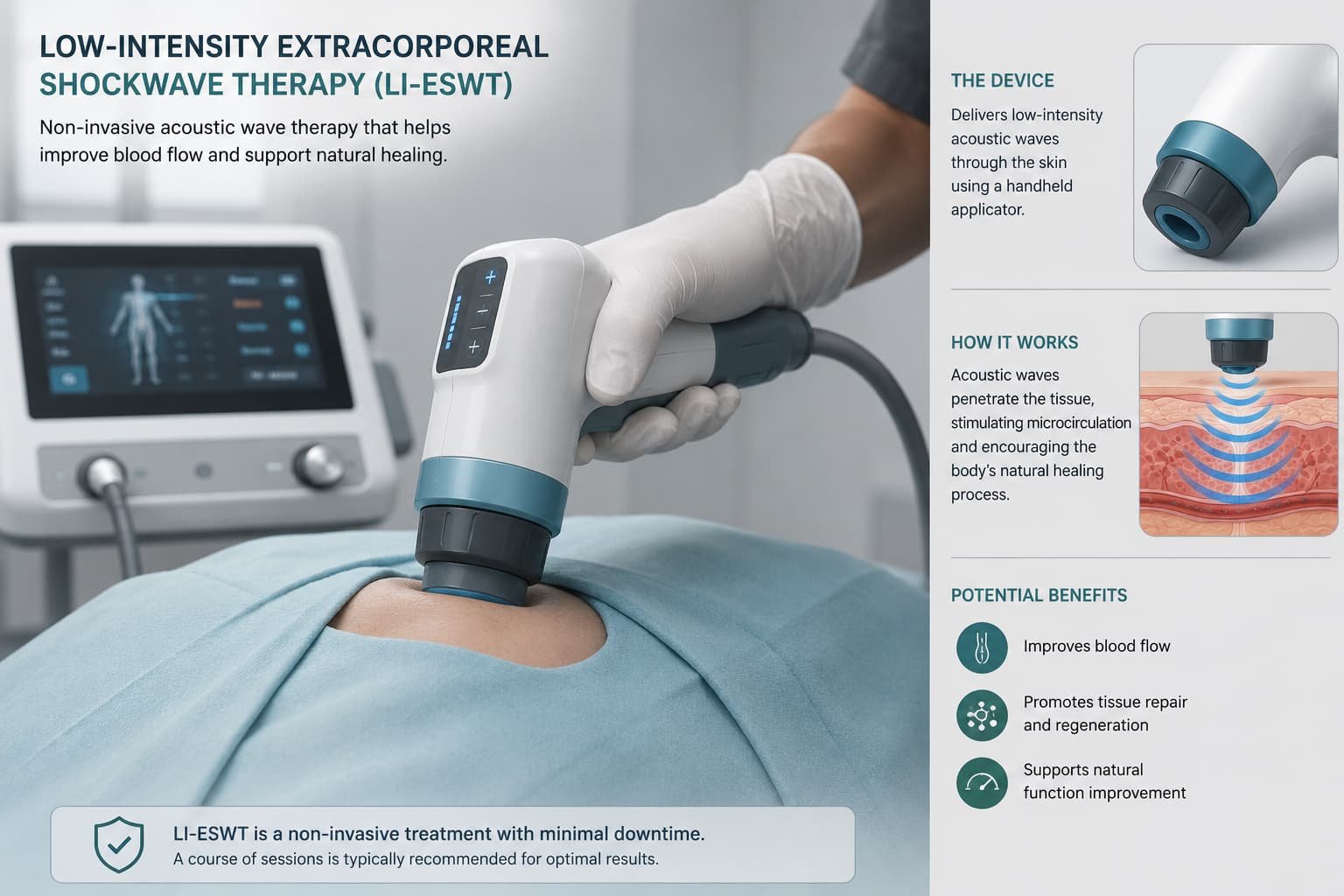
Low-intensity extracorporeal shockwave therapy, commonly abbreviated to LI-ESWT, delivers focused acoustic pulse waves through the skin into penile tissue. Unlike the P-shot, this treatment introduces no biological material whatsoever. It relies entirely on mechanical and acoustic stimulation to prompt a healing response.
The Mechanism Behind Shockwave Therapy
Acoustic waves create controlled micro-trauma within treated tissue at a cellular level. This process stimulates the release of growth factors already present within the body and encourages new blood vessel formation over time. Shockwave therapy also appears to help disrupt microplaque within small blood vessels supplying erectile tissue, improving overall circulation. This treatment works entirely without injections, needles, or blood processing of any kind. A typical treatment plan involves multiple sessions delivered across several weeks rather than a single visit.
Devices and Application
Handheld devices deliver acoustic pulses at a specified frequency and intensity. Clinicians move the device systematically across different zones of the penile shaft during each session.
Session Frequency
Most protocols schedule sessions once or twice weekly. A full course generally spans six to twelve individual sessions, depending on clinical response.
The Shockwave Therapy Procedure
Each individual session usually lasts between fifteen and twenty minutes. Most patients report mild tingling rather than genuine pain during treatment. Anaesthesia proves unnecessary for this procedure. Patients can return to normal activity immediately after each session, with no recovery period required.
P Shot vs Shockwave Therapy: Core Clinical Differences
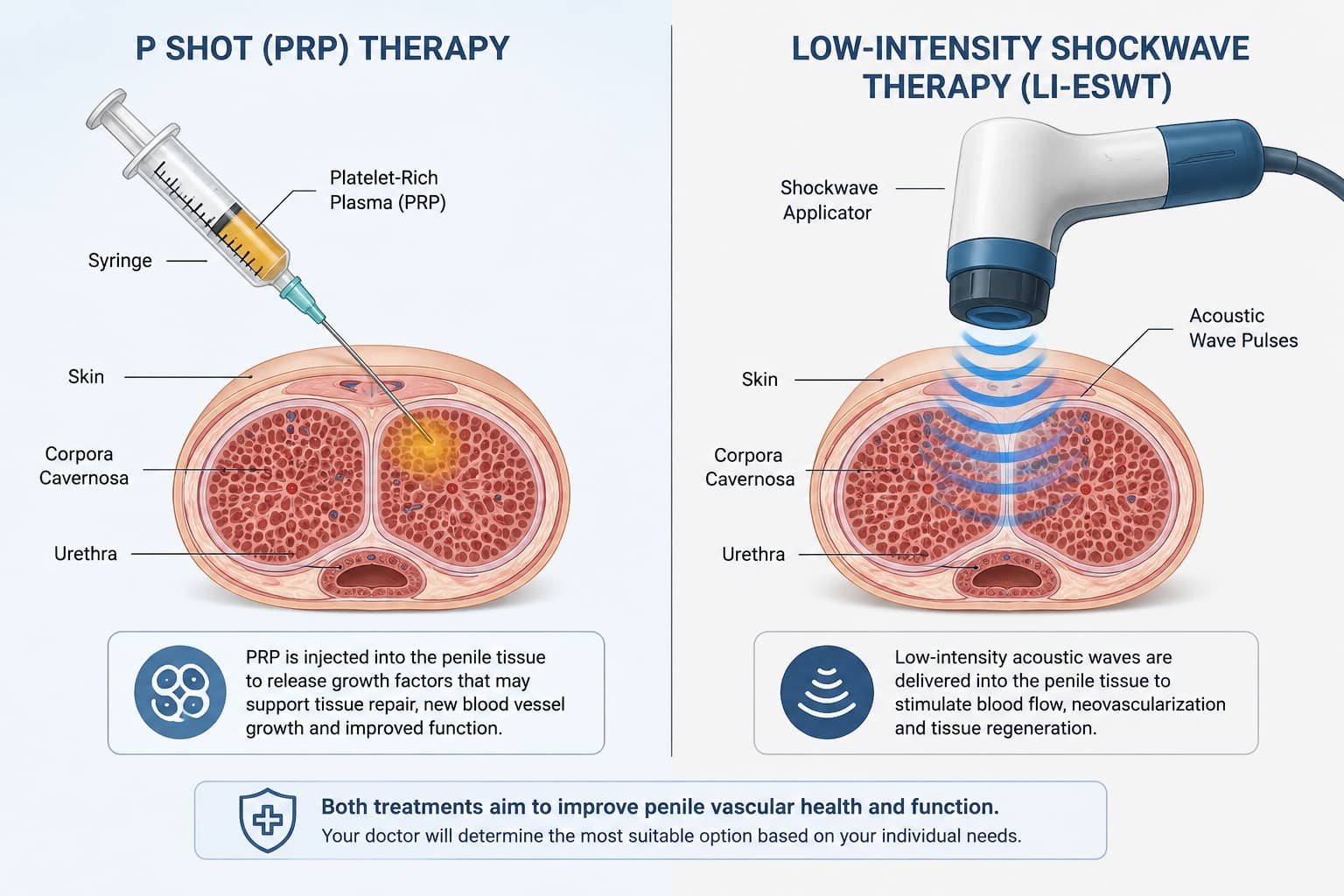
Direct comparison reveals several practical distinctions worth understanding before booking either treatment option.
Mechanism of Action
The P-shot introduces biological material designed to trigger tissue regeneration at a cellular level. Shockwave therapy stimulates existing tissue mechanically, without adding any external substance. This distinction sits at the centre of the P shot vs Shockwave Therapy discussion, since it directly affects suitability for different underlying causes of erectile dysfunction.
Number of Sessions and Time Commitment
A single P-shot session can produce measurable change in some patients, though certain clinics recommend a repeat session after several months for sustained benefit. Shockwave therapy generally requires a structured course, often six or more sessions delivered weekly or biweekly across a month or two. This difference matters considerably when comparing the practical time demands of P shot vs Shockwave Therapy for patients balancing treatment against work and personal commitments.
Onset and Duration of Results
P-shot before and after data, drawn largely from clinical case series rather than large randomised controlled trials, suggests visible changes often emerge from around four weeks post-treatment. P-shot before and after outcomes reportedly peak between eight and twelve weeks, with benefits persisting for twelve months or longer in some patients. Robust long-term data, however, remains limited across the wider field. Shockwave therapy results typically build gradually across the full treatment course, with certain published studies reporting sustained benefit for extended periods following the final session. Neither treatment produces an immediate or permanent result, and expectations should reflect this gradual pattern.
Cost Considerations in the UK
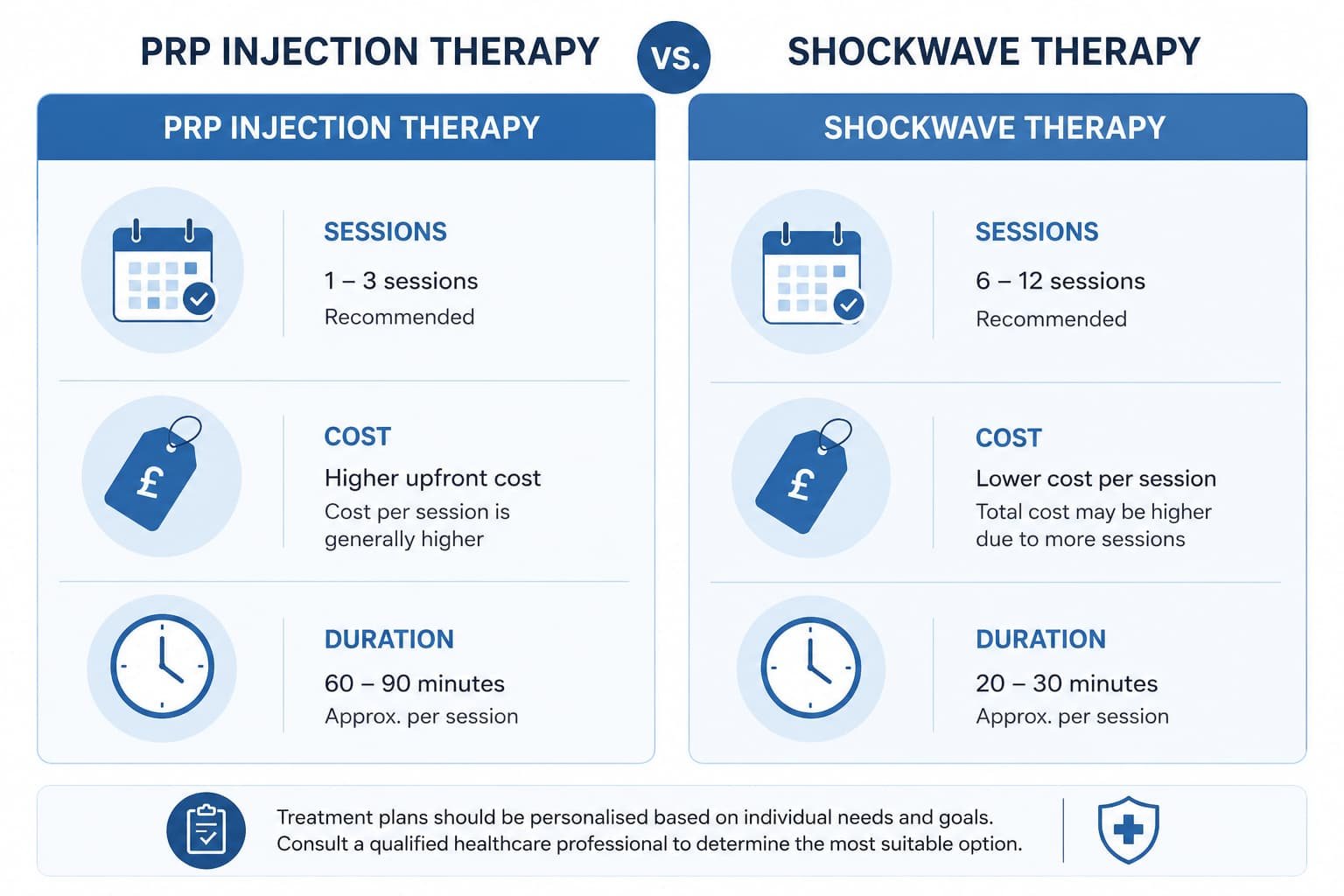
Priapus shot price at London private clinics generally starts from around one thousand pounds per session, with variation depending on protocol and additional services included. Shockwave therapy sessions typically cost considerably less per visit, though a full course of six to twelve sessions raises total expenditure to a broadly comparable range. Anyone researching male enlargement injections cost UK figures should note that pricing varies significantly between providers, clinic location, and practitioner experience. Cost alone should never guide treatment choice ahead of clinical suitability.
Evidence Base: What Current Research Shows
The quality of evidence differs meaningfully between the P Shot and shockwave therapy options. This distinction deserves careful consideration before choosing either approach.
Evidence Supporting PRP and the P-Shot
Clinical evidence for the P-shot in treating erectile dysfunction remains at a relatively early stage of development. Existing published studies tend to involve small patient numbers and often lack long-term, placebo-controlled design. The National Institute for Health and Care Excellence has not issued specific guidance approving PRP injections as a standard erectile dysfunction treatment. Professional bodies generally describe PRP-based regenerative therapy for ED as an emerging rather than firmly established option within mainstream urology. Patients deserve an honest account of this evidence gap before proceeding with treatment.
Evidence Supporting Shockwave Therapy
Low-intensity shockwave therapy holds a somewhat stronger published evidence base, with several peer-reviewed studies appearing in urology and sexual medicine journals. Findings generally indicate improvement in erectile function scores among men with vascular-related dysfunction, particularly in mild to moderate presentations. International urology bodies have begun including LI-ESWT within broader erectile dysfunction treatment guidance as an option for suitable patients. Evidence remains encouraging but not conclusive, and further large-scale, long-term trials continue across several countries.
Who May Benefit from Each Treatment Approach
Suitability depends heavily on the underlying cause of erectile dysfunction, general health status, and individual patient preference. Patient suitability forms the deciding factor in the P shot vs Shockwave Therapy decision, rather than treatment popularity or price.
Potential Candidates for the P-Shot
Men with tissue-level damage, reduced penile sensitivity, or Peyronie’s disease may find the P shot treatment relevant to the presenting clinical situation. Providers offering the P shot London and Priapus shot London routes commonly cite post-prostatectomy patients and those seeking an alternative to long-term pharmaceutical use as potentially suitable candidates. Suitability always requires proper clinical assessment rather than self-selection based on online research alone.
Potential Candidates for Shockwave Therapy
Men with primarily vascular erectile dysfunction, particularly mild to moderate presentations, often respond reasonably well to shockwave therapy. Patients who prefer to avoid injections entirely may also find this option more comfortable and accessible. A full medical history, including cardiovascular risk factors and diabetes status, should inform any treatment decision made with a qualified clinician.
Combining Both Treatments: A Developing Clinical Approach
Some clinics now offer combined protocols, applying shockwave therapy before P-shot injection within the same appointment. The clinical rationale suggests shockwave stimulation may improve tissue receptiveness to subsequently injected growth factors, theoretically enhancing overall response. Early clinical reports describe this combined approach favourably, though robust comparative trials directly testing combination therapy against either treatment alone remain scarce. Combination therapy represents a developing area rather than a proven superior standard of care. Patients should treat combined-protocol marketing claims with appropriate caution until stronger, peer-reviewed evidence emerges from controlled studies.
Safety Profile and Realistic Expectations
Both treatments carry a generally favourable safety profile when delivered by appropriately trained and regulated clinicians.
Risks Associated with the P-Shot
Reported side effects include temporary bruising, localised swelling, and mild discomfort around the injection site. Infection risk exists with any injection-based procedure, though this risk remains low when sterile technique applies correctly throughout. Men with active infection, bleeding disorders, or certain cancers may not qualify as suitable candidates for this treatment.
Risks Associated with Shockwave Therapy
Shockwave therapy carries a comparatively minimal reported risk profile overall. Mild redness or temporary discomfort during treatment sometimes occurs but usually resolves quickly. No recovery period typically follows an individual session.
Setting Realistic Expectations
Neither treatment guarantees results for every patient who undergoes it. Response varies according to age, underlying cause, overall vascular health, and adherence to the recommended treatment course. Individuals researching P shot UK providers should verify practitioner qualifications and regulatory registration before booking any appointment. Overpromising outcomes does a genuine disservice to anyone considering non-surgical treatment for erectile dysfunction in London or elsewhere. A thorough clinical assessment, including relevant investigations, remains essential before starting either treatment pathway.
Making an Informed Choice Between P Shot vs Shockwave Therapy
Choosing between these two treatments depends on accurate diagnosis, personal preference, and tolerance for cost and time commitment. Vascular-dominant cases without strong injection preference often suit shockwave therapy reasonably well. Tissue damage, Peyronie’s disease, or sensitivity concerns may point towards the P-shot pathway instead. A qualified clinician should assess penile Doppler ultrasound findings, hormone levels, and cardiovascular history before recommending either option to any individual patient. London-based providers offering erectile dysfunction treatment London services, including pshots clinic UK under the clinical direction of Dr Syed Nadeem Abbas, generally emphasise individual clinical assessment over generic, one-size-fits-all recommendation.
Frequently Asked Questions About P Shot vs Shockwave Therapy
Is the P-shot considered a natural treatment?
The P-shot uses a patient’s own blood, positioning it as a natural ED treatment using PRP therapy rather than a synthetic or pharmaceutical intervention. Clinical processing and medically supervised injection remain necessary throughout.
How long does a typical P shot before and after result last?
Available data on P shot before and after outcomes suggests benefits often persist for around twelve months in responding patients, though individual variation remains considerable and long-term data stays limited.
Does shockwave therapy cause pain during treatment?
Most patients describe mild tingling rather than genuine pain during shockwave sessions. Anaesthesia is not usually necessary for this procedure.
What factors influence Priapus shot price?
Priapus shot price varies according to clinic location, practitioner experience and qualification, and whether additional treatments accompany the core injection procedure.
Can shockwave therapy and the P-shot be combined safely?
Some clinics combine both treatments within a single protocol. Evidence supporting genuinely superior combined outcomes over either treatment alone remains preliminary at this stage.
Is either treatment available through NHS funding?
Neither the P-shot nor shockwave therapy for erectile dysfunction receives routine NHS funding currently. Both remain accessible primarily through private clinics across the UK.
What questions should a patient ask before booking treatment?
Patients should ask about practitioner qualifications, expected evidence behind the specific protocol offered, realistic outcome timelines, and full cost breakdown before booking either treatment.
Conclusion
The P shot vs Shockwave Therapy comparison reveals two genuinely different mechanisms addressing a shared underlying problem. One approach relies on biological regeneration using the patient’s own plasma; the other relies on mechanical, acoustic stimulation. Neither represents a universal solution suitable for every man, and neither should ever be marketed as one. Evidence quality currently differs between the two options, with shockwave therapy supported by a somewhat broader base of peer-reviewed published research at present. Informed decision-making depends on accurate diagnosis, honest evidence review, and realistic expectations rather than persuasive marketing language. Anyone considering either pathway should seek proper clinical assessment from a qualified practitioner before proceeding further. Given the clear differences in mechanism, evidence base, and cost, which factor matters most when weighing regenerative versus mechanical treatment for erectile dysfunction?
Read more:P Shot London vs Shockwave Therapy – What’s the Difference?
Does the P-Shot Increase Size? What the Clinical Evidence Actually Shows