✅Medically reviewed
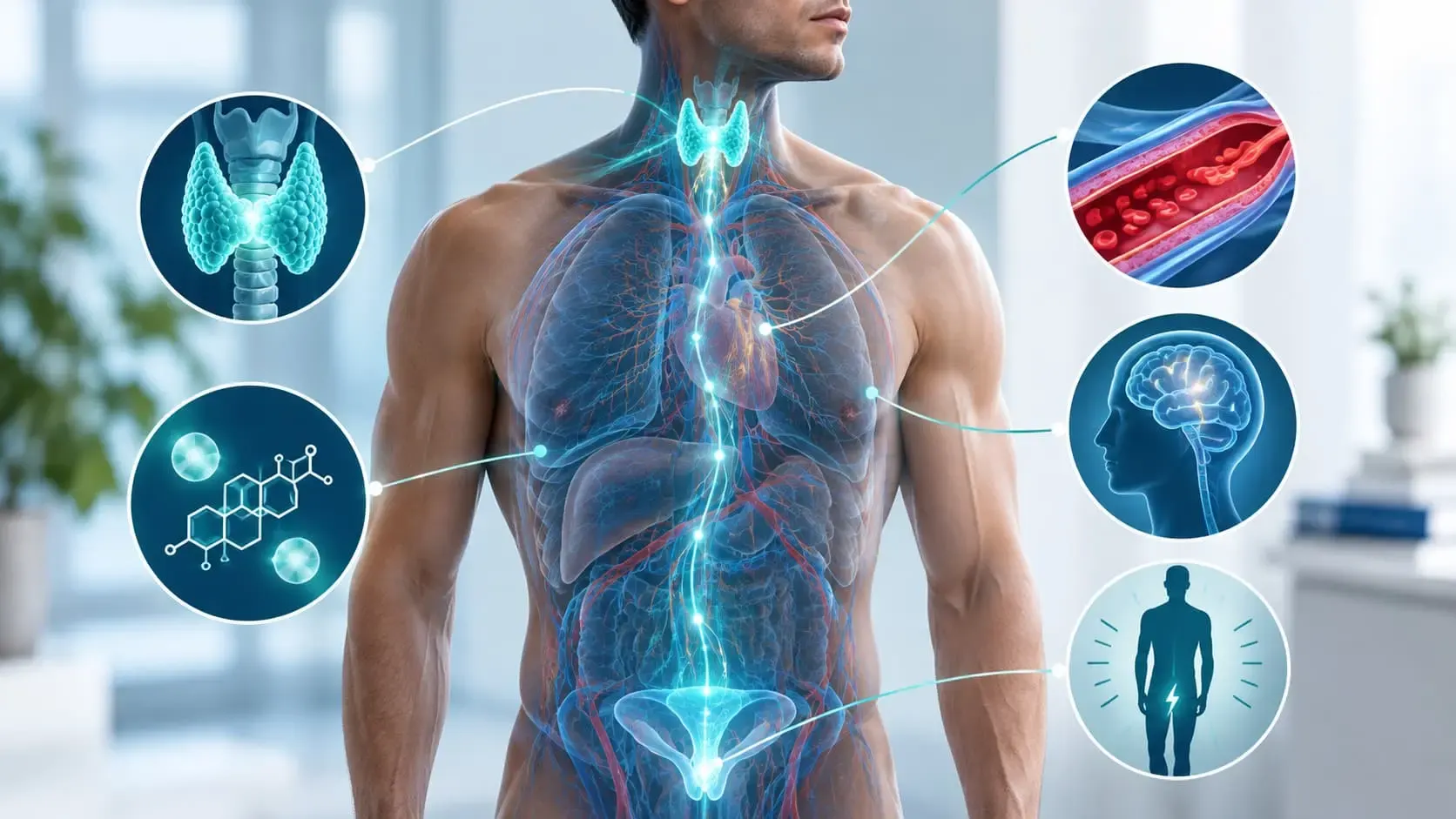
Erection problems rarely have a single cause. A butterfly-shaped gland in the neck can shape sexual function long before any obvious warning sign appears. The thyroid regulates metabolism, heart rate, body temperature, mood and energy. Each of these systems supports a healthy erection.
Research on thyroid and erectile dysfunction shows a striking pattern. A Greek clinical study found that almost eight in ten men with thyroid disease had some erectile difficulty. Many of those men improved once thyroid hormone levels returned to normal.
Despite this, thyroid testing often sits low on the list during an ED assessment. Clinicians usually check blood pressure, blood sugar and cholesterol first. Thyroid disease deserves a place on that list. Testing is simple, and treatment is well established.
This guide explains how thyroid hormones influence erections, libido and ejaculation. It covers hypothyroidism, hyperthyroidism, blood tests, treatment and the limits of current evidence. All information draws on NHS and NICE guidance and peer-reviewed research. The aim is clear, balanced information that supports an informed conversation with a GP.
Key Points at a Glance
- Both underactive and overactive thyroid conditions link with ED in clinical studies.
- Thyroid hormones affect testosterone, blood vessels, mood and libido.
- A simple blood test measures thyroid function.
- ED often improves after thyroid treatment, but not in every man.
- Other erectile dysfunction causes frequently coexist with thyroid disease.
What Does the Thyroid Do?
The thyroid sits at the base of the neck. It produces two main hormones, thyroxine (T4) and tri-iodothyronine (T3). The pituitary gland controls output through thyroid-stimulating hormone (TSH).
These hormones set the pace of metabolism. Heart rate, muscle function, body temperature, mood and sleep all respond to thyroid output. Thyroid hormones also interact with the reproductive hormone system.
Thyroid disease is common in the UK. NICE reports that subclinical hypothyroidism affects between 4 and 20 percent of people, depending on the population studied. Rates run higher in women, yet men still develop thyroid disease.
Thyroid disease falls into two broad groups. Hypothyroidism means an underactive gland. Hyperthyroidism means an overactive gland.
How Thyroid and Erectile Dysfunction Connect: What the Evidence Shows
The evidence on thyroid and erectile dysfunction comes mainly from small clinical studies. Can thyroid problems cause ED? Yes, thyroid disease can contribute to ED in a substantial share of men. The link appears in both underactive and overactive thyroid conditions.
The Krassas Study
A 2008 study in the Journal of Clinical Endocrinology and Metabolism remains widely cited. Krassas and colleagues assessed 71 men with thyroid dysfunction. Of these, 27 had hyperthyroidism and 44 had hypothyroidism. Every participant completed the Sexual Health Inventory for Males (SHIM) questionnaire.
Results showed some degree of ED in 78.9 percent of men with thyroid disease. Only 33.8 percent of control participants scored in the same range. After one year of thyroid treatment, SHIM scores improved significantly in both groups. Roughly three in ten men still had some ED at that point. That rate sat close to the control group figure.
The authors recommended thyroid screening for men with ED. Krassas and colleagues also advised delaying ED-specific treatment for at least six months after thyroid hormone levels normalise.
More Recent Evidence
A 2024 meta-analysis in BMC Endocrine Disorders examined hyperthyroidism and ED specifically. The authors reported a high prevalence of ED among affected men.
Limits of the Evidence
Several limits apply. The Krassas study used a single centre and a modest sample. Researchers excluded men with diabetes, cardiovascular disease and urological conditions. Real-world patients often carry several risk factors at once. The SHIM questionnaire measures symptoms, not blood flow. Most studies show association rather than proof of cause. Many men with thyroid disease keep normal erections, and many men with ED have normal thyroid function.
How Thyroid Hormones Affect Erections
No single mechanism explains thyroid and erectile dysfunction. Several pathways probably overlap.
Low Testosterone and Thyroid Disease
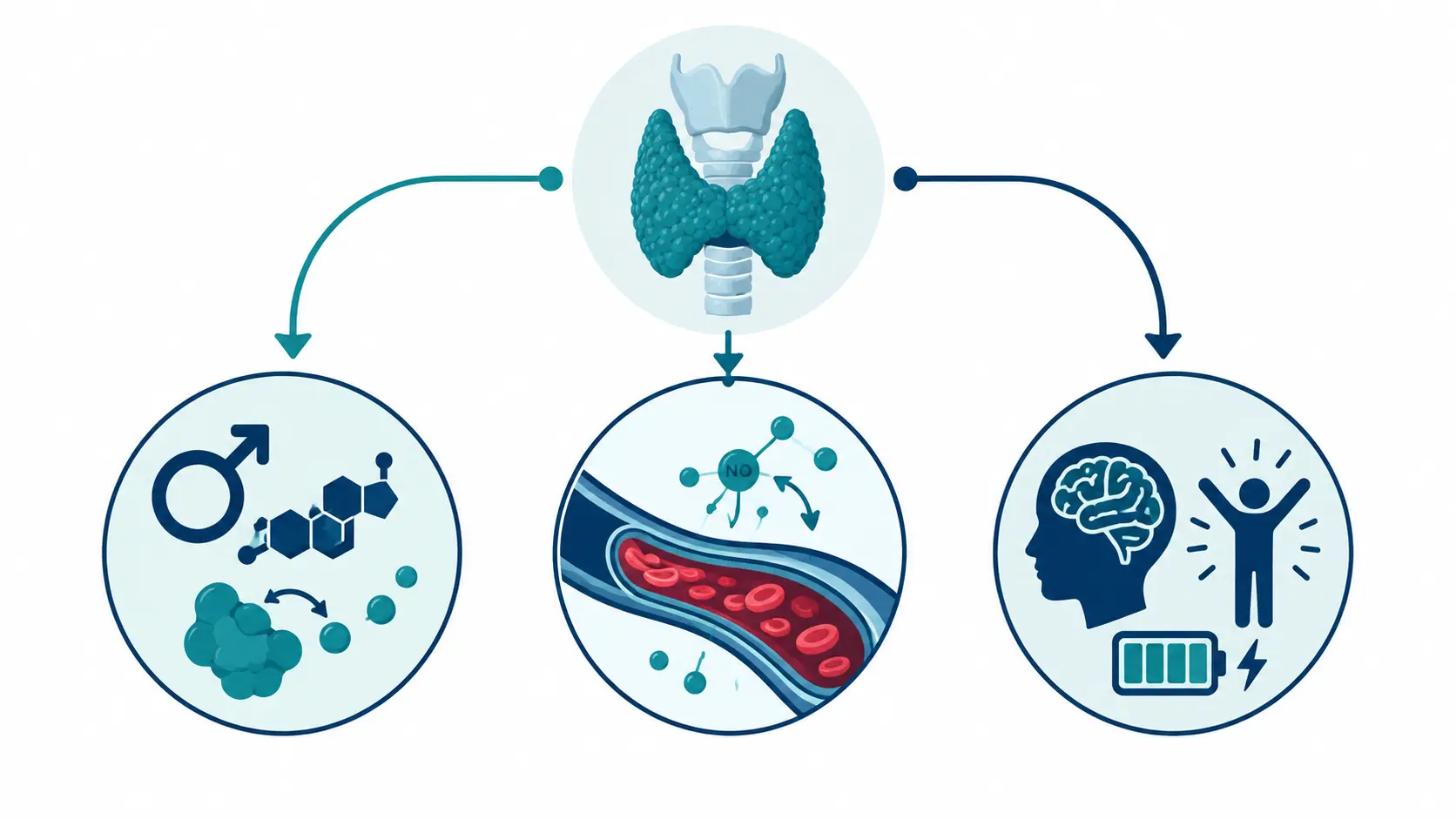
Thyroid hormones interact with the hypothalamic-pituitary-gonadal axis, the system that regulates testosterone. Disease of the gland also alters sex hormone-binding globulin (SHBG), a protein that carries testosterone in the blood. Hyperthyroidism tends to raise SHBG, while hypothyroidism tends to lower it. These shifts change measured testosterone and complicate interpretation.
Low testosterone and thyroid disease can coexist, so clinicians often test both. Testosterone supports libido and contributes to erectile function. Clinicians usually measure testosterone in a morning blood sample, when levels peak.
Blood Vessels and Nitric Oxide
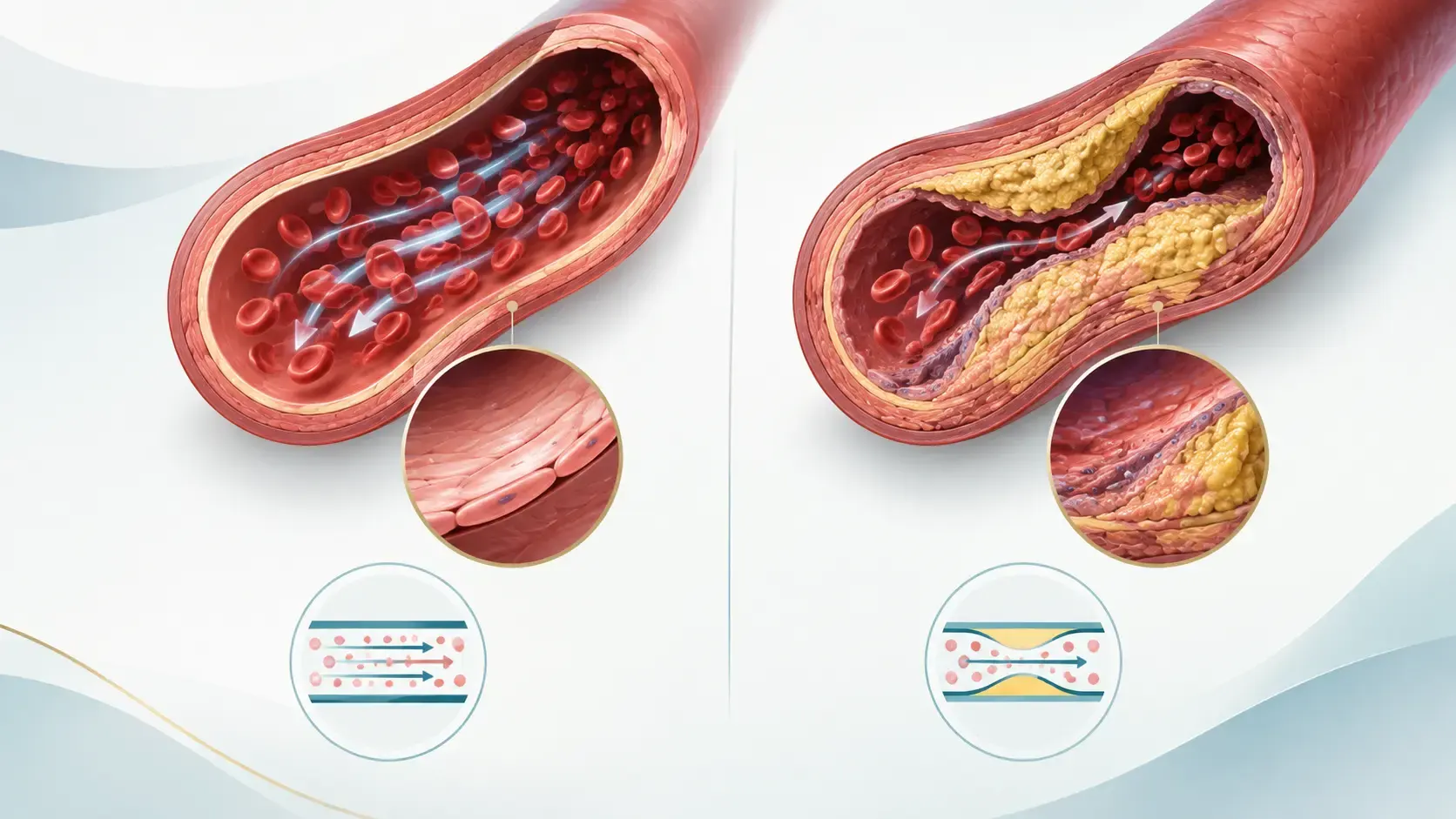
An erection depends on blood vessel relaxation inside the penis. Nitric oxide drives that process. Thyroid hormones influence the endothelium, the inner lining of blood vessels. Disease of the gland may impair endothelial function and reduce penile blood flow. Researchers still study how large this effect is.
Mood, Energy and Libido
Thyroid and low libido in men often appear together. Hypothyroidism can cause fatigue, low mood and weight gain. Hyperthyroidism can cause anxiety, restlessness and poor sleep. Each symptom reduces sexual desire and complicates arousal.
Performance anxiety can then reinforce the problem. After one failed erection, worry about the next attempt can sustain the cycle. This pattern may persist even after hormone levels normalise. Psychosexual counselling helps in such cases.
Ejaculation also changes. The International Society for Sexual Medicine reports that hyperthyroidism often pairs with premature ejaculation. Hypothyroidism often pairs with delayed ejaculation.
Hypothyroidism and Erectile Dysfunction
An underactive thyroid slows metabolism and drains energy. In the Krassas study, 37 of 44 hypothyroid men scored in the ED range. Among these men, SHIM scores rose with free thyroxine and fell with TSH. Greater hormone deficiency therefore tracked with worse erectile function.
Hashimoto’s thyroiditis, an autoimmune condition, is the commonest cause of hypothyroidism in the UK. The immune system attacks thyroid tissue, and hormone output falls gradually. Symptoms often develop slowly. Men may attribute tiredness and low desire to stress or ageing, which delays diagnosis.
Symptoms to Recognise
General Symptoms
- Tiredness
- Feeling cold
- Weight gain
- Constipation
- Dry skin
- Low mood
- Thinning hair
- Muscle aches
- Poor memory and concentration
Sexual Symptoms
- Reduced desire
- Delayed ejaculation
- Erection difficulty
Hyperthyroidism and Erectile Dysfunction
An overactive thyroid speeds up the body. In the Krassas study, 19 of 27 hyperthyroid men scored in the ED range. Premature ejaculation appears more often with hyperthyroidism. Anxiety, tremor, palpitations and poor sleep add further strain.
Graves’ disease, another autoimmune condition, is the commonest cause of hyperthyroidism. In the Krassas group, 18 of 27 hyperthyroid men had Graves’ disease. Toxic nodular goitre accounts for most other cases.
Symptoms to Recognise
General Symptoms
- Weight loss despite normal eating
- Feeling hot
- Fast or irregular heartbeat
- Anxiety or irritability
- Tremor
- Difficulty sleeping
- Frequent bowel movements
Sexual Symptoms
- Reduced desire
- Premature ejaculation
- Erection difficulty
Who Should Consider a Thyroid Check?
Thyroid testing suits men whose ED comes with other warning signs. Examples include:
- Persistent tiredness or low energy
- Unexplained weight gain or loss
- Feeling unusually cold or hot
- Palpitations, tremor or anxiety
- Falling libido
- Swelling at the front of the neck
- Personal or family history of thyroid or autoimmune disease
Testing also makes sense when ED has no clear explanation. Krassas and colleagues recommended screening for men presenting with ED. Treatable causes deserve treatment before any ED-specific therapy begins.
Other Erectile Dysfunction Causes to Rule Out
Thyroid disease rarely acts alone. NHS guidance lists many erectile dysfunction causes. Thyroid and erectile dysfunction therefore need assessment alongside these factors:
- Cardiovascular disease and high blood pressure
- Type 2 diabetes
- High cholesterol and obesity
- Low testosterone
- Medicines, including some antidepressants and blood pressure drugs
- Smoking, heavy alcohol use and recreational drugs
- Stress, anxiety, depression and relationship difficulties
Evidence links ED with cardiovascular disease, so a full assessment matters more than any single test.
Thyroid Blood Test for Men: What Clinicians Check

Assessment begins with a history. Clinicians ask when ED started, whether morning erections persist and whether desire has changed. Gradual onset with fewer morning erections suggests a physical cause, including hormonal disease. Sudden, situational ED suggests psychological factors. Questionnaires such as the SHIM track severity and response to treatment.
A thyroid blood test for men uses one simple blood sample. UK practice usually starts with TSH. Clinicians add free T4 when TSH falls outside the reference range. Typical patterns include:
- High TSH with low free T4 indicates primary hypothyroidism.
- High TSH with normal free T4 indicates subclinical hypothyroidism.
- Low TSH with high free T4 indicates hyperthyroidism.
Subclinical disease needs careful handling. NICE guideline NG145 advises repeat testing before treatment decisions. The same guideline suggests considering levothyroxine when TSH reaches 10 mIU/L or higher on two occasions, three months apart. Clinicians may also measure thyroid peroxidase antibodies once to detect autoimmune disease.
Men with ED often need further tests. Clinicians commonly add morning testosterone, blood glucose or HbA1c, a lipid profile and a blood pressure check. Biotin supplements can distort some thyroid results, so clinicians ask about supplements first.
A GP can arrange thyroid testing on the NHS, and private clinics also offer it.
Treatment Options for Thyroid-Related ED
Treating the Thyroid First
Treatment for thyroid and erectile dysfunction follows a clear order. Clinicians treat the thyroid disorder first.
NHS guidance describes levothyroxine tablets for hypothyroidism. Most patients take the tablets long term. Hyperthyroidism treatment includes antithyroid medicines such as carbimazole, radioactive iodine and surgery. Beta-blockers can ease palpitations and anxiety while other treatment takes effect. Repeat blood tests guide dose adjustments. Both over-treatment and under-treatment can keep symptoms active.
Why Timing Matters
The Krassas authors advised waiting at least six months after thyroid levels normalise before starting ED-specific treatment. Erectile function may recover during that period without further intervention. Individual circumstances differ, so a clinician decides whether earlier ED treatment suits a particular patient.
ED Medicines and Other Options
Persistent ED needs its own assessment. NHS options include PDE5 inhibitor tablets such as sildenafil and tadalafil, vacuum pumps, injections and psychosexual counselling. Prescribers review all medicines and cardiovascular health before starting a PDE5 inhibitor. No ED treatment replaces correct thyroid management.
Lifestyle Measures That Support Recovery
Lifestyle changes support both thyroid care and erectile health. Regular exercise improves cardiovascular fitness and mood. A healthy weight reduces strain on blood vessels and hormones. Stopping smoking and limiting alcohol protect vascular function. Consistent sleep supports hormonal balance.
Levothyroxine works best on an empty stomach, as NHS guidance advises. Iron and calcium supplements can reduce absorption, so patients usually separate the doses by several hours.
P Shot UK and PRP Therapy: Where the Evidence Stands
Some men with persistent ED ask about platelet-rich plasma (PRP) injections, which clinicians call the P shot. P Shot treatment involves injecting PRP, which the clinician prepares from the patient’s own blood, into penile tissue. Early studies report modest improvements in some men. Trials remain small, protocols vary and long-term data are limited. NHS guidance does not list PRP among standard ED treatments.
Reported risks include pain, bruising, swelling and infection. No treatment guarantees a particular outcome. PRP does not correct thyroid and erectile dysfunction caused by hormone imbalance. Thyroid status therefore needs checking first.
Men comparing P shot London clinics or other P shot UK providers should confirm provider qualifications. Clear answers about evidence, risks and realistic outcomes also matter.
pshots clinic UK is a private Harley Street clinic in Marylebone, London. Dr Syed Nadeem Abbas leads the clinic. Qualifications include MBBS, MRCS RCS Edinburgh and MRCGP. An MSc in Aesthetic Plastic Surgery with Distinction came from Queen Mary University of London. Training took place at Cambridge, Oxford and the Royal London Hospital. This article reflects published evidence and does not replace individual medical advice.
When to See a Doctor
A GP appointment suits any man with ED lasting more than a few weeks. Men with known thyroid disease who notice new ED should report it, because dose adjustment may help. Urgent review suits chest pain, severe palpitations, unexplained rapid weight loss, difficulty swallowing or a growing neck lump.
Frequently Asked Questions
Can thyroid problems cause ED?
Yes. Thyroid and erectile dysfunction share hormonal, vascular and mood-related pathways. Not every man with thyroid disease develops ED.
Which causes more ED: hypothyroidism or hyperthyroidism?
Both raise the risk. The Krassas study found no clear SHIM difference between the two groups.
Should every man with ED have a thyroid test?
Krassas and colleagues recommended screening men with ED. UK practice varies, so a GP decides based on symptoms, history and examination.
Will treating the thyroid cure ED?
Treatment improves ED in many men, but not all. Roughly three in ten still had some ED after one year in the Krassas study. Other causes may persist.
How long does recovery take?
Timelines vary. The Krassas study measured outcomes after one year and advised a six-month wait before specific ED treatment. A clinician can set realistic expectations.
Can thyroid medication affect erections?
Over-replacement with levothyroxine can mimic hyperthyroidism. Anxiety, palpitations and poor sleep may follow. Regular blood tests keep dosing accurate.
Does the P shot treat thyroid-related ED?
No. The P shot does not treat thyroid disease. Evidence for PRP in ED remains limited, and thyroid status needs checking first.
Key Takeaways
Thyroid and erectile dysfunction link through hormones, blood vessels, mood and energy. Studies show a high rate of ED among men with thyroid dysfunction. Treatment often restores erectile function.
The evidence also has limits. Studies remain small, and other erectile dysfunction causes frequently coexist. Test results should guide the order of care: thyroid first, then ED-specific options where needed.
Informed decisions begin with accurate testing. A thyroid blood test for men carries minimal risk and offers clear answers. Men who understand each step can discuss options confidently with a clinician.
If one blood test could explain persistent ED, why does thyroid screening still rank so low on checklists?
Read more:
Sleep Apnoea and Erectile Dysfunction: Is There a Link to Consider Before a P Shot?
Penile Doppler Ultrasound: Does a P Shot Candidate Need a Scan First?
Dr Syed Nadeem Abbas, MBBS, MRCSEd, MSc Aesthetic Plastic Surgery (Distinction) Medical Director, Pshot Clinic | CQC Regulated | Monday to Saturday 10:00–18:00 +44 7955 836986