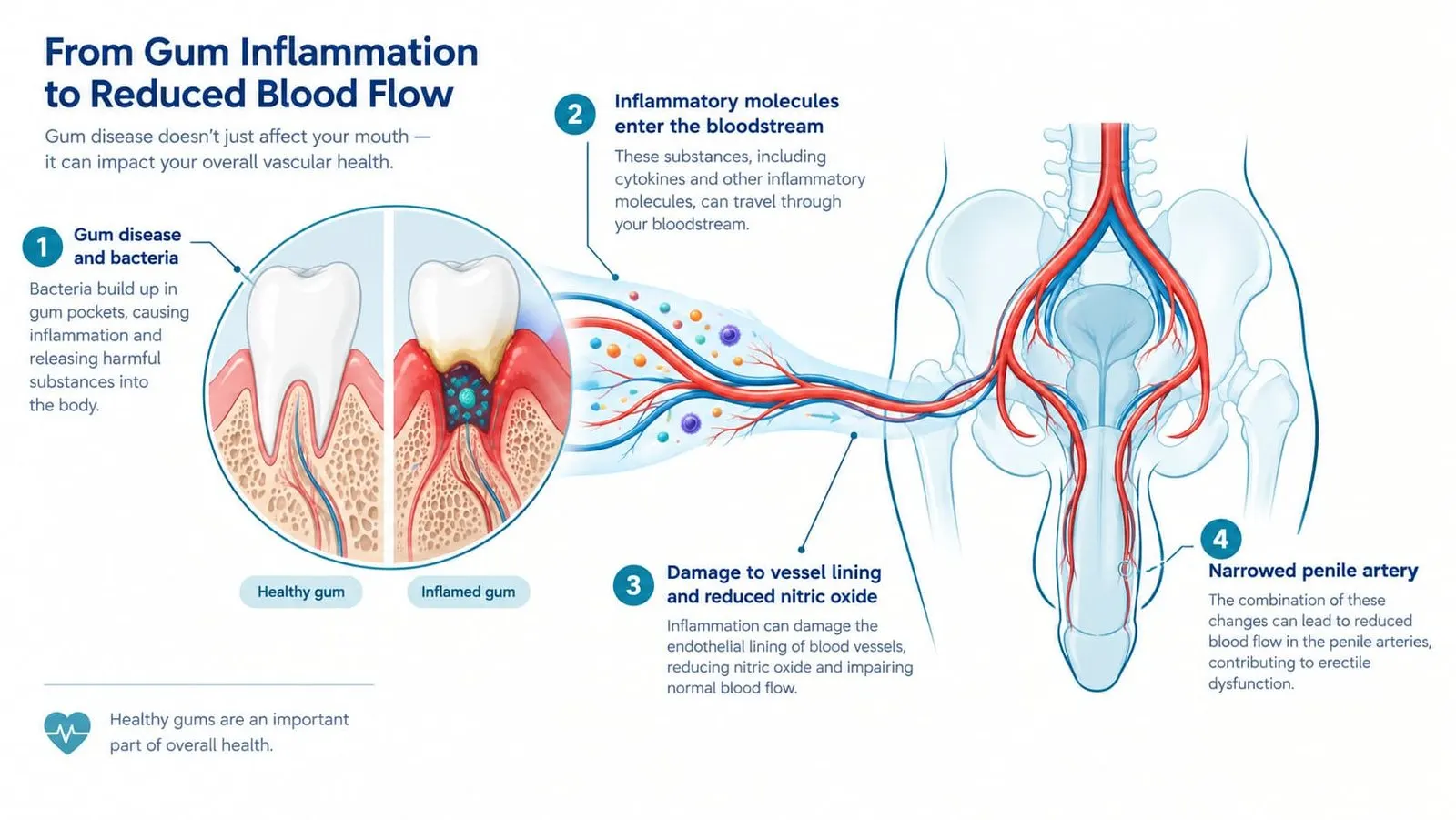
✅Medically reviewed
Few men connect a problem in the bedroom with a problem in the kidneys. Yet the two share the same biological roots. Blood vessels, hormones, nerves and mood all shape an erection. Kidney disease disturbs all of these systems. The scale of the overlap surprises many clinicians. A 2020 systematic review pooled 34 studies and 5,986 men. It found erectile problems in about three in four men with chronic kidney disease.
Most patients never raise the subject. Many doctors avoid it as well. Silence leaves a treatable condition untreated. This article explains erectile dysfunction and kidney disease from a clinical angle. It covers causes, warning signs, safe medicines and the limits of newer options. Sources include NHS guidance, NICE guidance and peer-reviewed research. Each section states what the evidence shows and where the evidence stops.
Understanding Erectile Dysfunction and Kidney Disease
What erectile dysfunction means
The NHS defines erectile dysfunction (ED) as trouble getting or keeping an erection firm enough for sex. Occasional difficulty is common and rarely signals disease. Persistent difficulty deserves medical attention. It often reflects a wider health problem rather than a local one.
What kidney disease means
The kidneys filter waste, balance fluid and help control blood pressure. They also activate vitamin D and support red blood cell production. NICE guideline NG203 defines chronic kidney disease (CKD) as abnormal kidney structure or function lasting longer than three months. Clinicians grade CKD from stage 1 to stage 5. Grading uses the estimated glomerular filtration rate (eGFR) and urine protein levels. Stage 5 means kidney failure.
How the two conditions connect
An erection needs healthy arteries, steady hormone signals, intact nerves and a settled mind.Kidney disease can damage all four systems at once. That overlap explains why kidney disease and erectile dysfunction appear together so often. Shared risk factors add to the picture. Diabetes, high blood pressure, smoking and obesity harm both the kidneys and the penile arteries.
Can Kidney Disease Cause Erectile Dysfunction?
Yes, kidney disease can cause erectile dysfunction, although it rarely acts alone. Most men have several contributing causes at once. Researchers describe the problem as multifactorial.
Erectile problems are the rule rather than the exception in advanced kidney disease. Pooled data show how common the problem is:
- A 2020 meta-analysis in the International Journal of Impotence Research found ED in 78% of men with CKD.
- The same analysis reported 77% prevalence among men on haemodialysis.
- Prevalence fell to 64% among men with a kidney transplant.
- A separate end-stage kidney disease meta-analysis reported 59% in transplant recipients. Haemodialysis reached 79% and peritoneal dialysis 71%.
Heterogeneity between studies is high. Figures therefore describe a range, not a precise rate. The message stays consistent across every review. Erectile dysfunction and kidney disease overlap in most men with advanced disease. Chronic kidney disease and ED therefore deserve joint assessment from the first clinic visit.
Causes of Erectile Dysfunction in Men with Kidney Disease
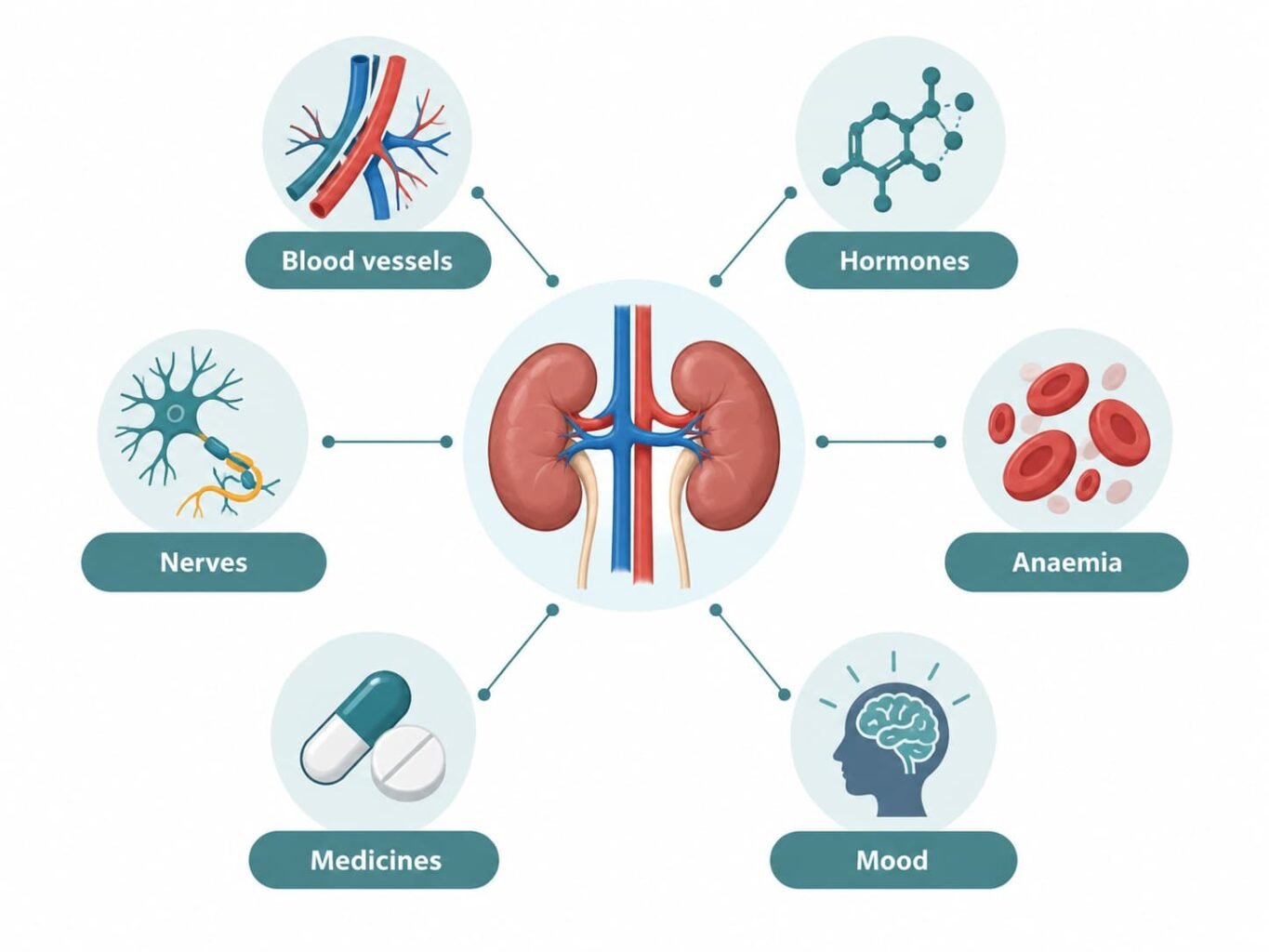
The causes of erectile dysfunction in men with kidney disease fall into six groups. Most patients show a mix of several groups.
Vascular damage
Atherosclerosis narrows arteries throughout the body. Penile arteries are small, so narrowing shows there early. CKD accelerates the process through chronic inflammation, high blood pressure, abnormal blood fats and disturbed calcium and phosphate balance. Diabetes adds further harm. Reduced blood flow remains a leading physical cause of ED in kidney patients.
Hormonal changes
The kidneys help clear and regulate hormones. Failing kidneys disturb the signalling between the brain and the testes. Testosterone often falls and prolactin often rises. Low testosterone reduces libido, energy and erection quality. Kidney Care UK notes that fragmented sleep can blunt the normal morning rise in testosterone.
Nerve damage
Diabetes, a leading cause of kidney disease, also injures nerves. Uraemic toxins add to the damage in advanced disease. Autonomic nerves control blood flow to the penis. Any disruption weakens the erection response.
Anaemia, fatigue and uraemia
Anaemia lowers oxygen delivery and energy. Dialysis schedules, poor sleep and muscle weakness add to the fatigue. Waste products that build up in advanced disease may also dull desire. Low energy often reduces sexual interest before any structural change appears.
Medicines
Blood pressure drugs treat a core kidney risk factor but can affect erections. Diuretics and beta-blockers carry the strongest reputation for this effect. Some antidepressants, including SSRIs, also contribute. Patients should never stop a kidney or heart medicine without medical advice. A prescriber can often switch to a better-suited alternative.
Psychological factors
Chronic illness, dialysis and body-image changes raise rates of anxiety and depression. Both conditions reduce desire and arousal. Performance anxiety then deepens the problem. Kidney Care UK explains how the adrenaline surge linked to worry can reduce an erection quickly. Worry about the next attempt then compounds the cycle.
Kidney Disease Symptoms in Men: Recognising the Warning Signs
General symptoms
Early kidney disease often causes no symptoms. Advancing disease produces recognisable signs. Kidney disease symptoms in men include:
- Persistent tiredness and poor concentration
- Swollen ankles, feet or hands
- Foamy or bloody urine
- Needing to pass urine more often, especially at night
- Dry, itchy skin
- Muscle cramps and loss of appetite
- Poor sleep and shortness of breath
Sexual symptoms
Chronic kidney disease and sexual health problems often start quietly. Fewer night-time and morning erections frequently appear first. Libido may fall. Erections may soften or fade during sex. Ejaculation and orgasm can also change. Fewer spontaneous erections deserve a medical conversation, not private worry.
Can erectile dysfunction signal kidney problems?
Some men notice ED before receiving a kidney diagnosis. Evidence for ED as an early kidney marker remains limited, though. ED serves more reliably as a marker of cardiovascular risk. NICE advises eGFR and urine albumin-to-creatinine ratio testing for adults with diabetes, hypertension or cardiovascular disease. Persistent ED in those groups justifies a question about kidney checks.
Kidney Failure and Erectile Dysfunction: Dialysis and Transplant
Men on dialysis
Kidney failure and erectile dysfunction often worsen together. Dialysis replaces part of the filtering role but cannot restore hormonal and vascular balance. Treatment also brings fatigue, fluid shifts and heavy time demands. Pooled studies place ED prevalence near 80% in haemodialysis. Better anaemia control and dialysis adequacy may improve energy and wellbeing. ED often persists despite these gains.
Men with a kidney transplant
Transplantation clears uraemic toxins and often restores hormone balance. Pooled prevalence falls from near 80% to between 59% and 64%. Transplant improves erectile function for many men but never guarantees recovery. Established vascular damage can persist. Immunosuppressive drugs, diabetes and high blood pressure may also contribute. Kidney Care UK notes that implant infection risk rises after transplant because of immunosuppression.
Chronic Kidney Disease and Sexual Health Beyond Erections
Chronic kidney disease and sexual health problems extend past erections alone. Low desire, reduced sperm quality, altered ejaculation and body-image concerns all occur. Each affects relationships as much as physical function.
Why conversations stall
Embarrassment silences both patients and clinicians. Many nephrology staff receive little training in sexual medicine. Patients often assume that sexual symptoms belong to normal ageing. Kidney Care UK highlights that most people would welcome a professional raising the topic. A single direct question from a clinician can open the door to treatment.
Involving partners
ED affects both partners. Partners may read reduced interest as rejection. Clear explanation of the physical causes removes that misunderstanding. Shared appointments allow questions from both sides. Same-sex partners may also need a separate sexual health review. Couples counselling adds support when anxiety dominates intimacy.
Practical steps before a consultation
Men can prepare notes before a clinic visit. Useful details include symptom onset, morning erections, current medicines and recent blood pressure readings. A written list keeps the discussion focused. It also reduces the pressure of speaking from memory.
Diagnosing ED in Men with Kidney Disease
Assessment starts with a private, structured history. Clinicians ask about onset, morning erections, libido, medicines, smoking, alcohol and mood. The five-item International Index of Erectile Function (IIEF-5) scores severity. Examination checks blood pressure, the genitals and signs of low testosterone.
Blood tests commonly include morning testosterone, HbA1c, blood fats and eGFR. Prolactin testing follows when libido is low. The NHS notes that a GP may check blood pressure and test for diabetes and cholesterol. Nephrology and urology teams should share the results. Shared records prevent conflicting advice.
ED Treatment for Kidney Disease Patients
Managing erectile dysfunction and kidney disease together needs coordinated care. Nephrology, urology and primary care teams each hold part of the picture. Treatment depends on CKD stage, cardiovascular risk and current medicines.
Lifestyle and risk factor control
Regular exercise, smoking cessation, weight control and moderate alcohol intake improve vascular health. Tight blood pressure and glucose control protect both the kidneys and erections. A renal dietitian can adapt food advice to kidney limits. These measures work slowly. Benefits take months, not days.
Medicine review
A pharmacist or nephrologist can review every prescription. Swapping a drug that harms erections sometimes helps. Changes always need medical supervision.
PDE5 inhibitors
The NHS lists sildenafil, tadalafil, vardenafil and avanafil as first-choice tablets. These drugs suit many men with CKD, dialysis or a transplant after medical review. Kidney function affects drug clearance. Prescribers therefore lower the starting dose in severe kidney impairment.
Nitrate medicines, including GTN spray, must never combine with PDE5 inhibitors. Alpha-blockers can also cause a sharp blood pressure drop. Men should avoid buying tablets from unregulated online sellers. Counterfeit products carry unknown ingredients.
Testosterone replacement
Low testosterone confirmed on morning blood samples may justify hormone therapy. Specialists weigh benefits against risks to the heart, red blood cell count and prostate. Hormone therapy suits only men with proven deficiency.
Injections, devices and implants
Alprostadil injections and urethral pellets bypass the tablet pathway. Vacuum erection devices draw blood into the penis mechanically. Bleeding disorders and anticoagulant use require caution with injections. Penile implants suit men with severe, treatment-resistant ED. A joint nephrology and urology discussion should precede surgery, especially after transplant.
Psychosexual therapy
Counselling reduces performance anxiety and improves communication. NHS services and Relate offer support for individuals and couples. Partners benefit from understanding the physical causes of ED.
P Shot for Erectile Dysfunction: Where the Evidence Stands
What the procedure involves
The P Shot uses platelet-rich plasma (PRP) prepared from the patient’s own blood. A clinician injects the processed plasma into penile tissue. The theory holds that growth factors support tissue repair and new blood vessel formation. Searches for P Shot London, Priapus shot London and P Shot UK all describe this same PRP approach.
Evidence and limitations
Small trials and pilot studies report modest improvements in some men. Study sizes remain small, protocols differ and follow-up stays short. NHS guidance does not list PRP among standard ED treatments. Robust trial data in men with CKD, dialysis or transplants remain scarce. Evidence on the P Shot in erectile dysfunction and kidney disease stays thin. PRP does not treat kidney disease, and no guarantee of benefit exists.
Dr Syed Nadeem Abbas leads pshots clinic UK on Harley Street, Marylebone. He holds MBBS, MRCS (Edinburgh) and MRCGP qualifications. His MSc in Aesthetic Plastic Surgery came from Queen Mary University of London.
Safety considerations in kidney disease
Bleeding and platelet function
Uraemia impairs platelet function, and haemodialysis often involves heparin. Anticoagulant and antiplatelet drugs add further risk. A nephrologist should review bleeding risk before any injection.
Infection and immune status
Immunosuppression after transplant raises infection risk. Anaemia and poor circulation may slow healing. Any invasive procedure needs specialist input and clear informed consent.
Men should treat the P Shot as an option for discussion after standard therapy. It does not replace PDE5 inhibitors, risk factor control or kidney care.
When to See a Doctor

Medical review becomes important in several situations:
- Persistent ED alongside swollen ankles, foamy urine or constant tiredness
- New ED after starting a blood pressure or antidepressant medicine
- Sudden loss of libido with fatigue and low mood
- Chest pain during sexual activity, which needs urgent assessment
An erection lasting longer than four hours needs emergency care. This applies after any injection treatment.
Frequently Asked Questions
Is Viagra safe in kidney disease?
Sildenafil suits many men with kidney disease after medical review. Prescribers often start at a lower dose in severe impairment. Nitrates make the drug unsafe. A doctor must check every medicine first.
Does a kidney transplant cure ED?
A transplant often improves erections but does not cure ED for everyone. Vascular damage, immunosuppressants and diabetes can keep symptoms active. Additional treatment frequently remains necessary.
Does kidney disease lower testosterone?
Low testosterone is common in kidney disease. Hormonal disruption, inflammation and fatigue all contribute. A morning blood test confirms the level. Specialists decide whether treatment is safe.
Can treatment improve erectile dysfunction and kidney disease together?
Joint management often helps both. Blood pressure control, glucose control and exercise protect the kidneys and the arteries. Medicines then target the erection directly. Results vary between men.
Can men with kidney disease have a P Shot?
No standard guideline answers this question. Evidence in kidney disease is thin. Bleeding risk, infection risk and medicines need review first. A nephrologist should agree before treatment begins.
Key Takeaways
Erectile dysfunction and kidney disease share vascular, hormonal, nerve and emotional pathways. That overlap makes ED common, and it makes ED treatable in many cases. Evidence supports a stepwise approach. Men should start with kidney and cardiovascular control. A medicine review and a safe PDE5 inhibitor often follow. Hormone testing, devices, injections and implants come next when needed.
Newer options such as PRP carry limited evidence in this group. Realistic expectations protect patients from disappointment and avoidable risk. Honest discussion with a nephrologist, a urologist and a GP supports informed decisions. Sexual health forms part of kidney care, not a separate issue to hide.
Which conversation with a doctor would make the biggest difference to a man’s health this month?
Read more:
Can Type 2 Diabetes-Related Erectile Dysfunction Be Reversed? What Research Shows
Tests to Take Before a P Shot: HbA1c, Testosterone, Lipids and Blood Pressure
Dr Syed Nadeem Abbas, MBBS, MRCSEd, MSc Aesthetic Plastic Surgery (Distinction) Medical Director, Pshot Clinic | CQC Regulated | Monday to Saturday 10:00–18:00 +44 7955 836986