✅Medically reviewed
Some men recover from COVID-19 and then notice a quiet, unwelcome change. Energy returns, the cough settles, and work resumes. Yet erections feel weaker, slower or less dependable than before. Many men blame stress. Others feel too embarrassed to raise the subject with a doctor. Silence lets the worry grow.
Long COVID erectile dysfunction now draws serious attention from urologists, endocrinologists and public health bodies. Researchers have studied the topic since 2021, and the findings remain mixed. Several studies report higher rates of erectile problems after infection. Other studies show that function often improves with time. The honest answer sits between those two positions.
This article explains what the evidence shows, what remains uncertain, and which steps make sense. The review draws on NICE guidance, NHS advice and peer-reviewed research. Sections cover definitions, biological mechanisms, risk factors, diagnosis and erectile dysfunction treatment options. Limits of the science receive equal space. Readers interested in Long COVID and men’s sexual health will find a balanced, practical overview.
What Is Long COVID?
NICE, SIGN and the Royal College of GPs jointly published the UK case definitions. NICE separates acute COVID-19, ongoing symptomatic COVID-19 and post-COVID-19 syndrome. Acute COVID-19 covers symptoms lasting up to four weeks. Ongoing symptomatic COVID-19 covers weeks four to twelve. Post-COVID-19 syndrome describes symptoms that continue beyond twelve weeks without another explanation.
“Long COVID” serves as the everyday term for both later stages. Symptoms often cluster, fluctuate and affect several body systems. NICE notes that the severity of the first infection does not reliably predict long-term symptoms. Mild infections can therefore still leave lasting problems.
Long-Term Effects of COVID-19 on Men
Fatigue, breathlessness, poor concentration and disturbed sleep top the list of reported symptoms. Mood changes, reduced libido and sexual difficulty also appear in research reports. Researchers use the term “sexual long COVID” for persistent sexual dysfunction after infection. Studies of the long-term effects of COVID-19 on men increasingly include erectile function, hormone levels and fertility. COVID-19 and male sexual health extend beyond erections to libido, ejaculation and fertility.
Long COVID Erectile Dysfunction: What Is the Link?
The evidence points to an association, not a proven cause. Long COVID erectile dysfunction describes erectile difficulty that appears or persists after infection. Clinicians also use the terms post-COVID erectile dysfunction and erectile dysfunction after COVID-19. Erectile problems after coronavirus can start during illness or emerge weeks later.
What the Research Shows
Several studies support the concern. A 2022 systematic review in the Journal of Endocrinological Investigation pooled eight studies. The authors reported an erectile dysfunction prevalence of 33% among COVID-19 patients. Relative risk reached 2.64 compared with people without COVID-19. Its confidence interval ran from 1.01 to 6.88, so the estimate lacks precision. Anxiety emerged as a significant risk factor.
A Thai cohort study followed 153 hospitalised men. Researchers measured erectile function during infection and again three months later. Prevalence fell from 64.7% to 50.3%. Even so, half of the men still screened positive at three months. Men older than 40 and men with major depression faced the highest risk of persistent problems. A Chinese study cited in that paper recorded prevalence of 44.8% at six months and 30% at nine months.
Why the Evidence Needs Careful Reading
Most studies cannot prove that the virus caused the erectile problem. Several studies lacked pre-infection erectile data. Many also lacked a comparison group of similarly ill men without COVID-19. The Thai authors acknowledged both limits. Pandemic stress, lockdowns, job insecurity and reduced sexual activity also confound the results. Heterogeneity across pooled studies stayed very high, so results differ widely. Prevalence also varied with the method: 9% by diagnostic coding and 46% by questionnaire.
| Study | Population | Key finding | Main limitation |
| Zhang et al., 2022 | Eight pooled studies | Prevalence 33%; relative risk 2.64 | Very high heterogeneity |
| Harirugsakul et al., 2022 | 153 hospitalised men | Prevalence fell from 64.7% to 50.3% | No control group |
| Salonia et al., 2021 | 121 recovered men | 55% had low testosterone at seven months | Hospitalised men only |
Taken together, the data justify attention rather than alarm. Some researchers describe erectile dysfunction as an early marker of wider vascular and systemic problems. Honest uncertainty remains.
How COVID-19 May Affect Erectile Function
Erections depend on healthy blood vessels, intact nerves, balanced hormones and a settled mind. COVID-19 and erectile function connect through several overlapping mechanisms. Researchers still debate the weight of each one.
COVID-19 and Blood Circulation
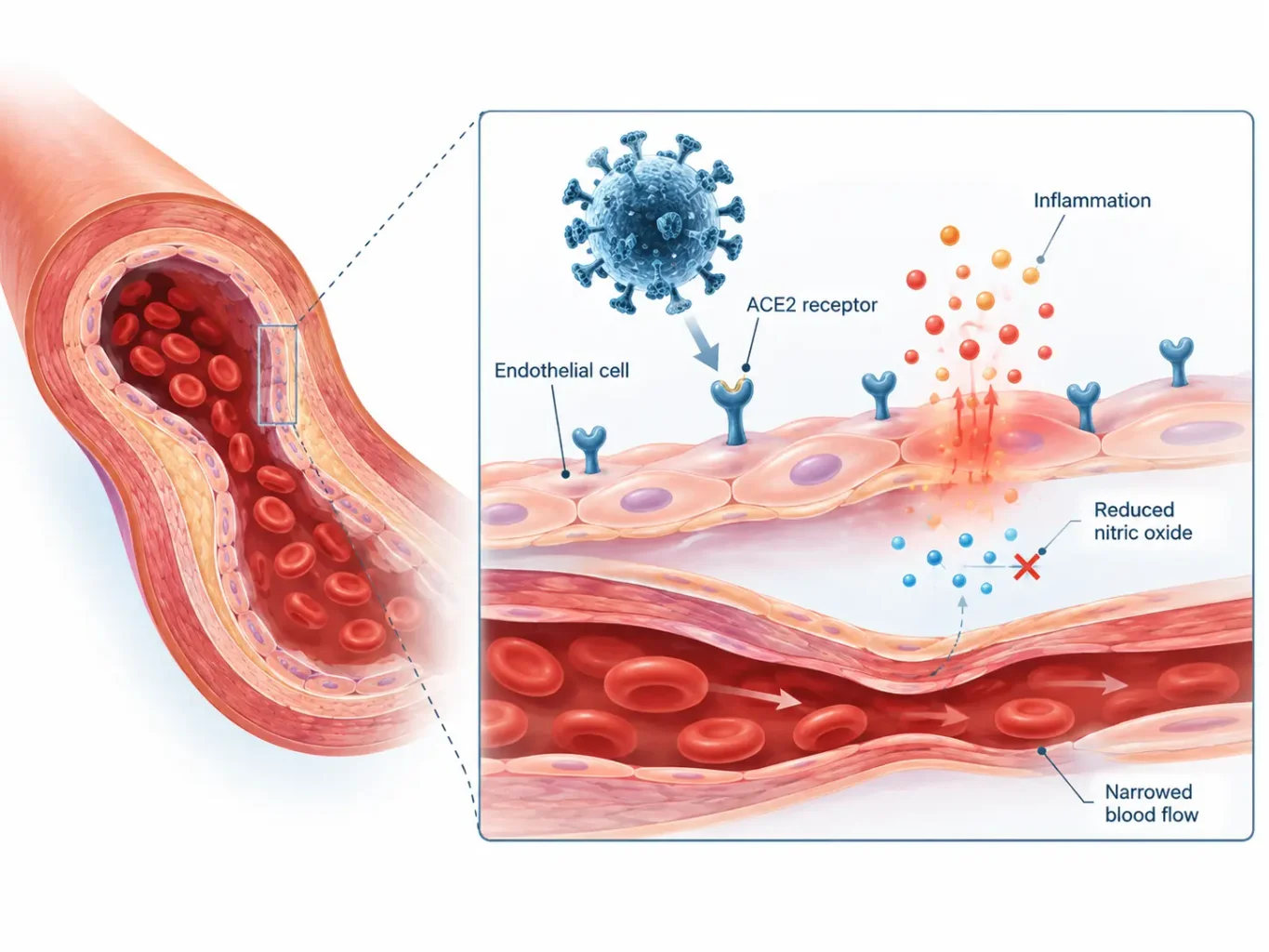
An erection requires rapid blood flow into the penis. The endothelium, a thin lining inside every blood vessel, controls that flow. SARS-CoV-2 can enter endothelial cells through ACE2 receptors. The virus may then trigger inflammation, clotting and poor vessel relaxation. A small tissue study reported the virus in penile endothelial cells, alongside reduced nitric oxide synthase. Nitric oxide drives the vessel relaxation behind an erection. Researchers need larger studies before drawing firm conclusions about COVID-19 and blood circulation in the penis.
Vascular Health and Erectile Dysfunction
Vascular health and erectile dysfunction share common roots. Penile arteries are narrow, so vascular disease often affects these vessels early. NHS guidance notes that erectile problems can signal heart disease or high blood pressure. A man with new erectile dysfunction after infection therefore deserves a cardiovascular check. That check matters whether or not COVID-19 played a role.
COVID-19 and Testosterone Levels
Testosterone supports libido and contributes to erectile quality. Levels often drop during acute infection. An Italian cohort tracked 121 recovered men. Total testosterone rose over time. Even so, 55% still had levels in the hypogonadal range at seven months. A 12-month follow-up of a smaller subgroup found that almost 30% still had low levels. Low testosterone may simply reflect illness severity, so hospitalised cohorts limit generalisation. A doctor should confirm any deficiency with morning blood tests.
Nerve and Autonomic Changes
The autonomic nervous system controls the blood flow changes behind an erection. Some long COVID patients show autonomic dysfunction, affecting heart rate, digestion and bladder control. Researchers propose that the same disturbance may affect erection control. Direct evidence remains limited.
Psychological and Lifestyle Factors
Anxiety and Depression
Mental health plays a central role. In the Thai cohort, major depression during infection raised the odds of persistent erectile dysfunction nearly ninefold. The meta-analysis identified anxiety as a risk factor. Performance worry then creates a cycle: one poor erection brings fear, and fear causes another.
Fatigue, Sleep and Reduced Activity
Long COVID fatigue lowers activity and often disrupts sleep. Weight gain, alcohol use and smoking can follow. Each factor can independently harm erectile function. Some medicines given during severe illness, including certain blood pressure drugs, can also affect erections.
Who Faces Higher Risk?
Age and mental health may matter more than the severity of the original infection. In the Thai study, men over 40 carried 2.65 times higher adjusted odds of persistent problems. Diabetes, high blood pressure, raised cholesterol, obesity and smoking add further risk. Those conditions also raise the risk of severe COVID-19, which complicates attribution. Risk of Long COVID erectile dysfunction therefore rises when age, depression and vascular disease overlap. Men with fatigue, low mood or other long COVID symptoms should mention sexual symptoms during the same consultation.
Why Men Delay Seeking Help
Long COVID erectile dysfunction often goes unreported. Embarrassment, fatigue and uncertainty about the cause all delay a visit. Some men assume that erectile symptoms belong to ageing or stress and expect the symptoms to pass. Others fear that a diagnosis signals a serious illness. Delay carries a cost, because erectile symptoms can reveal treatable diabetes, high blood pressure or low testosterone. Early conversation gives clinicians more options. Short, factual discussions with a GP usually take only minutes, and clinicians handle such questions routinely.
When to See a Doctor
A GP appointment makes sense when erectile difficulty lasts beyond several weeks. Urgent review applies when erectile change accompanies chest pain, breathlessness on exertion or leg pain on walking. Early assessment also screens for diabetes, high blood pressure and low testosterone.
What Assessment Involves
A GP typically asks about onset, morning erections, libido, mood, medicines and lifestyle. Normal morning erections often point towards a psychological contribution. Doctors may use the IIEF-5 questionnaire to grade severity. Examination covers blood pressure, weight and genital health. Blood tests commonly include glucose or HbA1c, cholesterol and morning testosterone. Referral to urology or andrology follows when the cause stays unclear or first-line treatment fails.
Preparing for the Appointment
Simple preparation makes the consultation more productive. A short symptom diary helps, noting when erectile difficulty started and how often it occurs. Current medicines and supplements belong on the list too. Notes on morning erections, libido, sleep and mood add useful detail. Men should mention any other long COVID symptoms, since fatigue and low mood influence treatment choices. A partner’s observations can add context where appropriate.
Erectile Dysfunction Treatment Options After COVID-19
No treatment exists specifically for Long COVID erectile dysfunction. Management follows standard erectile dysfunction treatment options, matched to the underlying cause. Most men start with lifestyle changes, medication or psychological support.
Lifestyle Measures
Regular aerobic exercise supports vascular health and erectile function. Stopping smoking, limiting alcohol, improving sleep and reaching a healthy weight add further benefit. NHS advice also lists pelvic floor exercises. Gradual return to activity suits men with ongoing fatigue. Small, consistent steps suit most men better than dramatic changes.
Medication
PDE5 inhibitors, including sildenafil, tadalafil, vardenafil and avanafil, form the usual first-line treatment. The tablets need sexual stimulation and do not treat the underlying cause. A prescriber must check heart conditions and nitrate use first. Side effects include headache, flushing and indigestion.
Psychological Support
Cognitive behavioural sex therapy and counselling help when anxiety or depression contributes. Treating depression benefits erectile function, although some antidepressants affect sexual function themselves. Partners can join sessions where appropriate.
Hormone Assessment
Clinicians consider testosterone treatment only after repeated morning tests confirm low levels and matching symptoms. Specialist supervision applies because treatment carries risks. Fertility plans need discussion first, since testosterone therapy can suppress sperm production.
Other Medical Options
Specialists also use vacuum erection devices, alprostadil preparations and, in selected cases, penile implants. Each option suits different circumstances and needs individual advice.
P Shot Treatment: A Regenerative Option With Limited Evidence
P Shot Treatment uses platelet-rich plasma (PRP) prepared from the patient’s own blood. A clinician injects the PRP into penile tissue. The theory proposes that growth factors support tissue repair and blood vessel function.
What the Evidence Shows
Evidence remains limited. Published studies are small, differ in protocol and rarely follow patients for long. Researchers still need larger randomised trials. Standard UK pathways place lifestyle change and PDE5 inhibitors first. Research specific to post-COVID erectile dysfunction remains scarce.
Realistic Expectations
Responses vary, and results carry no guarantee. Men with significant vascular disease or poorly controlled diabetes may respond less. A medical assessment should precede any decision. Clinics offering a P Shot UK service should explain evidence limits, risks and costs openly.
Where Patients Can Find Information
Dr Syed Nadeem Abbas leads pshots clinic UK, a private clinic in Harley Street, Marylebone. Credentials include MBBS, MRCS RCS Edinburgh and MRCGP. An MSc in Aesthetic Plastic Surgery with Distinction came from Queen Mary University London. Training took place at Cambridge, Oxford and the Royal London Hospital. The clinic offers P Shot London consultations for men seeking a medical assessment.
Recovery Outlook
Many men see erectile function improve over several months. Thai data show prevalence falling by three months, and Chinese data show a further fall by nine months. Improvement carries no guarantee. Persistent problems merit assessment and treatment rather than indefinite waiting. Early attention to sleep, mood, weight and blood pressure supports the best realistic outcome. Open discussion between partners can reduce performance pressure, which matters for Long COVID and men’s sexual health alike. Men with Long COVID erectile dysfunction deserve the same structured assessment as any other patient.
Frequently Asked Questions
Can COVID-19 cause erectile dysfunction?
Research links infection with higher rates of erectile dysfunction, but direct causation remains unproven. Vascular, hormonal, nerve and psychological factors probably combine.
How long does post-COVID erectile dysfunction last?
Duration varies. In published studies, prevalence fell over three to nine months. Some men still reported difficulty at nine months, so persistent symptoms warrant medical review.
Does mild COVID-19 cause erectile problems?
NICE confirms that long COVID can follow mild infection. Evidence on erectile function after mild illness remains thinner, because many studies enrolled hospitalised men.
Should a doctor test testosterone?
A doctor may order a morning blood test when low libido, fatigue or erectile difficulty persists. Low results need repeating before any treatment decision.
Which doctor should assess the problem?
A GP provides the first assessment and arranges blood tests. Urologists and andrologists handle complex or persistent cases. Private clinics also offer assessment.
Can Long COVID erectile dysfunction improve without treatment?
Many men improve spontaneously over months, as cohort data show. Improvement is not universal, and untreated contributing factors may persist. Medical review remains sensible when symptoms last beyond several weeks.
Should partners take part in the assessment?
Partners often provide useful context and support. Participation depends on personal preference, and a GP can also see the patient alone.
Key Takeaways
Long COVID erectile dysfunction deserves honest, evidence-based attention. Research shows a real association with infection, yet no study proves a single cause. Blood vessels, hormones, nerves and mental health all contribute. Many men improve over time, and others need active treatment.
Informed decision-making starts with a proper assessment. A GP can check cardiovascular risk, blood sugar and testosterone. Lifestyle change, medication and psychological support form the evidence-based foundation. Newer approaches, including P Shot Treatment, need careful scrutiny of the evidence, risks and costs.
Erectile function reflects wider health. If erectile symptoms can signal vascular and hormonal changes, what might an early conversation with a doctor reveal?
Read more:
Cholesterol and Erectile Dysfunction: Do Statins Affect Erections?
Thyroid Problems and Erectile Dysfunction: What’s the Link?
Dr Syed Nadeem Abbas, MBBS, MRCSEd, MSc Aesthetic Plastic Surgery (Distinction) Medical Director, Pshot Clinic | CQC Regulated | Monday to Saturday 10:00–18:00 +44 7955 836986