How Many P Shot Sessions Are Usually Needed? A Guide to Treatment Planning

✅Medically reviewed | Updated October 2026
No two men respond to a P shot in exactly the same way. Some patients expect one appointment to settle the matter. Others expect a course of three. Neither expectation rests on firm evidence, and that gap fuels confusion across the sector.
The question of how many P shot sessions a man needs dominates most first consultations. Clinics give different answers. One practice advertises a single visit. Another recommends a series with fixed intervals. Patients then compare numbers without understanding the reasoning behind each figure.
This guide examines the logic of P shot treatment planning. It reviews the published research, the clinical factors that shape a schedule, and the limits of current knowledge. Readers gain a practical tool for judging a proposed plan, rather than accepting a number at face value.
The P shot, also named the Priapus shot, uses platelet-rich plasma (PRP) taken from the patient’s own blood. No national standard protocol exists for it in the UK. That single fact explains why session numbers differ so widely between clinics.
Readers also need clarity on cost, timing, and realistic outcomes. Each section below separates established facts from unproven claims. Recognised UK sources and peer-reviewed studies support the key points.
What Is the P Shot and How Does It Work?
The PRP Process
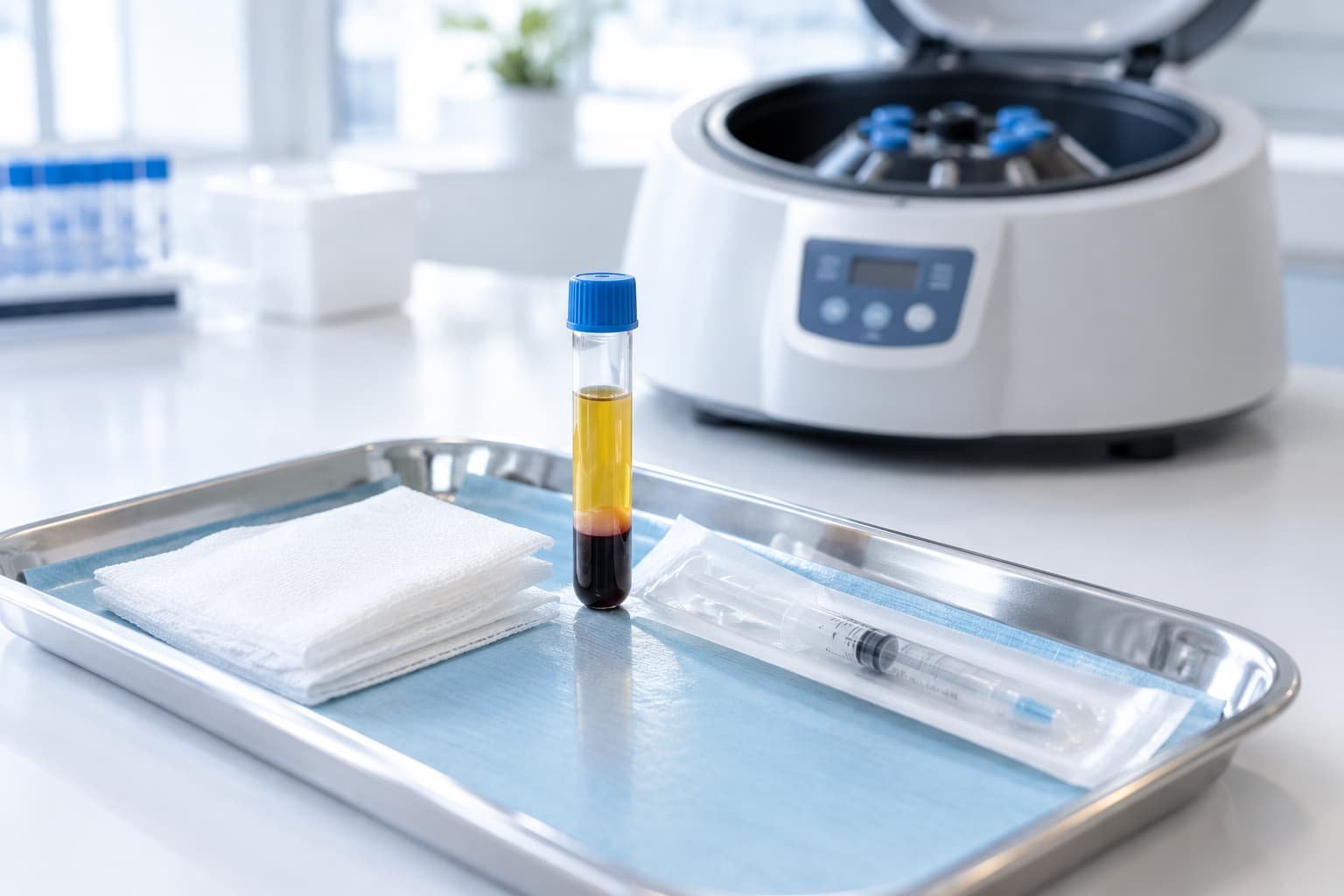
A clinician draws a small blood sample, usually from the arm. Next, a centrifuge separates the platelets from the other blood components. The resulting plasma holds a higher platelet concentration than normal blood. Injection into penile tissue follows, often after a topical anaesthetic.
Platelets release growth factors. Laboratory studies suggest these factors may support blood vessel growth and tissue repair. Human evidence for this mechanism remains incomplete. A 2023 systematic review in Sexual Medicine Reviews noted that the mechanism in erectile tissue stays undetermined.
Where P Shot Treatment Sits in UK Care
The NHS lists tablets, vacuum devices, and psychosexual therapy among established treatments for erectile dysfunction. NICE Clinical Knowledge Summaries follow a stepwise approach, starting with lifestyle review and medication. Neither source currently lists PRP injection among routine first-line options.
Erectile dysfunction can signal diabetes, cardiovascular disease, or hormonal problems. The NHS advises a GP assessment for persistent symptoms. A sound P shot treatment plan always begins with a medical assessment of the underlying cause.
How Many P Shot Sessions Do Most Men Need?
No agreed answer exists. Published protocols and clinic schedules vary considerably. A 2023 narrative review of four randomised trials found major differences in PRP collection, dosing, and follow-up. That variation makes direct comparison between studies difficult.
What the Research Shows
Several systematic reviews now summarise the trial data. Three findings stand out.
- A 2024 meta-analysis in Archivio Italiano di Urologia e Andrologia pooled three randomised trials. The trials enrolled 221 men with mild to moderate erectile dysfunction. Erectile function improved in the short term, for up to six months. No major adverse events appeared in either group.
- A 2025 meta-analysis in The Aging Male analysed seven randomised trials with 660 patients. The authors graded the overall evidence as low to moderate quality.
- A further meta-analysis of vasculogenic erectile dysfunction reported a 3.28-point average gain on validated function scores. The comparison group received placebo.
Research cannot yet answer how many P shot sessions deliver the best balance of benefit and risk. These results support cautious interest, not certainty. Current reviews do not identify an optimal number of sessions. Trials tested PRP against placebo and did not compare one session directly with several.
Common Clinical Approaches
Clinic literature usually describes one of three patterns. Each pattern reflects clinical judgement rather than proven superiority.
Single-Session Approach
Some clinicians offer one session for mild concerns. Review follows at roughly six to twelve weeks. The clinician adds a session only if measured progress stalls.
Short-Course Approach
Other clinicians propose two or three Priapus Shot sessions spaced several weeks apart. This pattern appears more often with moderate erectile dysfunction. The reasoning is cumulative benefit. Direct trial proof of that benefit remains lacking.
Maintenance Approach
A few men return for one repeat session after six to twelve months. Trials report benefit for up to six months. Data beyond that point stay scarce. An annual repeat therefore rests on clinical judgement, not trial evidence.
Factors That Shape a P Shot Treatment Plan
Several patient-specific factors change how many P shot sessions suit an individual. A responsible clinician weighs each factor before proposing a schedule.
Underlying Cause
Vascular, diabetic, hormonal, neurological, and psychological causes all produce erectile problems. Trial evidence focuses mainly on vascular causes. Psychological erectile dysfunction responds better to psychosexual therapy. Extra injections add nothing in that setting.
Severity and Duration
Mild, recent symptoms usually carry a better outlook than severe, long-standing symptoms. Most trials enrolled men with mild to moderate disease. Evidence for severe erectile dysfunction remains thin. Realistic planning reflects that gap.
Age and General Health
Diabetes, smoking, high blood pressure, and raised cholesterol damage blood vessels. Damaged vessels may limit tissue response. Evidence that age alone changes the number of sessions stays limited. Overall vascular health appears more relevant.
Medication and Lifestyle
Anticoagulant and antiplatelet drugs affect bleeding risk and require clinical review. Many men also take PDE5 inhibitors. The clinician decides whether the patient continues PDE5 inhibitors during treatment. Stopping smoking, exercising, and managing weight support any treatment plan.
Treatment Goals
Erectile function holds the strongest evidence base. Goals such as sensitivity or Peyronie’s disease have weaker support. Claims of permanent enlargement lack support from controlled trials. Clear goals help the clinician choose measurable targets.
How a P Shot Treatment Plan Takes Shape
Initial Assessment
The assessment covers medical history, medication, and current symptoms. A validated questionnaire such as the IIEF-5 records a baseline score. NICE Clinical Knowledge Summaries advise assessing cardiovascular risk and considering blood tests, including glucose and testosterone. These steps establish whether PRP suits the patient at all.
One Appointment in Detail
A typical appointment lasts under an hour. The clinician applies anaesthetic, collects blood, and prepares the plasma. Injections follow at several points in penile tissue. The number of injection points differs between clinics. A higher number of injections does not prove a better result.
Measuring Progress
Objective measures keep the plan honest. The IIEF-5 questionnaire scores erectile function out of 25. Another tool, the Erection Hardness Score, grades rigidity on a four-point scale. Repeating both measures at each review shows real change. Memory and mood alone distort recollection of results. A written record also helps the patient and the clinician agree when to stop.
Spacing and Review Points
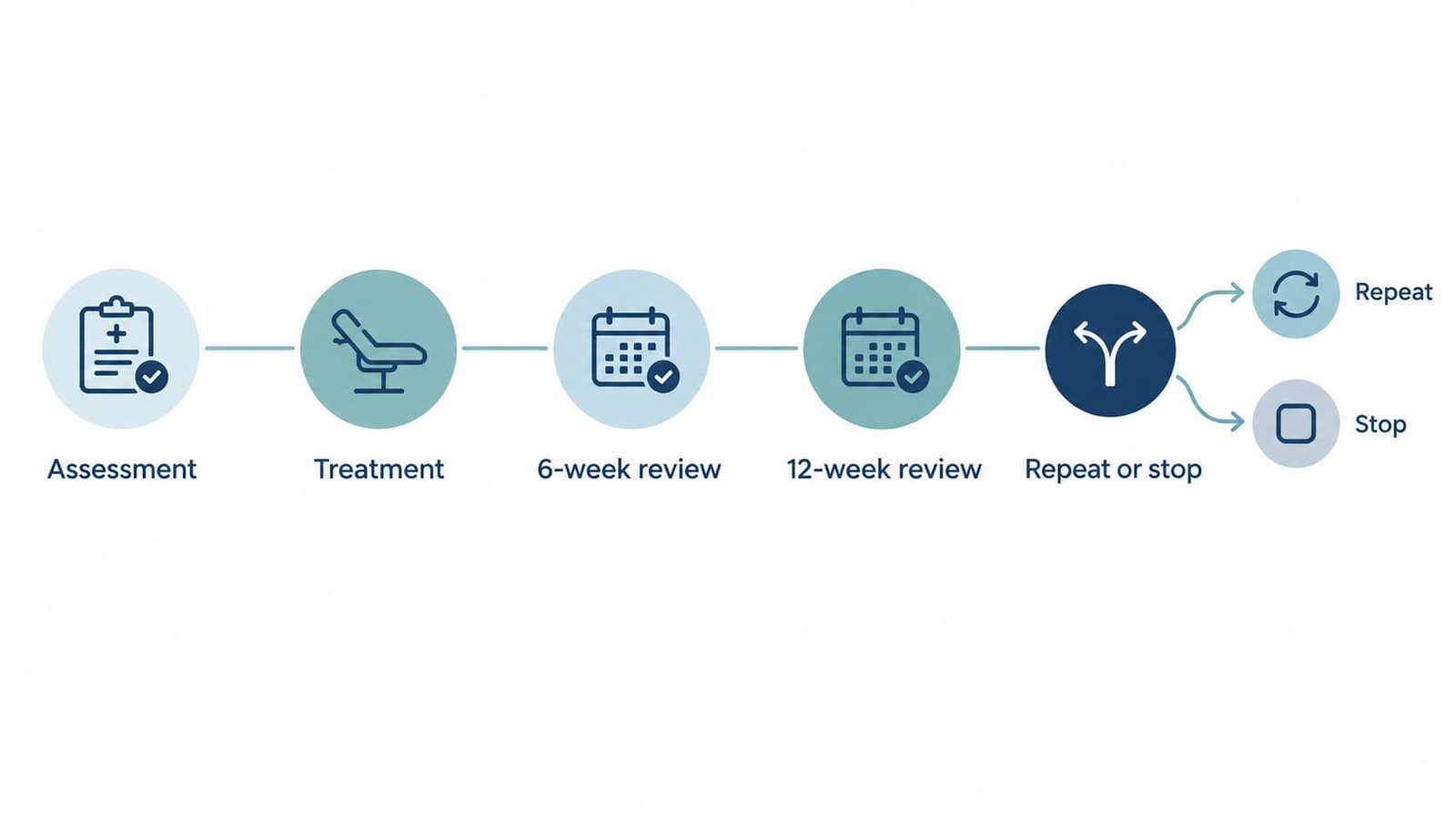
Spacing interacts directly with the total session count. No evidence-based interval exists for repeat sessions. Clinics schedule repeat sessions from several weeks to several months apart. Many clinics review progress at six and twelve weeks. A fixed review date protects patients from open-ended treatment. The review compares new scores against the baseline.
Combining P Shot Treatment with Other Therapies
Some clinics pair PRP with low-intensity shockwave therapy. The 2025 meta-analysis noted that PRP showed promise, particularly alongside shockwave therapy. Evidence quality stayed low to moderate. Combined protocols also complicate session counts, because two therapies act at once. Lifestyle change and standard medication still form the foundation. Any combined plan needs separate review of each component.
P Shot Repeat Treatment: When Does It Make Sense?
A P shot repeat treatment makes clinical sense in specific situations. Measured improvement after the first session supports a second. Fading benefit after several months may justify a repeat. Controlled risk factors improve the odds of lasting benefit.
Repeat treatment makes little sense in other situations. No measurable change after a fair review period suggests a different cause. Newly discovered conditions, such as untreated diabetes, need attention first. Psychological causes need a different approach.
A second session should follow measured progress, not a calendar. Each repeat adds cost and small procedural risks. The decision belongs to the patient after a clear discussion of expected gain.
Priapus Shot Price and Session Numbers
Cost often shapes decisions as strongly as evidence. The NHS does not routinely fund PRP for erectile dysfunction, so patients pay privately. Published UK prices range from several hundred pounds to above £1,000 per session. Clinic, equipment, and add-ons explain most of the gap.
The headline Priapus shot price rarely tells the full story. Patients should confirm what the fee covers:
- consultation and baseline assessment
- PRP preparation and anaesthetic
- follow-up reviews at six and twelve weeks
- any extra therapy, such as shockwave
Multiple sessions multiply the total. Package pricing may lower the cost per session. It also commits the patient before progress is known. Paying per session keeps the decision flexible.
P Shot Before and After: Realistic Outcomes
A P shot before and after photograph measures appearance. Erectile function is a measure of performance. Photographs therefore reveal little about success. Validated tools give better evidence. The IIEF-5 score and the Erection Hardness Score track change over time.
Trial improvements were modest and short-term. Benefit lasted up to six months in the reviewed studies. Men with mild to moderate vascular erectile dysfunction have the strongest evidence. PRP does not cure underlying vascular disease, and no clinic can guarantee a result.
Realistic outcomes also depend on baseline function. Some men gain a small improvement. Others notice no change. Honest clinics explain this range before the first injection.
Safety, Limitations, and Who Should Avoid Treatment
Safety data look reassuring so far. The 2024 meta-analysis reported no major adverse events across its three trials. Because the plasma comes from the patient, allergic reaction risk stays low. Minor effects include bruising, swelling, and temporary discomfort. Infection and bleeding remain rare but possible.
Some patients need extra caution or an alternative plan:
- men with active infection in the treatment area
- patients with blood or platelet disorders
- men taking anticoagulant medication without specialist review
- patients with active cancer in the pelvic region
Important limitations remain. Trials were small and short. Protocols differed. Long-term safety data stay limited. The NHS and NICE do not yet position PRP as a standard treatment. These facts belong in every consent discussion.
P Shot London and P Shot UK: Choosing a Provider
Anyone considering P shot London or P shot UK providers should check regulation first. The Care Quality Commission regulates independent clinics in England. Doctors’ registration and specialist status appear on the General Medical Council register.
Dr Syed Nadeem Abbas leads Pshots clinic UK, a Harley Street practice. His qualifications include MBBS, MRCS Ed, MRCGP, and an MSc in Aesthetic Plastic Surgery. The practice assesses suitability before proposing any schedule.
Patients can ask five questions before agreeing to a plan:
- Which evidence supports the proposed number of sessions?
- How does the clinic measure progress?
- What follow-up does the fee include?
- If no improvement appears, what happens next?
- Which risks apply to this specific patient?
Clear answers signal a transparent practice. Vague answers or pressure to prepay signal the opposite.
A Practical Framework for Treatment Decisions
Four steps turn the evidence into a workable plan.
Step One: Confirm the Cause
A GP or specialist should identify vascular, hormonal, or psychological contributors first.
Step Two: Record a Baseline
Validated scores taken before treatment give every later review a fixed reference point.
Step Three: Agree Review Dates
Review dates and stopping rules should appear in writing before the first injection.
Step Four: Decide on Repeat Treatment
Measured results, not marketing schedules, should settle how many P shot sessions follow.
Frequently Asked Questions
How many P shot sessions suit mild erectile dysfunction?
Many clinics start with one session and review at six to twelve weeks. Evidence cannot confirm an ideal number. The clinician adds a session only when measured progress justifies it.
How many P shot sessions do men with severe erectile dysfunction need?
No evidence defines a number for severe disease. Most trials excluded or under-represented this group. A specialist assessment should come before any decision, and established treatments often take priority.
How long do P-shot results last?
Trials report improvement for up to six months. Longer data remain limited. Individual results vary with age, cause, and vascular health.
How far apart should Priapus shot sessions be?
No evidence-based interval exists. Clinics typically space sessions several weeks to several months apart. Review results, not a fixed script, should guide spacing.
Does the NHS offer the P shot?
The NHS does not routinely offer PRP injections for erectile dysfunction. NHS services offer established treatments, such as tablets and vacuum devices. A GP can explain these options.
Can a P shot repeat treatment cause harm?
Each procedure carries small risks, including bruising and infection. Repeat sessions repeat those risks. Long-term safety data remain limited, so repeat treatment needs a clear clinical reason.
What does a P shot treatment plan cost?
UK prices vary widely. Patients should compare what each fee covers, including follow-up reviews and any added therapies.
Key Takeaways
The honest answer to how many P shot sessions are needed is that no fixed number exists. Evidence supports cautious interest in PRP for mild to moderate vascular erectile dysfunction. Trials show short-term gains and few serious adverse events. No trial proves an ideal schedule.
An informed decision rests on four pillars: a proper diagnosis, measurable goals, a defined review point, and transparent pricing. A plan that includes all four protects patients from both disappointment and overspending. Skipping any pillar deserves further questions.
Patients should also remember established options. NHS and NICE guidance supports tablets, devices, and psychosexual therapy as first steps. PRP remains an additional option, not a replacement.
If no clinic can prove an ideal number of sessions, which evidence should guide the final decision?
Read more: How Do Doctors Measure P-Shot Success? Erections, Sensitivity and Other Outcomes
How Long Does It Take to See P-Shot Results? A Week-by-Week Guide
Dr Syed Nadeem Abbas, MBBS, MRCSEd, MSc Aesthetic Plastic Surgery (Distinction) Medical Director, Pshot Clinic | CQC Regulated | Monday to Saturday 10:00–18:00 +44 7955 836986