How Long Does It Take to See P-Shot Results? A Week-by-Week Guide

✅Medically reviewed | Updated September 2026
Few questions in men’s sexual health create more impatience than this one: when does the treatment start to work? The P shot uses platelet-rich plasma (PRP), and PRP works slowly. Biology sets the pace, not the calendar.
Some men expect a change within hours. Others expect nothing for half a year. Neither expectation matches the published evidence. Realistic P-Shot results build across weeks and months, and the pattern varies from man to man.
Uncertainty drives much of the anxiety after treatment. Early swelling can mislead. A quiet first month can mislead too. Both reactions stem from the same gap: clear timelines rarely reach patients.
This guide follows a week-by-week structure. Each stage explains which tissue changes occur, which sensations are normal, and which signs need medical review. The guide draws on NHS information, NICE guidance, European Association of Urology (EAU) recommendations and peer-reviewed trials. It also flags where the evidence remains thin.
One point deserves clarity from the start. PRP therapy for erectile dysfunction (ED) remains an emerging treatment, not a first-line NHS option. Small studies and clinical experience shape the timelines below. No universal schedule exists.
What Is the P Shot and Why Does Timing Matter?
How the Procedure Works
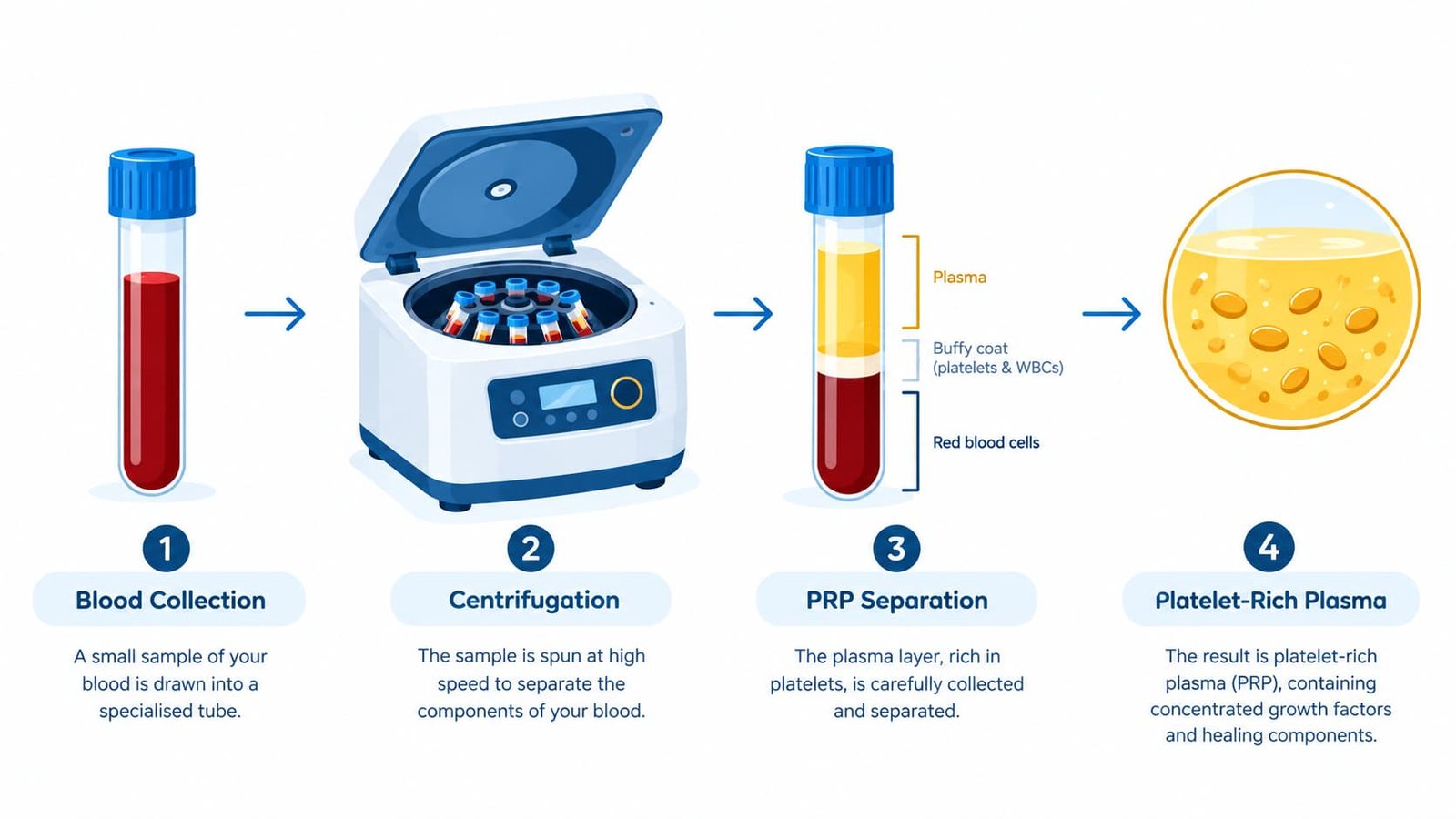
The P shot is a form of PRP therapy. A clinician draws a small blood sample from the arm. Next, a centrifuge separates platelets from other blood components. After local anaesthetic, the clinician injects the concentrated plasma into penile tissue.
Platelets release growth factors, including vascular endothelial growth factor (VEGF). Laboratory research links these factors with new blood vessel formation and tissue repair. Clinicians therefore describe P shot treatment as a regenerative approach. Human evidence for that mechanism remains limited.
The mechanism explains the timeline. Tablets such as sildenafil act within an hour. PRP does not override a symptom. Instead, PRP prompts gradual biological repair, and repair takes time.
Why Response Takes Weeks
Laboratory studies show platelets release most growth factors within days. Growth factors then signal nearby cells to divide, form new capillaries and lay down new tissue. Capillary formation takes weeks. Nerve and smooth muscle repair takes longer still.
Early days therefore carry no diagnostic value for treatment success. Animal and laboratory models supply most mechanistic data. Human confirmation of these steps in penile tissue remains incomplete.
Common Names for the Same Procedure
Search terms vary widely. The procedure appears as the priapus shot, Pshot, penis shot and p injection. All four labels describe the same PRP injection. The name comes from Priapus, the Greek god associated with fertility. Clinical papers usually use the term PRP injection for erectile dysfunction.
P-Shot Results Timeline at a Glance
The table below summarises a typical pattern, not a guarantee. Individual response varies with age, vascular health and baseline erectile function.
| Stage | Typical experience | Evidence strength |
| Day 0 to 2 | Swelling, tenderness, local numbness | Clinical experience |
| Days 3 to 7 | Swelling fades; bruising possible | Clinical experience |
| Weeks 2 to 4 | Early change in some men; none in others | Limited trial data |
| Weeks 4 to 8 | Main window for reported improvement | Small randomised trials |
| Weeks 8 to 12 | Common assessment point in trials | Small randomised trials |
| Months 3 to 6 | Effect stabilises or starts to fade | Limited follow-up |
| Months 6 to 12 | Durability uncertain | Very limited data |
Week-by-Week Guide to P-Shot Results
Timelines below combine trial follow-up points with common clinical practice. Trials rarely track men week by week. Clinical experience fills the gaps, so evidence strength varies by stage.
Day of Treatment and the First 48 Hours
The appointment usually lasts under an hour. Blood collection, PRP preparation and injection make up the visit. Local anaesthetic reduces discomfort during injection.
Immediate changes reflect the procedure itself. Fluid volume causes temporary fullness, and anaesthetic alters sensation. Neither effect counts as a treatment outcome. Both fade within hours to two days.
Clinicians commonly advise avoiding sexual activity for 24 to 48 hours. Injection sites need time to settle. Mild tenderness and swelling fall within normal expectations.
Days 3 to 7: The Settling Phase
Swelling usually reduces by day three. Small bruises may appear at injection sites. NHS advice describes the usual bruise colour sequence, with most bruises clearing within about two weeks.
Some men report reduced sensitivity for several days. This effect typically resolves within one to two weeks. Functional improvement rarely appears at this stage. Tissue repair has only begun.
Infection is rare but possible after any injection. Fever, spreading redness, discharge or worsening pain need same-day medical review.
Weeks 2 to 4: Early Signals
Some men report change from about two weeks. Morning or spontaneous erections may feel firmer. Others notice nothing. Both patterns sit within normal variation.
A lack of change at week four does not indicate treatment failure. Blood vessel remodelling proceeds slowly. New capillary formation, where it occurs, needs weeks to mature.
A 2021 randomised trial in the Journal of Sexual Medicine reported improved erectile function scores at early follow-up. Small sample sizes limit certainty. Larger trials remain necessary.
Weeks 4 to 8: The Main Response Window
Reported improvement clusters in this window. P-Shot results at this stage may include firmer erections, longer duration and better responsiveness to natural stimulation. Individual timing still varies considerably.
Many clinics schedule a second session in this period. Protocols differ widely. Trials have used between one and three injections, spaced weeks apart. No consensus defines the ideal number.
Objective tracking helps at this stage. The International Index of Erectile Function (IIEF-5) questionnaire scores five items on a 25-point scale. Baseline and follow-up scores show change more reliably than memory.
Weeks 8 to 12: The Assessment Point
Three months serves as the standard assessment point in most trials. Tissue remodelling has had time to mature by then. Clinicians therefore judge treatment response at roughly twelve weeks.
A fair review compares baseline and follow-up scores, not impressions. Men who report no change at twelve weeks should discuss next steps with the treating doctor. Several factors can blunt response, including unaddressed vascular disease, low testosterone, poorly controlled diabetes and medication effects. An honest review may also conclude that PRP offers no benefit for that individual.
Months 3 to 6: The Plateau Phase
Improvement, where present, tends to stabilise. Some men maintain gains. Others notice gradual fade. Follow-up data beyond six months remain limited in the literature. Photographs and self-reports at this stage add little without baseline scores.
Months 6 to 12 and Beyond: Durability
Clinics often quote 12 to 18 months of benefit. Published controlled data rarely extend that far. Honest counselling therefore describes durability as uncertain. Some clinicians offer repeat sessions. No trial has established an optimal maintenance schedule. Men should treat quoted durations as estimates, not promises.
Why Published Timelines Differ Between Clinics
Clinic websites quote different timelines. Some cite two to six weeks. Others cite four to eight weeks or three months. Differences reflect protocol variation, not new biology.
Clinics use different PRP preparation methods, injection volumes and outcome measures. Trial populations also differ in age, ED severity and other health conditions.
Confident timelines without cited trial data deserve scepticism. Peer-reviewed studies remain the safest anchor.
Factors That Change P-Shot Results
Underlying health probably influences response more than age alone. Several medical and lifestyle factors deserve attention.
Medical Factors
Vascular Disease and Diabetes
ED often signals underlying cardiovascular disease, according to NHS and NICE advice. Narrowed arteries and poorly controlled diabetes reduce blood flow and slow tissue healing. These conditions may limit any regenerative response. NICE guidance advises assessing cardiovascular risk in men with ED.
Hormones and Medicines
Low testosterone can cause or worsen ED. NICE guidance supports testosterone testing when symptoms suggest deficiency. Some antidepressants and blood pressure medicines also affect erections. Medication review therefore forms part of a sound assessment.
Lifestyle Factors
Habits With Established Benefit
Smoking, heavy alcohol intake, inactivity and poor sleep all harm vascular health. NHS advice for ED includes regular exercise, weight management, stopping smoking and moderating alcohol. These measures carry established benefit at low cost. Such measures also support any ED treatment, including P shot treatment.
Adjunct Treatments
Some clinics add vacuum devices or shockwave therapy to PRP. Evidence for these combinations remains limited. Claims that a device is essential to success lack strong trial support. Vacuum devices do have a place in NHS-listed ED care, independent of PRP.
What Research Says About P-Shot Results
Evidence Suggesting Benefit
A 2021 randomised, placebo-controlled trial appeared in the Journal of Sexual Medicine. PRP recipients showed better erectile function scores than placebo recipients. Participants had mild to moderate ED, and the sample was small.
Evidence Urging Caution
A 2023 randomised trial in European Urology reported mixed findings. Placebo response complicates interpretation in ED research. Small samples, varied protocols and short follow-up limit both trials. Systematic reviews reach similar conclusions about study quality.
Guideline Positions
EAU guidance describes evidence for PRP in ED as insufficient. NICE guidance lists PDE5 inhibitors as first-line treatment and does not list PRP. The NHS ED pages likewise omit PRP from standard options. NHS advice names a GP appointment as the starting point for ED.
No guideline defines an approved P shot schedule. Timelines in this guide therefore describe reported patterns, not standards.
P Shot Before and After: How to Judge Progress

Online galleries show P-shot before and after images. Such images carry major limits. Lighting, angle, arousal level and timing all change appearance. Selective galleries also hide non-responders. Photographs cannot measure erectile function.
Validated questionnaires and clinical assessment provide far stronger evidence. A practical tracking plan includes:
- Record IIEF-5 scores at baseline and again at weeks 4, 8 and 12.
- After each sexual activity attempt, note the Erection Hardness Score.
- Keep track of medication use, sleep quality, alcohol consumption and stress levels throughout the follow-up period.
Regular notes help the treating doctor judge response objectively.
Size Claims: What the Evidence Supports
Some web pages quote length gains of one inch or more. Controlled trials have not shown reliable increases in penile length or girth. Searches for penile injection growth and male enlargement injections cost UK reflect widespread belief in such gains.
The P shot targets erectile function, not enlargement. Marketing PRP as an enlargement product misleads patients. Any change in apparent size more likely reflects better erection quality.
Who May Consider the P Shot
Clinicians usually consider PRP after a standard ED assessment. Candidates typically have mild to moderate ED. Some cannot take PDE5 inhibitors because of nitrate medication. Others gain little benefit or dislike side effects from tablets.
NHS and NICE pathways place standard treatments first. Clinicians usually exclude men with active infection, bleeding disorders, low platelet counts or blood cancers. Recent anticoagulant use requires specialist advice. Psychological contributors such as performance anxiety can cause ED. PRP does not address those causes, and counselling may help.
Suitability depends on individual assessment, not on age alone.
Preparation Before Treatment
Preparation improves the quality of any later assessment. A GP or specialist review should come first. Relevant tests may include blood glucose or HbA1c, lipids and morning testosterone. A full medication list allows interaction checks. Baseline IIEF-5 scoring creates a fair comparison point. Anti-inflammatory drugs and supplements may affect bruising, so clinicians usually ask about both.
Priapus Shot Price and Cost Planning
Priapus shot price in London typically ranges from £900 to £1,500 per session. Costs vary with clinic, protocol and number of sessions. The NHS does not fund PRP for ED. Repeat sessions raise total cost. Men should confirm what each fee includes before booking. Written pricing prevents later surprises.
Safety and Warning Signs
PRP uses the patient’s own blood, so allergic reaction risk stays low. Common effects include bruising, tenderness and temporary swelling. Rare risks include infection, haematoma, scarring and altered sensation.
Clinicians screen for bleeding disorders, anticoagulant use, low platelet counts and active infection. Men taking blood thinners should not stop them without medical advice. Urgent care applies to fever, spreading redness, discharge or severe pain. The NHS also advises emergency help for a painful erection lasting over four hours.
Choosing a Provider for P Shot UK Care
Sound provider standards apply to any P shot treatment. A registered doctor should assess ED causes first. Independent clinics in England register with the Care Quality Commission (CQC) for regulated activities. Consent discussions should state the evidence limits plainly. Written aftercare and follow-up plans should accompany treatment. No ethical provider guarantees an outcome.
Pshots Clinic UK on Harley Street, led by Dr Syed Nadeem Abbas, offers P shot London consultations. The lead doctor holds MBBS, MRCS, MRCGP and an MSc in Aesthetic Plastic Surgery.
Frequently Asked Questions
How long until P-Shot results appear?
Early changes may appear from two to four weeks. Most trials assess response at around three months. Timing varies with age, vascular health and baseline function.
Can changes appear within days?
Immediate fullness and altered sensation reflect the injection itself. Regenerative changes need weeks. Early swelling does not signal improvement.
How many sessions do men need?
Published protocols range from one to three injections. Some clinics recommend more. No evidence-based standard exists.
How long do results last?
Clinics quote 12 to 18 months. Controlled data beyond six months remain scarce. Durability therefore stays uncertain.
Do results differ between men?
Yes. Age, vascular health, diabetes and ED severity all influence response. Trials report wide individual variation.
Can lifestyle changes improve response?
Evidence supports exercise, weight management and smoking cessation for ED generally. Direct evidence for PRP response remains limited.
Does the P shot enlarge the penis?
No reliable evidence shows enlargement. Treatment aims to improve erectile function.
Is the P shot available on the NHS?
The NHS does not routinely offer PRP for ED. NHS treatment starts with a GP assessment, lifestyle advice and medicines such as tablets.
What if no change appears by 12 weeks?
A doctor should review baseline scores, health conditions and medicines. Established options, including PDE5 inhibitors, may suit some men better.
Conclusion
Biology sets the timeline for P-Shot results. Injection-day fullness passes within days. Early signals may emerge from two to four weeks. The main response window spans weeks four to twelve, and durability beyond six months remains uncertain.
Informed decision-making rests on three habits: measure baseline function, track progress objectively and question every guaranteed outcome. Underlying health, medication and lifestyle deserve attention before any injection. NHS and NICE pathways remain the proven starting point. PRP remains an emerging option that some men may consider after that assessment.
Men who weigh P shot treatment should ask for evidence, written pricing and a clear review date. If a treatment needs three months to judge, what should count as success before the first injection?
Read more: What Is the P-Shot Success Rate? What the Research Really Shows
How Do Doctors Measure P-Shot Success? Erections, Sensitivity and Other Outcomes
Dr Syed Nadeem Abbas, MBBS, MRCSEd, MSc Aesthetic Plastic Surgery (Distinction) Medical Director, Pshot Clinic | CQC Regulated | Monday to Saturday 10:00–18:00 +44 7955 836986