P Shot in London: Complete Guide to Treatment, Suitability, Results, Risks and Costs

✅Medically reviewed | Updated October 2026
Few men’s health treatments attract as much curiosity, and as much confusion, as the P shot. Online pages mix clinical language with bold claims. Many promise outcomes that current research cannot confirm. Demand for P Shot London appointments keeps rising, yet reliable guidance remains scarce.
Erectile dysfunction affects a large share of men. The NHS describes the condition as common and links it to both physical and psychological causes. Tablets help many men, but not all. Some men experience side effects, while others see little benefit. That gap explains the growing interest in regenerative options such as platelet-rich plasma.
This guide separates evidence from assumption. The sections below explain how the treatment works and who may qualify. Risks, costs, and the limits of current knowledge follow. Every claim rests on published research or recognised UK health sources.
Clinicians also call the P shot the Priapus shot. Some websites use the labels penis shot or p injection. All three terms describe one procedure: an injection of platelet-rich plasma into penile tissue. The NHS does not offer it for erectile dysfunction. Private clinics provide it instead, and professional standards apply to those clinics.
An informed decision starts with realistic expectations. Plain language below covers the science, the process, the evidence, and the price.
What Is the P Shot?
The P shot is a regenerative injection treatment. A clinician draws a small blood sample and spins it in a centrifuge. The process concentrates platelets into platelet-rich plasma, or PRP. Next, the clinician injects the PRP into penile tissue.
A US physician popularised the P-Shot name. UK clinics now use the term widely, including variants such as Pshot and P shot treatment. The technique itself has older roots. Orthopaedic and sports medicine services have used PRP for joint and tendon problems for years.
Why Interest Keeps Growing
Several factors drive attention. Men now discuss sexual health more openly. Tablets do not suit everyone, and some men prefer treatments based on natural biological processes. Social media and clinic websites also amplify interest, sometimes without scientific support. Popularity does not equal proof of effectiveness.
How PRP May Work
Platelets store growth factors, including vascular endothelial growth factor and platelet-derived growth factor. Laboratory studies show these proteins support new blood vessel formation and nerve repair. Researchers therefore propose that PRP may improve blood flow in penile tissue. This mechanism remains a hypothesis, not a proven fact in human erectile tissue.
What the P Shot Does Not Do
The P shot does not replace surgery for structural problems. It carries no UK licence as a medicine for erectile dysfunction. Clinicians cannot promise permanent change. Underlying heart disease, diabetes, and hormonal conditions also remain untreated by the injection.
Who May Be Suitable for P Shot London Treatment?
Conditions Clinicians Discuss
Erectile dysfunction means persistent difficulty achieving or keeping an erection. Clinicians most often consider PRP for mild to moderate cases. Men who respond poorly to tablets, or who suffer side effects, often seek alternatives. Some clinics also discuss PRP for Peyronie’s disease, although evidence there remains thin.
Who Should Avoid the Treatment
Clinicians usually advise against PRP in several situations:
- Active infection of the skin or genital area
- Low platelet counts or other blood disorders
- Current or recent cancer treatment, without specialist agreement
- Anticoagulant therapy without a medication review
- Uncontrolled diabetes or high blood pressure
- Unrealistic expectations about outcomes
Why Assessment Comes First
Erectile dysfunction often signals other conditions. The NHS advises a GP visit, because the problem can reflect heart disease, diabetes, or high blood pressure. NICE Clinical Knowledge Summaries describe a similar stepwise assessment. A P shot should never delay assessment of these conditions.
A responsible clinician checks blood pressure, blood glucose, cholesterol, and testosterone before offering any injection. Lifestyle factors matter too. Smoking, heavy alcohol use, inactivity, and excess weight all impair erectile function. The NHS lists these among the first areas to address.
How the P Shot London Procedure Works
A standard P shot treatment takes under an hour in most clinics. The process follows four stages.
Preparing for the Appointment
Preparation is simple. Clinics often advise good hydration and a normal meal beforehand. The clinician asks for a list of current medicines. Anti-inflammatory tablets such as ibuprofen may affect platelet function, so clinics often advise a pause. Patients should follow the written instructions and raise medication questions early.
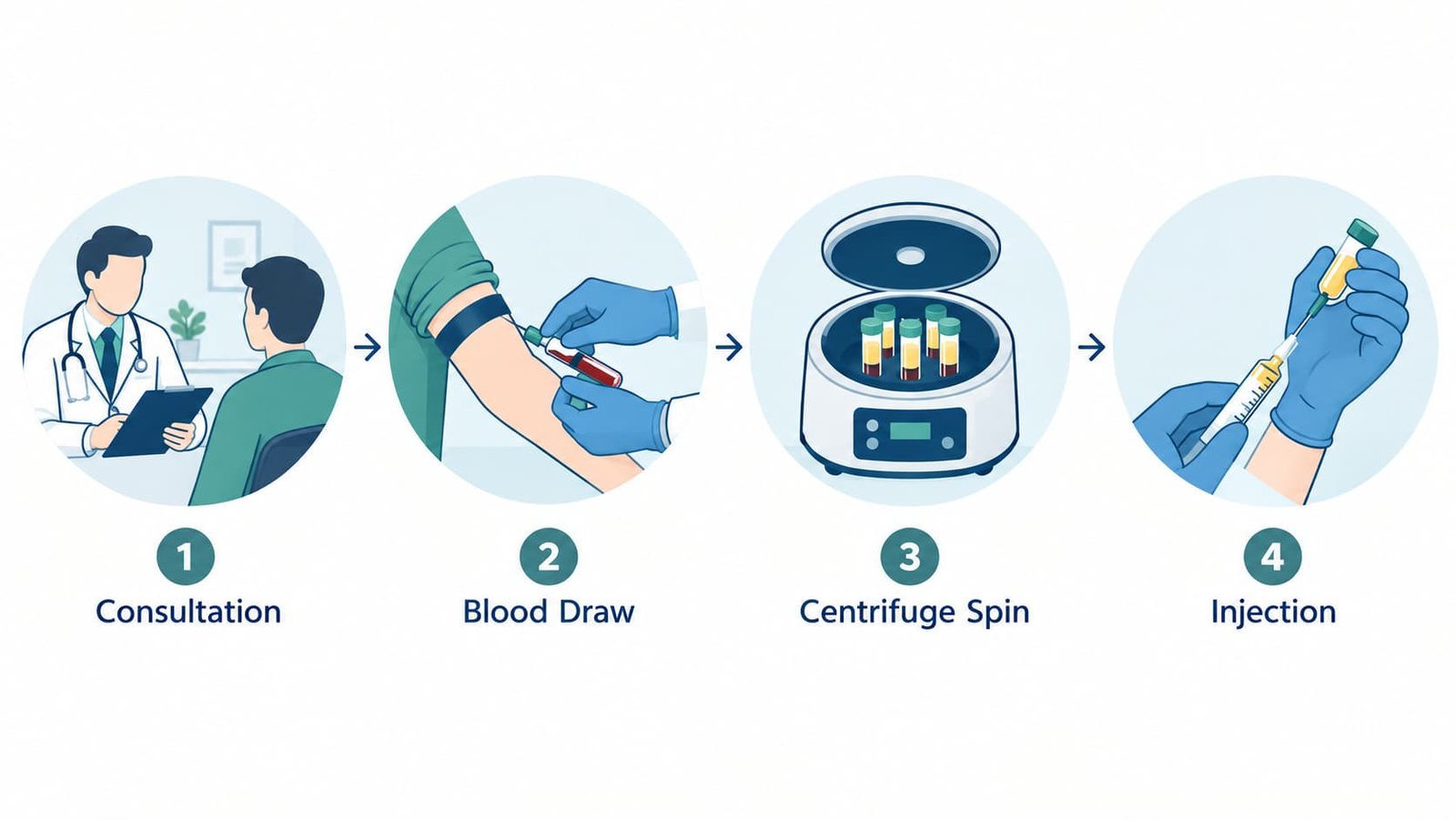
The Four Stages of the Appointment
Consultation and Consent
The clinician reviews medical history, medication, and symptoms. An examination follows. The clinician then explains benefits, limits, and risks, and records written consent.
Blood Collection and PRP Preparation
A nurse or doctor draws a small blood sample, often 10 to 20 millilitres. The sample spins in a centrifuge for several minutes. Afterwards, the clinician extracts the concentrated plasma.
Numbing and Injection
Topical anaesthetic cream numbs the skin. Some clinics add a local anaesthetic. The clinician then injects PRP into erectile tissue with a fine needle. Discomfort varies between men.
Aftercare
Clinics usually advise a short rest from sexual activity, often 24 to 48 hours. Mild swelling and bruising may appear. Normal daily activity typically resumes the same day.
What Does the Evidence Say About P Shot Results?
Findings From Clinical Studies
Research on PRP for erectile dysfunction has grown in recent years. A 2021 double-blind trial by Poulios and colleagues, published in the Journal of Sexual Medicine, enrolled 60 men. Men who received PRP reported higher erectile function scores than men who received saline. The trial used the International Index of Erectile Function (IIEF), a validated questionnaire. Early trials like this one show promise, but the studies remain small and short.
Systematic reviews reach a consistent conclusion. Most trials involve small groups and follow men for only weeks or months. Protocols differ in PRP preparation, dose, and injection schedule. Reviewers generally describe the certainty of evidence as low. At the time of writing, NICE has not published guidance recommending PRP for erectile dysfunction.
The Placebo Effect in Erectile Function
Erectile function responds strongly to expectation and anxiety. Placebo groups in erectile dysfunction trials often improve. Randomised, placebo-controlled designs therefore matter. Uncontrolled clinic reports tend to overstate benefit.
Typical Timeline Reported
Clinics describe gradual change over four to twelve weeks. Trials usually assess outcomes between one and six months after injection. Some clinics quote benefits lasting 12 to 18 months. No robust trial currently confirms benefits at that length. Maintenance sessions remain a matter of clinic protocol, not proven necessity.
P Shot Before and After: How to Read the Images
P shot before and after galleries attract many readers. Photographs carry clear limits, though. Lighting, room temperature, arousal level, and camera angle all alter appearance. Images also show nothing about firmness, stamina, or satisfaction.
Validated questionnaires such as the IIEF give stronger evidence than photographs. Patients reviewing P-shot before and after material should check for consent, consistent conditions, and dated records. The Advertising Standards Authority also requires marketing claims to carry evidence.
Does the P Shot Cause Penile Growth?
Some clinics describe improved girth after PRP. No high-quality trial shows lasting enlargement. Claims about penile injection growth therefore need caution.
Searches for male enlargement injections cost UK often mix PRP with filler procedures. The two differ. PRP aims to support tissue function. Filler adds volume and carries separate risks, including lumps, infection, and uneven shape.
Risks and Side Effects of the P Shot
Common Short-Term Effects
Minor effects follow many injections. These include:
- Bruising or small bleeding at the injection site
- Swelling and tenderness
- Temporary numbness or altered sensation
These effects usually settle within days.
Less Common and Theoretical Risks
Infection remains the main procedural risk. Poor hygiene or equipment errors raise that risk. Injury to nerves or blood vessels may cause altered sensation or lasting bruising. Scarring and penile curvature remain theoretical concerns, because large safety studies do not exist.
PRP comes from the patient’s own blood, so allergic reactions appear rare. Any new lump, curvature, fever, or severe pain needs urgent medical review.
UK Regulation and Oversight
No UK regulator licenses PRP specifically for erectile dysfunction. Clinics therefore offer it outside licensed indications. Private clinics in England must register with the Care Quality Commission when providing regulated activities. Patients can verify a doctor’s registration on the General Medical Council online register. A registration check takes minutes and forms the first safety step.
P Shot Compared With Standard Treatments

NHS guidance places lifestyle change first, then tablets called PDE5 inhibitors, such as sildenafil. NICE Clinical Knowledge Summaries follow a similar pathway. The table below sets the P shot beside established options.
| Treatment | Evidence base | NHS availability |
| Lifestyle change and risk-factor control | Strong | Yes |
| PDE5 inhibitor tablets | Strong | Yes |
| Vacuum erection devices | Established | Varies by area |
| Psychosexual therapy | Established for psychological causes | Varies by area |
| P shot (PRP) | Early and limited | No |
Established options carry far stronger evidence than PRP. Clinicians therefore tend to discuss the P shot after standard options.
P Shot UK Cost and Pricing
Typical Price Range
Priapus shot price varies widely across London. P Shot London fees currently range from about £900 to £2,400 per session. Many clinics list starting prices between £995 and £1,350. Quotes rise further when filler, shockwave therapy, or extra sessions enter the package. Clinics that bundle consultation, PRP preparation, and follow-up usually quote higher fees. Published prices change often, so patients should request a written quote.
The NHS does not fund the treatment for erectile dysfunction. Insurers seldom cover it either. Patients therefore pay privately.
What Affects the Price
- Practitioner qualifications and experience
- PRP preparation system and consumables
- Number of sessions in the protocol
- Follow-up care and complication management
- Add-on treatments, such as shockwave therapy
Questions Worth Asking Before Payment
- Which doctor performs the injection?
- Does the quote cover one session or a course?
- Which PRP system does the clinic use, and does it carry a UKCA or CE mark?
- What happens if a complication develops?
- Does the clinic provide written consent and aftercare instructions?
A low price signals little on its own, and a high price guarantees nothing. Value depends on qualifications, safety systems, and honest counselling.
How to Choose a Clinic
Several features mark a safe provider. A GMC-registered doctor leads the assessment. The clinic holds CQC registration where required. Written protocols describe PRP preparation and infection control. The consultation covers limits and alternatives, not only benefits. Patients comparing P Shot London providers should check each point.
Several warning signs deserve attention:
- Guaranteed or permanent results
- Pressure to pay on the day
- No named, registered doctor
- No written consent or aftercare plan
One example of a doctor-led structure is Pshots Clinic UK, a private clinic on Harley Street in Marylebone. Dr Syed Nadeem Abbas leads the clinic. The lead doctor holds MBBS, MRCS (RCS Edinburgh), and MRCGP qualifications. An MSc in Aesthetic Plastic Surgery from Queen Mary University of London, awarded with Distinction, adds further training. Clinical training took place at Cambridge, Oxford, and the Royal London Hospital.
Realistic Outcomes and Limitations
Realistic expectations protect patients from disappointment and overspending. Current evidence supports several cautious statements.
- Response varies, and some men notice no change.
- Benefits may fade, and no trial defines a standard repeat schedule.
- Severe vascular or nerve damage may limit response.
- Standard treatments still outperform PRP on proven evidence.
- Cosmetic size changes lack reliable support.
Honest clinicians describe the P shot as promising but unproven. P Shot London results therefore differ between men. Any clinic that promises certainty deserves scepticism.
Lifestyle Measures That Support Any Treatment
Lifestyle change improves erectile function in many men and carries no procedural risk. The NHS recommends regular exercise, a healthy weight, less alcohol, and stopping smoking. Better sleep and stress management also help. These measures work alongside any medical treatment, including PRP. Clinics that skip lifestyle advice miss a core part of care.
Frequently Asked Questions About P Shot London
Does the NHS offer the P shot?
No. The NHS does not routinely offer PRP for erectile dysfunction. NHS services provide lifestyle advice, tablets, devices, and psychosexual therapy instead.
How long does the P shot take to work?
Clinics report gradual change over four to twelve weeks. Trials mostly measure outcomes within six months. Individual response varies.
Does the treatment hurt?
Numbing cream reduces pain. Discomfort during injection varies between men. Mild soreness may follow for a few days.
How many sessions does a patient need?
Protocols differ. Some trials use two injections spaced weeks apart. Others use one. No standard schedule exists.
Is the P shot safe?
Short-term effects are usually minor. Serious complications appear uncommon but remain poorly measured. Qualified clinicians and sterile technique reduce risk.
Can PRP treat Peyronie’s disease?
Evidence remains limited. Some clinics offer PRP for Peyronie’s disease, but trials are small. Specialist urological assessment should come first.
Can patients combine the P shot with tablets?
Clinicians often advise continuing prescribed tablets during assessment. Stopping medication without advice may worsen symptoms. Any combined plan needs medical agreement.
Key Takeaways
The P shot sits between promise and proof. Early trials suggest benefit for some men with erectile dysfunction. Larger, longer studies still need to confirm those findings. Meanwhile, standard NHS treatments carry stronger evidence and lower cost.
Informed decisions follow a clear sequence. First, a GP or specialist assesses the causes of erectile dysfunction. Next, established options receive fair consideration. Finally, any P Shot London appointment should follow a thorough consultation, written consent, and a transparent price. Evidence, safety, and cost deserve equal weight.
Reliable clinics explain limits as clearly as benefits. Patients who ask hard questions protect both health and money. If the research remains early, what level of uncertainty feels acceptable before committing to treatment?
Read more:
P-Shot Pain: Does the P-Shot Hurt? Numbing and Comfort Options
What Is the P-Shot Success Rate? What the Research Really Shows
Dr Syed Nadeem Abbas, MBBS, MRCSEd, MSc Aesthetic Plastic Surgery (Distinction) Medical Director, Pshot Clinic | CQC Regulated | Monday to Saturday 10:00–18:00 +44 7955 836986