What Is the P-Shot Success Rate? What the Research Really Shows

✅Medically reviewed | Updated September 2026
Men researching non-surgical options for erectile difficulties often encounter bold claims about regenerative injections. The P-Shot success rate is one of the most searched questions among men considering this treatment. Marketing pages frequently quote high percentages without context. This article separates promotional language from peer-reviewed evidence. It examines what clinical trials actually measured, how outcomes were defined, and why reported success figures vary so widely between sources. Readers will find a balanced, evidence-based explanation, not a sales pitch.
What Is the P-Shot?
The P-Shot, or Priapus Shot, is a trademarked injection technique. It uses platelet-rich plasma (PRP) prepared from a man’s own blood. A clinician draws a small blood sample and spins it in a centrifuge. This process concentrates platelets and growth factors. The concentrate is then injected into specific areas of the penis. Proponents suggest these growth factors encourage tissue repair and improved blood flow. The treatment is sometimes described using the terms P shot, Pshot, or penis shot. These names all refer to the same PRP-based procedure.
The P shot treatment is not currently approved as a standard erectile dysfunction therapy by UK regulatory bodies. It falls into a category of regenerative or “restorative” therapies still under clinical investigation. NHS guidance on erectile dysfunction lists established options such as PDE5 inhibitors, vacuum devices, and injectable alprostadil. PRP-based injections do not currently appear in NICE clinical pathways for erectile dysfunction.
Understanding “Success Rate” in P-Shot Research
The phrase P-shot success rate sounds precise. In clinical research, however, success can mean several different things. Some studies define success as an improved score on the International Index of Erectile Function (IIEF) questionnaire. Other studies measure patient-reported satisfaction. A few report changes in penile blood flow using Doppler ultrasound. These are not interchangeable measures, and mixing them creates misleading headline statistics.
A treatment showing a “70% success rate” in one study might refer to any improvement in questionnaire score. It does not necessarily mean 70% of men achieved normal erectile function. Readers should always check what outcome a percentage actually reflects.
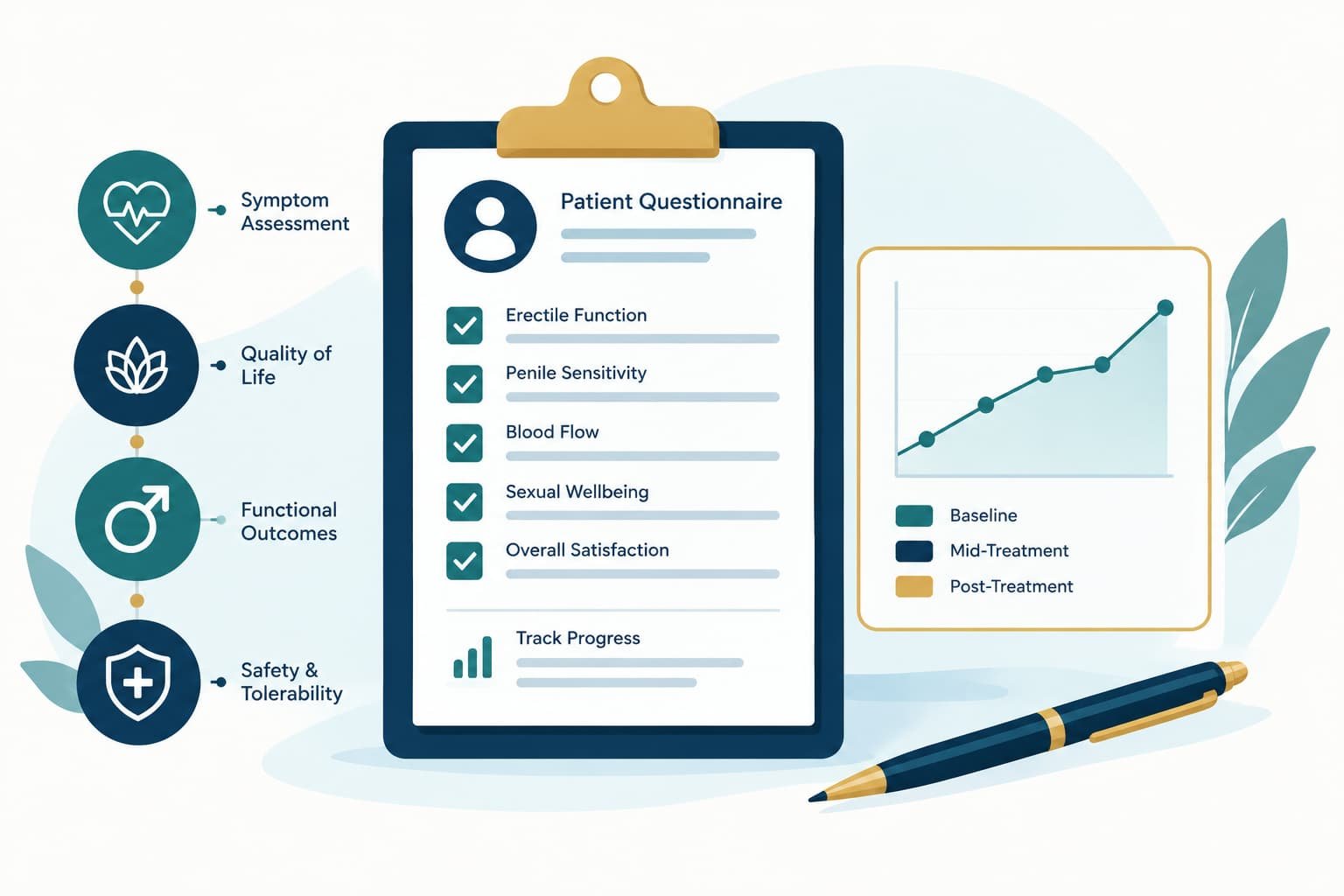
How Researchers Measure Outcomes
Clinical researchers typically track these outcome types:
- Change in IIEF-5 or IIEF-15 questionnaire scores
- Patient-reported improvement in erection hardness
- Partner-reported satisfaction
- Objective vascular measurements
- Adverse event rates
Studies that rely only on subjective questionnaires are more vulnerable to placebo effects. Studies with objective vascular measurements provide stronger evidence, though these remain limited in number.
What Does the Current Evidence Show?
Published research on PRP injections for erectile dysfunction has grown since 2020. The overall picture remains mixed rather than conclusive.
Small Studies Reporting Positive Results
Several small, uncontrolled studies report improvement in erectile function scores after PRP injection. A 2022 review published in Frontiers in Reproductive Health summarised the existing evidence base. It noted that erectile dysfunction affects an estimated one in five men in the United Kingdom, around 4.3 million men in total. The same review highlighted growing clinical interest in PRP as a regenerative option, while stressing that robust trial data remained limited.
These early studies typically involved fewer than fifty participants. Most lacked a control group. Without a placebo comparison, it becomes difficult to separate genuine biological effect from expectation bias. A percentage drawn from an uncontrolled study of thirty men cannot reliably predict outcomes for the wider population.
Randomised Controlled Trial Findings
Randomised controlled trials (RCTs) provide the strongest form of evidence. Findings from these trials have been less favourable than uncontrolled studies. One double-blind, placebo-controlled trial presented at the American Urological Association meeting compared PRP injections against a placebo in sixty-one men with mild to moderate erectile dysfunction. Researchers reported that the results did not demonstrate meaningful benefit over placebo, and noted that the therapy marketed as the Priapus shot lacked strong supporting evidence. This finding is significant. It suggests that some of the improvement reported in earlier open-label studies may reflect placebo response rather than a true treatment effect.
A 2025 systematic review and meta-analysis of randomised controlled trials, following PRISMA guidance, was conducted to evaluate PRP monotherapy for erectile dysfunction more rigorously. Reviewers searched multiple databases, including PubMed, EMBASE, and Cochrane Library, to identify eligible trials. This type of pooled analysis carries more weight than any single small trial, because it combines data across studies to reduce the influence of chance findings.
Systematic Reviews and Meta-Analyses
A 2024 meta-analysis published in PLOS ONE pooled data from both controlled and single-arm trials investigating PRP for erectile dysfunction. The authors noted that evidence on PRP effectiveness for this condition remained inconclusive, despite a growing number of studies being conducted. This conclusion reflects the current scientific consensus. PRP shows biological plausibility and an encouraging safety profile. Proof of consistent, reproducible clinical benefit is still developing.
A separate 2024 systematic review examined PRP therapy across both erectile dysfunction and Peyronie’s disease. Reviewers again identified substantial variation in injection protocols, PRP preparation methods, and follow-up periods across the available studies. This variation makes it difficult to calculate one universal success percentage that applies fairly across all clinics and techniques.
Another 2023 narrative review identified four randomised clinical trials investigating intracavernosal PRP for erectile dysfunction. The review concluded that while PRP appears safe, its efficacy for managing erectile dysfunction remains unknown because of significant heterogeneity among the trial protocols.
Why the P-Shot Success Rate Is Difficult to Pin Down
Several factors explain the wide range of reported outcomes.
Small Sample Sizes
Most published studies include fewer than one hundred participants. Small samples produce results that can swing significantly with a handful of individual responses. A single study cannot establish a reliable, generalisable P-shot success rate.
Lack of Standardisation
PRP preparation varies between clinics. Centrifugation speed, platelet concentration, and injection volume all differ. Some practitioners use leukocyte-rich PRP. Others use leukocyte-poor preparations. These technical differences may influence outcomes, yet few studies control for them consistently.
Placebo Effect
Erectile dysfunction has a well-documented placebo response. Expectation, anxiety reduction, and increased attention from a clinician can all improve subjective erection scores temporarily. Placebo-controlled trials help account for this, but many marketing claims rely on uncontrolled data.
Short Follow-Up Periods
Many studies assess outcomes at only one, three, or six months. Long-term durability data beyond twelve months remains sparse. This gap limits understanding of whether reported benefits persist.
Who Might Respond Better to the P Shot
Individual response likely depends on several factors, based on patterns observed across the available literature:
- Age and overall vascular health
- Severity and underlying cause of erectile difficulty
- Presence of diabetes or cardiovascular disease
- Smoking status
- Realistic expectations regarding degree of change
Men with mild, early-stage erectile difficulty may report more noticeable change than men with severe, long-standing vascular disease. This pattern appears across several small studies, though it has not been confirmed in large controlled trials.
Psychological factors also influence reported outcomes. Anxiety around sexual performance can worsen erectile difficulty independently of vascular health. A treatment that reduces anxiety through attention and reassurance may produce a measurable improvement in questionnaire scores, even without a direct physiological effect. Clinicians assessing suitability should consider psychological contributors alongside physical ones, and discuss non-injection options where appropriate before recommending PRP therapy.
P Shot London: Availability and Practice Standards
Demand for P shot London appointments has grown alongside broader interest in men’s regenerative health treatments. Clinics offering the P shot in the UK vary considerably in clinical background, PRP preparation equipment, and injection technique. Prospective patients should verify that any provider holds appropriate medical qualifications and follows recognised infection control standards. Regulatory oversight for PRP-based aesthetic and sexual health injections in the UK sits within a developing framework, so due diligence remains the patient’s responsibility.
Pshots clinic uk, a Harley Street practice led by Dr Syed Nadeem Abbas, is among the UK providers offering PRP-based men’s health treatments within a regulated medical setting.
Regulatory Status of the P Shot in the UK
The P shot UK market operates within a regulatory environment still catching up with demand for regenerative injectables. Autologous PRP is classified differently from medicines and devices, since it derives from the patient’s own tissue rather than a manufactured product. This classification means oversight varies depending on how and where a clinic operates. Registered medical practitioners performing the P shot in the UK are still bound by General Medical Council standards, clinical governance requirements, and informed consent obligations. Patients should confirm that a prescribing clinician, rather than a non-medical technician, is responsible for assessment and injection. Checking professional registration, insurance, and clinic accreditation remains a practical safeguard, given that PRP-based sexual health treatments sit outside standard NHS and NICE-endorsed pathways.
Priapus Shot Price and Cost Considerations
Priapus shot price varies across UK clinics, generally reflecting differences in consultation depth, PRP kit quality, and aftercare provision. Costs typically range across several hundred pounds per session, with some protocols requiring more than one treatment for a full course. A lower price does not indicate a higher P-shot success rate, and cost alone should never be the deciding factor.
For context, male enlargement injections cost UK figures can vary widely depending on the specific technique used, whether PRP, hyaluronic acid filler, or another injectable substance. Patients comparing options should ask providers directly how outcomes were measured in any published or clinic-reported success figures, rather than relying on marketing percentages alone.
P-Shot Before and After: Realistic Expectations
Searches for P shot before and after images are common among prospective patients. Photographic comparisons cannot substitute for controlled clinical data, and visual results are highly dependent on lighting, positioning, and selective presentation. Penile injection growth claims associated with the P shot are not consistently supported by rigorous trial evidence. Any size-related change reported anecdotally should be interpreted with caution rather than treated as an expected outcome.
Men considering this treatment should approach P-shot before and after claims with the same scrutiny applied to the underlying research. Individual anatomy, baseline erectile function, and treatment protocol all influence any visible change.
How the Procedure Works
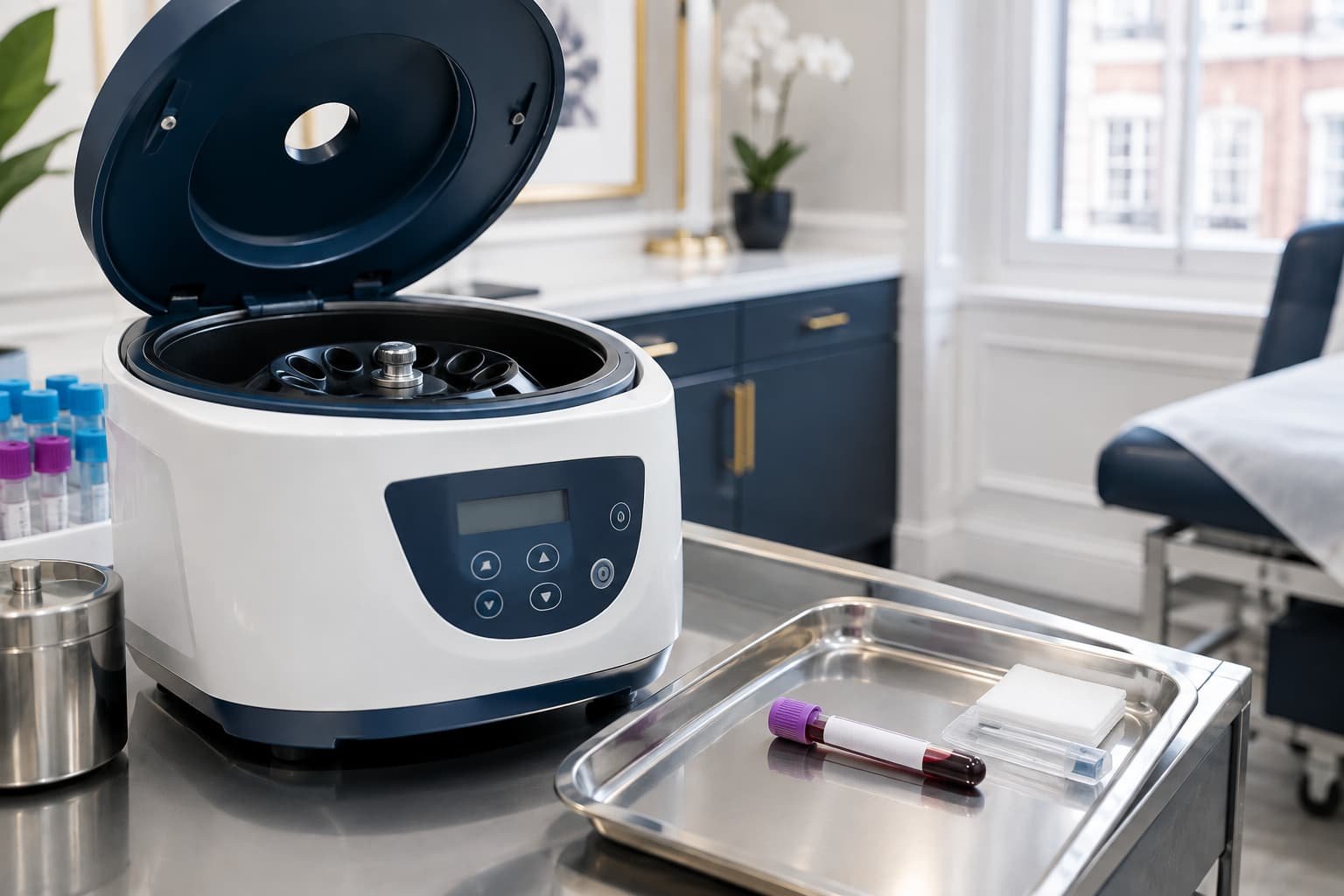
A typical P injection appointment follows a structured process:
- Initial consultation and medical history review
- Blood draw, usually a small sample from the arm
- Centrifugation to separate and concentrate platelets
- Application of topical or local anaesthetic
- Injection of PRP into specific penile tissue areas
- Short observation period before discharge
The full procedure typically takes under an hour. Recovery guidance usually includes avoiding sexual activity for a short period and monitoring for swelling or bruising.
Clinics vary in how many sessions they recommend for a complete course. Some protocols involve a single injection appointment. Others space two or three sessions several weeks apart, based on the theory that repeated stimulation may support more sustained tissue response. There is no consensus in the published literature on optimal dosing intervals or total session number. Patients should ask any provider to explain the specific protocol being offered and the evidence supporting that particular schedule, rather than accepting a generic treatment plan without explanation.
Risks and Limitations
PRP injections carry a generally favourable safety profile because the plasma is autologous, meaning it originates from the patient’s own blood. Reported side effects include temporary bruising, swelling, and injection site discomfort. Serious complications appear rare in published safety data, though large-scale, long-term safety studies remain limited. Allergic reaction risk is low compared with treatments using non-autologous or synthetic materials, since the injected substance comes directly from the patient.
The absence of major reported harm should not be interpreted as proof of benefit. Safety and efficacy are separate questions, and a treatment can be reasonably safe while still lacking strong evidence of meaningful clinical improvement.
The P-shot success rate reported by any single clinic should not be assumed to reflect peer-reviewed outcomes. Clinic-reported figures often lack the methodological rigour of published trials and may not account for regression to the mean or placebo response.
FAQ
Is the P-Shot proven to work?
Current evidence is mixed. Some uncontrolled studies report improvement, while a randomised placebo-controlled trial found no significant benefit over placebo. Larger, well-designed trials are needed before firm conclusions can be drawn.
What is a realistic P-shot success rate based on current research?
There is no single verified figure. Reported improvement rates in small uncontrolled studies range broadly, but methodological limitations mean these numbers cannot be generalised reliably.
Is the P Shot available on the NHS?
No. PRP-based injections for erectile dysfunction are not part of standard NHS treatment pathways. NHS-approved options include oral medication, vacuum devices, and other established interventions.
How much does a Priapus shot price typically cost in the UK?
Pricing varies by clinic and protocol. Patients should request a detailed breakdown of what is included and how many sessions a full course requires.
Are P-shot before and after results guaranteed?
No. Individual response varies, and photographic comparisons are not a substitute for controlled clinical evidence.
Who should avoid this treatment?
Men with bleeding disorders, active infection at the injection site, or unrealistic expectations of guaranteed results should discuss suitability carefully with a qualified clinician before proceeding.
How long do P-Shot results typically last, according to research?
Published follow-up periods are generally short, often between one and twelve months. Data on durability beyond one year is limited, so long-term persistence of any reported benefit remains uncertain.
Key Takeaways
The P-shot success rate cannot be reduced to a single reliable percentage. Evidence ranges from encouraging small studies to a placebo-controlled trial showing no significant benefit. Systematic reviews consistently describe the evidence base as promising but inconclusive. Prospective patients deserve information grounded in published research, not marketing language. Anyone considering PRP-based treatment should review the available trial data, ask providers direct questions about outcome measurement, and set realistic expectations before proceeding. Given how much the evidence still varies between studies, what would it take for research on the P-shot success rate to reach a genuine, reproducible consensus?
Read more:
P-Shot for Sensitivity vs ED: Does It Work Differently?
P Shot and Testosterone Levels: Is There a Link?
Dr Syed Nadeem Abbas, MBBS, MRCSEd, MSc Aesthetic Plastic Surgery (Distinction) Medical Director, Pshot Clinic | CQC Regulated | Monday to Saturday 10:00–18:00 +44 7955 836986